01for·since 등과 함께 쓰는 미래 시점까지 누적된 기간
will have been + -ing 구조를 사용합니다. 의미: for·since 등과 함께 쓰는 미래 시점까지 누적된 기간.
By next June, we will have been studying this species for ten years.
미래완료진행형 · B2. will have been + -ing 구조를 사용합니다. 의미: for·since 등과 함께 쓰는 미래 시점까지 누적된 기간.
새로 만든 12문제입니다. 상황에서 의도를 파악하고 형태를 연습한 뒤 새로운 맥락에 적용하세요.
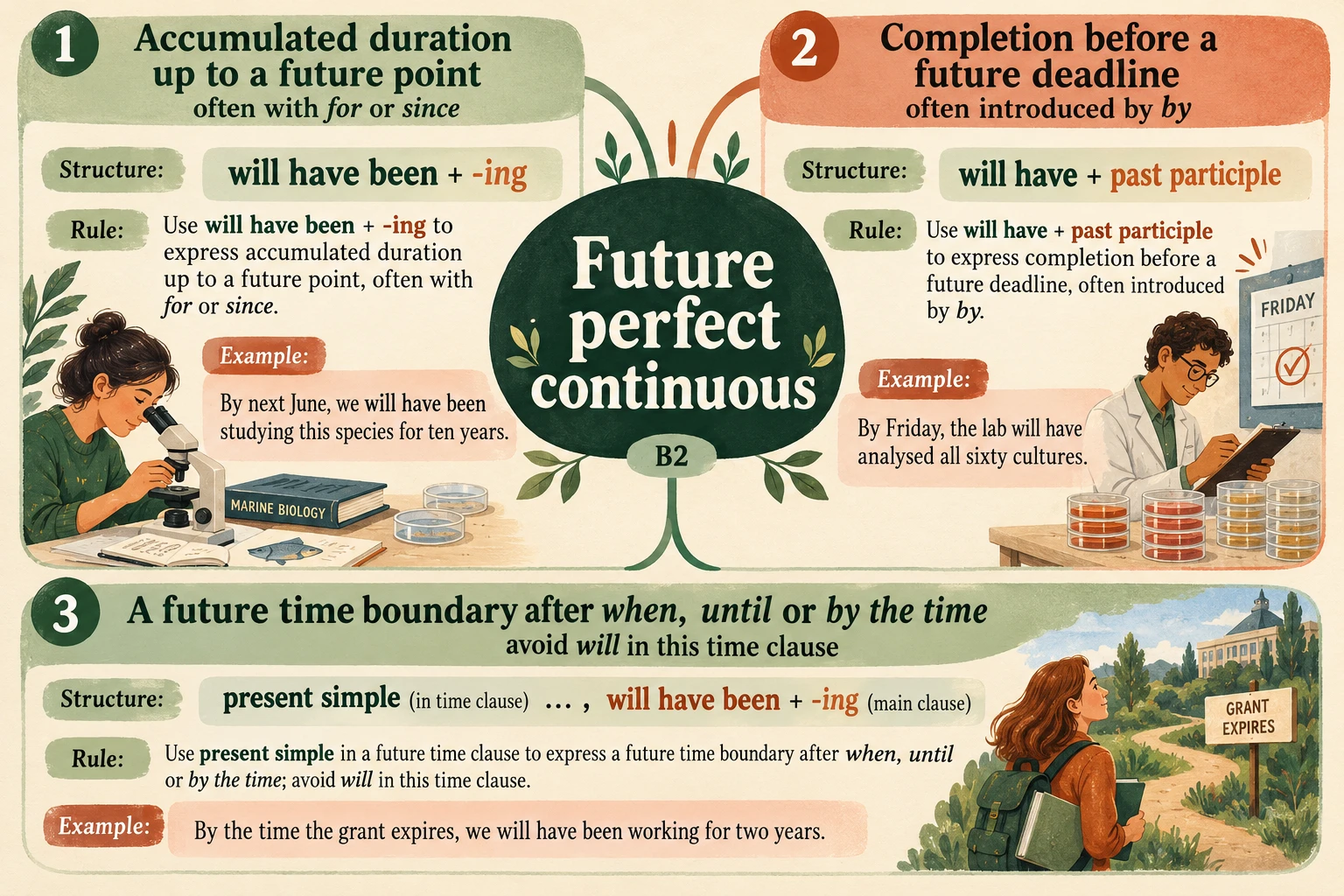
will have been + -ing 구조를 사용합니다. 의미: for·since 등과 함께 쓰는 미래 시점까지 누적된 기간.
By next June, we will have been studying this species for ten years.will have + past participle 구조를 사용합니다. 의미: by 등이 나타내는 미래 기한 전의 완료.
By Friday, the lab will have analysed all sixty cultures.present simple in a future time clause 구조를 사용합니다. 의미: when, until, by the time의 미래 시간절에서는 보통 현재형 사용.
By the time the grant expires, we will have been working for two years.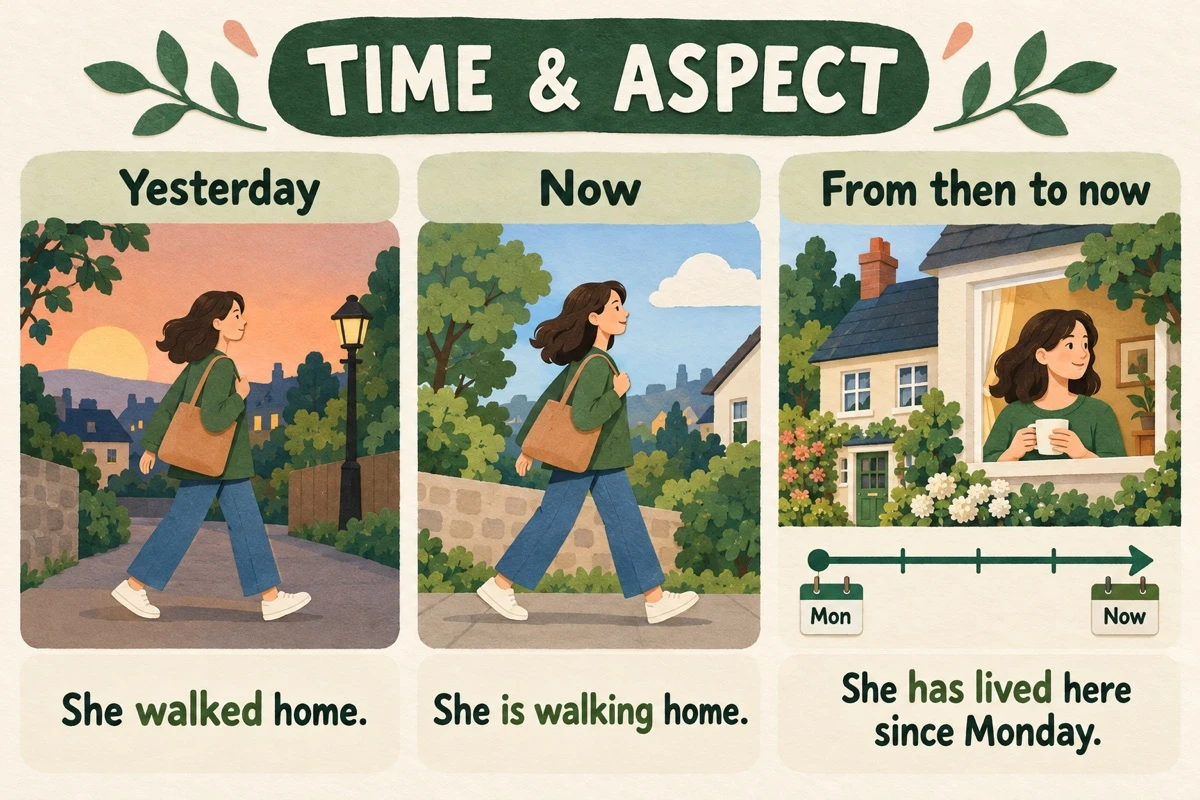
The research will continue; stress accumulated duration at next June.
will have been + -ing 구조를 사용합니다. 의미: for·since 등과 함께 쓰는 미래 시점까지 누적된 기간.
By next June, we will have been studying this species for ten years.will have + past participle 구조를 사용합니다. 의미: by 등이 나타내는 미래 기한 전의 완료.
By Friday, the lab will have analysed all sixty cultures.present simple in a future time clause 구조를 사용합니다. 의미: when, until, by the time의 미래 시간절에서는 보통 현재형 사용.
By the time the grant expires, we will have been working for two years.첫 시도를 남기고 변화의 이유를 이해한 뒤 새로운 상황에서 확인해 보세요.
아직 복습 노트가 없어요. 짧은 워밍업부터 해보세요.
will have been + -ing 구조를 사용합니다. 의미: for·since 등과 함께 쓰는 미래 시점까지 누적된 기간.
By next June, we will have been studying this species for ten years.will have + past participle 구조를 사용합니다. 의미: by 등이 나타내는 미래 기한 전의 완료.
By Friday, the lab will have analysed all sixty cultures.present simple in a future time clause 구조를 사용합니다. 의미: when, until, by the time의 미래 시간절에서는 보통 현재형 사용.
By the time the grant expires, we will have been working for two years.정답을 열면 해당 문제에 도움 사용이 기록돼요.
The research will continue; stress accumulated duration at next June.
판단 단서는 “The research will continue; stress accumulated duration at next June.”입니다. will have been + -ing 구조를 사용합니다. 의미: for·since 등과 함께 쓰는 미래 시점까지 누적된 기간. 이 과제의 완성 문장은 “By next June, we will have been studying this species for ten years.”입니다.
Focus on an exact completed total before the future deadline.
판단 단서는 “Focus on an exact completed total before the future deadline.”입니다. will have + past participle 구조를 사용합니다. 의미: by 등이 나타내는 미래 기한 전의 완료. 이 과제의 완성 문장은 “By Friday, the lab will have analysed all sixty cultures.”입니다.
Future time boundary follows by the time.
판단 단서는 “Future time boundary follows by the time.”입니다. present simple in a future time clause 구조를 사용합니다. 의미: when, until, by the time의 미래 시간절에서는 보통 현재형 사용. 이 과제의 완성 문장은 “By the time the grant expires, we will have been working for two years.”입니다.
The occupation will still be continuing; emphasise duration at a future anniversary.
판단 단서는 “The occupation will still be continuing; emphasise duration at a future anniversary.”입니다. will have been + -ing 구조를 사용합니다. 의미: for·since 등과 함께 쓰는 미래 시점까지 누적된 기간. 이 과제의 완성 문장은 “In August, she will have been working at the station for twenty years.”입니다.
Use the future perfect simple of publish for the completed total.
완성 문장: “By the end of next year, the team will have published three volumes.” will have + past participle 구조를 사용합니다. 의미: by 등이 나타내는 미래 기한 전의 완료. 과제의 주어·시간·의미에 맞춘 형태입니다. 검토한 답만 자동으로 확인하며, 다른 표현을 자동으로 틀렸다고 하지 않습니다.
The main clause is future; this subordinate clause sets its time boundary.
판단 단서는 “The main clause is future; this subordinate clause sets its time boundary.”입니다. present simple in a future time clause 구조를 사용합니다. 의미: when, until, by the time의 미래 시간절에서는 보통 현재형 사용. 이 과제의 완성 문장은 “When you arrive next week, I will have been teaching here for a month.”입니다.
Use the future perfect continuous of travel to stress duration up to next Monday.
완성 문장: “By next Monday, they will have been travelling for six consecutive weeks.” will have been + -ing 구조를 사용합니다. 의미: for·since 등과 함께 쓰는 미래 시점까지 누적된 기간. 과제의 주어·시간·의미에 맞춘 형태입니다. 검토한 답만 자동으로 확인하며, 다른 표현을 자동으로 틀렸다고 하지 않습니다.
The strike will be ongoing; count its duration at next Friday.
판단 단서는 “The strike will be ongoing; count its duration at next Friday.”입니다. will have been + -ing 구조를 사용합니다. 의미: for·since 등과 함께 쓰는 미래 시점까지 누적된 기간. 이 과제의 완성 문장은 “By next Friday, the workers will have been striking for a fortnight.”입니다.
Use the future perfect simple of complete for all ten trials finished before the meeting.
완성 문장: “By the review meeting, we will have completed all ten trials.” will have + past participle 구조를 사용합니다. 의미: by 등이 나타내는 미래 기한 전의 완료. 과제의 주어·시간·의미에 맞춘 형태입니다. 검토한 답만 자동으로 확인하며, 다른 표현을 자동으로 틀렸다고 하지 않습니다.
In a future time clause, use the present simple for the event boundary.
판단 단서는 “In a future time clause, use the present simple for the event boundary.”입니다. present simple in a future time clause 구조를 사용합니다. 의미: when, until, by the time의 미래 시간절에서는 보통 현재형 사용. 이 과제의 완성 문장은 “We will have been walking for five hours when we reach the refuge.”입니다.
Count completed deliveries, rather than the duration of delivery activity.
판단 단서는 “Count completed deliveries, rather than the duration of delivery activity.”입니다. will have + past participle 구조를 사용합니다. 의미: by 등이 나타내는 미래 기한 전의 완료. 이 과제의 완성 문장은 “By this evening, the courier will have delivered eighty parcels.”입니다.
Use the present simple of finish in the time clause.
완성 문장: “By the time the course finishes, she will have been studying for nine months.” present simple in a future time clause 구조를 사용합니다. 의미: when, until, by the time의 미래 시간절에서는 보통 현재형 사용. 과제의 주어·시간·의미에 맞춘 형태입니다. 검토한 답만 자동으로 확인하며, 다른 표현을 자동으로 틀렸다고 하지 않습니다.