01can과 동사원형
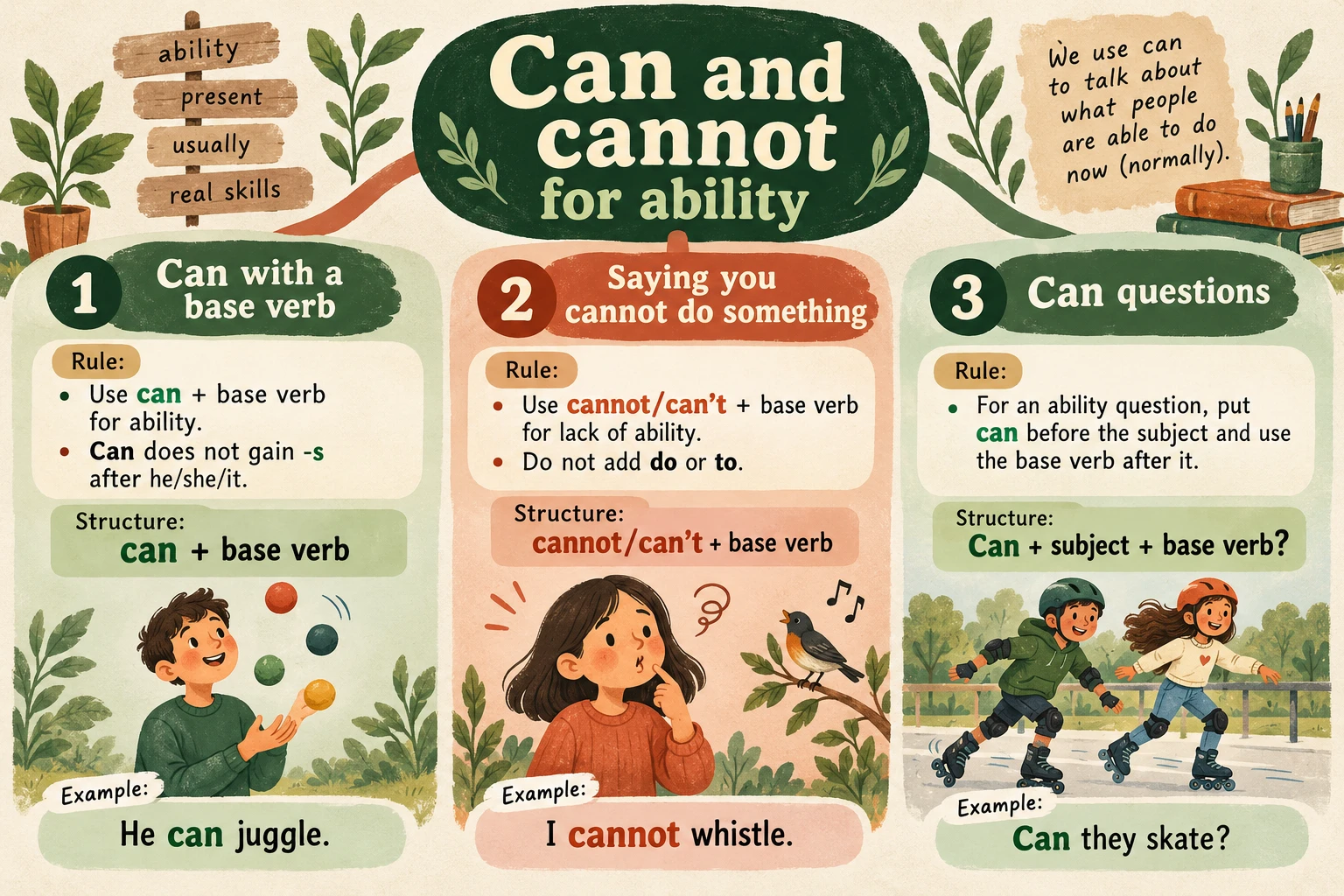
능력은 can+동사원형이며 he/she/it 뒤에서도 can에 -s를 붙이지 않습니다.
He can juggle.
능력의 can·cannot · A1. 능력은 can+동사원형이며 he/she/it 뒤에서도 can에 -s를 붙이지 않습니다.
짧은 상황에서 ‘능력의 can·cannot’을 연습합니다. 단서를 읽고 형태를 고르거나 쓴 뒤 이유를 확인하세요. 수준은 편집상 안내입니다.
능력은 can+동사원형이며 he/she/it 뒤에서도 can에 -s를 붙이지 않습니다.
He can juggle.못하는 일은 cannot/can’t+원형이며 do나 to를 넣지 않습니다.
I cannot whistle.능력 의문문은 can을 주어 앞에 두고 동사원형을 씁니다.
Can they skate?
Lea is a good swimmer. She can ___ a long way. (swim)
능력은 can+동사원형이며 he/she/it 뒤에서도 can에 -s를 붙이지 않습니다.
He can juggle.못하는 일은 cannot/can’t+원형이며 do나 to를 넣지 않습니다.
I cannot whistle.능력 의문문은 can을 주어 앞에 두고 동사원형을 씁니다.
Can they skate?첫 시도를 남기고 변화의 이유를 이해한 뒤 새로운 상황에서 확인해 보세요.
아직 복습 노트가 없어요. 짧은 워밍업부터 해보세요.
능력은 can+동사원형이며 he/she/it 뒤에서도 can에 -s를 붙이지 않습니다.
He can juggle.못하는 일은 cannot/can’t+원형이며 do나 to를 넣지 않습니다.
I cannot whistle.능력 의문문은 can을 주어 앞에 두고 동사원형을 씁니다.
Can they skate?정답을 열면 해당 문제에 도움 사용이 기록돼요.
Lea is a good swimmer. She can ___ a long way. (swim)
“Lea is a good swimmer. She can ___ a long way. (swim)”를 보세요. 능력은 can+동사원형이며 he/she/it 뒤에서도 can에 -s를 붙이지 않습니다. 완성 문장: “Lea is a good swimmer. She can swim a long way. (swim)”.
I do not know how to drive. I ___ drive.
“I do not know how to drive. I ___ drive.”를 보세요. 못하는 일은 cannot/can’t+원형이며 do나 to를 넣지 않습니다. 완성 문장: “I do not know how to drive. I cannot drive.”.
___ your brother speak Italian?
“___ your brother speak Italian?”를 보세요. 능력 의문문은 can을 주어 앞에 두고 동사원형을 씁니다. 완성 문장: “Can your brother speak Italian?”.
This bird can ___ my name. (say)
완성 예문: “This bird can say my name. (say)”. 능력은 can+동사원형이며 he/she/it 뒤에서도 can에 -s를 붙이지 않습니다.
The baby is only two months old. She ___ walk yet.
“The baby is only two months old. She ___ walk yet.”를 보세요. 못하는 일은 cannot/can’t+원형이며 do나 to를 넣지 않습니다. 완성 문장: “The baby is only two months old. She cannot walk yet.”.
Can Omar ___ a bicycle? (ride)
“Can Omar ___ a bicycle? (ride)”를 보세요. 능력 의문문은 can을 주어 앞에 두고 동사원형을 씁니다. 완성 문장: “Can Omar ride a bicycle? (ride)”.
My aunt can ___ three languages. (speak)
완성 예문: “My aunt can speak three languages. (speak)”. 능력은 can+동사원형이며 he/she/it 뒤에서도 can에 -s를 붙이지 않습니다.
Our new robot can ___ stairs. (climb)
“Our new robot can ___ stairs. (climb)”를 보세요. 능력은 can+동사원형이며 he/she/it 뒤에서도 can에 -s를 붙이지 않습니다. 완성 문장: “Our new robot can climb stairs. (climb)”.
He has never learned to read music. He ___ read this score.
“He has never learned to read music. He ___ read this score.”를 보세요. 못하는 일은 cannot/can’t+원형이며 do나 to를 넣지 않습니다. 완성 문장: “He has never learned to read music. He cannot read this score.”.
Can you ___ the letters at the back? (see)
완성 예문: “Can you see the letters at the back? (see)”. 능력 의문문은 can을 주어 앞에 두고 동사원형을 씁니다.
I have lost my voice. I ___ sing today.
“I have lost my voice. I ___ sing today.”를 보세요. 못하는 일은 cannot/can’t+원형이며 do나 to를 넣지 않습니다. 완성 문장: “I have lost my voice. I cannot sing today.”.
Ask about present ability using can: ___ your sister play the violin?
완성 예문: “Ask about present ability using can: Can your sister play the violin?”. 능력 의문문은 can을 주어 앞에 두고 동사원형을 씁니다.