01極性を逆にし、同じ助動詞で中立的な確認をする付加疑問
positive statement + negative tag を用います。表す内容:極性を逆にし、同じ助動詞で中立的な確認をする付加疑問。
You have received the invoice, haven’t you?
付加疑問文 · B1. positive statement + negative tag を用います。表す内容:極性を逆にし、同じ助動詞で中立的な確認をする付加疑問。
12問のオリジナル問題です。状況から意味を読み取り、形を練習して、新しい場面で応用します。
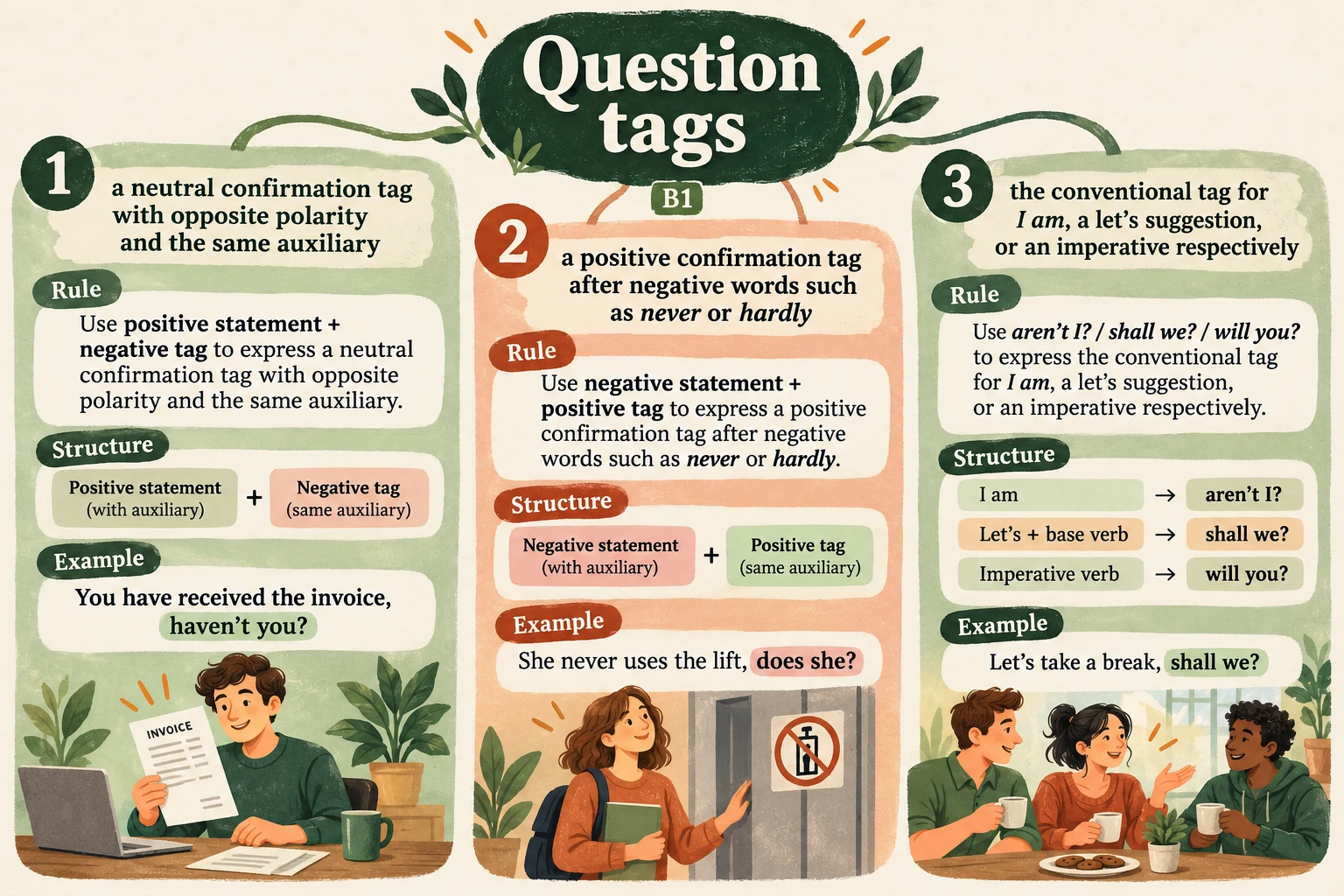
positive statement + negative tag を用います。表す内容:極性を逆にし、同じ助動詞で中立的な確認をする付加疑問。
You have received the invoice, haven’t you?negative statement + positive tag を用います。表す内容:never・hardly など否定的な語に続く肯定の付加疑問。
She never uses the lift, does she?aren't I? / shall we? / will you? を用います。表す内容:それぞれ I am、let’s の提案、命令文に使う慣用的な付加疑問。
Let’s take a break, shall we?
Use a neutral confirmation tag after the positive statement.
positive statement + negative tag を用います。表す内容:極性を逆にし、同じ助動詞で中立的な確認をする付加疑問。
You have received the invoice, haven’t you?negative statement + positive tag を用います。表す内容:never・hardly など否定的な語に続く肯定の付加疑問。
She never uses the lift, does she?aren't I? / shall we? / will you? を用います。表す内容:それぞれ I am、let’s の提案、命令文に使う慣用的な付加疑問。
Let’s take a break, shall we?初回答を残し、変化の理由を理解して、別の場面で確かめます。
まだ復習ノートはありません。まずは短いウォームアップを。
positive statement + negative tag を用います。表す内容:極性を逆にし、同じ助動詞で中立的な確認をする付加疑問。
You have received the invoice, haven’t you?negative statement + positive tag を用います。表す内容:never・hardly など否定的な語に続く肯定の付加疑問。
She never uses the lift, does she?aren't I? / shall we? / will you? を用います。表す内容:それぞれ I am、let’s の提案、命令文に使う慣用的な付加疑問。
Let’s take a break, shall we?解答を開くと、その問題にヒント利用が記録されます。
Use a neutral confirmation tag after the positive statement.
「You have received the invoice, ___?」に注目しましょう。positive statement + negative tag を用います。表す内容:極性を逆にし、同じ助動詞で中立的な確認をする付加疑問。 完成文:「You have received the invoice, haven’t you?」。
Never makes the statement negative in meaning.
「She never uses the lift, ___?」に注目しましょう。negative statement + positive tag を用います。表す内容:never・hardly など否定的な語に続く肯定の付加疑問。 完成文:「She never uses the lift, does she?」。
Use the conventional tag for a suggestion with let’s.
「Let’s take a break, ___?」に注目しましょう。aren't I? / shall we? / will you? を用います。表す内容:それぞれ I am、let’s の提案、命令文に使う慣用的な付加疑問。 完成文:「Let’s take a break, shall we?」。
The main clause is a positive past simple statement. Use a neutral opposite-polarity confirmation tag, not a same-polarity echo.
「The main clause is a positive past simple statement. Use a neutral opposite-polarity confirmation tag, not a same-polarity echo.」に注目しましょう。positive statement + negative tag を用います。表す内容:極性を逆にし、同じ助動詞で中立的な確認をする付加疑問。 完成文:「They signed the contract, didn’t they?」。
Write the positive tag after a negative past statement.
完成文:「You did not see the notice, did you?」 negative statement + positive tag を用います。表す内容:never・hardly など否定的な語に続く肯定の付加疑問。 問題の主語・時間・意味に合わせた形です。確認済みの解答だけを自動照合します。別の表現を自動的に誤りとはしません。
Use the conventional informal confirmation tag for I am.
「I am next, ___?」に注目しましょう。aren't I? / shall we? / will you? を用います。表す内容:それぞれ I am、let’s の提案、命令文に使う慣用的な付加疑問。 完成文:「I am next, aren’t I?」。
Write the negative tag corresponding to will.
完成文:「They will call tonight, won’t they?」 positive statement + negative tag を用います。表す内容:極性を逆にし、同じ助動詞で中立的な確認をする付加疑問。 問題の主語・時間・意味に合わせた形です。確認済みの解答だけを自動照合します。別の表現を自動的に誤りとはしません。
The positive statement contains can. Use a neutral opposite-polarity confirmation tag, not a same-polarity echo.
「The positive statement contains can. Use a neutral opposite-polarity confirmation tag, not a same-polarity echo.」に注目しましょう。positive statement + negative tag を用います。表す内容:極性を逆にし、同じ助動詞で中立的な確認をする付加疑問。 完成文:「Ravi can drive the van, can’t he?」。
Write the positive tag; hardly gives the statement negative meaning.
完成文:「We hardly know them, do we?」 negative statement + positive tag を用います。表す内容:never・hardly など否定的な語に続く肯定の付加疑問。 問題の主語・時間・意味に合わせた形です。確認済みの解答だけを自動照合します。別の表現を自動的に誤りとはしません。
Use a conventional request tag after an imperative.
「Close the gate, ___?」に注目しましょう。aren't I? / shall we? / will you? を用います。表す内容:それぞれ I am、let’s の提案、命令文に使う慣用的な付加疑問。 完成文:「Close the gate, will you?」。
Nobody makes the statement negative; use they for the tag’s person. Use a neutral opposite-polarity confirmation tag, not a same-polarity echo.
「Nobody makes the statement negative; use they for the tag’s person. Use a neutral opposite-polarity confirmation tag, not a same-polarity echo.」に注目しましょう。negative statement + positive tag を用います。表す内容:never・hardly など否定的な語に続く肯定の付加疑問。 完成文:「Nobody has objected, have they?」。
Write the conventional question tag for a suggestion beginning with let’s.
完成文:「Let’s check the route first, shall we?」 aren't I? / shall we? / will you? を用います。表す内容:それぞれ I am、let’s の提案、命令文に使う慣用的な付加疑問。 問題の主語・時間・意味に合わせた形です。確認済みの解答だけを自動照合します。別の表現を自動的に誤りとはしません。