01긍정·부정을 반대로 하고 같은 조동사를 쓰는 중립적 확인
positive statement + negative tag 구조를 사용합니다. 의미: 긍정·부정을 반대로 하고 같은 조동사를 쓰는 중립적 확인.
You have received the invoice, haven’t you?
부가의문문 · B1. positive statement + negative tag 구조를 사용합니다. 의미: 긍정·부정을 반대로 하고 같은 조동사를 쓰는 중립적 확인.
새로 만든 12문제입니다. 상황에서 의도를 파악하고 형태를 연습한 뒤 새로운 맥락에 적용하세요.
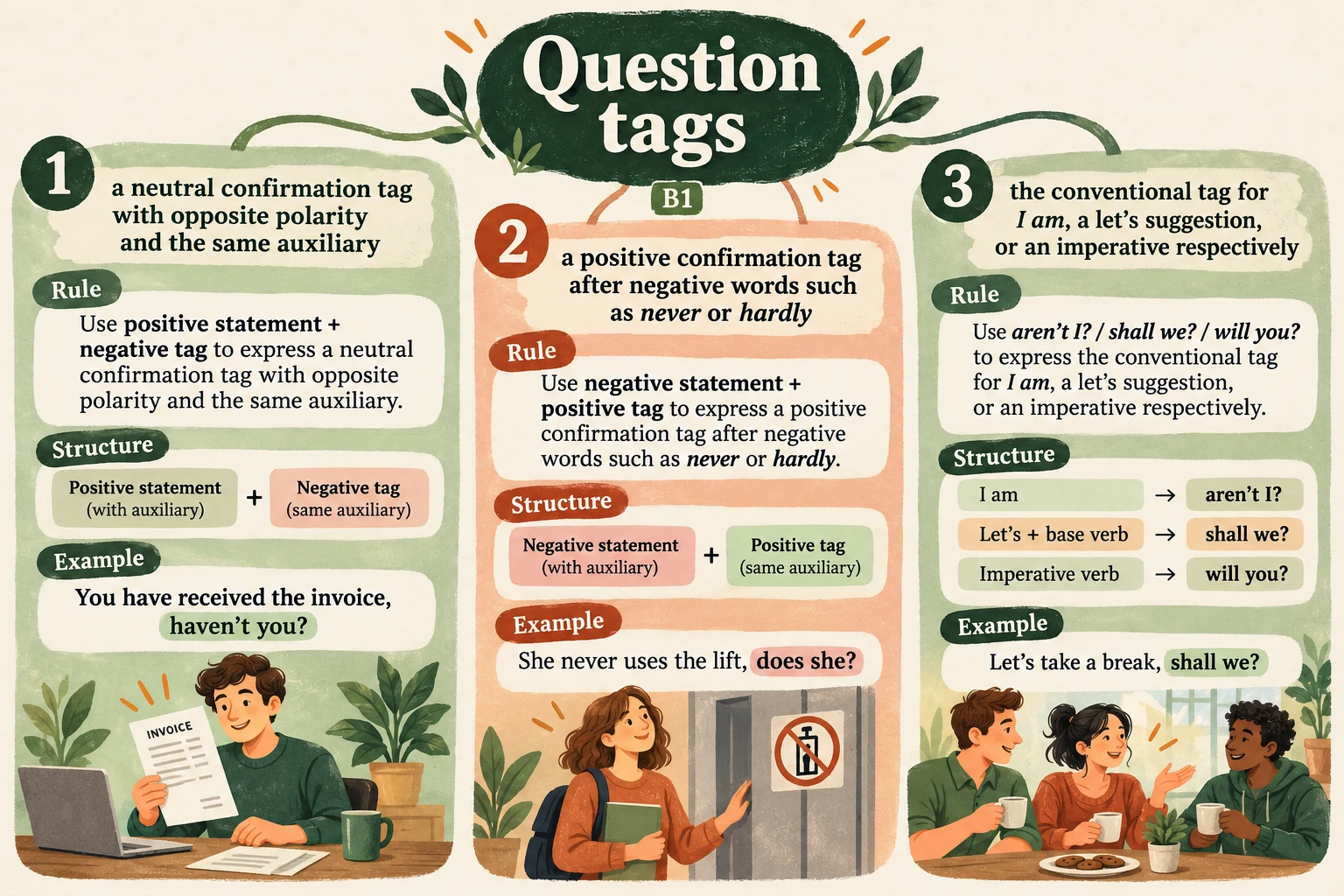
positive statement + negative tag 구조를 사용합니다. 의미: 긍정·부정을 반대로 하고 같은 조동사를 쓰는 중립적 확인.
You have received the invoice, haven’t you?negative statement + positive tag 구조를 사용합니다. 의미: never·hardly 같은 부정 의미 표현 뒤의 긍정 부가의문.
She never uses the lift, does she?aren't I? / shall we? / will you? 구조를 사용합니다. 의미: 각각 I am, let’s 제안, 명령문에 쓰는 관용적 부가의문.
Let’s take a break, shall we?
Use a neutral confirmation tag after the positive statement.
positive statement + negative tag 구조를 사용합니다. 의미: 긍정·부정을 반대로 하고 같은 조동사를 쓰는 중립적 확인.
You have received the invoice, haven’t you?negative statement + positive tag 구조를 사용합니다. 의미: never·hardly 같은 부정 의미 표현 뒤의 긍정 부가의문.
She never uses the lift, does she?aren't I? / shall we? / will you? 구조를 사용합니다. 의미: 각각 I am, let’s 제안, 명령문에 쓰는 관용적 부가의문.
Let’s take a break, shall we?첫 시도를 남기고 변화의 이유를 이해한 뒤 새로운 상황에서 확인해 보세요.
아직 복습 노트가 없어요. 짧은 워밍업부터 해보세요.
positive statement + negative tag 구조를 사용합니다. 의미: 긍정·부정을 반대로 하고 같은 조동사를 쓰는 중립적 확인.
You have received the invoice, haven’t you?negative statement + positive tag 구조를 사용합니다. 의미: never·hardly 같은 부정 의미 표현 뒤의 긍정 부가의문.
She never uses the lift, does she?aren't I? / shall we? / will you? 구조를 사용합니다. 의미: 각각 I am, let’s 제안, 명령문에 쓰는 관용적 부가의문.
Let’s take a break, shall we?정답을 열면 해당 문제에 도움 사용이 기록돼요.
Use a neutral confirmation tag after the positive statement.
“You have received the invoice, ___?”를 보세요. positive statement + negative tag 구조를 사용합니다. 의미: 긍정·부정을 반대로 하고 같은 조동사를 쓰는 중립적 확인. 완성 문장: “You have received the invoice, haven’t you?”.
Never makes the statement negative in meaning.
“She never uses the lift, ___?”를 보세요. negative statement + positive tag 구조를 사용합니다. 의미: never·hardly 같은 부정 의미 표현 뒤의 긍정 부가의문. 완성 문장: “She never uses the lift, does she?”.
Use the conventional tag for a suggestion with let’s.
“Let’s take a break, ___?”를 보세요. aren't I? / shall we? / will you? 구조를 사용합니다. 의미: 각각 I am, let’s 제안, 명령문에 쓰는 관용적 부가의문. 완성 문장: “Let’s take a break, shall we?”.
The main clause is a positive past simple statement. Use a neutral opposite-polarity confirmation tag, not a same-polarity echo.
“The main clause is a positive past simple statement. Use a neutral opposite-polarity confirmation tag, not a same-polarity echo.”를 보세요. positive statement + negative tag 구조를 사용합니다. 의미: 긍정·부정을 반대로 하고 같은 조동사를 쓰는 중립적 확인. 완성 문장: “They signed the contract, didn’t they?”.
Write the positive tag after a negative past statement.
완성 문장: “You did not see the notice, did you?” negative statement + positive tag 구조를 사용합니다. 의미: never·hardly 같은 부정 의미 표현 뒤의 긍정 부가의문. 과제의 주어·시간·의미에 맞춘 형태입니다. 검토한 답만 자동으로 확인하며, 다른 표현을 자동으로 틀렸다고 하지 않습니다.
Use the conventional informal confirmation tag for I am.
“I am next, ___?”를 보세요. aren't I? / shall we? / will you? 구조를 사용합니다. 의미: 각각 I am, let’s 제안, 명령문에 쓰는 관용적 부가의문. 완성 문장: “I am next, aren’t I?”.
Write the negative tag corresponding to will.
완성 문장: “They will call tonight, won’t they?” positive statement + negative tag 구조를 사용합니다. 의미: 긍정·부정을 반대로 하고 같은 조동사를 쓰는 중립적 확인. 과제의 주어·시간·의미에 맞춘 형태입니다. 검토한 답만 자동으로 확인하며, 다른 표현을 자동으로 틀렸다고 하지 않습니다.
The positive statement contains can. Use a neutral opposite-polarity confirmation tag, not a same-polarity echo.
“The positive statement contains can. Use a neutral opposite-polarity confirmation tag, not a same-polarity echo.”를 보세요. positive statement + negative tag 구조를 사용합니다. 의미: 긍정·부정을 반대로 하고 같은 조동사를 쓰는 중립적 확인. 완성 문장: “Ravi can drive the van, can’t he?”.
Write the positive tag; hardly gives the statement negative meaning.
완성 문장: “We hardly know them, do we?” negative statement + positive tag 구조를 사용합니다. 의미: never·hardly 같은 부정 의미 표현 뒤의 긍정 부가의문. 과제의 주어·시간·의미에 맞춘 형태입니다. 검토한 답만 자동으로 확인하며, 다른 표현을 자동으로 틀렸다고 하지 않습니다.
Use a conventional request tag after an imperative.
“Close the gate, ___?”를 보세요. aren't I? / shall we? / will you? 구조를 사용합니다. 의미: 각각 I am, let’s 제안, 명령문에 쓰는 관용적 부가의문. 완성 문장: “Close the gate, will you?”.
Nobody makes the statement negative; use they for the tag’s person. Use a neutral opposite-polarity confirmation tag, not a same-polarity echo.
“Nobody makes the statement negative; use they for the tag’s person. Use a neutral opposite-polarity confirmation tag, not a same-polarity echo.”를 보세요. negative statement + positive tag 구조를 사용합니다. 의미: never·hardly 같은 부정 의미 표현 뒤의 긍정 부가의문. 완성 문장: “Nobody has objected, have they?”.
Write the conventional question tag for a suggestion beginning with let’s.
완성 문장: “Let’s check the route first, shall we?” aren't I? / shall we? / will you? 구조를 사용합니다. 의미: 각각 I am, let’s 제안, 명령문에 쓰는 관용적 부가의문. 과제의 주어·시간·의미에 맞춘 형태입니다. 검토한 답만 자동으로 확인하며, 다른 표현을 자동으로 틀렸다고 하지 않습니다.