01سؤالا تأكيديا محايدا بقطبية معاكسة ونفس الفعل المساعد
استخدم positive statement + negative tag للتعبير عن سؤالا تأكيديا محايدا بقطبية معاكسة ونفس الفعل المساعد.
You have received the invoice, haven’t you?
الأسئلة الذيلية · B1. استخدم positive statement + negative tag للتعبير عن سؤالا تأكيديا محايدا بقطبية معاكسة ونفس الفعل المساعد.
أكمل 12 مهمة أصلية. استنتج المعنى المقصود من السياق، وتدرّب على الصيغة ثم طبّقها في موقف جديد.
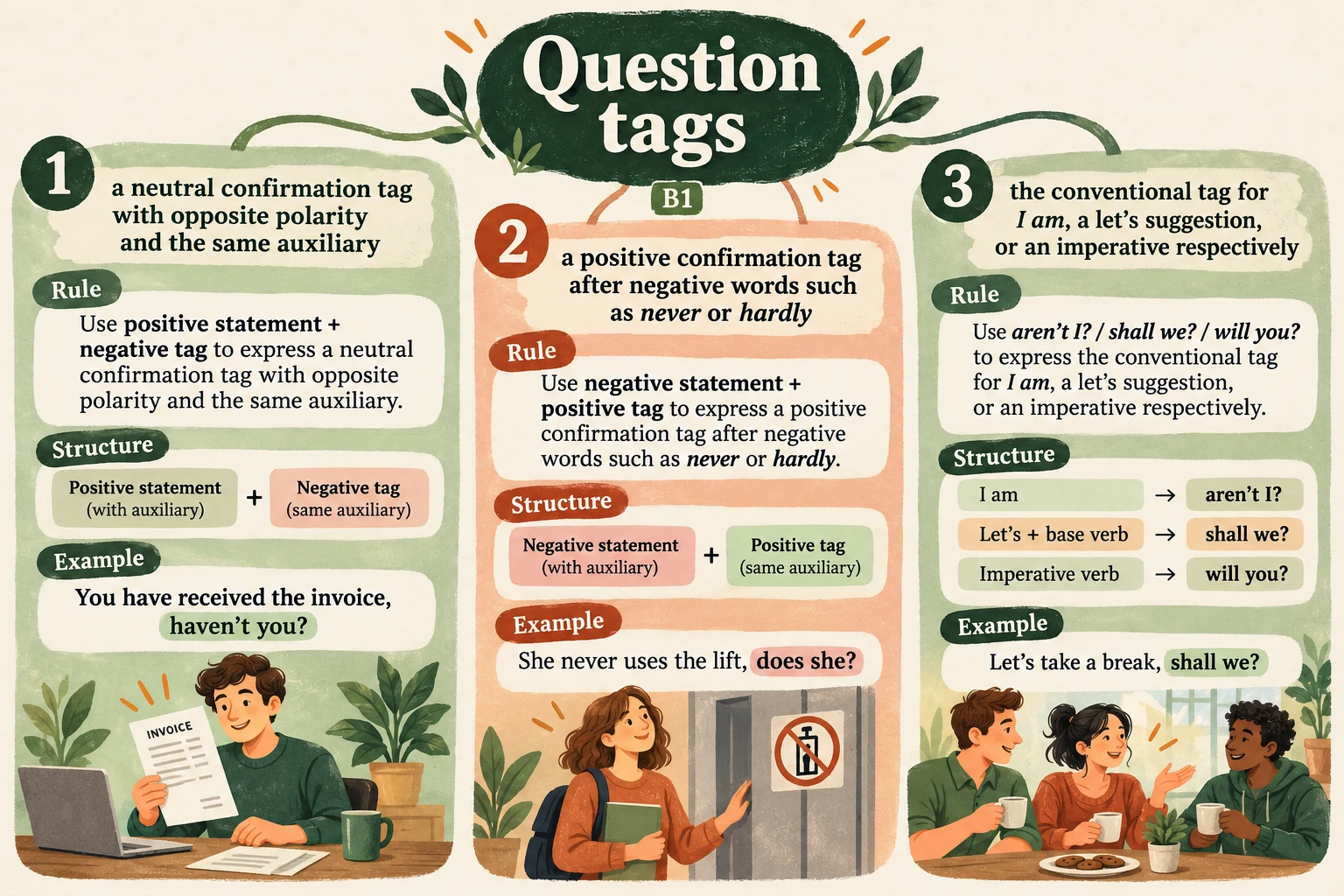
استخدم positive statement + negative tag للتعبير عن سؤالا تأكيديا محايدا بقطبية معاكسة ونفس الفعل المساعد.
You have received the invoice, haven’t you?استخدم negative statement + positive tag للتعبير عن سؤالا تأكيديا مثبتا بعد كلمات منفية مثل never أو hardly.
She never uses the lift, does she?استخدم aren't I? / shall we? / will you? للتعبير عن الذيل المعتاد مع I am أو اقتراح let’s أو الأمر على الترتيب.
Let’s take a break, shall we?
Use a neutral confirmation tag after the positive statement.
استخدم positive statement + negative tag للتعبير عن سؤالا تأكيديا محايدا بقطبية معاكسة ونفس الفعل المساعد.
You have received the invoice, haven’t you?استخدم negative statement + positive tag للتعبير عن سؤالا تأكيديا مثبتا بعد كلمات منفية مثل never أو hardly.
She never uses the lift, does she?استخدم aren't I? / shall we? / will you? للتعبير عن الذيل المعتاد مع I am أو اقتراح let’s أو الأمر على الترتيب.
Let’s take a break, shall we?احتفظ بالمحاولة الأولى، وافهم التغيير، ثم اختبر فهمك في موقف جديد.
لا توجد ملاحظات بعد. جرّب تهيئة قصيرة.
استخدم positive statement + negative tag للتعبير عن سؤالا تأكيديا محايدا بقطبية معاكسة ونفس الفعل المساعد.
You have received the invoice, haven’t you?استخدم negative statement + positive tag للتعبير عن سؤالا تأكيديا مثبتا بعد كلمات منفية مثل never أو hardly.
She never uses the lift, does she?استخدم aren't I? / shall we? / will you? للتعبير عن الذيل المعتاد مع I am أو اقتراح let’s أو الأمر على الترتيب.
Let’s take a break, shall we?فتح إجابة يسجّل استخدام المساعدة لذلك السؤال.
Use a neutral confirmation tag after the positive statement.
انظر إلى «You have received the invoice, ___?». استخدم positive statement + negative tag للتعبير عن سؤالا تأكيديا محايدا بقطبية معاكسة ونفس الفعل المساعد. الجملة المكتملة: «You have received the invoice, haven’t you?».
Never makes the statement negative in meaning.
انظر إلى «She never uses the lift, ___?». استخدم negative statement + positive tag للتعبير عن سؤالا تأكيديا مثبتا بعد كلمات منفية مثل never أو hardly. الجملة المكتملة: «She never uses the lift, does she?».
Use the conventional tag for a suggestion with let’s.
انظر إلى «Let’s take a break, ___?». استخدم aren't I? / shall we? / will you? للتعبير عن الذيل المعتاد مع I am أو اقتراح let’s أو الأمر على الترتيب. الجملة المكتملة: «Let’s take a break, shall we?».
The main clause is a positive past simple statement. Use a neutral opposite-polarity confirmation tag, not a same-polarity echo.
انظر إلى «The main clause is a positive past simple statement. Use a neutral opposite-polarity confirmation tag, not a same-polarity echo.». استخدم positive statement + negative tag للتعبير عن سؤالا تأكيديا محايدا بقطبية معاكسة ونفس الفعل المساعد. الجملة المكتملة: «They signed the contract, didn’t they?».
Write the positive tag after a negative past statement.
الجملة المكتملة: «You did not see the notice, did you?» استخدم negative statement + positive tag للتعبير عن سؤالا تأكيديا مثبتا بعد كلمات منفية مثل never أو hardly. يحدد الفاعل والزمن والمعنى في المهمة هذه الصيغة. تُطابق الإجابات المراجعة فقط تلقائياً؛ ولا تُعد الصياغات الأخرى خطأ تلقائياً.
Use the conventional informal confirmation tag for I am.
انظر إلى «I am next, ___?». استخدم aren't I? / shall we? / will you? للتعبير عن الذيل المعتاد مع I am أو اقتراح let’s أو الأمر على الترتيب. الجملة المكتملة: «I am next, aren’t I?».
Write the negative tag corresponding to will.
الجملة المكتملة: «They will call tonight, won’t they?» استخدم positive statement + negative tag للتعبير عن سؤالا تأكيديا محايدا بقطبية معاكسة ونفس الفعل المساعد. يحدد الفاعل والزمن والمعنى في المهمة هذه الصيغة. تُطابق الإجابات المراجعة فقط تلقائياً؛ ولا تُعد الصياغات الأخرى خطأ تلقائياً.
The positive statement contains can. Use a neutral opposite-polarity confirmation tag, not a same-polarity echo.
انظر إلى «The positive statement contains can. Use a neutral opposite-polarity confirmation tag, not a same-polarity echo.». استخدم positive statement + negative tag للتعبير عن سؤالا تأكيديا محايدا بقطبية معاكسة ونفس الفعل المساعد. الجملة المكتملة: «Ravi can drive the van, can’t he?».
Write the positive tag; hardly gives the statement negative meaning.
الجملة المكتملة: «We hardly know them, do we?» استخدم negative statement + positive tag للتعبير عن سؤالا تأكيديا مثبتا بعد كلمات منفية مثل never أو hardly. يحدد الفاعل والزمن والمعنى في المهمة هذه الصيغة. تُطابق الإجابات المراجعة فقط تلقائياً؛ ولا تُعد الصياغات الأخرى خطأ تلقائياً.
Use a conventional request tag after an imperative.
انظر إلى «Close the gate, ___?». استخدم aren't I? / shall we? / will you? للتعبير عن الذيل المعتاد مع I am أو اقتراح let’s أو الأمر على الترتيب. الجملة المكتملة: «Close the gate, will you?».
Nobody makes the statement negative; use they for the tag’s person. Use a neutral opposite-polarity confirmation tag, not a same-polarity echo.
انظر إلى «Nobody makes the statement negative; use they for the tag’s person. Use a neutral opposite-polarity confirmation tag, not a same-polarity echo.». استخدم negative statement + positive tag للتعبير عن سؤالا تأكيديا مثبتا بعد كلمات منفية مثل never أو hardly. الجملة المكتملة: «Nobody has objected, have they?».
Write the conventional question tag for a suggestion beginning with let’s.
الجملة المكتملة: «Let’s check the route first, shall we?» استخدم aren't I? / shall we? / will you? للتعبير عن الذيل المعتاد مع I am أو اقتراح let’s أو الأمر على الترتيب. يحدد الفاعل والزمن والمعنى في المهمة هذه الصيغة. تُطابق الإجابات المراجعة فقط تلقائياً؛ ولا تُعد الصياغات الأخرى خطأ تلقائياً.