01someoneとsomethingの区別
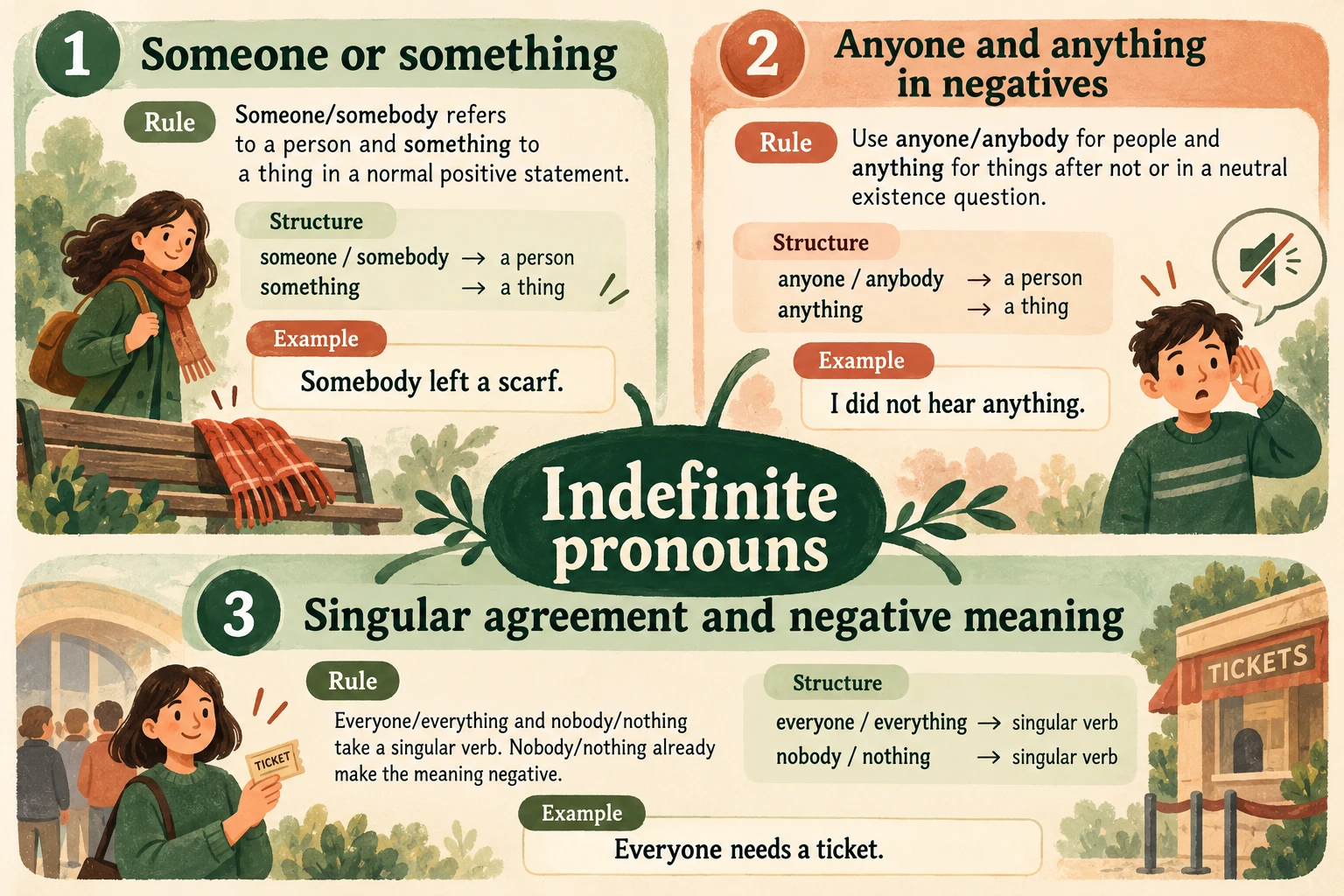
普通の肯定文でsomeone/somebodyは人、somethingは物を指します。
Somebody left a scarf.
不定代名詞 · A2. 普通の肯定文でsomeone/somebodyは人、somethingは物を指します。
短い場面で「不定代名詞」を練習します。手がかりを読み、形を選ぶか入力してから理由を確認しましょう。レベルは編集上の目安です。
普通の肯定文でsomeone/somebodyは人、somethingは物を指します。
Somebody left a scarf.notの後や有無を中立的に問う疑問文では、人はanyone/anybody、物はanythingです。
I did not hear anything.everyone/everythingとnobody/nothingは単数扱いです。nobody/nothing自体に否定の意味があります。
Everyone needs a ticket.
A person is knocking, but I do not know who. ___ is at the door.
普通の肯定文でsomeone/somebodyは人、somethingは物を指します。
Somebody left a scarf.notの後や有無を中立的に問う疑問文では、人はanyone/anybody、物はanythingです。
I did not hear anything.everyone/everythingとnobody/nothingは単数扱いです。nobody/nothing自体に否定の意味があります。
Everyone needs a ticket.初回答を残し、変化の理由を理解して、別の場面で確かめます。
まだ復習ノートはありません。まずは短いウォームアップを。
普通の肯定文でsomeone/somebodyは人、somethingは物を指します。
Somebody left a scarf.notの後や有無を中立的に問う疑問文では、人はanyone/anybody、物はanythingです。
I did not hear anything.everyone/everythingとnobody/nothingは単数扱いです。nobody/nothing自体に否定の意味があります。
Everyone needs a ticket.解答を開くと、その問題にヒント利用が記録されます。
A person is knocking, but I do not know who. ___ is at the door.
「A person is knocking, but I do not know who. ___ is at the door.」に注目しましょう。普通の肯定文でsomeone/somebodyは人、somethingは物を指します。 完成文:「A person is knocking, but I do not know who. Someone is at the door.」。
I opened the empty drawer to look for an object and did not find ___ inside.
「I opened the empty drawer to look for an object and did not find ___ inside.」に注目しましょう。notの後や有無を中立的に問う疑問文では、人はanyone/anybody、物はanythingです。 完成文:「I opened the empty drawer and did not find anything inside.」。
All the guests are ready. Everyone ___ ready.
「All the guests are ready. Everyone ___ ready.」に注目しましょう。everyone/everythingとnobody/nothingは単数扱いです。nobody/nothing自体に否定の意味があります。 完成文:「All the guests are ready. Everyone is ready.」。
I can hear a strange noise. ___ is moving in the cupboard.
物音だけでは、物と人のどちらが動いているかは分かりません。この手がかりではsomething・someone・somebodyのいずれも使え、isを伴います。 この問題では次の別表現も確認済みです:Someone / Somebody。可能な英語表現をすべて列挙したものではありません。
I do not know a single person here. I do not know ___.
「I do not know a single person here. I do not know ___.」に注目しましょう。notの後や有無を中立的に問う疑問文では、人はanyone/anybody、物はanythingです。 完成文:「I do not know a single person here. I do not know anyone.」。
The room is completely empty. Nobody ___ inside.
「The room is completely empty. Nobody ___ inside.」に注目しましょう。everyone/everythingとnobody/nothingは単数扱いです。nobody/nothing自体に否定の意味があります。 完成文:「The room is completely empty. Nobody is inside.」。
I found a useful object in the drawer. I found ___ suitable for opening this lid. (use a some- word for a thing)
完成例:「I found a useful object in the drawer. I found something suitable for opening this lid. (use a some- word for a thing)」。普通の肯定文でsomeone/somebodyは人、somethingは物を指します。
A stranger helped me. ___ helped, but I did not get their name.
「A stranger helped me. ___ helped, but I did not get their name.」に注目しましょう。普通の肯定文でsomeone/somebodyは人、somethingは物を指します。 完成文:「A stranger helped me. Someone helped, but I did not get their name.」。
Have you heard any news? I have not heard ___ today.
「Have you heard any news? I have not heard ___ today.」に注目しましょう。notの後や有無を中立的に問う疑問文では、人はanyone/anybody、物はanythingです。 完成文:「Have you heard any news? I have not heard anything today.」。
Every single item is packed. Everything ___ in the suitcase.
完成例:「Every single item is packed. Everything is in the suitcase.」。everyone/everythingとnobody/nothingは単数扱いです。nobody/nothing自体に否定の意味があります。
I could not see a single person on the platform. I could not see ___.
「I could not see a single person on the platform. I could not see ___.」に注目しましょう。notの後や有無を中立的に問う疑問文では、人はanyone/anybody、物はanythingです。 完成文:「I could not see a single person on the platform. I could not see anyone.」。
No part of this machine works. Nothing ___ properly. (work)
完成例:「No part of this machine works. Nothing works properly. (work)」。everyone/everythingとnobody/nothingは単数扱いです。nobody/nothing自体に否定の意味があります。