01الفرق بين someone وsomething
تشير someone/somebody إلى شخص وsomething إلى شيء في الإثبات العادي.
Somebody left a scarf.
الضمائر غير المحددة · A2. تشير someone/somebody إلى شخص وsomething إلى شيء في الإثبات العادي.
تدرّب على الضمائر غير المحددة في مواقف قصيرة. اقرأ القرينة واختر الصيغة أو اكتبها، ثم راجع السبب. المستوى دليل تحريري تقريبي.
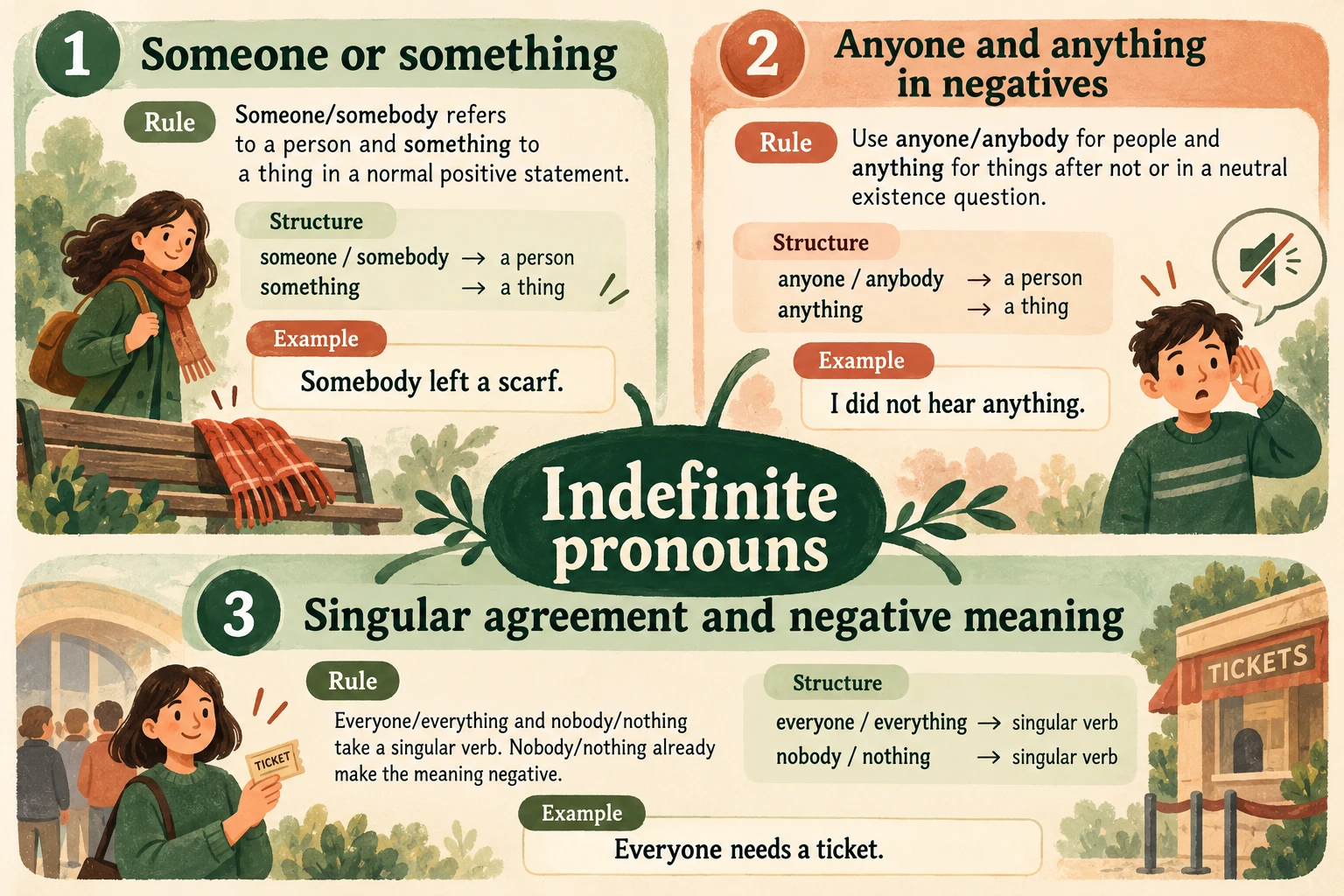
تشير someone/somebody إلى شخص وsomething إلى شيء في الإثبات العادي.
Somebody left a scarf.بعد not وفي سؤال الوجود المحايد نستخدم anyone/anybody للأشخاص وanything للأشياء.
I did not hear anything.تأخذ everyone/everything وnobody/nothing فعلًا مفردًا، وتحمل nobody/nothing النفي أصلًا.
Everyone needs a ticket.
A person is knocking, but I do not know who. ___ is at the door.
تشير someone/somebody إلى شخص وsomething إلى شيء في الإثبات العادي.
Somebody left a scarf.بعد not وفي سؤال الوجود المحايد نستخدم anyone/anybody للأشخاص وanything للأشياء.
I did not hear anything.تأخذ everyone/everything وnobody/nothing فعلًا مفردًا، وتحمل nobody/nothing النفي أصلًا.
Everyone needs a ticket.احتفظ بالمحاولة الأولى، وافهم التغيير، ثم اختبر فهمك في موقف جديد.
لا توجد ملاحظات بعد. جرّب تهيئة قصيرة.
تشير someone/somebody إلى شخص وsomething إلى شيء في الإثبات العادي.
Somebody left a scarf.بعد not وفي سؤال الوجود المحايد نستخدم anyone/anybody للأشخاص وanything للأشياء.
I did not hear anything.تأخذ everyone/everything وnobody/nothing فعلًا مفردًا، وتحمل nobody/nothing النفي أصلًا.
Everyone needs a ticket.فتح إجابة يسجّل استخدام المساعدة لذلك السؤال.
A person is knocking, but I do not know who. ___ is at the door.
انظر إلى «A person is knocking, but I do not know who. ___ is at the door.». تشير someone/somebody إلى شخص وsomething إلى شيء في الإثبات العادي. الجملة المكتملة: «A person is knocking, but I do not know who. Someone is at the door.».
I opened the empty drawer to look for an object and did not find ___ inside.
انظر إلى «I opened the empty drawer to look for an object and did not find ___ inside.». بعد not وفي سؤال الوجود المحايد نستخدم anyone/anybody للأشخاص وanything للأشياء. الجملة المكتملة: «I opened the empty drawer and did not find anything inside.».
All the guests are ready. Everyone ___ ready.
انظر إلى «All the guests are ready. Everyone ___ ready.». تأخذ everyone/everything وnobody/nothing فعلًا مفردًا، وتحمل nobody/nothing النفي أصلًا. الجملة المكتملة: «All the guests are ready. Everyone is ready.».
I can hear a strange noise. ___ is moving in the cupboard.
الصوت وحده لا يحدد إن كان المتحرك شيئاً أو شخصاً. توافق something وsomeone وsomebody هذه القرينة وتأخذ جميعها is. تُقبل أيضاً هذه البدائل المراجَعة في هذه المهمة: Someone / Somebody. ليست القائمة حصرية لكل صياغة إنجليزية ممكنة.
I do not know a single person here. I do not know ___.
انظر إلى «I do not know a single person here. I do not know ___.». بعد not وفي سؤال الوجود المحايد نستخدم anyone/anybody للأشخاص وanything للأشياء. الجملة المكتملة: «I do not know a single person here. I do not know anyone.».
The room is completely empty. Nobody ___ inside.
انظر إلى «The room is completely empty. Nobody ___ inside.». تأخذ everyone/everything وnobody/nothing فعلًا مفردًا، وتحمل nobody/nothing النفي أصلًا. الجملة المكتملة: «The room is completely empty. Nobody is inside.».
I found a useful object in the drawer. I found ___ suitable for opening this lid. (use a some- word for a thing)
إكمال مرجعي: «I found a useful object in the drawer. I found something suitable for opening this lid. (use a some- word for a thing)». تشير someone/somebody إلى شخص وsomething إلى شيء في الإثبات العادي.
A stranger helped me. ___ helped, but I did not get their name.
انظر إلى «A stranger helped me. ___ helped, but I did not get their name.». تشير someone/somebody إلى شخص وsomething إلى شيء في الإثبات العادي. الجملة المكتملة: «A stranger helped me. Someone helped, but I did not get their name.».
Have you heard any news? I have not heard ___ today.
انظر إلى «Have you heard any news? I have not heard ___ today.». بعد not وفي سؤال الوجود المحايد نستخدم anyone/anybody للأشخاص وanything للأشياء. الجملة المكتملة: «Have you heard any news? I have not heard anything today.».
Every single item is packed. Everything ___ in the suitcase.
إكمال مرجعي: «Every single item is packed. Everything is in the suitcase.». تأخذ everyone/everything وnobody/nothing فعلًا مفردًا، وتحمل nobody/nothing النفي أصلًا.
I could not see a single person on the platform. I could not see ___.
انظر إلى «I could not see a single person on the platform. I could not see ___.». بعد not وفي سؤال الوجود المحايد نستخدم anyone/anybody للأشخاص وanything للأشياء. الجملة المكتملة: «I could not see a single person on the platform. I could not see anyone.».
No part of this machine works. Nothing ___ properly. (work)
إكمال مرجعي: «No part of this machine works. Nothing works properly. (work)». تأخذ everyone/everything وnobody/nothing فعلًا مفردًا، وتحمل nobody/nothing النفي أصلًا.