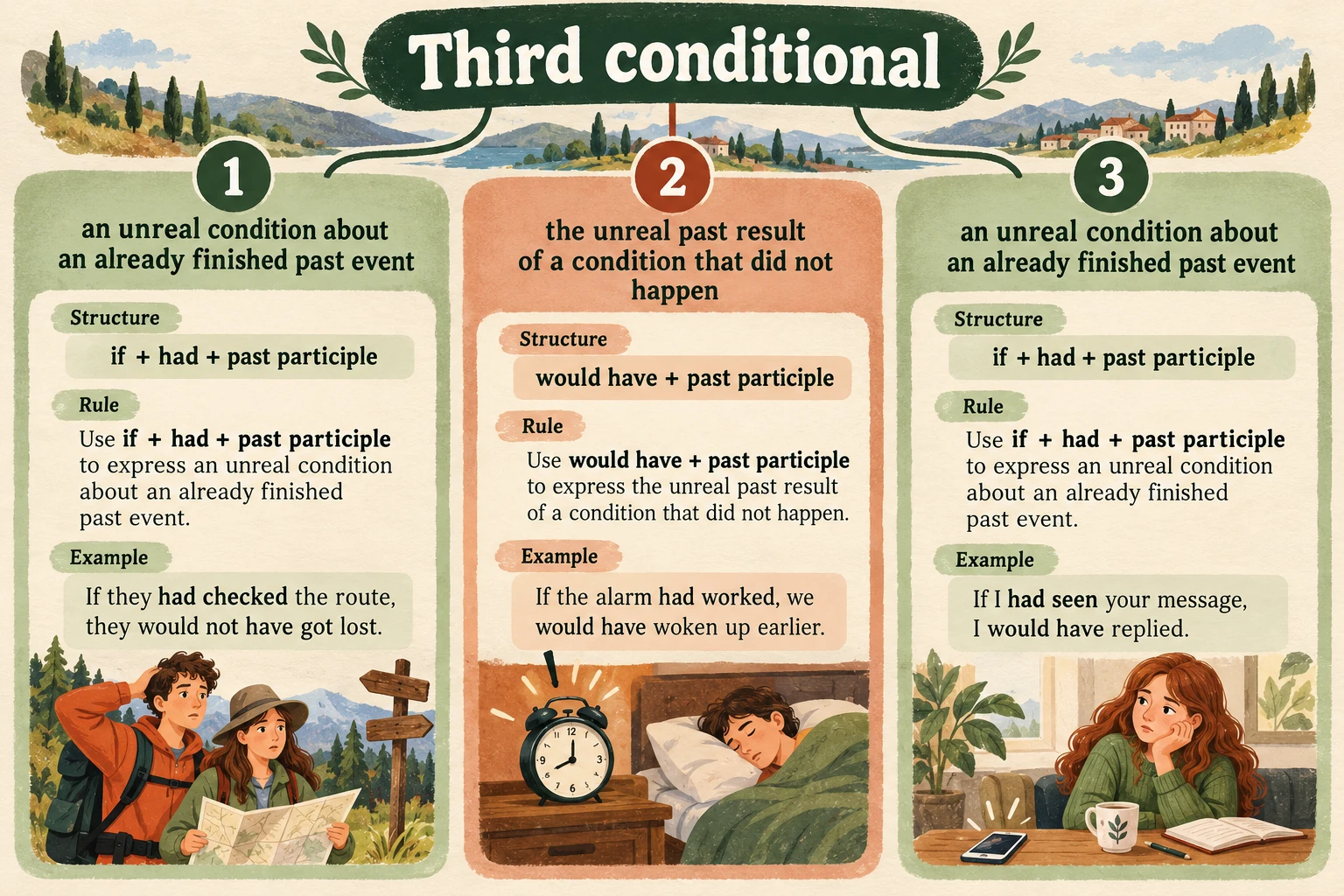
01an unreal condition about an already finished past event
Use if + had + past participle to express an unreal condition about an already finished past event.
If they had checked the route, they would not have got lost.
Third conditional · B2. Use if + had + past participle to express an unreal condition about an already finished past event.
Complete 12 original tasks. Use the situation to choose the intended meaning, practise the form, then apply it in a fresh context.
Use if + had + past participle to express an unreal condition about an already finished past event.
If they had checked the route, they would not have got lost.Use would have + past participle to express the unreal past result of a condition that did not happen.
If the alarm had worked, we would have woken up earlier.Use if + had + past participle to express an unreal condition about an already finished past event.
If I had seen your message, I would have replied.
They did not check the route yesterday and got lost. Imagine the opposite past.
Use if + had + past participle to express an unreal condition about an already finished past event.
If they had checked the route, they would not have got lost.Use would have + past participle to express the unreal past result of a condition that did not happen.
If the alarm had worked, we would have woken up earlier.Use if + had + past participle to express an unreal condition about an already finished past event.
If I had seen your message, I would have replied.Keep the first try. Understand the change. Check it in a fresh situation.
No practice notes yet. Try a short warm-up.
Use if + had + past participle to express an unreal condition about an already finished past event.
If they had checked the route, they would not have got lost.Use would have + past participle to express the unreal past result of a condition that did not happen.
If the alarm had worked, we would have woken up earlier.Use if + had + past participle to express an unreal condition about an already finished past event.
If I had seen your message, I would have replied.Opening an answer records help for that question.
They did not check the route yesterday and got lost. Imagine the opposite past.
The deciding clue is “They did not check the route yesterday and got lost. Imagine the opposite past.”. Use if + had + past participle to express an unreal condition about an already finished past event. In this task, the completed sentence is “If they had checked the route, they would not have got lost.”.
The alarm did not work, so nobody woke up in time.
The deciding clue is “The alarm did not work, so nobody woke up in time.”. Use would have + past participle to express the unreal past result of a condition that did not happen. In this task, the completed sentence is “If the alarm had worked, we would have woken up earlier.”.
I did not see the message yesterday.
The deciding clue is “I did not see the message yesterday.”. Use if + had + past participle to express an unreal condition about an already finished past event. In this task, the completed sentence is “If I had seen your message, I would have replied.”.
The doors were not locked, allowing the theft last night.
The deciding clue is “The doors were not locked, allowing the theft last night.”. Use if + had + past participle to express an unreal condition about an already finished past event. In this task, the completed sentence is “If we had locked the doors, the theft would not have happened.”.
Use a would-result with attend for a counterfactual past consequence.
Complete sentence: “If she had received the invitation, she would have attended the ceremony.” Use would have + past participle to express the unreal past result of a condition that did not happen. The subject, time and meaning in the task determine this form. Only reviewed responses are matched automatically; other wording is not automatically wrong.
The engineers did not detect the fault before launch.
The deciding clue is “The engineers did not detect the fault before launch.”. Use if + had + past participle to express an unreal condition about an already finished past event. In this task, the completed sentence is “If they had detected the fault, they would have postponed the launch.”.
Use the past perfect of leave for the unreal past condition.
Complete sentence: “If we had left earlier, we would have caught the ferry.” Use if + had + past participle to express an unreal condition about an already finished past event. The subject, time and meaning in the task determine this form. Only reviewed responses are matched automatically; other wording is not automatically wrong.
The backup was absent, so the records were lost.
The deciding clue is “The backup was absent, so the records were lost.”. Use if + had + past participle to express an unreal condition about an already finished past event. In this task, the completed sentence is “If a backup had existed, we would have recovered the records.”.
Use a negative would-result with fail for the past result opposite to what actually happened.
Complete sentence: “If the battery had been charged, the device would not have failed.” Use would have + past participle to express the unreal past result of a condition that did not happen. The subject, time and meaning in the task determine this form. Only reviewed responses are matched automatically; other wording is not automatically wrong.
We did not book in advance and paid more last weekend.
The deciding clue is “We did not book in advance and paid more last weekend.”. Use if + had + past participle to express an unreal condition about an already finished past event. In this task, the completed sentence is “If we had booked in advance, we would have paid less.”.
A fact about last year is being imagined differently.
The deciding clue is “A fact about last year is being imagined differently.”. Use would have + past participle to express the unreal past result of a condition that did not happen. In this task, the completed sentence is “If the museum had extended its hours, more visitors would have visited it.”.
Use the past perfect passive of repair for the unreal condition before yesterday’s accident.
Complete sentence: “If the brakes had been repaired properly, the accident would not have happened.” Use if + had + past participle to express an unreal condition about an already finished past event. The subject, time and meaning in the task determine this form. Only reviewed responses are matched automatically; other wording is not automatically wrong.