01regret about a past fact that cannot now be changed
Use wish/if only + had + past participle to express regret about a past fact that cannot now be changed.
I wish I had not disclosed the secret.
Past regrets with wish and if only · B2. Use wish/if only + had + past participle to express regret about a past fact that cannot now be changed.
Complete 12 original tasks. Use the situation to choose the intended meaning, practise the form, then apply it in a fresh context.
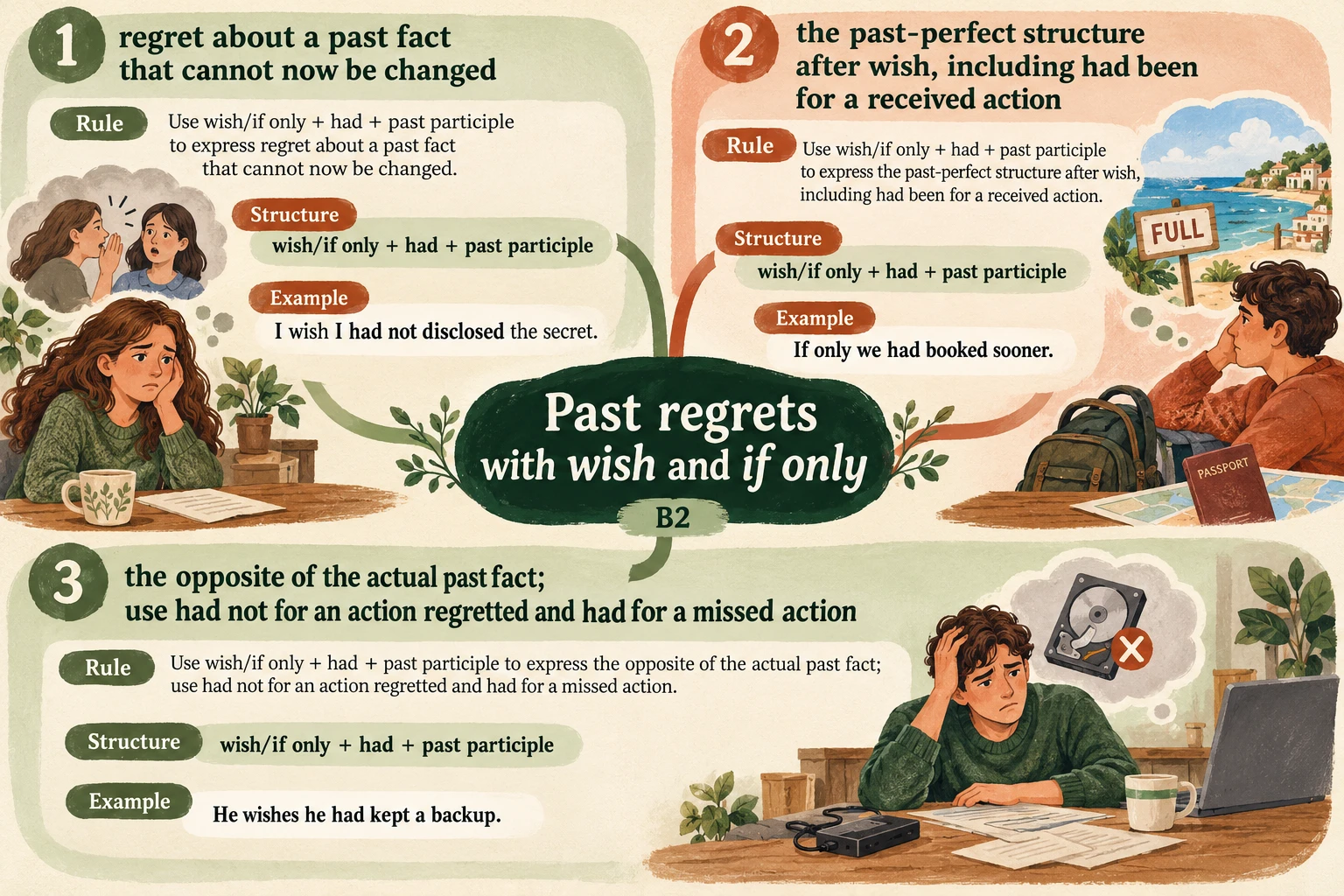
Use wish/if only + had + past participle to express regret about a past fact that cannot now be changed.
I wish I had not disclosed the secret.Use wish/if only + had + past participle to express the past-perfect structure after wish, including had been for a received action.
If only we had booked sooner.Use wish/if only + had + past participle to express the opposite of the actual past fact; use had not for an action regretted and had for a missed action.
He wishes he had kept a backup.
I disclosed the secret yesterday and regret it now.
Use wish/if only + had + past participle to express regret about a past fact that cannot now be changed.
I wish I had not disclosed the secret.Use wish/if only + had + past participle to express the past-perfect structure after wish, including had been for a received action.
If only we had booked sooner.Use wish/if only + had + past participle to express the opposite of the actual past fact; use had not for an action regretted and had for a missed action.
He wishes he had kept a backup.Keep the first try. Understand the change. Check it in a fresh situation.
No practice notes yet. Try a short warm-up.
Use wish/if only + had + past participle to express regret about a past fact that cannot now be changed.
I wish I had not disclosed the secret.Use wish/if only + had + past participle to express the past-perfect structure after wish, including had been for a received action.
If only we had booked sooner.Use wish/if only + had + past participle to express the opposite of the actual past fact; use had not for an action regretted and had for a missed action.
He wishes he had kept a backup.Opening an answer records help for that question.
I disclosed the secret yesterday and regret it now.
The deciding clue is “I disclosed the secret yesterday and regret it now.”. Use wish/if only + had + past participle to express regret about a past fact that cannot now be changed. In this task, the completed sentence is “I wish I had not disclosed the secret.”.
The tickets sold out because we waited. Express regret about that past decision.
The deciding clue is “The tickets sold out because we waited. Express regret about that past decision.”. Use wish/if only + had + past participle to express the past-perfect structure after wish, including had been for a received action. In this task, the completed sentence is “If only we had booked sooner.”.
He did not keep a backup and regrets that completed omission.
The deciding clue is “He did not keep a backup and regrets that completed omission.”. Use wish/if only + had + past participle to express the opposite of the actual past fact; use had not for an action regretted and had for a missed action. In this task, the completed sentence is “He wishes he had kept a backup.”.
I misunderstood the notice last week.
The deciding clue is “I misunderstood the notice last week.”. Use wish/if only + had + past participle to express regret about a past fact that cannot now be changed. In this task, the completed sentence is “I wish I had read the notice more carefully.”.
Use the negative past perfect of send for a regretted completed action.
Complete sentence: “She wishes she had not sent that angry email.” Use wish/if only + had + past participle to express the past-perfect structure after wish, including had been for a received action. The subject, time and meaning in the task determine this form. Only reviewed responses are matched automatically; other wording is not automatically wrong.
We did not attend the final performance.
The deciding clue is “We did not attend the final performance.”. Use wish/if only + had + past participle to express the opposite of the actual past fact; use had not for an action regretted and had for a missed action. In this task, the completed sentence is “If only we had attended the final performance.”.
Use the past perfect of ask for a missed past opportunity.
Complete sentence: “I wish I had asked for a second opinion before the repair.” Use wish/if only + had + past participle to express regret about a past fact that cannot now be changed. The subject, time and meaning in the task determine this form. Only reviewed responses are matched automatically; other wording is not automatically wrong.
The previous purchase was a mistake, not a future plan.
The deciding clue is “The previous purchase was a mistake, not a future plan.”. Use wish/if only + had + past participle to express regret about a past fact that cannot now be changed. In this task, the completed sentence is “I wish we had not bought that unreliable van.”.
Use the past perfect passive of warn about the warning we did not receive.
Complete sentence: “We wish we had been warned about the closure.” Use wish/if only + had + past participle to express the past-perfect structure after wish, including had been for a received action. The subject, time and meaning in the task determine this form. Only reviewed responses are matched automatically; other wording is not automatically wrong.
The speaker lost a receipt last week and now needs it.
The deciding clue is “The speaker lost a receipt last week and now needs it.”. Use wish/if only + had + past participle to express the opposite of the actual past fact; use had not for an action regretted and had for a missed action. In this task, the completed sentence is “If only I had kept the receipt.”.
The funding application deadline has passed.
The deciding clue is “The funding application deadline has passed.”. Use wish/if only + had + past participle to express the past-perfect structure after wish, including had been for a received action. In this task, the completed sentence is “I wish I had submitted the application on time.”.
Use the negative past perfect of ignore for a past action now regretted.
Complete sentence: “If only they had not ignored the first warning signs.” Use wish/if only + had + past participle to express the opposite of the actual past fact; use had not for an action regretted and had for a missed action. The subject, time and meaning in the task determine this form. Only reviewed responses are matched automatically; other wording is not automatically wrong.