01una condición irreal sobre un hecho pasado ya terminado
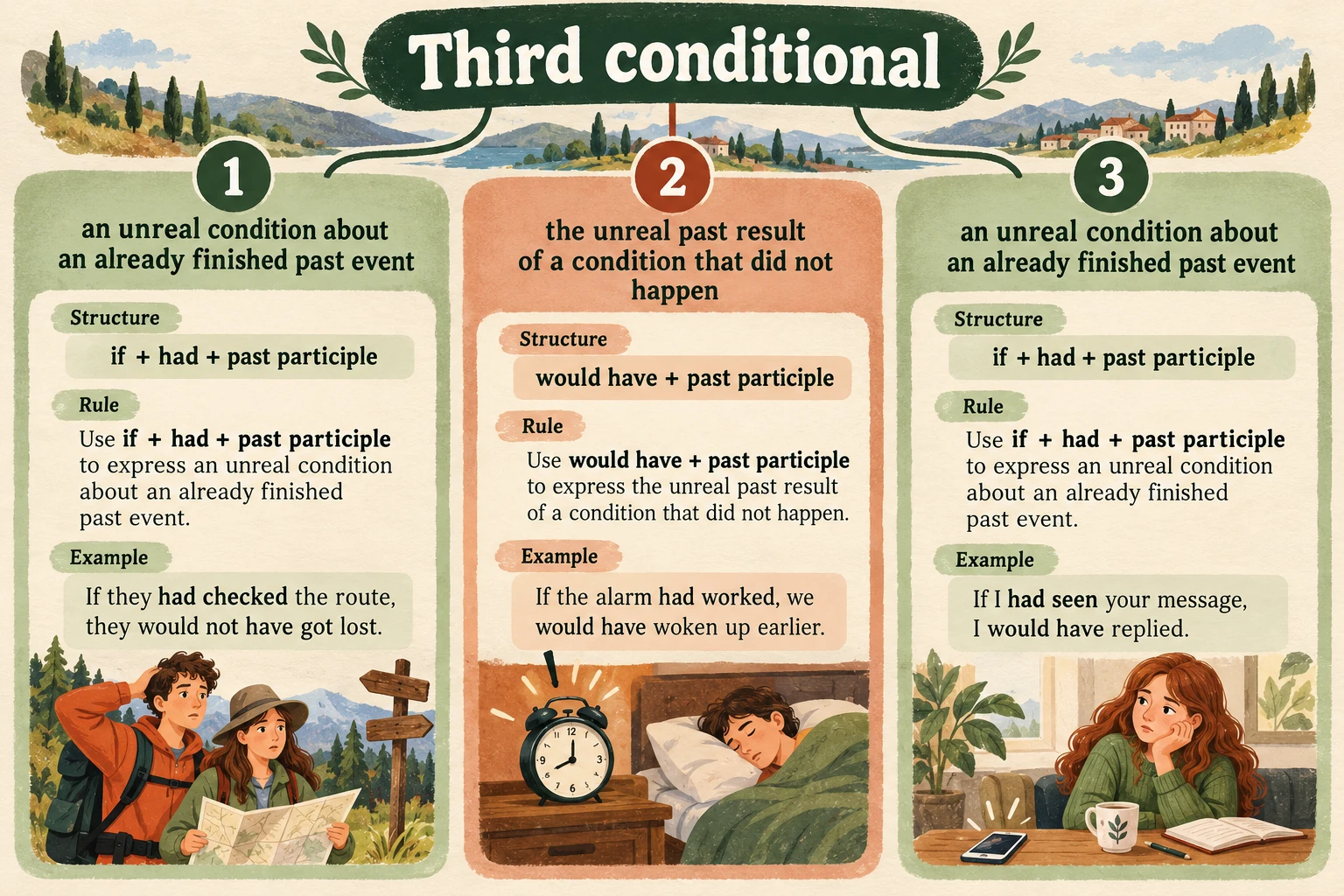
Usa if + had + past participle para expresar una condición irreal sobre un hecho pasado ya terminado.
If they had checked the route, they would not have got lost.
Tercera condicional · B2. Usa if + had + past participle para expresar una condición irreal sobre un hecho pasado ya terminado.
Completa 12 tareas originales. Deduce el sentido por la situación, practica la forma y aplícala en un contexto nuevo.
Usa if + had + past participle para expresar una condición irreal sobre un hecho pasado ya terminado.
If they had checked the route, they would not have got lost.Usa would have + past participle para expresar el resultado pasado irreal de una condición que no ocurrió.
If the alarm had worked, we would have woken up earlier.Usa if + had + past participle para expresar una condición irreal sobre un hecho pasado ya terminado.
If I had seen your message, I would have replied.
They did not check the route yesterday and got lost. Imagine the opposite past.
Usa if + had + past participle para expresar una condición irreal sobre un hecho pasado ya terminado.
If they had checked the route, they would not have got lost.Usa would have + past participle para expresar el resultado pasado irreal de una condición que no ocurrió.
If the alarm had worked, we would have woken up earlier.Usa if + had + past participle para expresar una condición irreal sobre un hecho pasado ya terminado.
If I had seen your message, I would have replied.Conserva el primer intento, entiende el cambio y compruébalo en otra situación.
Aún no hay repasos. Prueba un calentamiento corto.
Usa if + had + past participle para expresar una condición irreal sobre un hecho pasado ya terminado.
If they had checked the route, they would not have got lost.Usa would have + past participle para expresar el resultado pasado irreal de una condición que no ocurrió.
If the alarm had worked, we would have woken up earlier.Usa if + had + past participle para expresar una condición irreal sobre un hecho pasado ya terminado.
If I had seen your message, I would have replied.Abrir una respuesta registra ayuda para esa pregunta.
They did not check the route yesterday and got lost. Imagine the opposite past.
La pista decisiva es «They did not check the route yesterday and got lost. Imagine the opposite past.». Usa if + had + past participle para expresar una condición irreal sobre un hecho pasado ya terminado. En esta tarea, la oración completa es «If they had checked the route, they would not have got lost.».
The alarm did not work, so nobody woke up in time.
La pista decisiva es «The alarm did not work, so nobody woke up in time.». Usa would have + past participle para expresar el resultado pasado irreal de una condición que no ocurrió. En esta tarea, la oración completa es «If the alarm had worked, we would have woken up earlier.».
I did not see the message yesterday.
La pista decisiva es «I did not see the message yesterday.». Usa if + had + past participle para expresar una condición irreal sobre un hecho pasado ya terminado. En esta tarea, la oración completa es «If I had seen your message, I would have replied.».
The doors were not locked, allowing the theft last night.
La pista decisiva es «The doors were not locked, allowing the theft last night.». Usa if + had + past participle para expresar una condición irreal sobre un hecho pasado ya terminado. En esta tarea, la oración completa es «If we had locked the doors, the theft would not have happened.».
Use a would-result with attend for a counterfactual past consequence.
Oración completa: «If she had received the invitation, she would have attended the ceremony.» Usa would have + past participle para expresar el resultado pasado irreal de una condición que no ocurrió. El sujeto, el tiempo y el sentido de la tarea determinan la forma. Solo se cotejan automáticamente las respuestas revisadas; otra redacción no es automáticamente incorrecta.
The engineers did not detect the fault before launch.
La pista decisiva es «The engineers did not detect the fault before launch.». Usa if + had + past participle para expresar una condición irreal sobre un hecho pasado ya terminado. En esta tarea, la oración completa es «If they had detected the fault, they would have postponed the launch.».
Use the past perfect of leave for the unreal past condition.
Oración completa: «If we had left earlier, we would have caught the ferry.» Usa if + had + past participle para expresar una condición irreal sobre un hecho pasado ya terminado. El sujeto, el tiempo y el sentido de la tarea determinan la forma. Solo se cotejan automáticamente las respuestas revisadas; otra redacción no es automáticamente incorrecta.
The backup was absent, so the records were lost.
La pista decisiva es «The backup was absent, so the records were lost.». Usa if + had + past participle para expresar una condición irreal sobre un hecho pasado ya terminado. En esta tarea, la oración completa es «If a backup had existed, we would have recovered the records.».
Use a negative would-result with fail for the past result opposite to what actually happened.
Oración completa: «If the battery had been charged, the device would not have failed.» Usa would have + past participle para expresar el resultado pasado irreal de una condición que no ocurrió. El sujeto, el tiempo y el sentido de la tarea determinan la forma. Solo se cotejan automáticamente las respuestas revisadas; otra redacción no es automáticamente incorrecta.
We did not book in advance and paid more last weekend.
La pista decisiva es «We did not book in advance and paid more last weekend.». Usa if + had + past participle para expresar una condición irreal sobre un hecho pasado ya terminado. En esta tarea, la oración completa es «If we had booked in advance, we would have paid less.».
A fact about last year is being imagined differently.
La pista decisiva es «A fact about last year is being imagined differently.». Usa would have + past participle para expresar el resultado pasado irreal de una condición que no ocurrió. En esta tarea, la oración completa es «If the museum had extended its hours, more visitors would have visited it.».
Use the past perfect passive of repair for the unreal condition before yesterday’s accident.
Oración completa: «If the brakes had been repaired properly, the accident would not have happened.» Usa if + had + past participle para expresar una condición irreal sobre un hecho pasado ya terminado. El sujeto, el tiempo y el sentido de la tarea determinan la forma. Solo se cotejan automáticamente las respuestas revisadas; otra redacción no es automáticamente incorrecta.