01a strong deduction about the past based on evidence available now
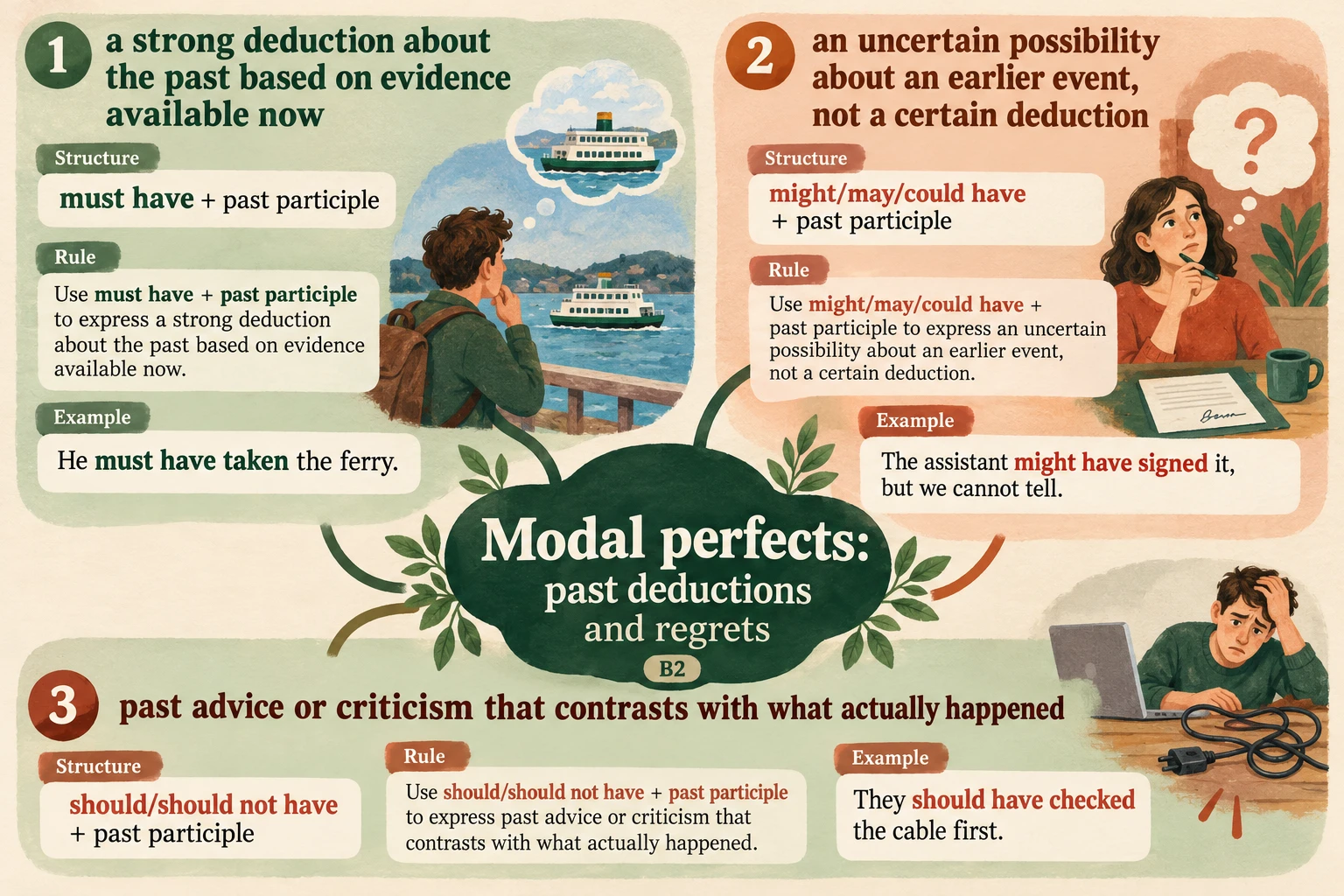
Use must have + past participle to express a strong deduction about the past based on evidence available now.
He must have taken the ferry.
Modal perfects: past deductions and regrets · B2. Use must have + past participle to express a strong deduction about the past based on evidence available now.
Complete 12 original tasks. Use the situation to choose the intended meaning, practise the form, then apply it in a fresh context.
Use must have + past participle to express a strong deduction about the past based on evidence available now.
He must have taken the ferry.Use might/may/could have + past participle to express an uncertain possibility about an earlier event, not a certain deduction.
The assistant might have signed it, but we cannot tell.Use should/should not have + past participle to express past advice or criticism that contrasts with what actually happened.
They should have checked the cable first.
The only bridge was closed all day, yet he reached the island; strong past deduction.
Use must have + past participle to express a strong deduction about the past based on evidence available now.
He must have taken the ferry.Use might/may/could have + past participle to express an uncertain possibility about an earlier event, not a certain deduction.
The assistant might have signed it, but we cannot tell.Use should/should not have + past participle to express past advice or criticism that contrasts with what actually happened.
They should have checked the cable first.Keep the first try. Understand the change. Check it in a fresh situation.
No practice notes yet. Try a short warm-up.
Use must have + past participle to express a strong deduction about the past based on evidence available now.
He must have taken the ferry.Use might/may/could have + past participle to express an uncertain possibility about an earlier event, not a certain deduction.
The assistant might have signed it, but we cannot tell.Use should/should not have + past participle to express past advice or criticism that contrasts with what actually happened.
They should have checked the cable first.Opening an answer records help for that question.
The only bridge was closed all day, yet he reached the island; strong past deduction.
The deciding clue is “The only bridge was closed all day, yet he reached the island; strong past deduction.”. Use must have + past participle to express a strong deduction about the past based on evidence available now. In this task, the completed sentence is “He must have taken the ferry.”.
The signature is unclear; there is only an uncertain possibility.
The deciding clue is “The signature is unclear; there is only an uncertain possibility.”. Use might/may/could have + past participle to express an uncertain possibility about an earlier event, not a certain deduction. In this task, the completed sentence is “The assistant might have signed it, but we cannot tell.”.
They ignored an available safety check and an avoidable accident followed.
The deciding clue is “They ignored an available safety check and an avoidable accident followed.”. Use should/should not have + past participle to express past advice or criticism that contrasts with what actually happened. In this task, the completed sentence is “They should have checked the cable first.”.
The sealed envelope is empty now and no one else could access it; strong deduction.
The deciding clue is “The sealed envelope is empty now and no one else could access it; strong deduction.”. Use must have + past participle to express a strong deduction about the past based on evidence available now. In this task, the completed sentence is “Someone must have removed the letter before sealing it.”.
Use a perfect possibility modal with take: the cause is possible, not established.
Complete sentence: “The visitor might have taken the wrong corridor; we are not sure.” Use might/may/could have + past participle to express an uncertain possibility about an earlier event, not a certain deduction. The subject, time and meaning in the task determine this form. Only reviewed responses are matched automatically; other wording is not automatically wrong.
You shared a confidential file, contrary to good advice.
The deciding clue is “You shared a confidential file, contrary to good advice.”. Use should/should not have + past participle to express past advice or criticism that contrasts with what actually happened. In this task, the completed sentence is “You should not have sent that file outside the company.”.
Use a perfect strong-deduction modal with misunderstand for a past conversation.
Complete sentence: “He arrived two hours early; he must have misunderstood the time.” Use must have + past participle to express a strong deduction about the past based on evidence available now. The subject, time and meaning in the task determine this form. Only reviewed responses are matched automatically; other wording is not automatically wrong.
All the food is gone and the guests have left; strong evidence of a completed meal.
The deciding clue is “All the food is gone and the guests have left; strong evidence of a completed meal.”. Use must have + past participle to express a strong deduction about the past based on evidence available now. In this task, the completed sentence is “They must have eaten already.”.
Use a perfect possibility modal with overlook for an uncertain past event.
Complete sentence: “The committee may have overlooked the attachment; we cannot be certain.” Use might/may/could have + past participle to express an uncertain possibility about an earlier event, not a certain deduction. The subject, time and meaning in the task determine this form. Only reviewed responses are matched automatically; other wording is not automatically wrong.
The driver failed to rest before a long journey; retrospective criticism.
The deciding clue is “The driver failed to rest before a long journey; retrospective criticism.”. Use should/should not have + past participle to express past advice or criticism that contrasts with what actually happened. In this task, the completed sentence is “He should have taken a break before setting off.”.
An earlier cause is possible, but the records are missing.
The deciding clue is “An earlier cause is possible, but the records are missing.”. Use might/may/could have + past participle to express an uncertain possibility about an earlier event, not a certain deduction. In this task, the completed sentence is “The figures might have been entered twice.”.
Use a negative perfect advice modal with reveal to criticise a completed disclosure.
Complete sentence: “You should not have revealed the witness’s identity.” Use should/should not have + past participle to express past advice or criticism that contrasts with what actually happened. The subject, time and meaning in the task determine this form. Only reviewed responses are matched automatically; other wording is not automatically wrong.