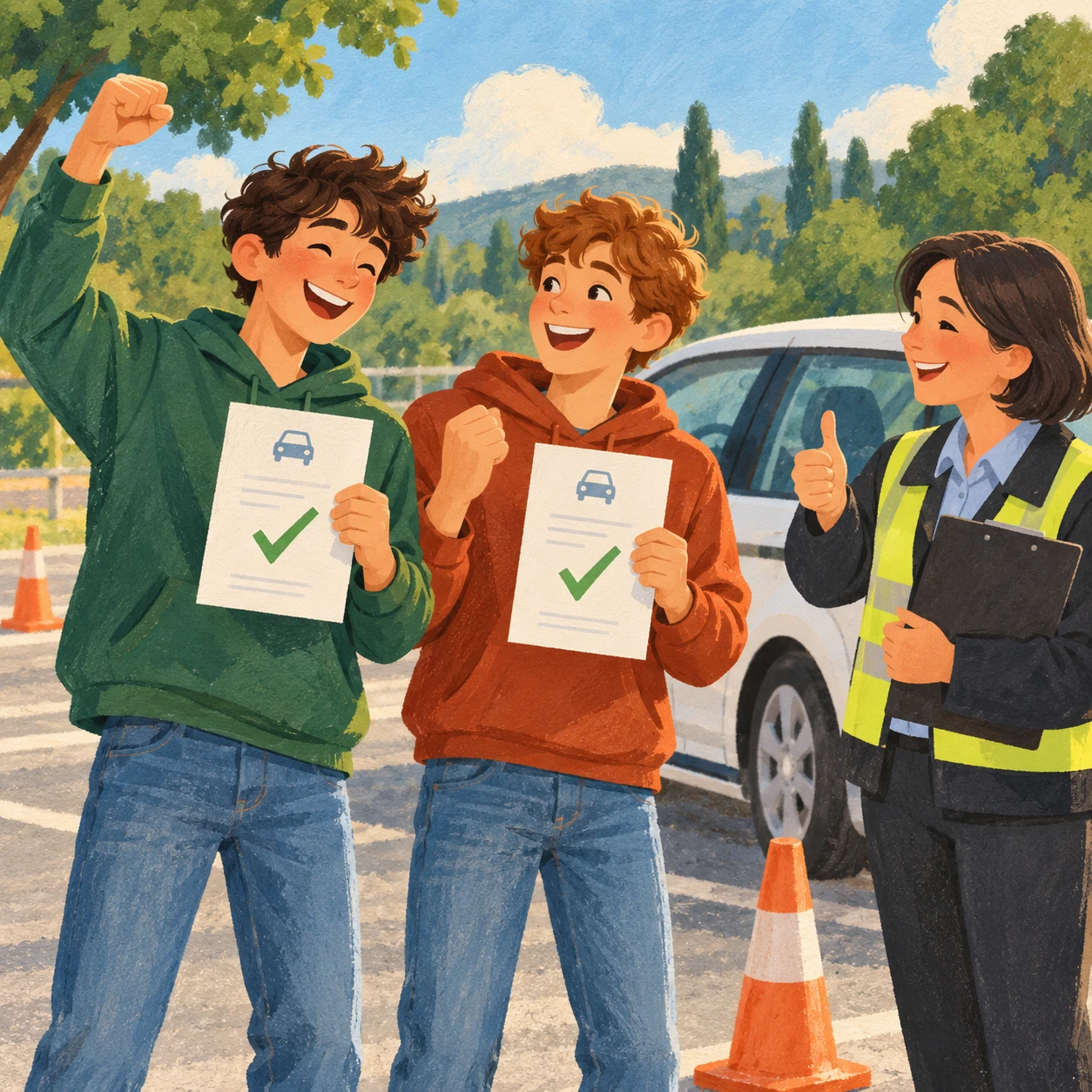
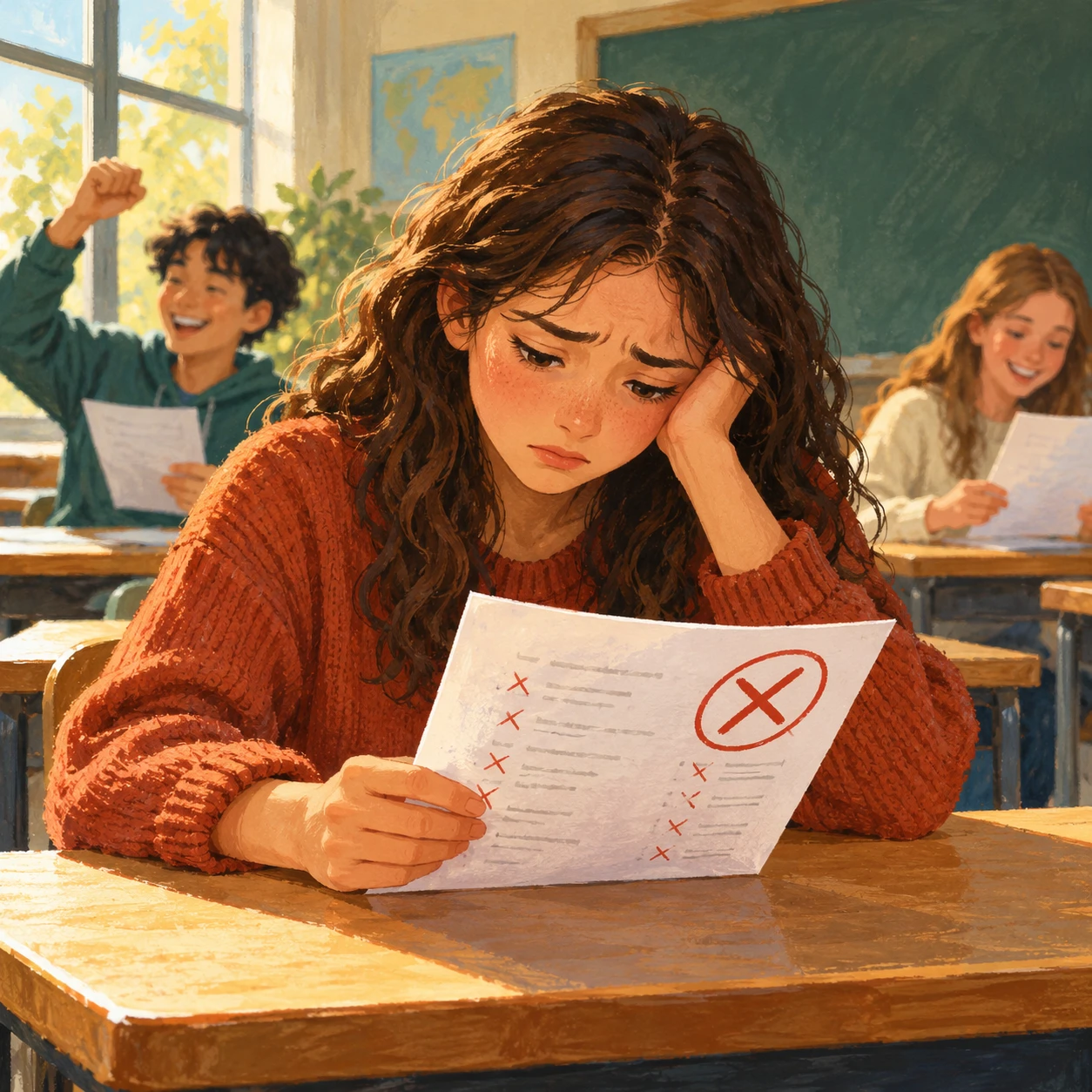
clase · deberes · examen · horario
Distingue estos significados según la situación: lesson = clase; homework = deberes; exam = examen; timetable = horario.
A period of teaching in which the class learns one topic is a lesson.

Educación y estudio · A2. Distingue estos significados según la situación: lesson = clase; homework = deberes; exam = examen; timetable = horario.
Practica Educación y estudio en situaciones breves. Lee la pista, elige o escribe una forma y revisa la explicación. El nivel es una orientación editorial. Explora 12 tarjetas y 24 preguntas contextualizadas, con nuevas situaciones de repaso y aplicación.

A period of time used for teaching and learning.
Today’s lesson ended with a short debate.
La clase de hoy terminó con un breve debate.
Se refieren a este sentido. La familia puede cambiar de significado; las expresiones próximas no siempre son intercambiables.
Usa «lesson» para clase. Compáralo con «homework» (deberes); son sentidos distintos.
Distingue estos significados según la situación: lesson = clase; homework = deberes; exam = examen; timetable = horario.
A period of teaching in which the class learns one topic is a lesson.
Distingue estos significados según la situación: subject = asignatura; science = ciencias; history = historia; maths = matemáticas.
The general school word for an area of study, such as history or science, is subject.
Distingue estos significados según la situación: revise = repasar; pass = aprobar; fail = suspender; mark = calificar.
Before a test, I study material I have already learned. I revise.
A period of teaching in which the class learns one topic is a ___.
Distingue estos significados según la situación: lesson = clase; homework = deberes; exam = examen; timetable = horario.
A period of teaching in which the class learns one topic is a lesson.Distingue estos significados según la situación: subject = asignatura; science = ciencias; history = historia; maths = matemáticas.
The general school word for an area of study, such as history or science, is subject.Distingue estos significados según la situación: revise = repasar; pass = aprobar; fail = suspender; mark = calificar.
Before a test, I study material I have already learned. I revise.Conserva el primer intento, entiende el cambio y compruébalo en otra situación.
Aún no hay repasos. Prueba un calentamiento corto.
Abrir una respuesta registra ayuda para esa pregunta.
A period of teaching in which the class learns one topic is a ___.
Fíjate en «period of teaching». Aquí se pide «clase»: «lesson». Distingue clase, trabajo asignado, evaluación y horario de clases. Frase completa: «A period of teaching in which the class learns one topic is a lesson.».
The general school word for an area of study, such as history or science, is ___.
Fíjate en «general school word». Aquí se pide «asignatura»: «subject». Subject es la categoría general. Science, history y maths son materias concretas. Frase completa: «The general school word for an area of study, such as history or science, is subject.».
Before a test, I study material I have already learned. I ___.
Fíjate en «already learned». Aquí se pide «repasar»: «revise». Repasar, alcanzar la nota, no alcanzarla y calificar son acciones distintas. Frase completa: «Before a test, I study material I have already learned. I revise.».
The teacher gives us work to do after class at home: ___.
Fíjate en «after class at home». Aquí se pide «deberes»: «homework». Distingue clase, trabajo asignado, evaluación y horario de clases. Frase completa: «The teacher gives us work to do after class at home: homework.».
What is the usual broad school-subject name for studying the natural world through experiments, rather than the name of one topic within it? ___.
Fíjate en «broad school-subject name». Aquí se pide «ciencias»: «science». Subject es la categoría general. Science, history y maths son materias concretas. Frase completa: «What is the usual broad school-subject name for studying the natural world through experiments, rather than the name of one topic within it? science.” / “In this subject we test ideas about the natural world through experiments: science.».
If I get enough correct answers to succeed in the test, I ___.
Fíjate en «succeed in the test». Aquí se pide «aprobar»: «pass». Repasar, alcanzar la nota, no alcanzarla y calificar son acciones distintas. Frase completa: «If I get enough correct answers to succeed in the test, I pass.».
A formal test used to assess what students know is an ___.
Fíjate en «formal test». Aquí se pide «examen»: «exam». Distingue clase, trabajo asignado, evaluación y horario de clases. Frase completa: «A formal test used to assess what students know is an exam.».
The chart showing when each school lesson starts is our ___.
Fíjate en «when each school lesson starts». Aquí se pide «horario»: «timetable». Distingue clase, trabajo asignado, evaluación y horario de clases. Frase completa: «The chart showing when each school lesson starts is our timetable.».
The school subject about people and events in the past is ___.
Fíjate en «people and events in the past». Aquí se pide «historia»: «history». Subject es la categoría general. Science, history y maths son materias concretas. Frase completa: «The school subject about people and events in the past is history.».
If I do not reach the score needed to succeed in the exam, I ___.
Fíjate en «do not reach the score». Aquí se pide «suspender»: «fail». Repasar, alcanzar la nota, no alcanzarla y calificar son acciones distintas. Frase completa: «If I do not reach the score needed to succeed in the exam, I fail.».
The subject involving numbers, shapes and calculations is ___.
Fíjate en «numbers, shapes and calculations». Aquí se pide «matemáticas»: «maths». Subject es la categoría general. Science, history y maths son materias concretas. Frase completa: «The subject involving numbers, shapes and calculations is maths.».
The teacher checks our answers and gives each test a score. The teacher will ___ the tests.
Fíjate en «gives each test a score». Aquí se pide «calificar»: «mark». Repasar, alcanzar la nota, no alcanzarla y calificar son acciones distintas. Frase completa: «The teacher checks our answers and gives each test a score. The teacher will mark the tests.».
Our teacher explains a new topic in a forty-minute English ___.
Fíjate en «explains a new topic». Aquí se pide «clase»: «lesson». Distingue clase, trabajo asignado, evaluación y horario de clases. Frase completa: «Our teacher explains a new topic in a forty-minute English lesson.».
A particular area you study at school, such as maths, is a school ___.
Fíjate en «area you study». Aquí se pide «asignatura»: «subject». Subject es la categoría general. Science, history y maths son materias concretas. Frase completa: «A particular area you study at school, such as maths, is a school subject.».
Before the test, I read my notes again to ___ for it.
Fíjate en «read my notes again». Aquí se pide «repasar»: «revise». Repasar, alcanzar la nota, no alcanzarla y calificar son acciones distintas. Frase completa: «Before the test, I read my notes again to revise for it.».
Our teacher gives us schoolwork to finish at home. It is ___.
Fíjate en «schoolwork to finish at home». Aquí se pide «deberes»: «homework». Distingue clase, trabajo asignado, evaluación y horario de clases. Frase completa: «Our teacher gives us schoolwork to finish at home. It is homework.».
What is the usual broad school-subject name for studying the natural world through experiments? ___.
Fíjate en «studying the natural world». Aquí se pide «ciencias»: «science». Subject es la categoría general. Science, history y maths son materias concretas. Frase completa: «What is the usual broad school-subject name for studying the natural world through experiments? science.” / “The subject that studies nature through experiments is science.».
I need 50 points to succeed in the test. I get 70, so I ___.
Fíjate en «I get 70». Aquí se pide «aprobar»: «pass». Repasar, alcanzar la nota, no alcanzarla y calificar son acciones distintas. Frase completa: «I need 50 points to succeed in the test. I get 70, so I pass.».
A formal test of what students know is an ___.
Fíjate en «formal test». Aquí se pide «examen»: «exam». Distingue clase, trabajo asignado, evaluación y horario de clases. Frase completa: «A formal test of what students know is an exam.».
The chart showing the days and times of all our classes is our ___.
Fíjate en «days and times». Aquí se pide «horario»: «timetable». Distingue clase, trabajo asignado, evaluación y horario de clases. Frase completa: «The chart showing the days and times of all our classes is our timetable.».
Which school subject focuses on studying past events and societies? ___.
Fíjate en «past events and societies». Aquí se pide «historia»: «history». Subject es la categoría general. Science, history y maths son materias concretas. Frase completa: «Which school subject focuses on studying past events and societies? history.».
I need 50 points to succeed in the test. I get 30, so I ___.
Fíjate en «I get 30». Aquí se pide «suspender»: «fail». Repasar, alcanzar la nota, no alcanzarla y calificar son acciones distintas. Frase completa: «I need 50 points to succeed in the test. I get 30, so I fail.».
The school subject about numbers and calculations is ___.
Fíjate en «numbers and calculations». Aquí se pide «matemáticas»: «maths». Subject es la categoría general. Science, history y maths son materias concretas. Frase completa: «The school subject about numbers and calculations is maths.».
Teachers read students’ answers and decide their scores when they ___ the exams.
Fíjate en «decide their scores». Aquí se pide «calificar»: «mark». Repasar, alcanzar la nota, no alcanzarla y calificar son acciones distintas. Frase completa: «Teachers read students’ answers and decide their scores when they mark the exams.».