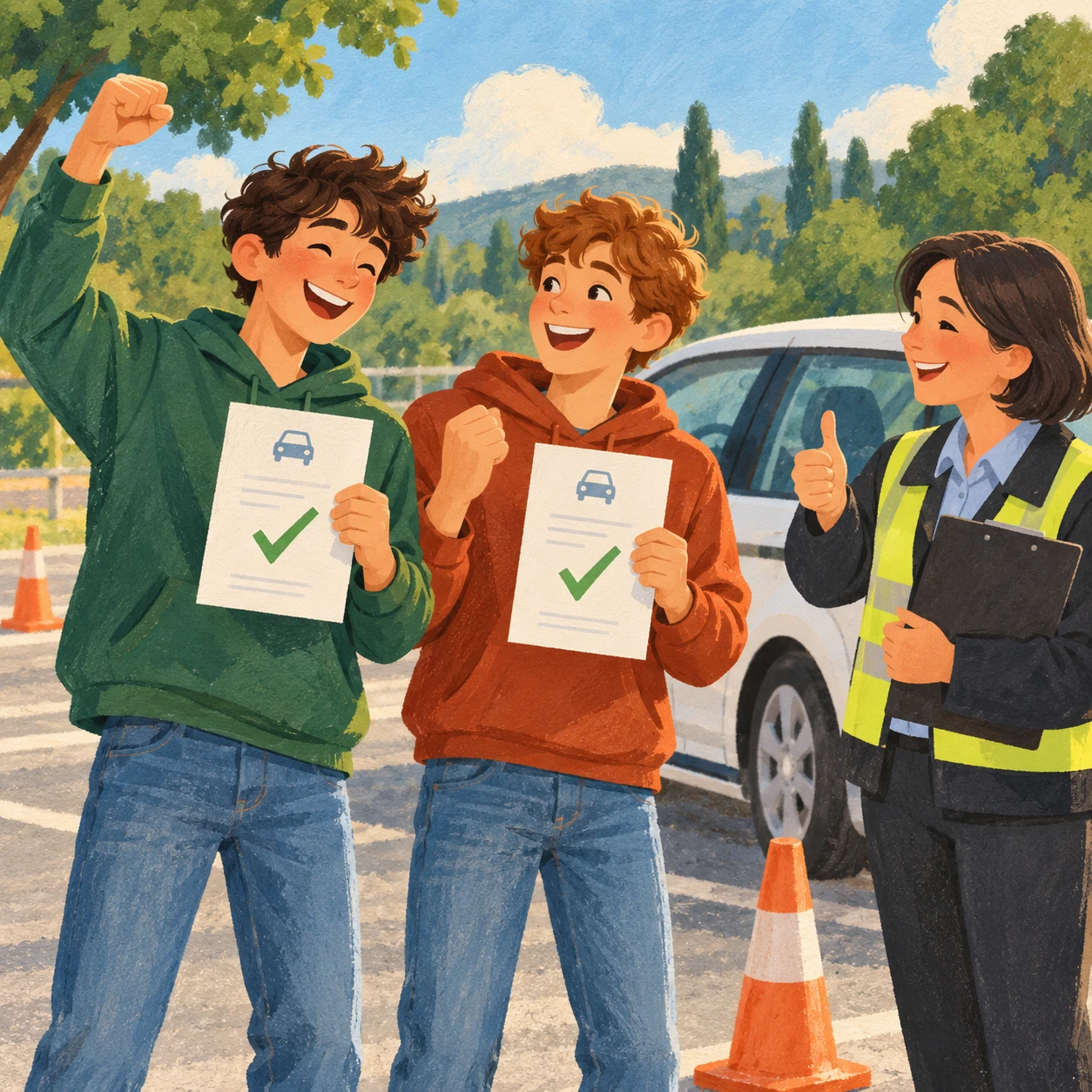
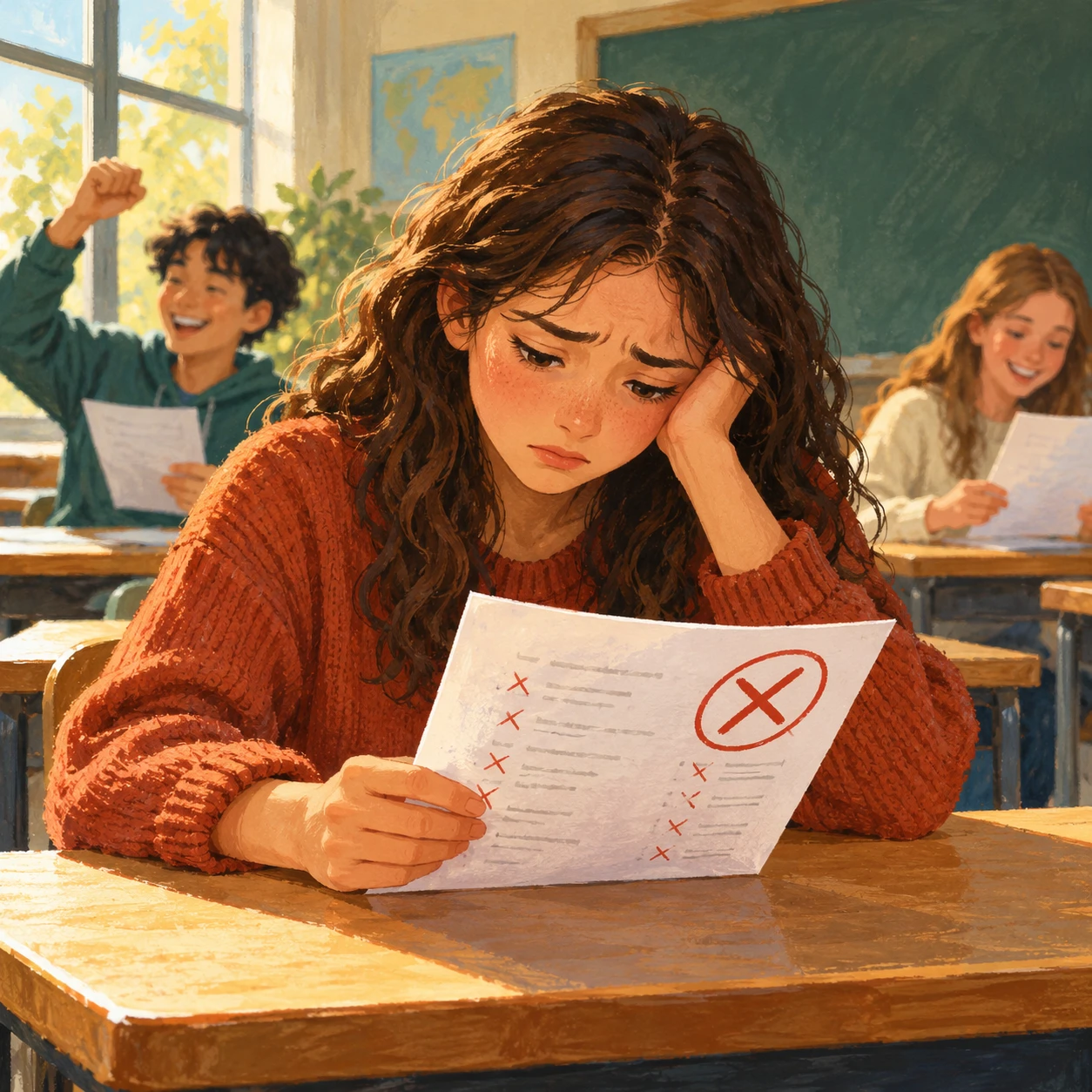
aula · lição de casa · prova · horário de aulas
Use a situação para distinguir estes sentidos: lesson = aula; homework = lição de casa; exam = prova; timetable = horário de aulas.
A period of teaching in which the class learns one topic is a lesson.

Educação e estudo · A2. Use a situação para distinguir estes sentidos: lesson = aula; homework = lição de casa; exam = prova; timetable = horário de aulas.
Pratique Educação e estudo em situações curtas. Leia a pista, escolha ou escreva uma forma e confira a explicação. O nível é uma orientação editorial. Explore 12 cartões e 24 questões contextualizadas, com novas situações de revisão e aplicação.

A period of time used for teaching and learning.
Today’s lesson ended with a short debate.
A aula de hoje terminou com um breve debate.
Estas indicações se referem a este sentido. Palavras da mesma família podem mudar de sentido; expressões próximas nem sempre são intercambiáveis.
Use “lesson” para aula. Compare com “homework” (lição de casa); os sentidos são diferentes.
Use a situação para distinguir estes sentidos: lesson = aula; homework = lição de casa; exam = prova; timetable = horário de aulas.
A period of teaching in which the class learns one topic is a lesson.
Use a situação para distinguir estes sentidos: subject = matéria; science = ciências; history = história; maths = matemática.
The general school word for an area of study, such as history or science, is subject.
Use a situação para distinguir estes sentidos: revise = revisar a matéria; pass = passar; fail = reprovar; mark = corrigir e dar nota.
Before a test, I study material I have already learned. I revise.
A period of teaching in which the class learns one topic is a ___.
Use a situação para distinguir estes sentidos: lesson = aula; homework = lição de casa; exam = prova; timetable = horário de aulas.
A period of teaching in which the class learns one topic is a lesson.Use a situação para distinguir estes sentidos: subject = matéria; science = ciências; history = história; maths = matemática.
The general school word for an area of study, such as history or science, is subject.Use a situação para distinguir estes sentidos: revise = revisar a matéria; pass = passar; fail = reprovar; mark = corrigir e dar nota.
Before a test, I study material I have already learned. I revise.Guarde a primeira tentativa, entenda a mudança e confira em outra situação.
Ainda não há revisões. Faça um aquecimento curto.
Abrir uma resposta registra ajuda para essa questão.
A period of teaching in which the class learns one topic is a ___.
Observe “period of teaching”. Aqui precisamos de “aula”: “lesson”. Separe aula, trabalho solicitado, avaliação e horário de aulas. Frase completa: “A period of teaching in which the class learns one topic is a lesson.”.
The general school word for an area of study, such as history or science, is ___.
Observe “general school word”. Aqui precisamos de “matéria”: “subject”. Subject é a categoria geral. Science, history e maths são matérias específicas. Frase completa: “The general school word for an area of study, such as history or science, is subject.”.
Before a test, I study material I have already learned. I ___.
Observe “already learned”. Aqui precisamos de “revisar a matéria”: “revise”. Revisar, atingir a nota, não atingi-la e dar nota são ações diferentes. Frase completa: “Before a test, I study material I have already learned. I revise.”.
The teacher gives us work to do after class at home: ___.
Observe “after class at home”. Aqui precisamos de “lição de casa”: “homework”. Separe aula, trabalho solicitado, avaliação e horário de aulas. Frase completa: “The teacher gives us work to do after class at home: homework.”.
What is the usual broad school-subject name for studying the natural world through experiments, rather than the name of one topic within it? ___.
Observe “broad school-subject name”. Aqui precisamos de “ciências”: “science”. Subject é a categoria geral. Science, history e maths são matérias específicas. Frase completa: “What is the usual broad school-subject name for studying the natural world through experiments, rather than the name of one topic within it? science.” / “In this subject we test ideas about the natural world through experiments: science.”.
If I get enough correct answers to succeed in the test, I ___.
Observe “succeed in the test”. Aqui precisamos de “passar”: “pass”. Revisar, atingir a nota, não atingi-la e dar nota são ações diferentes. Frase completa: “If I get enough correct answers to succeed in the test, I pass.”.
A formal test used to assess what students know is an ___.
Observe “formal test”. Aqui precisamos de “prova”: “exam”. Separe aula, trabalho solicitado, avaliação e horário de aulas. Frase completa: “A formal test used to assess what students know is an exam.”.
The chart showing when each school lesson starts is our ___.
Observe “when each school lesson starts”. Aqui precisamos de “horário de aulas”: “timetable”. Separe aula, trabalho solicitado, avaliação e horário de aulas. Frase completa: “The chart showing when each school lesson starts is our timetable.”.
The school subject about people and events in the past is ___.
Observe “people and events in the past”. Aqui precisamos de “história”: “history”. Subject é a categoria geral. Science, history e maths são matérias específicas. Frase completa: “The school subject about people and events in the past is history.”.
If I do not reach the score needed to succeed in the exam, I ___.
Observe “do not reach the score”. Aqui precisamos de “reprovar”: “fail”. Revisar, atingir a nota, não atingi-la e dar nota são ações diferentes. Frase completa: “If I do not reach the score needed to succeed in the exam, I fail.”.
The subject involving numbers, shapes and calculations is ___.
Observe “numbers, shapes and calculations”. Aqui precisamos de “matemática”: “maths”. Subject é a categoria geral. Science, history e maths são matérias específicas. Frase completa: “The subject involving numbers, shapes and calculations is maths.”.
The teacher checks our answers and gives each test a score. The teacher will ___ the tests.
Observe “gives each test a score”. Aqui precisamos de “corrigir e dar nota”: “mark”. Revisar, atingir a nota, não atingi-la e dar nota são ações diferentes. Frase completa: “The teacher checks our answers and gives each test a score. The teacher will mark the tests.”.
Our teacher explains a new topic in a forty-minute English ___.
Observe “explains a new topic”. Aqui precisamos de “aula”: “lesson”. Separe aula, trabalho solicitado, avaliação e horário de aulas. Frase completa: “Our teacher explains a new topic in a forty-minute English lesson.”.
A particular area you study at school, such as maths, is a school ___.
Observe “area you study”. Aqui precisamos de “matéria”: “subject”. Subject é a categoria geral. Science, history e maths são matérias específicas. Frase completa: “A particular area you study at school, such as maths, is a school subject.”.
Before the test, I read my notes again to ___ for it.
Observe “read my notes again”. Aqui precisamos de “revisar a matéria”: “revise”. Revisar, atingir a nota, não atingi-la e dar nota são ações diferentes. Frase completa: “Before the test, I read my notes again to revise for it.”.
Our teacher gives us schoolwork to finish at home. It is ___.
Observe “schoolwork to finish at home”. Aqui precisamos de “lição de casa”: “homework”. Separe aula, trabalho solicitado, avaliação e horário de aulas. Frase completa: “Our teacher gives us schoolwork to finish at home. It is homework.”.
What is the usual broad school-subject name for studying the natural world through experiments? ___.
Observe “studying the natural world”. Aqui precisamos de “ciências”: “science”. Subject é a categoria geral. Science, history e maths são matérias específicas. Frase completa: “What is the usual broad school-subject name for studying the natural world through experiments? science.” / “The subject that studies nature through experiments is science.”.
I need 50 points to succeed in the test. I get 70, so I ___.
Observe “I get 70”. Aqui precisamos de “passar”: “pass”. Revisar, atingir a nota, não atingi-la e dar nota são ações diferentes. Frase completa: “I need 50 points to succeed in the test. I get 70, so I pass.”.
A formal test of what students know is an ___.
Observe “formal test”. Aqui precisamos de “prova”: “exam”. Separe aula, trabalho solicitado, avaliação e horário de aulas. Frase completa: “A formal test of what students know is an exam.”.
The chart showing the days and times of all our classes is our ___.
Observe “days and times”. Aqui precisamos de “horário de aulas”: “timetable”. Separe aula, trabalho solicitado, avaliação e horário de aulas. Frase completa: “The chart showing the days and times of all our classes is our timetable.”.
Which school subject focuses on studying past events and societies? ___.
Observe “past events and societies”. Aqui precisamos de “história”: “history”. Subject é a categoria geral. Science, history e maths são matérias específicas. Frase completa: “Which school subject focuses on studying past events and societies? history.”.
I need 50 points to succeed in the test. I get 30, so I ___.
Observe “I get 30”. Aqui precisamos de “reprovar”: “fail”. Revisar, atingir a nota, não atingi-la e dar nota são ações diferentes. Frase completa: “I need 50 points to succeed in the test. I get 30, so I fail.”.
The school subject about numbers and calculations is ___.
Observe “numbers and calculations”. Aqui precisamos de “matemática”: “maths”. Subject é a categoria geral. Science, history e maths são matérias específicas. Frase completa: “The school subject about numbers and calculations is maths.”.
Teachers read students’ answers and decide their scores when they ___ the exams.
Observe “decide their scores”. Aqui precisamos de “corrigir e dar nota”: “mark”. Revisar, atingir a nota, não atingi-la e dar nota são ações diferentes. Frase completa: “Teachers read students’ answers and decide their scores when they mark the exams.”.