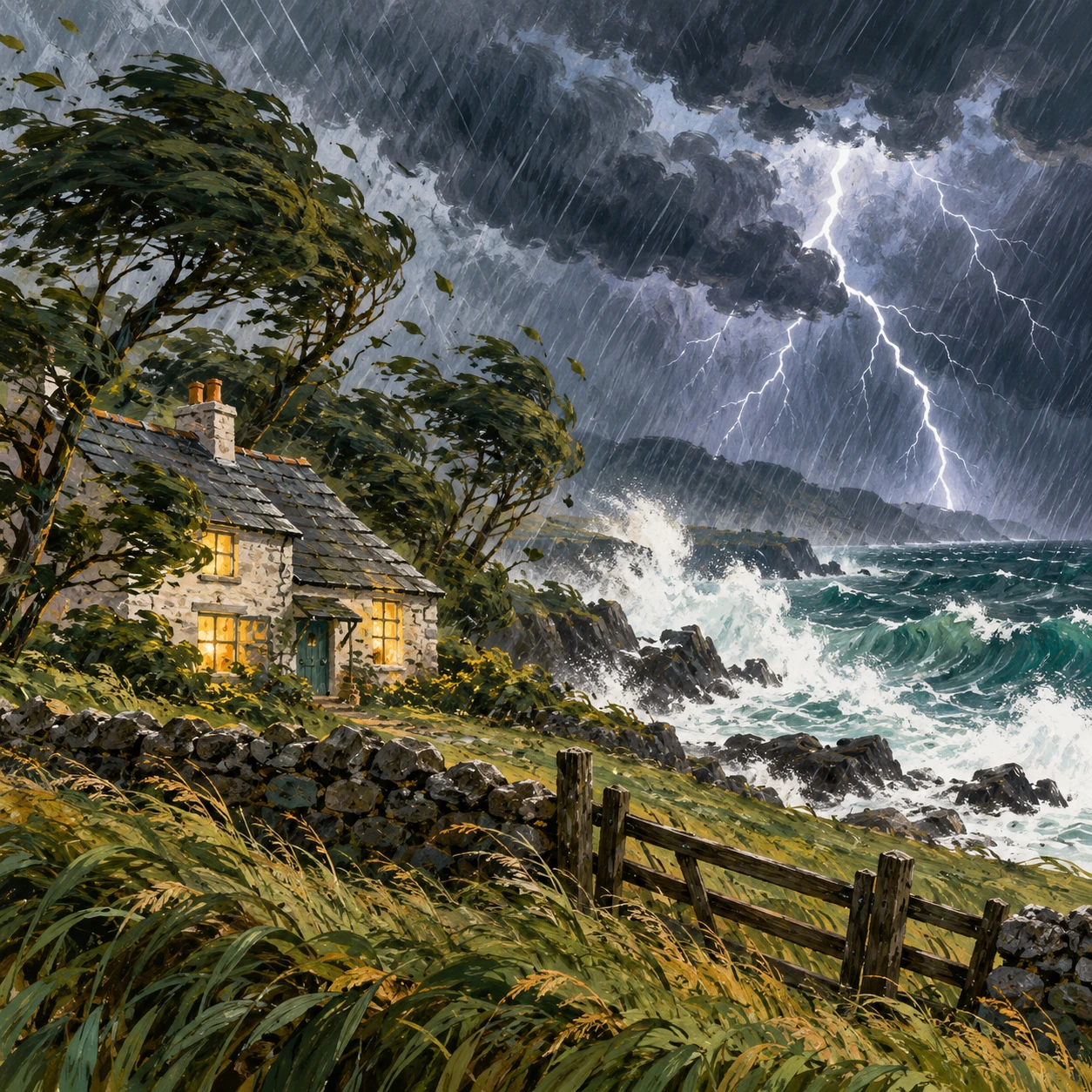
nublado · ventoso · soleado · con niebla
Distingue estos significados según la situación: cloudy = nublado; windy = ventoso; sunny = soleado; foggy = con niebla.
There are many clouds covering the sky. It is cloudy.

Tiempo y estaciones · A2. Distingue estos significados según la situación: cloudy = nublado; windy = ventoso; sunny = soleado; foggy = con niebla.
Practica Tiempo y estaciones en situaciones breves. Lee la pista, elige o escribe una forma y revisa la explicación. El nivel es una orientación editorial. Explora 12 tarjetas y 24 preguntas contextualizadas, con nuevas situaciones de repaso y aplicación.
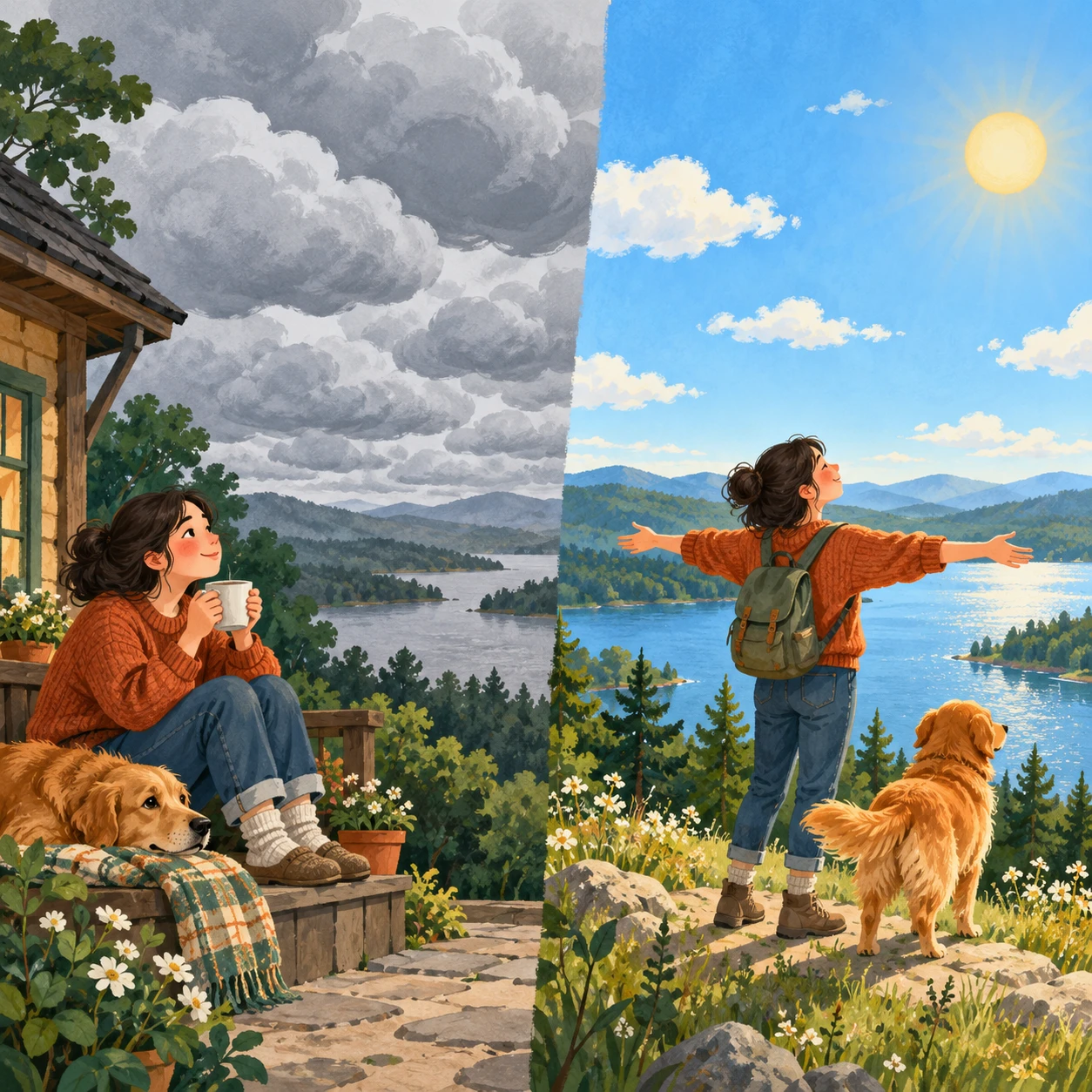
With many clouds in the sky.
The morning was cloudy, but the afternoon was clear.
La mañana estuvo nublada, pero la tarde estuvo despejada.
Se refieren a este sentido. La familia puede cambiar de significado; las expresiones próximas no siempre son intercambiables.
Usa «cloudy» para nublado. Compáralo con «windy» (ventoso); son sentidos distintos.
Distingue estos significados según la situación: cloudy = nublado; windy = ventoso; sunny = soleado; foggy = con niebla.
There are many clouds covering the sky. It is cloudy.
Distingue estos significados según la situación: spring = primavera; summer = verano; autumn = otoño; winter = invierno.
The season after winter and before summer is spring.
Distingue estos significados según la situación: forecast = pronóstico; temperature = temperatura; storm = tormenta; shower = chubasco.
A report predicting tomorrow’s weather is a weather forecast.
Clouds cover the sky, but there is no fog near the ground and the air is still. It is ___.
Distingue estos significados según la situación: cloudy = nublado; windy = ventoso; sunny = soleado; foggy = con niebla.
There are many clouds covering the sky. It is cloudy.Distingue estos significados según la situación: spring = primavera; summer = verano; autumn = otoño; winter = invierno.
The season after winter and before summer is spring.Distingue estos significados según la situación: forecast = pronóstico; temperature = temperatura; storm = tormenta; shower = chubasco.
A report predicting tomorrow’s weather is a weather forecast.Conserva el primer intento, entiende el cambio y compruébalo en otra situación.
Aún no hay repasos. Prueba un calentamiento corto.
Abrir una respuesta registra ayuda para esa pregunta.
Clouds cover the sky, but there is no fog near the ground and the air is still. It is ___.
Fíjate en «Clouds cover the sky». Aquí se pide «nublado»: «cloudy». Estos rasgos pueden coincidir. Responde al rasgo pedido, no a otra condición posible. Frase completa: «Clouds cover the sky, but there is no fog near the ground and the air is still. It is cloudy.” / “There are many clouds covering the sky. It is cloudy.».
The season after winter and before summer is ___.
Fíjate en «after winter and before summer». Aquí se pide «primavera»: «spring». Usa el orden: primavera, verano, otoño, invierno. Frase completa: «The season after winter and before summer is spring.».
A report predicting tomorrow’s weather is a weather ___.
Fíjate en «predicting tomorrow’s weather». Aquí se pide «pronóstico»: «forecast». Una predicción no es una medida ni un suceso. Una lluvia breve difiere de un temporal violento. Frase completa: «A report predicting tomorrow’s weather is a weather forecast.».
The sky is not clear and there is no fog near the ground. Which word describes the strong movement of air blowing my hat away? It is ___.
Fíjate en «strong movement of air». Aquí se pide «ventoso»: «windy». Estos rasgos pueden coincidir. Responde al rasgo pedido, no a otra condición posible. Frase completa: «The sky is not clear and there is no fog near the ground. Which word describes the strong movement of air blowing my hat away? It is windy.” / “The air is moving strongly and blowing my hat away. It is windy.».
The season after spring and before autumn is ___.
Fíjate en «after spring and before autumn». Aquí se pide «verano»: «summer». Usa el orden: primavera, verano, otoño, invierno. Frase completa: «The season after spring and before autumn is summer.».
The number of degrees showing how hot or cold the air is is its ___.
Fíjate en «number of degrees». Aquí se pide «temperatura»: «temperature». Una predicción no es una medida ni un suceso. Una lluvia breve difiere de un temporal violento. Frase completa: «The number of degrees showing how hot or cold the air is is its temperature.».
Which word describes the bright sun shining from a clear sky? It is ___.
Fíjate en «bright sun». Aquí se pide «soleado»: «sunny». Estos rasgos pueden coincidir. Responde al rasgo pedido, no a otra condición posible. Frase completa: «Which word describes the bright sun shining from a clear sky? It is sunny.” / “The sun is shining brightly from a clear sky. It is sunny.».
Which word specifically describes low cloud near the ground making the road hard to see? It is ___.
Fíjate en «low cloud near the ground». Aquí se pide «con niebla»: «foggy». Estos rasgos pueden coincidir. Responde al rasgo pedido, no a otra condición posible. Frase completa: «Which word specifically describes low cloud near the ground making the road hard to see? It is foggy.” / “Low cloud near the ground makes it hard to see the road. It is foggy.».
The season after summer and before winter is ___.
Fíjate en «after summer and before winter». Aquí se pide «otoño»: «autumn». Usa el orden: primavera, verano, otoño, invierno. Frase completa: «The season after summer and before winter is autumn.».
There is violent weather with thunder, lightning and strong wind: a ___.
Fíjate en «thunder, lightning and strong wind». Aquí se pide «tormenta»: «storm». Una predicción no es una medida ni un suceso. Una lluvia breve difiere de un temporal violento. Frase completa: «There is violent weather with thunder, lightning and strong wind: a storm.».
The season after autumn and before spring is ___.
Fíjate en «after autumn and before spring». Aquí se pide «invierno»: «winter». Usa el orden: primavera, verano, otoño, invierno. Frase completa: «The season after autumn and before spring is winter.».
A short period of rain that soon stops is a ___.
Fíjate en «short period of rain». Aquí se pide «chubasco»: «shower». Una predicción no es una medida ni un suceso. Una lluvia breve difiere de un temporal violento. Frase completa: «A short period of rain that soon stops is a shower.».
A thick layer of clouds covers the sky; the air is still and there is no ground-level fog. It is ___.
Fíjate en «layer of clouds». Aquí se pide «nublado»: «cloudy». Estos rasgos pueden coincidir. Responde al rasgo pedido, no a otra condición posible. Frase completa: «A thick layer of clouds covers the sky; the air is still and there is no ground-level fog. It is cloudy.” / “A thick layer of clouds covers the sky. It is cloudy.».
In Britain, this season comes after winter and before summer. It is ___.
Fíjate en «after winter and before summer». Aquí se pide «primavera»: «spring». Usa el orden: primavera, verano, otoño, invierno. Frase completa: «In Britain, this season comes after winter and before summer. It is spring.».
The report of tomorrow’s weather is the weather ___.
Fíjate en «report of tomorrow’s weather». Aquí se pide «pronóstico»: «forecast». Una predicción no es una medida ni un suceso. Una lluvia breve difiere de un temporal violento. Frase completa: «The report of tomorrow’s weather is the weather forecast.».
Which word describes the strong movement of air that bends the trees? It is ___.
Fíjate en «strong movement of air». Aquí se pide «ventoso»: «windy». Estos rasgos pueden coincidir. Responde al rasgo pedido, no a otra condición posible. Frase completa: «Which word describes the strong movement of air that bends the trees? It is windy.” / “The air is moving strongly and the trees are bending. It is windy.».
In Britain, the season after spring and before autumn is ___.
Fíjate en «after spring and before autumn». Aquí se pide «verano»: «summer». Usa el orden: primavera, verano, otoño, invierno. Frase completa: «In Britain, the season after spring and before autumn is summer.».
The thermometer shows 22 degrees. It measures the ___.
Fíjate en «thermometer». Aquí se pide «temperatura»: «temperature». Una predicción no es una medida ni un suceso. Una lluvia breve difiere de un temporal violento. Frase completa: «The thermometer shows 22 degrees. It measures the temperature.».
Which word describes bright sunshine from a clear sky? It is ___.
Fíjate en «bright sunshine». Aquí se pide «soleado»: «sunny». Estos rasgos pueden coincidir. Responde al rasgo pedido, no a otra condición posible. Frase completa: «Which word describes bright sunshine from a clear sky? It is sunny.” / “The sun is shining in a clear sky. It is sunny.».
Which word specifically describes fog near the ground making the road hard to see? It is ___.
Fíjate en «fog near the ground». Aquí se pide «con niebla»: «foggy». Estos rasgos pueden coincidir. Responde al rasgo pedido, no a otra condición posible. Frase completa: «Which word specifically describes fog near the ground making the road hard to see? It is foggy.” / “Fog makes it hard to see the road. It is foggy.».
In Britain, the season after summer and before winter is ___.
Fíjate en «after summer and before winter». Aquí se pide «otoño»: «autumn». Usa el orden: primavera, verano, otoño, invierno. Frase completa: «In Britain, the season after summer and before winter is autumn.».
For several hours, severe wind, heavy rain and thunder affect the whole town, rather than a brief burst of rain. A ___ is passing over it.
Fíjate en «severe wind, heavy rain and thunder». Aquí se pide «tormenta»: «storm». Una predicción no es una medida ni un suceso. Una lluvia breve difiere de un temporal violento. Frase completa: «For several hours, severe wind, heavy rain and thunder affect the whole town, rather than a brief burst of rain. A storm is passing over it.».
In Britain, the season after autumn and before spring is ___.
Fíjate en «after autumn and before spring». Aquí se pide «invierno»: «winter». Usa el orden: primavera, verano, otoño, invierno. Frase completa: «In Britain, the season after autumn and before spring is winter.».
A short period of light rain begins, then quickly ends. It is a ___.
Fíjate en «quickly ends». Aquí se pide «chubasco»: «shower». Una predicción no es una medida ni un suceso. Una lluvia breve difiere de un temporal violento. Frase completa: «A short period of light rain begins, then quickly ends. It is a shower.».