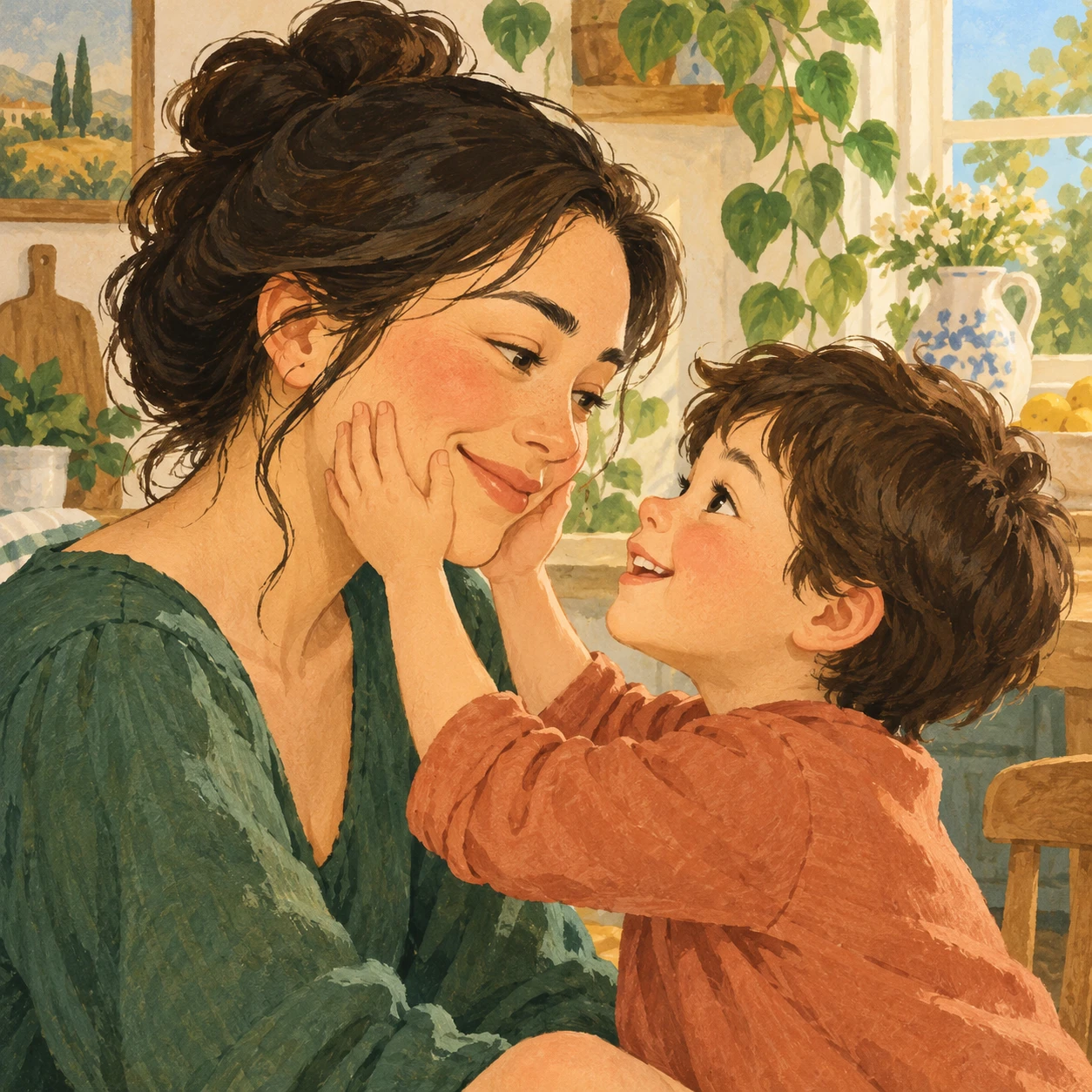
cabeza · cara · ojo · oreja
Distingue estos significados en su contexto: head = cabeza; face = cara; eye = ojo; ear = oreja.
He wears a hat on his head.

Partes del cuerpo · A1. Distingue estos significados en su contexto: head = cabeza; face = cara; eye = ojo; ear = oreja.
Aprende doce palabras útiles del tema. Estudia ejemplos independientes y practica en situaciones nuevas. El nivel es orientativo, no una certificación.

the part of your body above your neck
He wears a hat on his head.
Lleva un sombrero en la cabeza.
Se refieren a este sentido. La familia puede cambiar de significado; las expresiones próximas no siempre son intercambiables.
Practica «shake your head» como combinación. En esta unidad «head» significa cabeza.
Distingue estos significados en su contexto: head = cabeza; face = cara; eye = ojo; ear = oreja.
He wears a hat on his head.
Distingue estos significados en su contexto: nose = nariz; mouth = boca; tooth = diente; tongue = lengua.
My nose is cold in this wind.
Distingue estos significados en su contexto: arm = brazo; hand = mano; finger = dedo de la mano; foot = pie.
She carries the bag under her arm.
Put your helmet on your ___ before you ride your bike.
Distingue estos significados en su contexto: head = cabeza; face = cara; eye = ojo; ear = oreja.
He wears a hat on his head.Distingue estos significados en su contexto: nose = nariz; mouth = boca; tooth = diente; tongue = lengua.
My nose is cold in this wind.Distingue estos significados en su contexto: arm = brazo; hand = mano; finger = dedo de la mano; foot = pie.
She carries the bag under her arm.Conserva el primer intento, entiende el cambio y compruébalo en otra situación.
Aún no hay repasos. Prueba un calentamiento corto.
Abrir una respuesta registra ayuda para esa pregunta.
Put your helmet on your ___ before you ride your bike.
Fíjate en «helmet». Aquí se pide «cabeza»: «head». Mira la parte exacta del cuerpo y su función. Una parte menor pertenece a otra mayor, pero usa la parte específica pedida. Frase completa: «Put your helmet on your head before you ride your bike.».
She holds the flower near her ___ to smell it.
Fíjate en «smell». Aquí se pide «nariz»: «nose». Mira la parte exacta del cuerpo y su función. Una parte menor pertenece a otra mayor, pero usa la parte específica pedida. Frase completa: «She holds the flower near her nose to smell it.».
The long part of your body between your shoulder and your hand is your ___.
Fíjate en «between your shoulder and your hand». Aquí se pide «brazo»: «arm». Mira la parte exacta del cuerpo y su función. Una parte menor pertenece a otra mayor, pero usa la parte específica pedida. Frase completa: «The long part of your body between your shoulder and your hand is your arm.».
The front of your head, where your eyes, nose and mouth are, is your ___.
Fíjate en «front of your head». Aquí se pide «cara»: «face». Mira la parte exacta del cuerpo y su función. Una parte menor pertenece a otra mayor, pero usa la parte específica pedida. Frase completa: «The front of your head, where your eyes, nose and mouth are, is your face.».
Close one ___ and look through the camera with the other.
Fíjate en «look through the camera». Aquí se pide «ojo»: «eye». Mira la parte exacta del cuerpo y su función. Una parte menor pertenece a otra mayor, pero usa la parte específica pedida. Frase completa: «Close one eye and look through the camera with the other.».
I cannot hear well in my left ___.
Fíjate en «cannot hear». Aquí se pide «oreja»: «ear». Mira la parte exacta del cuerpo y su función. Una parte menor pertenece a otra mayor, pero usa la parte específica pedida. Frase completa: «I cannot hear well in my left ear.».
Do not talk with food in your ___.
Fíjate en «food in your». Aquí se pide «boca»: «mouth». Mira la parte exacta del cuerpo y su función. Una parte menor pertenece a otra mayor, pero usa la parte específica pedida. Frase completa: «Do not talk with food in your mouth.».
The dentist repairs a broken ___ at the back of my mouth.
Fíjate en «dentist repairs». Aquí se pide «diente»: «tooth». Mira la parte exacta del cuerpo y su función. Una parte menor pertenece a otra mayor, pero usa la parte específica pedida. Frase completa: «The dentist repairs a broken tooth at the back of my mouth.».
The soft moving part inside your mouth that helps you taste food is your ___.
Fíjate en «helps you taste». Aquí se pide «lengua»: «tongue». Mira la parte exacta del cuerpo y su función. Una parte menor pertenece a otra mayor, pero usa la parte específica pedida. Frase completa: «The soft moving part inside your mouth that helps you taste food is your tongue.».
Wash each ___, including all five fingers, before you eat.
Fíjate en «including all five fingers». Aquí se pide «mano»: «hand». Mira la parte exacta del cuerpo y su función. Una parte menor pertenece a otra mayor, pero usa la parte específica pedida. Frase completa: «Wash each hand, including all five fingers, before you eat.».
Press the small button with the tip of your index ___.
Fíjate en «index». Aquí se pide «dedo de la mano»: «finger». Mira la parte exacta del cuerpo y su función. Una parte menor pertenece a otra mayor, pero usa la parte específica pedida. Frase completa: «Press the small button with the tip of your index finger.».
This shoe is too small for my ___.
Fíjate en «shoe is too small». Aquí se pide «pie»: «foot». Mira la parte exacta del cuerpo y su función. Una parte menor pertenece a otra mayor, pero usa la parte específica pedida. Frase completa: «This shoe is too small for my foot.».
Her scalp, the skin over the top of her skull, is covered with wet hair. The hair on the top of her ___ is wet.
Fíjate en «skin over the top of her skull». Aquí se pide «cabeza»: «head». Mira la parte exacta del cuerpo y su función. Una parte menor pertenece a otra mayor, pero usa la parte específica pedida. Frase completa: «Her scalp, the skin over the top of her skull, is covered with wet hair. The hair on the top of her head is wet.” / “The hair on the top of her head is wet.».
The most specific name for the front part of your head, from your forehead to your chin, is your ___.
Fíjate en «forehead to your chin». Aquí se pide «cara»: «face». Mira la parte exacta del cuerpo y su función. Una parte menor pertenece a otra mayor, pero usa la parte específica pedida. Frase completa: «The most specific name for the front part of your head, from your forehead to your chin, is your face.».
When I have a cold, this organ above my mouth is blocked, so I cannot breathe through my ___.
Fíjate en «organ above my mouth». Aquí se pide «nariz»: «nose». Mira la parte exacta del cuerpo y su función. Una parte menor pertenece a otra mayor, pero usa la parte específica pedida. Frase completa: «When I have a cold, this organ above my mouth is blocked, so I cannot breathe through my nose.” / “When I have a cold, I cannot breathe through my nose.».
The baby opens her ___ when she sees the spoon of food.
Fíjate en «spoon of food». Aquí se pide «boca»: «mouth». Mira la parte exacta del cuerpo y su función. Una parte menor pertenece a otra mayor, pero usa la parte específica pedida. Frase completa: «The baby opens her mouth when she sees the spoon of food.».
The sleeve covers my ___ from shoulder to wrist.
Fíjate en «shoulder to wrist». Aquí se pide «brazo»: «arm». Mira la parte exacta del cuerpo y su función. Una parte menor pertenece a otra mayor, pero usa la parte específica pedida. Frase completa: «The sleeve covers my arm from shoulder to wrist.».
She holds the pen in her right ___.
Fíjate en «holds the pen». Aquí se pide «mano»: «hand». Mira la parte exacta del cuerpo y su función. Una parte menor pertenece a otra mayor, pero usa la parte específica pedida. Frase completa: «She holds the pen in her right hand.».
A small insect flew into my right ___, so I could not see clearly.
Fíjate en «could not see clearly». Aquí se pide «ojo»: «eye». Mira la parte exacta del cuerpo y su función. Una parte menor pertenece a otra mayor, pero usa la parte específica pedida. Frase completa: «A small insect flew into my right eye, so I could not see clearly.».
The earring goes through a small hole in her ___.
Fíjate en «earring». Aquí se pide «oreja»: «ear». Mira la parte exacta del cuerpo y su función. Una parte menor pertenece a otra mayor, pero usa la parte específica pedida. Frase completa: «The earring goes through a small hole in her ear.».
I bit something hard and broke a small hard white part used for chewing inside my mouth: a ___.
Fíjate en «hard white part». Aquí se pide «diente»: «tooth». Mira la parte exacta del cuerpo y su función. Una parte menor pertenece a otra mayor, pero usa la parte específica pedida. Frase completa: «I bit something hard and broke a small hard white part used for chewing inside my mouth: a tooth.” / “I bit something hard and hurt a tooth.».
The doctor asks me to stick out my ___ and say “ah”.
Fíjate en «stick out». Aquí se pide «lengua»: «tongue». Mira la parte exacta del cuerpo y su función. Una parte menor pertenece a otra mayor, pero usa la parte específica pedida. Frase completa: «The doctor asks me to stick out my tongue and say “ah”.».
He points at the map with his index ___.
Fíjate en «index». Aquí se pide «dedo de la mano»: «finger». Mira la parte exacta del cuerpo y su función. Una parte menor pertenece a otra mayor, pero usa la parte específica pedida. Frase completa: «He points at the map with his index finger.».
Each ___ is at the bottom of a leg and has a heel and five toes.
Fíjate en «heel and five toes». Aquí se pide «pie»: «foot». Mira la parte exacta del cuerpo y su función. Una parte menor pertenece a otra mayor, pero usa la parte específica pedida. Frase completa: «Each foot is at the bottom of a leg and has a heel and five toes.».