Comprobar la estructura verbal
Identifica el sujeto, el tiempo y los auxiliares antes de elegir la forma verbal.
Last Saturday, we [1] _____ the train to the coast.

Un viaje de fin de semana · A2. Identifica el sujeto, el tiempo y los auxiliares antes de elegir la forma verbal.
Completa los huecos numerados usando todo el contexto inglés. Cada pregunta corresponde a un hueco; compara gramática y significado.
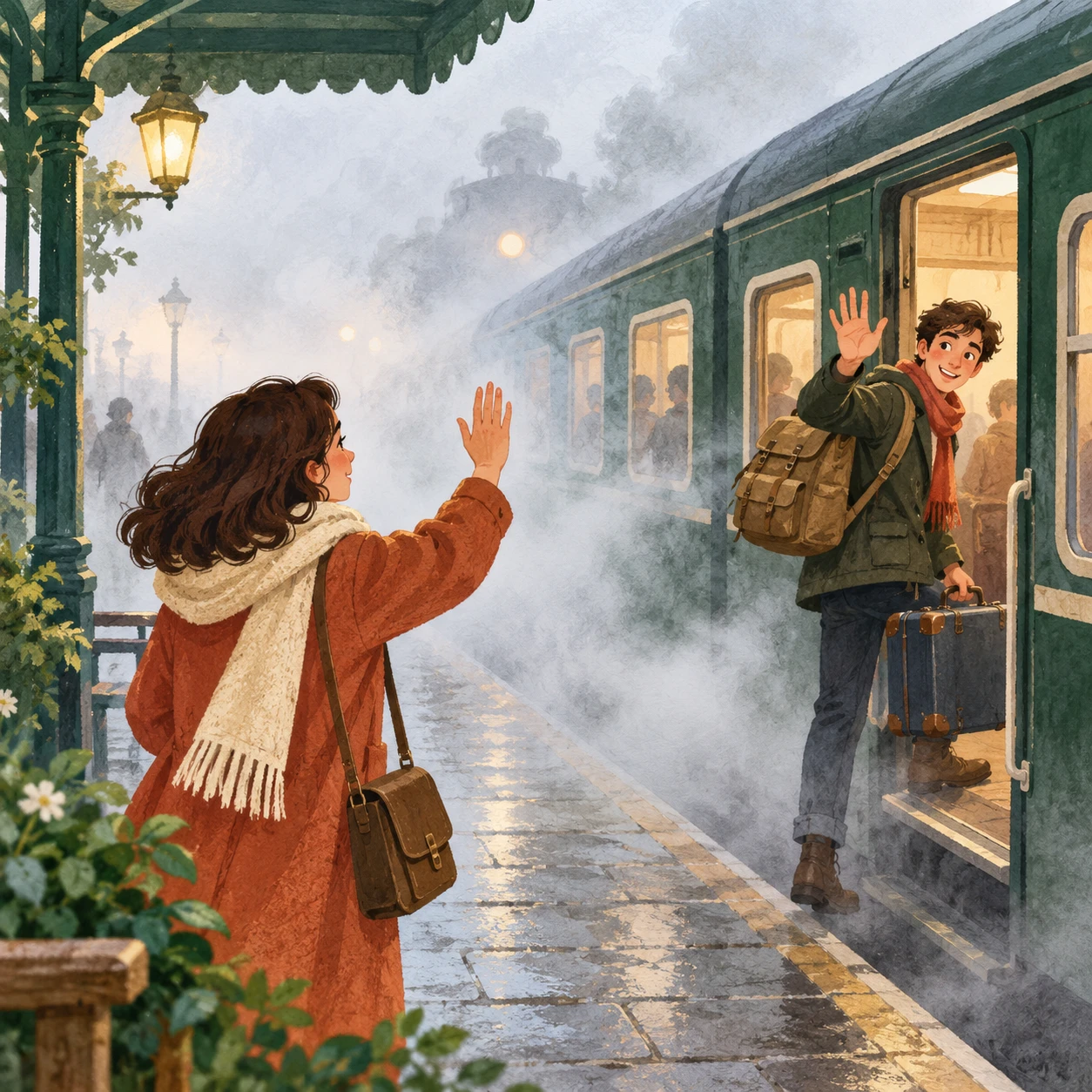
Completa los huecos numerados usando todo el contexto inglés. Cada pregunta corresponde a un hueco; compara gramática y significado.
Last Saturday, we [1] _____ the train to the coast. The journey was faster [2] _____ driving. While we [3] _____ for the bus outside the station, it began to rain. We were interested [4] _____ visiting the small sea museum. [5] _____ the weather was wet, the town was full of visitors. We decided [6] _____ lunch before the museum visit. There were only a [7] _____ tables left in the cafe. We chose a seat [8] _____ was beside the window. I [9] _____ a photograph of the harbour before we left the cafe. We went to the museum [10] _____ we wanted to learn about the old fishing boats.
Identifica el sujeto, el tiempo y los auxiliares antes de elegir la forma verbal.
Last Saturday, we [1] _____ the train to the coast.
Lee ambos lados del hueco. Comprueba artículos, pronombres, preposiciones y expresiones fijas como un patrón completo.
The journey was faster [2] _____ driving.
Decide si las ideas expresan causa, contraste, condición o referencia. Después comprueba la estructura que exige el enlace.
[5] _____ the weather was wet, the town was full of visitors.
Completa los huecos numerados usando todo el contexto inglés. Cada pregunta corresponde a un hueco; compara gramática y significado.
Last Saturday, we [1] _____ the train to the coast. The journey was faster [2] _____ driving. While we [3] _____ for the bus outside the station, it began to rain. We were interested [4] _____ visiting the small sea museum. [5] _____ the weather was wet, the town was full of visitors. We decided [6] _____ lunch before the museum visit. There were only a [7] _____ tables left in the cafe. We chose a seat [8] _____ was beside the window. I [9] _____ a photograph of the harbour before we left the cafe. We went to the museum [10] _____ we wanted to learn about the old fishing boats.
A weekend at the coast — gap 1
Identifica el sujeto, el tiempo y los auxiliares antes de elegir la forma verbal.
Last Saturday, we [1] _____ the train to the coast.Lee ambos lados del hueco. Comprueba artículos, pronombres, preposiciones y expresiones fijas como un patrón completo.
The journey was faster [2] _____ driving.Decide si las ideas expresan causa, contraste, condición o referencia. Después comprueba la estructura que exige el enlace.
[5] _____ the weather was wet, the town was full of visitors.Conserva el primer intento, entiende el cambio y compruébalo en otra situación.
Aún no hay repasos. Prueba un calentamiento corto.
Identifica el sujeto, el tiempo y los auxiliares antes de elegir la forma verbal.
Last Saturday, we [1] _____ the train to the coast.Lee ambos lados del hueco. Comprueba artículos, pronombres, preposiciones y expresiones fijas como un patrón completo.
The journey was faster [2] _____ driving.Decide si las ideas expresan causa, contraste, condición o referencia. Después comprueba la estructura que exige el enlace.
[5] _____ the weather was wet, the town was full of visitors.Abrir una respuesta registra ayuda para esa pregunta.
A weekend at the coast — gap 1
Mira «Last Saturday, we [1] _____ the train to the coast.». El hecho terminó en un periodo pasado indicado; usa past simple. Oración completa: «Last Saturday, we took the train to the coast.».
A weekend at the coast — gap 2
«than» conecta el comparativo «faster» con el término siguiente. El comparativo ya está dado: el hueco evalúa el conector, no la formación del adjetivo. Oración completa: «The journey was faster than driving.»
A weekend at the coast — gap 3
Mira «While we [3] _____ for the bus outside the station, it began to rain.». La acción ya estaba en curso cuando ocurrió el hecho breve; usa past continuous. Oración completa: «While we were waiting for the bus outside the station, it began to rain.».
A weekend at the coast — gap 4
Mira «We were interested [4] _____ visiting the small sea museum.». Este patrón fijo de verbo, adjetivo o sustantivo exige esta preposición; las alternativas cercanas no encajan en la misma construcción. Oración completa: «We were interested in visiting the small sea museum.».
A weekend at the coast — gap 5
Mira «[5] _____ the weather was wet, the town was full of visitors.». Las ideas contrastan. Este conector va seguido de una oración completa; aquí no sirve una preposición ante un sintagma nominal. Oración completa: «Although the weather was wet, the town was full of visitors.».
A weekend at the coast — gap 6
Mira «We decided [6] _____ lunch before the museum visit.». Este patrón verbal o expresión de finalidad necesita to seguido de la forma base. Oración completa: «We decided to have lunch before the museum visit.».
A weekend at the coast — gap 7
Mira «There were only a [7] _____ tables left in the cafe.». Ajusta el cuantificador según si el sustantivo es contable singular, contable plural o incontable. Oración completa: «There were only a few tables left in the cafe.».
A weekend at the coast — gap 8
Mira «We chose a seat [8] _____ was beside the window.». La expresión relativa debe ajustarse al antecedente y a su función; comprueba si expresa persona, cosa o posesión. Oración completa: «We chose a seat which was beside the window.».
A weekend at the coast — gap 9
Mira «I [9] _____ a photograph of the harbour before we left the cafe.». El hecho terminó en un periodo pasado indicado; usa past simple. Oración completa: «I took a photograph of the harbour before we left the cafe.».
A weekend at the coast — gap 10
Mira «We went to the museum [10] _____ we wanted to learn about the old fishing boats.». La segunda oración da la causa de la primera; usa un conector causal, no de contraste o resultado. Oración completa: «We went to the museum because we wanted to learn about the old fishing boats.».