Verificar a estrutura verbal
Identifique sujeito, referência temporal e auxiliares antes de escolher a forma verbal.
Last Saturday, we [1] _____ the train to the coast.

Uma viagem de fim de semana · A2. Identifique sujeito, referência temporal e auxiliares antes de escolher a forma verbal.
Complete as lacunas numeradas usando todo o contexto em inglês. Cada questão corresponde a uma lacuna; confira gramática e sentido.
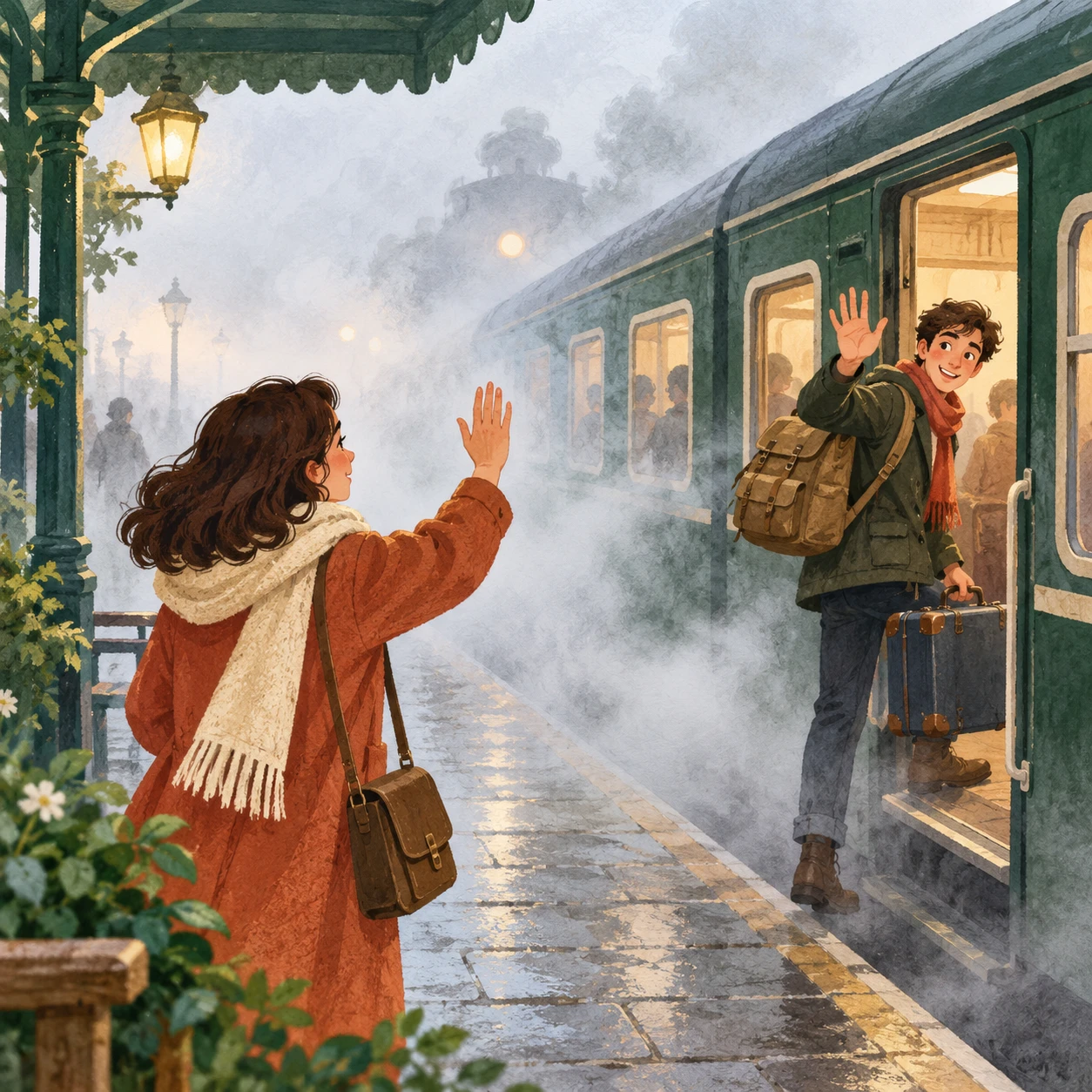
Complete as lacunas numeradas usando todo o contexto em inglês. Cada questão corresponde a uma lacuna; confira gramática e sentido.
Last Saturday, we [1] _____ the train to the coast. The journey was faster [2] _____ driving. While we [3] _____ for the bus outside the station, it began to rain. We were interested [4] _____ visiting the small sea museum. [5] _____ the weather was wet, the town was full of visitors. We decided [6] _____ lunch before the museum visit. There were only a [7] _____ tables left in the cafe. We chose a seat [8] _____ was beside the window. I [9] _____ a photograph of the harbour before we left the cafe. We went to the museum [10] _____ we wanted to learn about the old fishing boats.
Identifique sujeito, referência temporal e auxiliares antes de escolher a forma verbal.
Last Saturday, we [1] _____ the train to the coast.
Leia os dois lados da lacuna. Confira artigos, pronomes, preposições e expressões fixas como uma construção completa.
The journey was faster [2] _____ driving.
Identifique causa, contraste, condição ou referência. Depois confira a gramática exigida pelo elemento de ligação.
[5] _____ the weather was wet, the town was full of visitors.
Complete as lacunas numeradas usando todo o contexto em inglês. Cada questão corresponde a uma lacuna; confira gramática e sentido.
Last Saturday, we [1] _____ the train to the coast. The journey was faster [2] _____ driving. While we [3] _____ for the bus outside the station, it began to rain. We were interested [4] _____ visiting the small sea museum. [5] _____ the weather was wet, the town was full of visitors. We decided [6] _____ lunch before the museum visit. There were only a [7] _____ tables left in the cafe. We chose a seat [8] _____ was beside the window. I [9] _____ a photograph of the harbour before we left the cafe. We went to the museum [10] _____ we wanted to learn about the old fishing boats.
A weekend at the coast — gap 1
Identifique sujeito, referência temporal e auxiliares antes de escolher a forma verbal.
Last Saturday, we [1] _____ the train to the coast.Leia os dois lados da lacuna. Confira artigos, pronomes, preposições e expressões fixas como uma construção completa.
The journey was faster [2] _____ driving.Identifique causa, contraste, condição ou referência. Depois confira a gramática exigida pelo elemento de ligação.
[5] _____ the weather was wet, the town was full of visitors.Guarde a primeira tentativa, entenda a mudança e confira em outra situação.
Ainda não há revisões. Faça um aquecimento curto.
Identifique sujeito, referência temporal e auxiliares antes de escolher a forma verbal.
Last Saturday, we [1] _____ the train to the coast.Leia os dois lados da lacuna. Confira artigos, pronomes, preposições e expressões fixas como uma construção completa.
The journey was faster [2] _____ driving.Identifique causa, contraste, condição ou referência. Depois confira a gramática exigida pelo elemento de ligação.
[5] _____ the weather was wet, the town was full of visitors.Abrir uma resposta registra ajuda para essa questão.
A weekend at the coast — gap 1
Observe “Last Saturday, we [1] _____ the train to the coast.”. O evento terminou em um período passado indicado; use past simple. Frase completa: “Last Saturday, we took the train to the coast.”.
A weekend at the coast — gap 2
“than” liga o comparativo “faster” ao termo seguinte da comparação. O comparativo já está dado; a lacuna verifica o conector, não a formação do adjetivo. Frase completa: “The journey was faster than driving.”
A weekend at the coast — gap 3
Observe “While we [3] _____ for the bus outside the station, it began to rain.”. A ação já estava em andamento quando ocorreu o evento breve; use past continuous. Frase completa: “While we were waiting for the bus outside the station, it began to rain.”.
A weekend at the coast — gap 4
Observe “We were interested [4] _____ visiting the small sea museum.”. Esta construção fixa de verbo, adjetivo ou substantivo exige essa preposição; as alternativas não cabem na mesma estrutura. Frase completa: “We were interested in visiting the small sea museum.”.
A weekend at the coast — gap 5
Observe “[5] _____ the weather was wet, the town was full of visitors.”. As ideias contrastam. Este conector recebe uma oração completa; uma preposição seguida de sintagma nominal não cabe aqui. Frase completa: “Although the weather was wet, the town was full of visitors.”.
A weekend at the coast — gap 6
Observe “We decided [6] _____ lunch before the museum visit.”. Este padrão verbal ou expressão de finalidade exige to seguido do verbo na forma básica. Frase completa: “We decided to have lunch before the museum visit.”.
A weekend at the coast — gap 7
Observe “There were only a [7] _____ tables left in the cafe.”. Ajuste o quantificador conforme o substantivo seja contável singular, contável plural ou incontável. Frase completa: “There were only a few tables left in the cafe.”.
A weekend at the coast — gap 8
Observe “We chose a seat [8] _____ was beside the window.”. O relativo precisa corresponder ao antecedente e à sua função; verifique pessoa, coisa ou posse. Frase completa: “We chose a seat which was beside the window.”.
A weekend at the coast — gap 9
Observe “I [9] _____ a photograph of the harbour before we left the cafe.”. O evento terminou em um período passado indicado; use past simple. Frase completa: “I took a photograph of the harbour before we left the cafe.”.
A weekend at the coast — gap 10
Observe “We went to the museum [10] _____ we wanted to learn about the old fishing boats.”. A segunda oração dá o motivo da primeira; use um conector causal, não de contraste ou resultado. Frase completa: “We went to the museum because we wanted to learn about the old fishing boats.”.