Check the verb structure
Identify the subject, time reference and any auxiliary before choosing the verb form.
Last Saturday, we [1] _____ the train to the coast.

A weekend trip · A2. Identify the subject, time reference and any auxiliary before choosing the verb form.
Complete the numbered gaps using the whole English context. Each question targets one gap; compare both grammar and meaning.
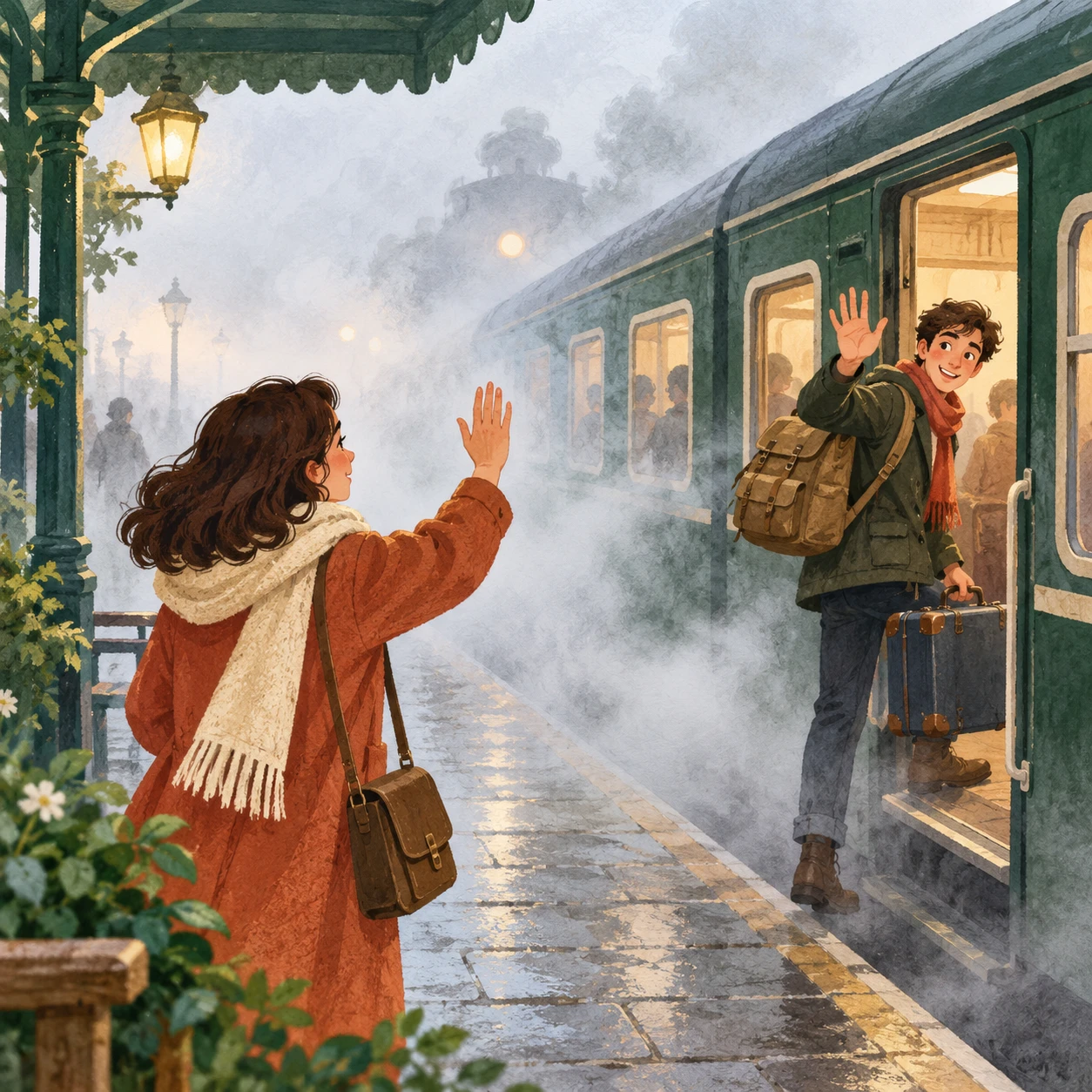
Complete the numbered gaps using the whole English context. Each question targets one gap; compare both grammar and meaning.
Last Saturday, we [1] _____ the train to the coast. The journey was faster [2] _____ driving. While we [3] _____ for the bus outside the station, it began to rain. We were interested [4] _____ visiting the small sea museum. [5] _____ the weather was wet, the town was full of visitors. We decided [6] _____ lunch before the museum visit. There were only a [7] _____ tables left in the cafe. We chose a seat [8] _____ was beside the window. I [9] _____ a photograph of the harbour before we left the cafe. We went to the museum [10] _____ we wanted to learn about the old fishing boats.
Identify the subject, time reference and any auxiliary before choosing the verb form.
Last Saturday, we [1] _____ the train to the coast.
Read the words on both sides of a gap. Check articles, pronouns, prepositions and fixed expressions as a complete pattern.
The journey was faster [2] _____ driving.
Decide whether the surrounding ideas show cause, contrast, condition or reference. Then check the grammar required by the connector.
[5] _____ the weather was wet, the town was full of visitors.
Complete the numbered gaps using the whole English context. Each question targets one gap; compare both grammar and meaning.
Last Saturday, we [1] _____ the train to the coast. The journey was faster [2] _____ driving. While we [3] _____ for the bus outside the station, it began to rain. We were interested [4] _____ visiting the small sea museum. [5] _____ the weather was wet, the town was full of visitors. We decided [6] _____ lunch before the museum visit. There were only a [7] _____ tables left in the cafe. We chose a seat [8] _____ was beside the window. I [9] _____ a photograph of the harbour before we left the cafe. We went to the museum [10] _____ we wanted to learn about the old fishing boats.
A weekend at the coast — gap 1
Identify the subject, time reference and any auxiliary before choosing the verb form.
Last Saturday, we [1] _____ the train to the coast.Read the words on both sides of a gap. Check articles, pronouns, prepositions and fixed expressions as a complete pattern.
The journey was faster [2] _____ driving.Decide whether the surrounding ideas show cause, contrast, condition or reference. Then check the grammar required by the connector.
[5] _____ the weather was wet, the town was full of visitors.Keep the first try. Understand the change. Check it in a fresh situation.
No practice notes yet. Try a short warm-up.
Identify the subject, time reference and any auxiliary before choosing the verb form.
Last Saturday, we [1] _____ the train to the coast.Read the words on both sides of a gap. Check articles, pronouns, prepositions and fixed expressions as a complete pattern.
The journey was faster [2] _____ driving.Decide whether the surrounding ideas show cause, contrast, condition or reference. Then check the grammar required by the connector.
[5] _____ the weather was wet, the town was full of visitors.Opening an answer records help for that question.
A weekend at the coast — gap 1
Look at “Last Saturday, we [1] _____ the train to the coast.”. The event is completed in a stated past period, so use the past simple form. Complete sentence: “Last Saturday, we took the train to the coast.”.
A weekend at the coast — gap 2
“than” links the comparative “faster” to the comparison that follows. The comparative is already supplied; this gap tests the connector, not adjective formation. Complete sentence: “The journey was faster than driving.”
A weekend at the coast — gap 3
Look at “While we [3] _____ for the bus outside the station, it began to rain.”. The action was already in progress when the shorter event occurred; use the past continuous. Complete sentence: “While we were waiting for the bus outside the station, it began to rain.”.
A weekend at the coast — gap 4
Look at “We were interested [4] _____ visiting the small sea museum.”. This fixed verb, adjective or noun pattern requires the stated preposition; nearby alternatives do not fit the same construction. Complete sentence: “We were interested in visiting the small sea museum.”.
A weekend at the coast — gap 5
Look at “[5] _____ the weather was wet, the town was full of visitors.”. The ideas contrast. This connector is followed by a full clause; a noun-phrase preposition cannot replace it here. Complete sentence: “Although the weather was wet, the town was full of visitors.”.
A weekend at the coast — gap 6
Look at “We decided [6] _____ lunch before the museum visit.”. Use to + base verb after this expression to complete its verb pattern or show purpose. Complete sentence: “We decided to have lunch before the museum visit.”.
A weekend at the coast — gap 7
Look at “There were only a [7] _____ tables left in the cafe.”. Match the quantity word to whether the noun is countable and singular, countable and plural, or uncountable. Complete sentence: “There were only a few tables left in the cafe.”.
A weekend at the coast — gap 8
Look at “We chose a seat [8] _____ was beside the window.”. The relative expression must fit its antecedent and its role in the clause; check whether it refers to a person, thing or possession. Complete sentence: “We chose a seat which was beside the window.”.
A weekend at the coast — gap 9
Look at “I [9] _____ a photograph of the harbour before we left the cafe.”. The event is completed in a stated past period, so use the past simple form. Complete sentence: “I took a photograph of the harbour before we left the cafe.”.
A weekend at the coast — gap 10
Look at “We went to the museum [10] _____ we wanted to learn about the old fishing boats.”. The second clause gives the reason for the first; use a causal connector rather than a contrast or result connector. Complete sentence: “We went to the museum because we wanted to learn about the old fishing boats.”.