Die Verbstruktur prüfen
Bestimme Subjekt, Zeitbezug und Hilfsverb, bevor du die Verbform wählst.
Last Saturday, we [1] _____ the train to the coast.

Ein Wochenendausflug · A2. Bestimme Subjekt, Zeitbezug und Hilfsverb, bevor du die Verbform wählst.
Ergänze die nummerierten Lücken anhand des gesamten englischen Kontexts. Jede Frage betrifft eine Lücke; prüfe Grammatik und Bedeutung.
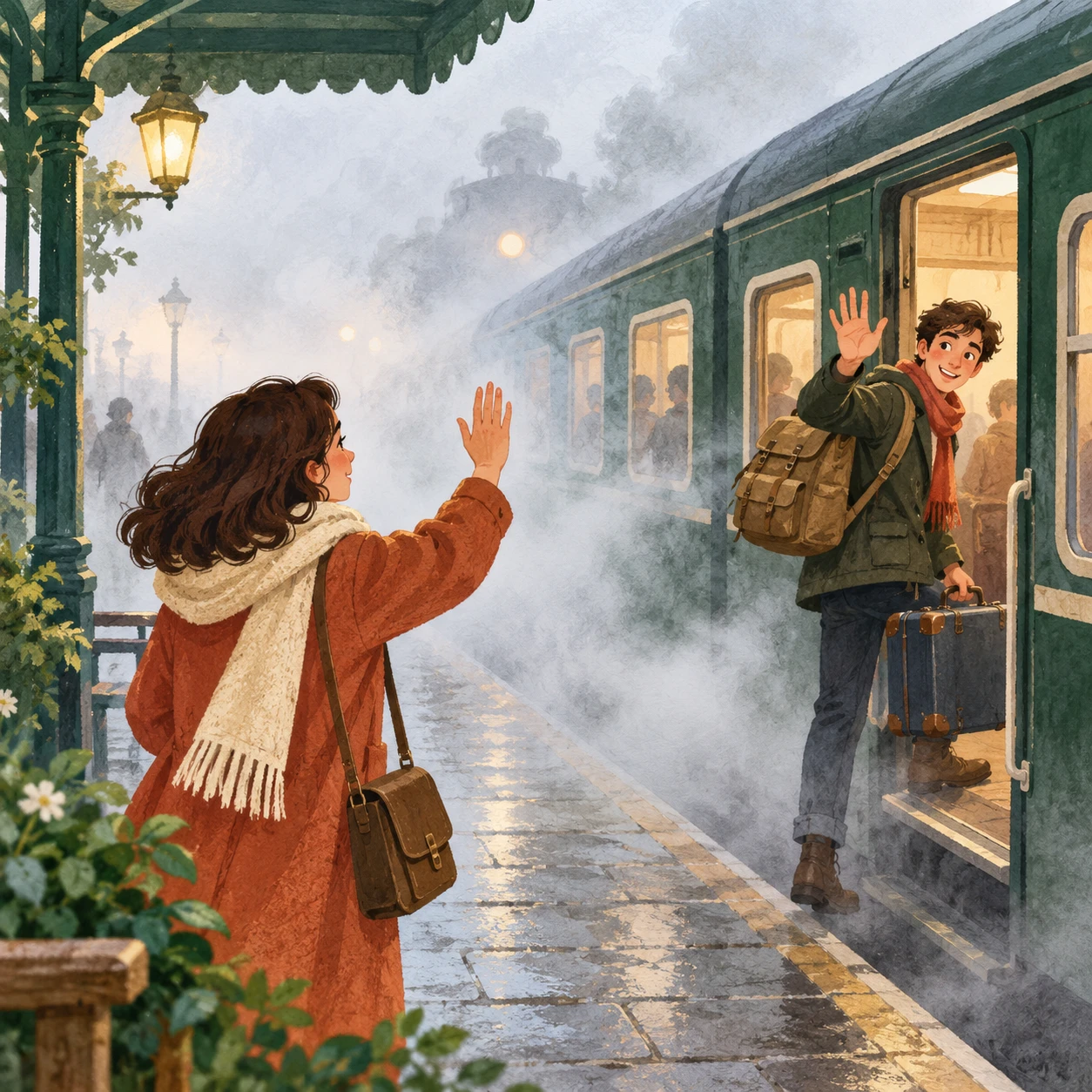
Ergänze die nummerierten Lücken anhand des gesamten englischen Kontexts. Jede Frage betrifft eine Lücke; prüfe Grammatik und Bedeutung.
Last Saturday, we [1] _____ the train to the coast. The journey was faster [2] _____ driving. While we [3] _____ for the bus outside the station, it began to rain. We were interested [4] _____ visiting the small sea museum. [5] _____ the weather was wet, the town was full of visitors. We decided [6] _____ lunch before the museum visit. There were only a [7] _____ tables left in the cafe. We chose a seat [8] _____ was beside the window. I [9] _____ a photograph of the harbour before we left the cafe. We went to the museum [10] _____ we wanted to learn about the old fishing boats.
Bestimme Subjekt, Zeitbezug und Hilfsverb, bevor du die Verbform wählst.
Last Saturday, we [1] _____ the train to the coast.
Lies die Wörter auf beiden Seiten. Prüfe Artikel, Pronomen, Präpositionen und feste Ausdrücke als ganze Verbindung.
The journey was faster [2] _____ driving.
Entscheide, ob Ursache, Gegensatz, Bedingung oder Verweis vorliegt. Prüfe dann die vom Bindewort verlangte Grammatik.
[5] _____ the weather was wet, the town was full of visitors.
Ergänze die nummerierten Lücken anhand des gesamten englischen Kontexts. Jede Frage betrifft eine Lücke; prüfe Grammatik und Bedeutung.
Last Saturday, we [1] _____ the train to the coast. The journey was faster [2] _____ driving. While we [3] _____ for the bus outside the station, it began to rain. We were interested [4] _____ visiting the small sea museum. [5] _____ the weather was wet, the town was full of visitors. We decided [6] _____ lunch before the museum visit. There were only a [7] _____ tables left in the cafe. We chose a seat [8] _____ was beside the window. I [9] _____ a photograph of the harbour before we left the cafe. We went to the museum [10] _____ we wanted to learn about the old fishing boats.
A weekend at the coast — gap 1
Bestimme Subjekt, Zeitbezug und Hilfsverb, bevor du die Verbform wählst.
Last Saturday, we [1] _____ the train to the coast.Lies die Wörter auf beiden Seiten. Prüfe Artikel, Pronomen, Präpositionen und feste Ausdrücke als ganze Verbindung.
The journey was faster [2] _____ driving.Entscheide, ob Ursache, Gegensatz, Bedingung oder Verweis vorliegt. Prüfe dann die vom Bindewort verlangte Grammatik.
[5] _____ the weather was wet, the town was full of visitors.Bewahre den ersten Versuch. Verstehe die Änderung. Prüfe sie in einer neuen Situation.
Noch keine Lernnotizen. Starte mit einem kurzen Einstieg.
Bestimme Subjekt, Zeitbezug und Hilfsverb, bevor du die Verbform wählst.
Last Saturday, we [1] _____ the train to the coast.Lies die Wörter auf beiden Seiten. Prüfe Artikel, Pronomen, Präpositionen und feste Ausdrücke als ganze Verbindung.
The journey was faster [2] _____ driving.Entscheide, ob Ursache, Gegensatz, Bedingung oder Verweis vorliegt. Prüfe dann die vom Bindewort verlangte Grammatik.
[5] _____ the weather was wet, the town was full of visitors.Das Öffnen einer Antwort wird für diese Aufgabe als Hilfe erfasst.
A weekend at the coast — gap 1
Achte auf „Last Saturday, we [1] _____ the train to the coast.“. Das Ereignis ist in einem genannten vergangenen Zeitraum abgeschlossen; verwende das past simple. Vollständiger Satz: „Last Saturday, we took the train to the coast.“.
A weekend at the coast — gap 2
„than“ verbindet den Komparativ „faster“ mit dem folgenden Vergleich. Der Komparativ ist schon gegeben; gefragt ist das Verbindungswort, nicht die Bildung des Adjektivs. Vollständiger Satz: „The journey was faster than driving.“
A weekend at the coast — gap 3
Achte auf „While we [3] _____ for the bus outside the station, it began to rain.“. Die Handlung lief bereits, als das kürzere Ereignis eintrat; verwende das past continuous. Vollständiger Satz: „While we were waiting for the bus outside the station, it began to rain.“.
A weekend at the coast — gap 4
Achte auf „We were interested [4] _____ visiting the small sea museum.“. Diese feste Verb-, Adjektiv- oder Nomenverbindung verlangt die angegebene Präposition; ähnliche Alternativen passen nicht in dieselbe Konstruktion. Vollständiger Satz: „We were interested in visiting the small sea museum.“.
A weekend at the coast — gap 5
Achte auf „[5] _____ the weather was wet, the town was full of visitors.“. Die Aussagen stehen im Gegensatz. Auf diese Verbindung folgt ein vollständiger Teilsatz; eine Präposition vor einer Nominalgruppe passt hier nicht. Vollständiger Satz: „Although the weather was wet, the town was full of visitors.“.
A weekend at the coast — gap 6
Achte auf „We decided [6] _____ lunch before the museum visit.“. Dieses Verbmuster oder diese Zweckangabe verlangt to mit der Grundform des Verbs. Vollständiger Satz: „We decided to have lunch before the museum visit.“.
A weekend at the coast — gap 7
Achte auf „There were only a [7] _____ tables left in the cafe.“. Passe das Mengenwort daran an, ob das Nomen zählbar im Singular, zählbar im Plural oder nicht zählbar ist. Vollständiger Satz: „There were only a few tables left in the cafe.“.
A weekend at the coast — gap 8
Achte auf „We chose a seat [8] _____ was beside the window.“. Der Relativausdruck muss zum Bezugswort und seiner Rolle passen; prüfe Person, Sache oder Besitz. Vollständiger Satz: „We chose a seat which was beside the window.“.
A weekend at the coast — gap 9
Achte auf „I [9] _____ a photograph of the harbour before we left the cafe.“. Das Ereignis ist in einem genannten vergangenen Zeitraum abgeschlossen; verwende das past simple. Vollständiger Satz: „I took a photograph of the harbour before we left the cafe.“.
A weekend at the coast — gap 10
Achte auf „We went to the museum [10] _____ we wanted to learn about the old fishing boats.“. Der zweite Teilsatz begründet den ersten; verwende eine kausale Verbindung, keinen Gegensatz oder eine Folge. Vollständiger Satz: „We went to the museum because we wanted to learn about the old fishing boats.“.