
B1

Un taller de fotografía

Sobre esta lección

Un taller de fotografía · B1. Relaciona la persona, hora, lugar o cantidad con el hecho correcto. Conserva la condición o permiso indicados; una norma no demuestra que un hecho ocurriera.

Escucha la grabación original en inglés, responde y abre después la transcripción para comprobar las pruebas. Estas preguntas relacionadas usan la misma grabación; el nivel es orientativo, no un resultado certificado.

10 preguntas
Guárdalo para encontrarlo en Mi colección.
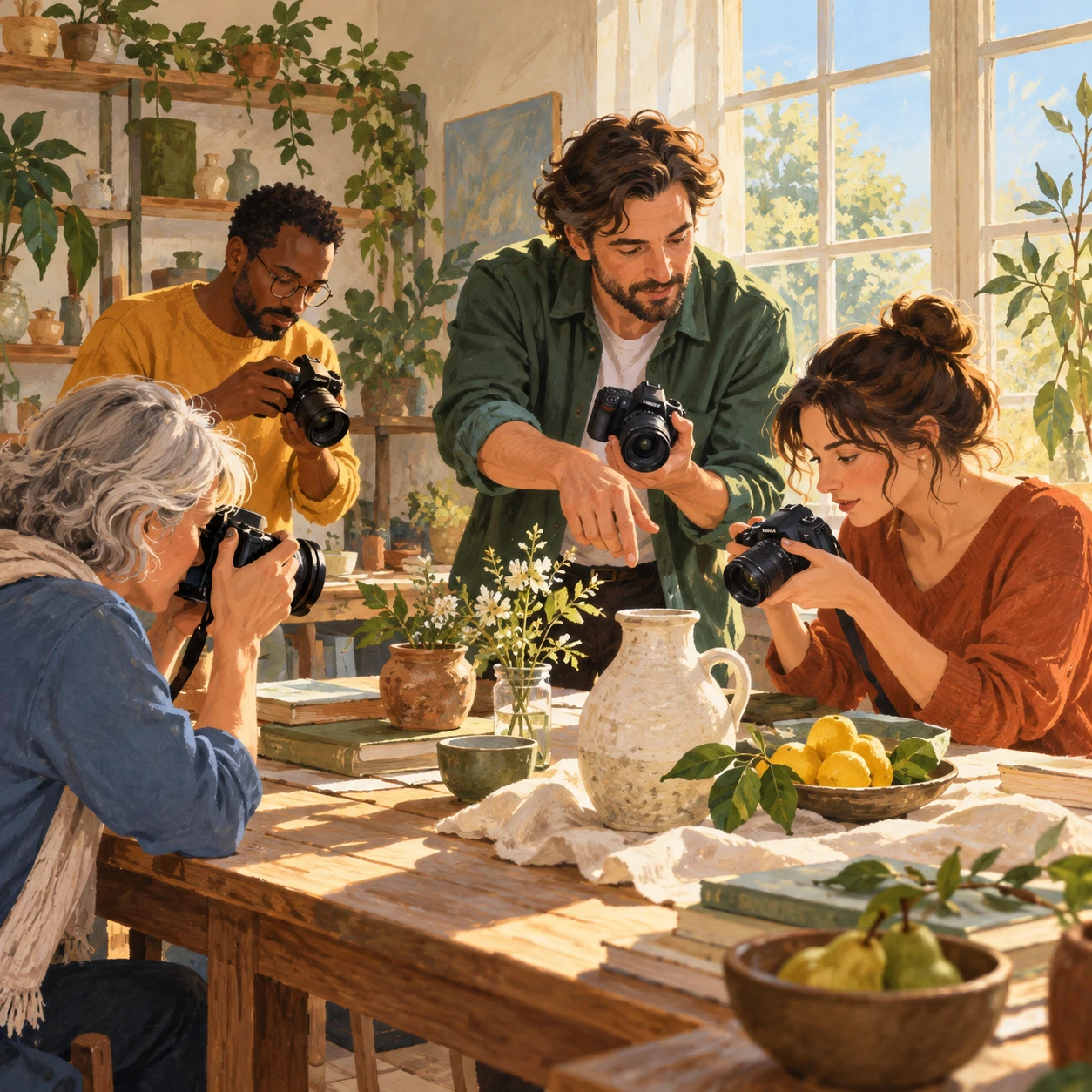
A photography workshop — context illustration
Comprensión oralB1

Working with the camera you already have

Escucha la grabación original en inglés, responde y abre después la transcripción para comprobar las pruebas. Estas preguntas relacionadas usan la misma grabación; el nivel es orientativo, no un resultado certificado.

Un poco de claridad

Detalles explícitos · Condiciones y permisos

Relaciona la persona, hora, lugar o cantidad con el hecho correcto. Conserva la condición o permiso indicados; una norma no demuestra que un hecho ocurriera.

The doors open at eight. The class starts at nine.

Razones

Usa la razón dada; una razón externa que parece posible no basta.

We meet inside because it is raining.

Condiciones y permisos · Qué apoya un ejemplo · Límites de la evidencia

Conserva la condición o permiso indicados; una norma no demuestra que un hecho ocurriera. Identifica qué idea apoya el ejemplo sin tomarlo como prueba universal. Distingue lo respaldado de lo desconocido. Que algo no se mencione no prueba que no exista.

If the front door is locked, use the side entrance.

Material de aprendizaje
A photography workshop — context illustration
Comprensión oralB1

Working with the camera you already have

Escucha la grabación original en inglés, responde y abre después la transcripción para comprobar las pruebas. Estas preguntas relacionadas usan la misma grabación; el nivel es orientativo, no un resultado certificado.

0/10
Preguntas
01 / 10D01Guárdalo para encontrarlo en Mi colección.

Working with the camera you already have

What equipment may learners use?

Tu respuesta
1 / 10

Tu ruta de aprendizaje

01
Paso 1 · Calentamiento

Calentamiento

0/3
02
Paso 2 · Practicar la habilidad

Detalles explícitos · Condiciones y permisos

0/1

Relaciona la persona, hora, lugar o cantidad con el hecho correcto. Conserva la condición o permiso indicados; una norma no demuestra que un hecho ocurriera.

The doors open at eight. The class starts at nine.
03
Paso 3 · Practicar la habilidad

Razones

0/1

Usa la razón dada; una razón externa que parece posible no basta.

We meet inside because it is raining.
04
Paso 4 · Practicar la habilidad

Condiciones y permisos · Qué apoya un ejemplo · Límites de la evidencia

0/1

Conserva la condición o permiso indicados; una norma no demuestra que un hecho ocurriera. Identifica qué idea apoya el ejemplo sin tomarlo como prueba universal. Distingue lo respaldado de lo desconocido. Que algo no se mencione no prueba que no exista.

If the front door is locked, use the side entrance.
05
Paso 5 · Práctica relacionada

Práctica relacionada

0/2
06
Paso 6 · Reto del texto

Reto del texto

0/2
Repasos de esta unidad

Haz que los errores sirvan.

Conserva el primer intento, comprueba la evidencia y prueba otra pregunta. Responder sobre el mismo material no demuestra transferencia a otro texto.

0

Aún no hay repasos. Prueba un calentamiento corto.

Mapa de la lección

Un taller de fotografía

B1
A photography workshop

Puntos de la lección

01

Detalles explícitos · Condiciones y permisos

Relaciona la persona, hora, lugar o cantidad con el hecho correcto. Conserva la condición o permiso indicados; una norma no demuestra que un hecho ocurriera.

The doors open at eight. The class starts at nine.
02

Razones

Usa la razón dada; una razón externa que parece posible no basta.

We meet inside because it is raining.
03

Condiciones y permisos · Qué apoya un ejemplo · Límites de la evidencia

Conserva la condición o permiso indicados; una norma no demuestra que un hecho ocurriera. Identifica qué idea apoya el ejemplo sin tomarlo como prueba universal. Distingue lo respaldado de lo desconocido. Que algo no se mencione no prueba que no exista.

If the front door is locked, use the side entrance.

Preguntas y respuestas

Abrir una respuesta registra ayuda para esa pregunta.

D01 · Calentamiento

Working with the camera you already have

What equipment may learners use?

  1. A professional camera, even if its owner cannot save an image.
  2. Any phone, even if its camera cannot save photographs.
  3. A phone only if it produces professional-quality photographs.
  4. A phone whose camera they know how to operate.
Respuesta y explicación
A phone whose camera they know how to operate.

Respuesta: «A phone whose camera they know how to operate.». Prueba: «A phone is fine, provided you know how to open its camera and save a photograph.». Revisa «A professional camera, even if its owner cannot save an image.»: Cambia u omite una condición del texto. Revisa «A phone only if it produces professional-quality photographs.»: Cambia u omite una condición del texto.

D02 · Calentamiento

Working with the camera you already have

Why does the tutor ask learners to bring a jacket?

  1. The first exercise involves photographing clothes outdoors.
  2. Because the group will go outside even in cloudy weather.
  3. The windows must stay open throughout the classroom session.
  4. The group will begin outside in the town square.
Respuesta y explicación
Because the group will go outside even in cloudy weather.

Respuesta: «Because the group will go outside even in cloudy weather.». Prueba: «Bring a jacket because we will go outside even if the weather is cloudy.». Revisa «The windows must stay open throughout the classroom session.»: El texto no da este dato. No lo añadas. Revisa «The first exercise involves photographing clothes outdoors.»: El texto no da este dato. No lo añadas.

D03 · Calentamiento

Working with the camera you already have

Will choosing not to join the online gallery reduce a learner’s feedback?

  1. No, provided a learner submits pictures to the public gallery instead.
  2. No, gallery participation is optional and does not affect feedback.
  3. Yes, because partners will comment only on gallery images.
  4. Feedback is available only after the gallery has closed.
Respuesta y explicación
No, gallery participation is optional and does not affect feedback.

Respuesta: «No, gallery participation is optional and does not affect feedback.». Prueba: «Participation in the gallery is optional; it will not affect the feedback you receive.». Revisa «Feedback is available only after the gallery has closed.»: El texto no da este dato. No lo añadas. Revisa «Yes, because partners will comment only on gallery images.»: Dice lo contrario del dato pertinente.

P01 · Practicar la habilidad

Working with the camera you already have

What should learners turn off?

  1. The camera between each of the three positions.
  2. All conversation during partner feedback.
  3. The camera sound.
  4. Automatic saving of photographs.
Respuesta y explicación
The camera sound.

Respuesta: «The camera sound.». Prueba: «Please turn off the sound so it does not disturb other learners.». Revisa «The camera between each of the three positions.»: El texto no da este dato. No lo añadas. Revisa «Automatic saving of photographs.»: Dice lo contrario del dato pertinente. Prueba: «provided you know how to open its camera and save a photograph.».

P02 · Practicar la habilidad

Working with the camera you already have

Why has the group’s starting location changed?

  1. The market prevents learners from moving the cup.
  2. The classroom windows provide less light after lunch.
  3. The canal path will be too busy before lunch.
  4. A street market would make instructions hard to hear.
Respuesta y explicación
A street market would make instructions hard to hear.

Respuesta: «A street market would make instructions hard to hear.». Prueba: «a large street market is being held there today, and it would be difficult for the group to hear instructions.». Revisa «The canal path will be too busy before lunch.»: El texto no da este dato. No lo añadas. Revisa «The classroom windows provide less light after lunch.»: El texto no da este dato. No lo añadas.

P03 · Practicar la habilidad

Working with the camera you already have

What is the first exercise intended to demonstrate?

  1. How changing the subject makes a phone camera perform better.
  2. How the photographer’s position changes the image.
  3. How an unusual subject is more important than background or light.
  4. How moving the cup changes the image.
Respuesta y explicación
How the photographer’s position changes the image.

Respuesta: «How the photographer’s position changes the image.». Prueba: «The point is to see how changing your own position changes the background and the light.». Revisa «How moving the cup changes the image.»: El texto no da este dato. No lo añadas. Prueba: «without moving the cup.». Revisa «How changing the subject makes a phone camera perform better.»: Da un dato distinto del que se pregunta.

R01 · Práctica relacionada

Working with the camera you already have

What must stay in the same place during the first exercise?

  1. The camera.
  2. The photographer’s partner.
  3. The cup.
  4. Each photographer.
Respuesta y explicación
The cup.

Respuesta: «The cup.». Prueba: «You will photograph it from three different positions without moving the cup.». Revisa «The photographer’s partner.»: El texto no da este dato. No lo añadas. Prueba: «you will choose one picture to show a partner.». Revisa «Each photographer.»: Dice lo contrario del dato pertinente. Prueba: «You will photograph it from three different positions».

R02 · Práctica relacionada

Working with the camera you already have

What should learners explain before a partner comments?

  1. What they were trying to do in the photograph.
  2. Why their partner should prefer that subject.
  3. Which gallery the photograph will be published in.
  4. Why they chose an expensive camera.
Respuesta y explicación
What they were trying to do in the photograph.

Respuesta: «What they were trying to do in the photograph.». Prueba: «Explain what you tried to do before your partner comments.». Revisa «Why they chose an expensive camera.»: El texto no da este dato. No lo añadas. Revisa «Why their partner should prefer that subject.»: Usa un criterio de éxito distinto del indicado en el texto. Prueba: «rather than just whether someone likes the subject.».

X01 · Reto del texto

Working with the camera you already have

What is required before publishing a photograph of another learner?

  1. Asking that person for permission.
  2. Agreeing with the partner that the photograph looks good.
  3. Waiting until the private gallery opens.
  4. Selecting the image as one of the final two.
Respuesta y explicación
Asking that person for permission.

Respuesta: «Asking that person for permission.». Prueba: «Please do not publish photographs of other learners without asking them first.». Revisa «Agreeing with the partner that the photograph looks good.»: Cambia u omite una condición del texto. Revisa «Waiting until the private gallery opens.»: Cambia u omite una condición del texto. Prueba: «a small private online gallery.».

X02 · Reto del texto

Working with the camera you already have

What outcome does the tutor consider realistic for one day?

  1. The ability to judge every photograph without further practice.
  2. A complete understanding of every camera setting.
  3. Two finished images that must be published publicly.
  4. A more deliberate approach and a few exercises to continue.
Respuesta y explicación
A more deliberate approach and a few exercises to continue.

Respuesta: «A more deliberate approach and a few exercises to continue.». Prueba: «I hope you leave with a more deliberate way of looking and one or two exercises you can continue at home.». Revisa «A complete understanding of every camera setting.»: Amplía o refuerza la afirmación más de lo que permite el texto. Revisa «The ability to judge every photograph without further practice.»: Amplía o refuerza la afirmación más de lo que permite el texto.