01بناء الصيغة
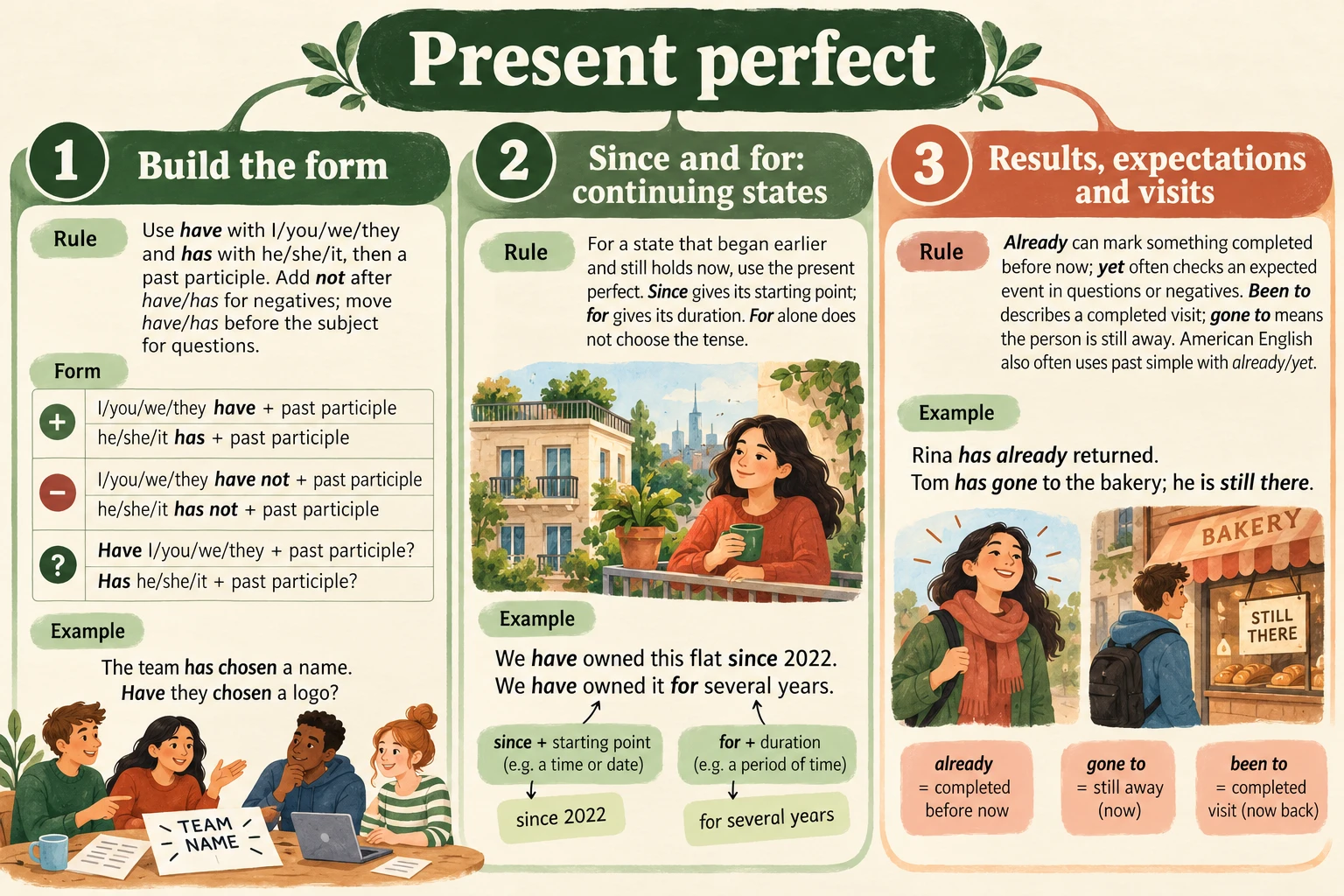
نستخدم have مع I/you/we/they وhas مع he/she/it، ثم التصريف الثالث للفعل. للنفي نضيف not بعد have/has، وللسؤال نضع have/has قبل الفاعل النحوي.
have/has + past participle
المضارع التام · A2. نستخدم have مع I/you/we/they وhas مع he/she/it، ثم التصريف الثالث للفعل. للنفي نضيف not بعد have/has، وللسؤال نضع have/has قبل الفاعل النحوي.
اربط الماضي بالحاضر، وتدرّب على have/has والتصريف الثالث وsince/for وbeen وgone.
نستخدم have مع I/you/we/they وhas مع he/she/it، ثم التصريف الثالث للفعل. للنفي نضيف not بعد have/has، وللسؤال نضع have/has قبل الفاعل النحوي.
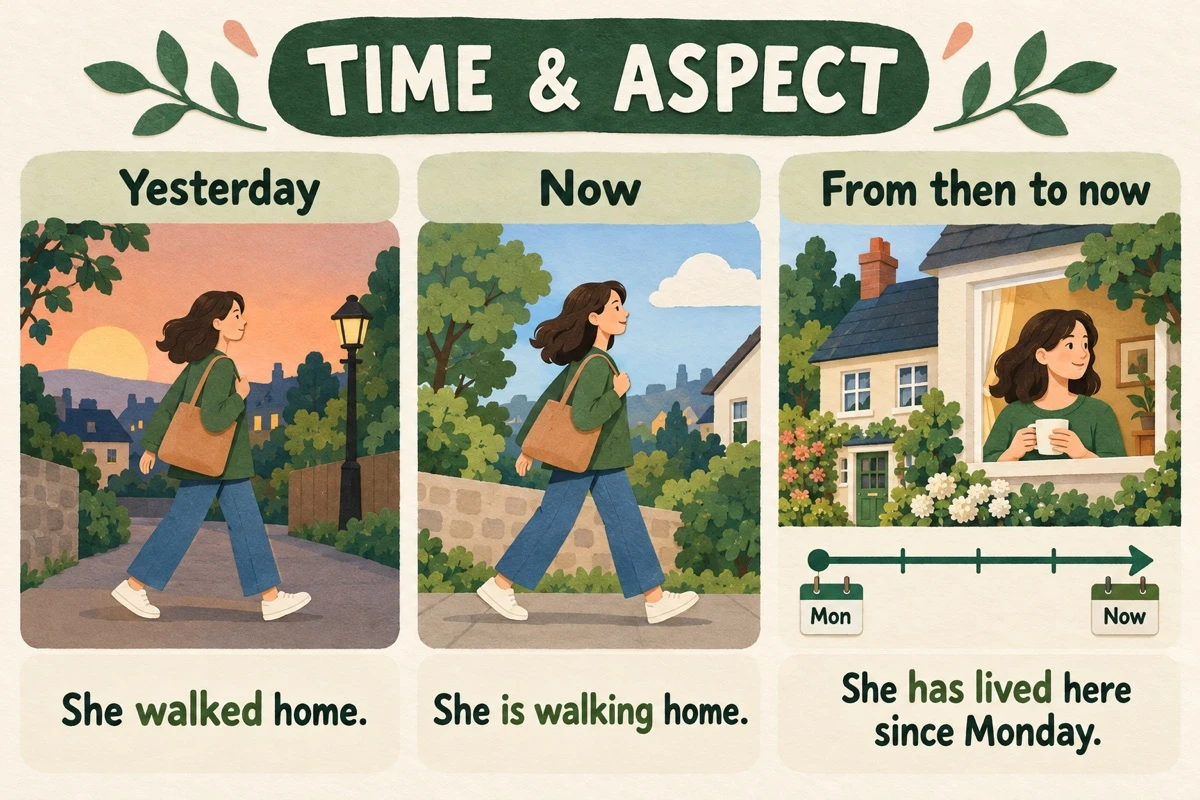
have/has + past participleنستخدم المضارع التام لحالة بدأت سابقًا وما زالت قائمة. تحدد since نقطة البداية وتحدد for المدة. وجود for وحده لا يحدد الزمن.
since + starting point · for + durationقد تدل already على إنجاز حدث قبل الآن، وتُستخدم yet غالبًا في سؤال أو نفي عن حدث متوقع. تصف been to زيارة انتهت بالعودة، وتدل gone to على أن الشخص لم يعد بعد. ويشيع أيضًا الماضي البسيط مع already/yet في الإنجليزية الأمريكية.
has gone → still away · has been → returnedI have finished.She has finished.
I haven’t finished.She hasn’t finished.
Have you finished?Has she finished?
Yes, I have.No, she hasn’t.
The team needs an introduction before it can send its report. Ask whether Maya has completed it.
نستخدم have مع I/you/we/they وhas مع he/she/it، ثم التصريف الثالث للفعل. للنفي نضيف not بعد have/has، وللسؤال نضع have/has قبل الفاعل النحوي.
The team has chosen a name. Have they chosen a logo?نستخدم المضارع التام لحالة بدأت سابقًا وما زالت قائمة. تحدد since نقطة البداية وتحدد for المدة. وجود for وحده لا يحدد الزمن.
We have owned this flat since 2022. We have owned it for several years.قد تدل already على إنجاز حدث قبل الآن، وتُستخدم yet غالبًا في سؤال أو نفي عن حدث متوقع. تصف been to زيارة انتهت بالعودة، وتدل gone to على أن الشخص لم يعد بعد. ويشيع أيضًا الماضي البسيط مع already/yet في الإنجليزية الأمريكية.
Rina has already returned. Tom has gone to the bakery; he is still there.احتفظ بالمحاولة الأولى، وافهم التغيير، ثم اختبر فهمك في موقف جديد.
لا توجد ملاحظات بعد. جرّب تهيئة قصيرة.
نستخدم have مع I/you/we/they وhas مع he/she/it، ثم التصريف الثالث للفعل. للنفي نضيف not بعد have/has، وللسؤال نضع have/has قبل الفاعل النحوي.
The team has chosen a name. Have they chosen a logo?نستخدم المضارع التام لحالة بدأت سابقًا وما زالت قائمة. تحدد since نقطة البداية وتحدد for المدة. وجود for وحده لا يحدد الزمن.
We have owned this flat since 2022. We have owned it for several years.قد تدل already على إنجاز حدث قبل الآن، وتُستخدم yet غالبًا في سؤال أو نفي عن حدث متوقع. تصف been to زيارة انتهت بالعودة، وتدل gone to على أن الشخص لم يعد بعد. ويشيع أيضًا الماضي البسيط مع already/yet في الإنجليزية الأمريكية.
Rina has already returned. Tom has gone to the bakery; he is still there.فتح إجابة يسجّل استخدام المساعدة لذلك السؤال.
The team needs an introduction before it can send its report. Ask whether Maya has completed it.
انظر إلى «The team needs an introduction before it can send its report. Ask whether Maya has completed it.». نستخدم have مع I/you/we/they وhas مع he/she/it، ثم التصريف الثالث للفعل. للنفي نضيف not بعد have/has، وللسؤال نضع have/has قبل الفاعل النحوي. الجملة المكتملة: «Has Maya written the introduction?».
I met Leila in 2020. We became friends then and are still friends. I have known Leila ___ 2020.
انظر إلى «I met Leila in 2020. We became friends then and are still friends. I have known Leila ___ 2020.». نستخدم المضارع التام لحالة بدأت سابقًا وما زالت قائمة. تحدد since نقطة البداية وتحدد for المدة. وجود for وحده لا يحدد الزمن. الجملة المكتملة: «I met Leila in 2020. We became friends then and are still friends. I have known Leila since 2020.».
Omar left for the library. He is there now and will return at six.
انظر إلى «Omar left for the library. He is there now and will return at six.». قد تدل already على إنجاز حدث قبل الآن، وتُستخدم yet غالبًا في سؤال أو نفي عن حدث متوقع. تصف been to زيارة انتهت بالعودة، وتدل gone to على أن الشخص لم يعد بعد. ويشيع أيضًا الماضي البسيط مع already/yet في الإنجليزية الأمريكية. الجملة المكتملة: «Omar has gone to the library.».
We need to see the new timetable before choosing a class. We ___ the new timetable. Please show it to us now.
مع 'we' نستخدم 'have not' أو 'haven’t'. والتصريف الثالث للفعل هو 'seen' لا 'saw'. تُقبل أيضاً هذه البدائل المراجَعة في هذه المهمة: 've not seen. ليست القائمة حصرية لكل صياغة إنجليزية ممكنة.
This is my current bicycle. I bought it three years ago and still own it. I have had it ___ three years.
انظر إلى «This is my current bicycle. I bought it three years ago and still own it. I have had it ___ three years.». نستخدم المضارع التام لحالة بدأت سابقًا وما زالت قائمة. تحدد since نقطة البداية وتحدد for المدة. وجود for وحده لا يحدد الزمن. الجملة المكتملة: «This is my current bicycle. I bought it three years ago and still own it. I have had it for three years.».
You offer to reserve a table for us. I completed the reservation earlier, so you do not need to do it.
انظر إلى «You offer to reserve a table for us. I completed the reservation earlier, so you do not need to do it.». قد تدل already على إنجاز حدث قبل الآن، وتُستخدم yet غالبًا في سؤال أو نفي عن حدث متوقع. تصف been to زيارة انتهت بالعودة، وتدل gone to على أن الشخص لم يعد بعد. ويشيع أيضًا الماضي البسيط مع already/yet في الإنجليزية الأمريكية. الجملة المكتملة: «I have already reserved a table.».
I moved to this town in 2019 and still live here. I have lived here ___ 2019.
بدأ السكن هنا في 2019 وما زال مستمرًا؛ وتسبق 'since' سنة البداية.
Find the verb-form error: Jon has eat his lunch, so he is not hungry.
أنهى Jon غداءه وليس جائعًا الآن. بعد 'has' نستخدم التصريف الثالث للفعل 'eaten'.
Ava started her current job five years ago and still has it. Find the error: Ava has had this job since five years.
انظر إلى «Ava started her current job five years ago and still has it. Find the error: Ava has had this job since five years.». نستخدم المضارع التام لحالة بدأت سابقًا وما زالت قائمة. تحدد since نقطة البداية وتحدد for المدة. وجود for وحده لا يحدد الزمن. الجملة المكتملة: «Ava has had this job for five years.».
Nora visited the post office and is back home now. A message incorrectly says: Nora has gone to the post office.
انظر إلى «Nora visited the post office and is back home now. A message incorrectly says: Nora has gone to the post office.». قد تدل already على إنجاز حدث قبل الآن، وتُستخدم yet غالبًا في سؤال أو نفي عن حدث متوقع. تصف been to زيارة انتهت بالعودة، وتدل gone to على أن الشخص لم يعد بعد. ويشيع أيضًا الماضي البسيط مع already/yet في الإنجليزية الأمريكية. الجملة المكتملة: «Nora has been to the post office.».
We are waiting at the stop. The bus is late, and it is not here now. We still expect it to come.
انظر إلى «We are waiting at the stop. The bus is late, and it is not here now. We still expect it to come.». قد تدل already على إنجاز حدث قبل الآن، وتُستخدم yet غالبًا في سؤال أو نفي عن حدث متوقع. تصف been to زيارة انتهت بالعودة، وتدل gone to على أن الشخص لم يعد بعد. ويشيع أيضًا الماضي البسيط مع already/yet في الإنجليزية الأمريكية. الجملة المكتملة: «The bus has not arrived yet.».
The paper tray was broken. I repaired it, and the printer works now.
لإصلاح الطابعة نتيجة حاضرة: إنها تعمل الآن. نستخدم 'have fixed'، وتُقبل أيضًا الصيغة المختصرة 'I’ve fixed'.