01المبني للمجهول في المضارع البسيط
لوصف عمل متكرر نستخدم am/is/are ثم التصريف الثالث للفعل. تتوافق صيغة be مع الشخص أو الشيء الذي يقع عليه الفعل.
am/is/are + past participle
المبني للمجهول: المضارع البسيط والماضي البسيط · A2. لوصف عمل متكرر نستخدم am/is/are ثم التصريف الثالث للفعل. تتوافق صيغة be مع الشخص أو الشيء الذي يقع عليه الفعل.
عبّر عمّا يحدث لشخص أو شيء، وتدرّب على المبني للمجهول في المضارع والماضي البسيطين.
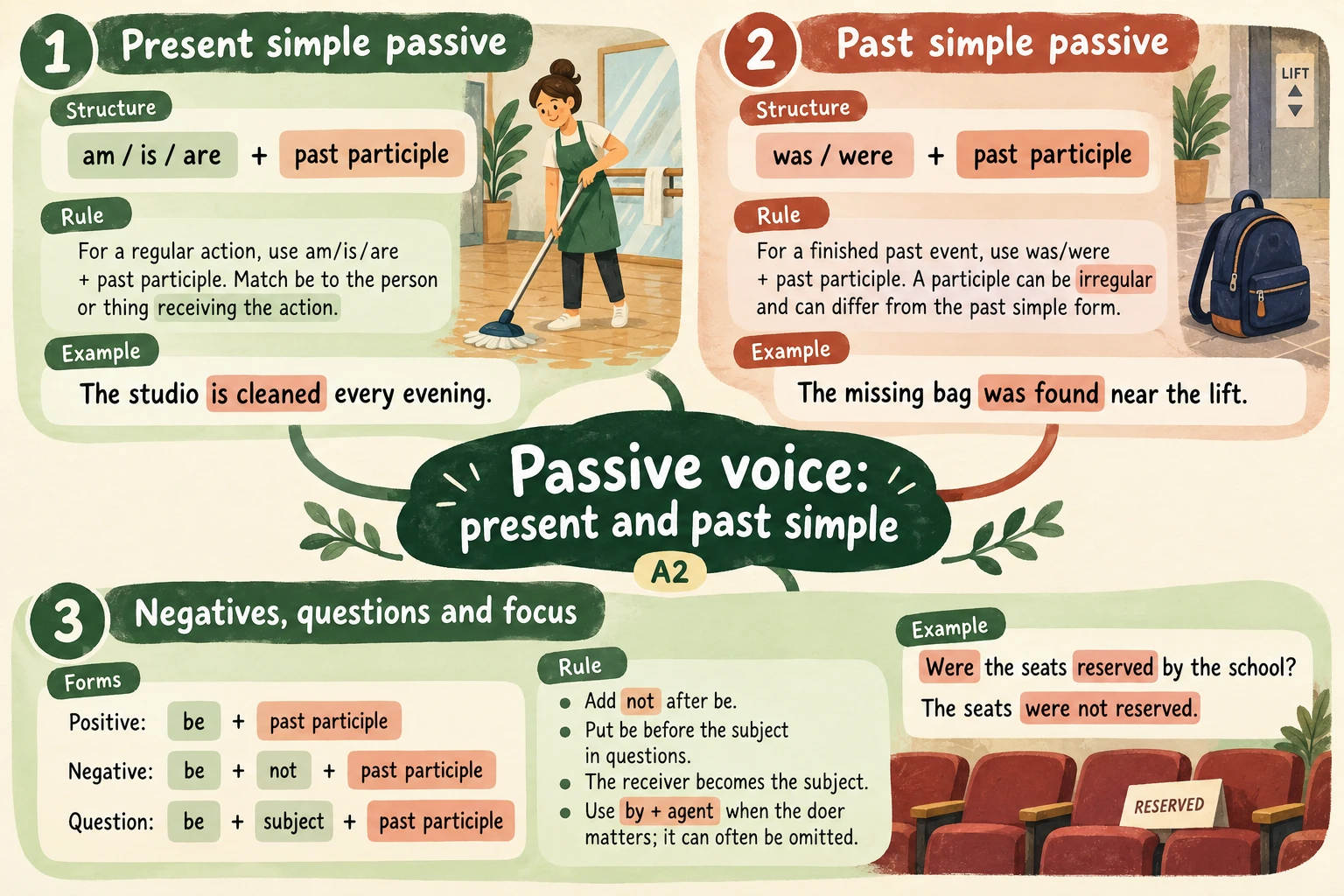
لوصف عمل متكرر نستخدم am/is/are ثم التصريف الثالث للفعل. تتوافق صيغة be مع الشخص أو الشيء الذي يقع عليه الفعل.
am/is/are + past participleلوصف حدث انتهى في الماضي نستخدم was/were ثم التصريف الثالث للفعل. وقد يختلف هذا الشكل غير المنتظم عن صيغة الماضي البسيط.
was/were + past participleنضيف not بعد be، ونضع be قبل الفاعل النحوي في السؤال. يصبح متلقي الفعل محور الجملة. نذكر منفذ الفعل باستخدام by إذا كان مهمًا، ويمكن حذفه في حالات كثيرة.
Was the room cleaned? · It wasn’t cleaned.The room is cleaned daily.It was cleaned yesterday.
The room isn’t cleaned daily.It wasn’t cleaned yesterday.
Is the room cleaned daily?Was it cleaned yesterday?
Yes, it is.No, it wasn’t.
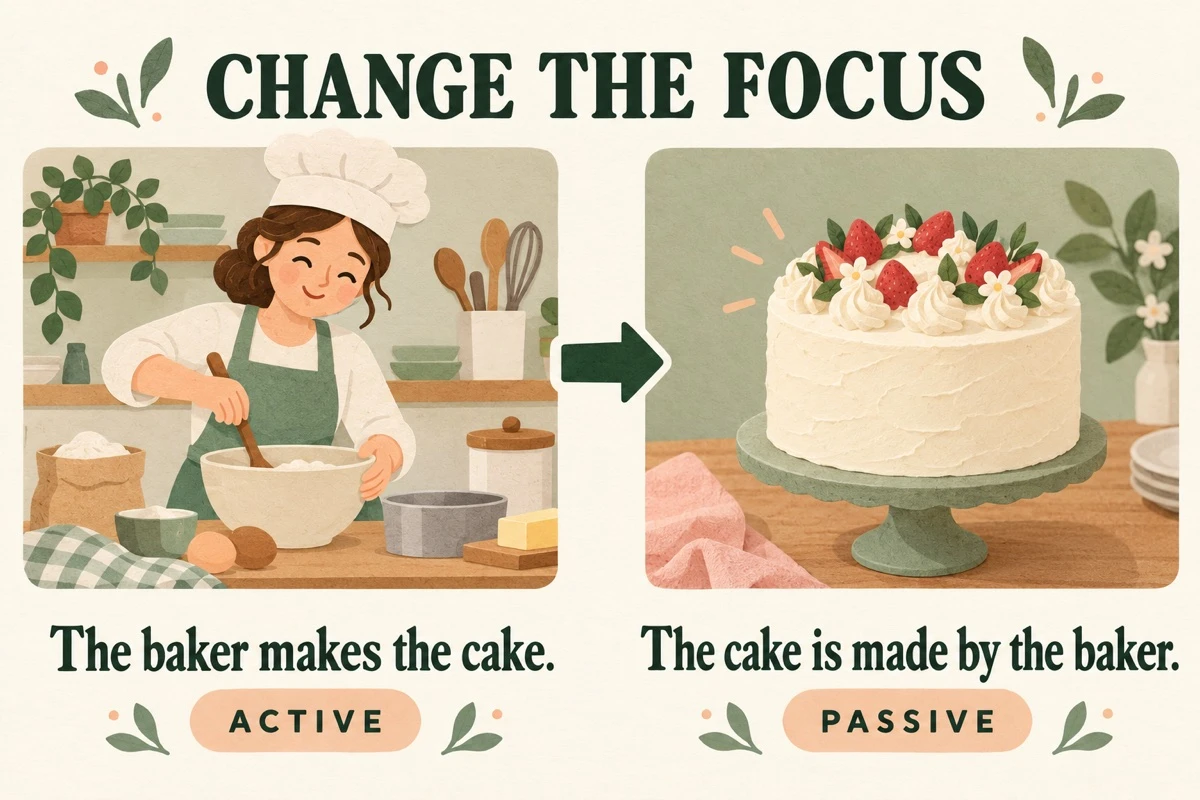
A cleaner cleans one entrance every morning. Focus on the entrance.
لوصف عمل متكرر نستخدم am/is/are ثم التصريف الثالث للفعل. تتوافق صيغة be مع الشخص أو الشيء الذي يقع عليه الفعل.
The studio is cleaned every evening.لوصف حدث انتهى في الماضي نستخدم was/were ثم التصريف الثالث للفعل. وقد يختلف هذا الشكل غير المنتظم عن صيغة الماضي البسيط.
The missing bag was found near the lift.نضيف not بعد be، ونضع be قبل الفاعل النحوي في السؤال. يصبح متلقي الفعل محور الجملة. نذكر منفذ الفعل باستخدام by إذا كان مهمًا، ويمكن حذفه في حالات كثيرة.
Were the seats reserved by the school? The seats were not reserved.احتفظ بالمحاولة الأولى، وافهم التغيير، ثم اختبر فهمك في موقف جديد.
لا توجد ملاحظات بعد. جرّب تهيئة قصيرة.
لوصف عمل متكرر نستخدم am/is/are ثم التصريف الثالث للفعل. تتوافق صيغة be مع الشخص أو الشيء الذي يقع عليه الفعل.
The studio is cleaned every evening.لوصف حدث انتهى في الماضي نستخدم was/were ثم التصريف الثالث للفعل. وقد يختلف هذا الشكل غير المنتظم عن صيغة الماضي البسيط.
The missing bag was found near the lift.نضيف not بعد be، ونضع be قبل الفاعل النحوي في السؤال. يصبح متلقي الفعل محور الجملة. نذكر منفذ الفعل باستخدام by إذا كان مهمًا، ويمكن حذفه في حالات كثيرة.
Were the seats reserved by the school? The seats were not reserved.فتح إجابة يسجّل استخدام المساعدة لذلك السؤال.
A cleaner cleans one entrance every morning. Focus on the entrance.
انظر إلى «A cleaner cleans one entrance every morning. Focus on the entrance.». لوصف عمل متكرر نستخدم am/is/are ثم التصريف الثالث للفعل. تتوافق صيغة be مع الشخص أو الشيء الذي يقع عليه الفعل. الجملة المكتملة: «The entrance is cleaned every morning.».
The secretary wrote the meeting minutes yesterday. Minutes means the written record of a meeting.
انظر إلى «The secretary wrote the meeting minutes yesterday. Minutes means the written record of a meeting.». لوصف حدث انتهى في الماضي نستخدم was/were ثم التصريف الثالث للفعل. وقد يختلف هذا الشكل غير المنتظم عن صيغة الماضي البسيط. الجملة المكتملة: «The minutes were written yesterday.».
The club checks its bikes before each ride. Ask about this routine, focusing on the bikes.
انظر إلى «The club checks its bikes before each ride. Ask about this routine, focusing on the bikes.». نضيف not بعد be، ونضع be قبل الفاعل النحوي في السؤال. يصبح متلقي الفعل محور الجملة. نذكر منفذ الفعل باستخدام by إذا كان مهمًا، ويمكن حذفه في حالات كثيرة. الجملة المكتملة: «Are the bikes checked before each ride?».
The cafe makes these sandwiches here every morning. The sandwiches ___ here every morning.
تُصنع الشطائر بانتظام؛ والاسم 'sandwiches' جمع، لذا نستخدم 'are made'.
Last night's storm broke two windows. Focus on the windows.
انظر إلى «Last night's storm broke two windows. Focus on the windows.». لوصف حدث انتهى في الماضي نستخدم was/were ثم التصريف الثالث للفعل. وقد يختلف هذا الشكل غير المنتظم عن صيغة الماضي البسيط. الجملة المكتملة: «The two windows were broken during last night's storm.».
The caretaker forgot to lock the doors last night. Nobody else locked them. Focus on the doors.
انظر إلى «The caretaker forgot to lock the doors last night. Nobody else locked them. Focus on the doors.». نضيف not بعد be، ونضع be قبل الفاعل النحوي في السؤال. يصبح متلقي الفعل محور الجملة. نذكر منفذ الفعل باستخدام by إذا كان مهمًا، ويمكن حذفه في حالات كثيرة. الجملة المكتملة: «The doors were not locked last night.».
A local artist painted this mural in 2021.
تتلقى 'This mural' الفعل؛ نستخدم 'was painted' ونذكر الفنان باستخدام 'by'.
Find the agreement error: The invitations is sent every May.
الاسم 'Invitations' جمع؛ غيّر 'is' إلى 'are' مع إبقاء 'sent' وعبارة التكرار.
Find the verb-form error: The parcel was took to the office yesterday.
انظر إلى «Find the verb-form error: The parcel was took to the office yesterday.». لوصف حدث انتهى في الماضي نستخدم was/were ثم التصريف الثالث للفعل. وقد يختلف هذا الشكل غير المنتظم عن صيغة الماضي البسيط. الجملة المكتملة: «The parcel was taken to the office yesterday.».
Find the error in this question: Did the tickets checked at the gate yesterday?
انظر إلى «Find the error in this question: Did the tickets checked at the gate yesterday?». نضيف not بعد be، ونضع be قبل الفاعل النحوي في السؤال. يصبح متلقي الفعل محور الجملة. نذكر منفذ الفعل باستخدام by إذا كان مهمًا، ويمكن حذفه في حالات كثيرة. الجملة المكتملة: «Were the tickets checked at the gate yesterday?».
Our workshop prints these labels every Friday. Focus on the labels.
انظر إلى «Our workshop prints these labels every Friday. Focus on the labels.». لوصف عمل متكرر نستخدم am/is/are ثم التصريف الثالث للفعل. تتوافق صيغة be مع الشخص أو الشيء الذي يقع عليه الفعل. الجملة المكتملة: «These labels are printed in our workshop every Friday.».
The storm damaged the roof last winter.
وقع الضرر على السقف في حدث ماضٍ انتهى؛ نستخدم 'was damaged' ونحافظ على السبب بعبارة 'by the storm'.