Stated details · Inference from clues
Keep the requested person, time, place or amount attached to the correct event. Combine the actual clues without adding an unsupported fact.
The doors open at eight. The class starts at nine.

Reducing waste at a bakery · B1. Keep the requested person, time, place or amount attached to the correct event. Combine the actual clues without adding an unsupported fact.
Read the original English material and answer with evidence. The level is an editorial guide, not a certified result.
Read the original English material and answer with evidence. The level is an editorial guide, not a certified result.
To the team,
During last month’s stock review, we found that we were counting unsold loaves but not the damaged packaging we threw away each day. From Monday, we will record both. This will give us a clearer picture of where waste occurs, rather than assuming that every problem starts with making too much bread.
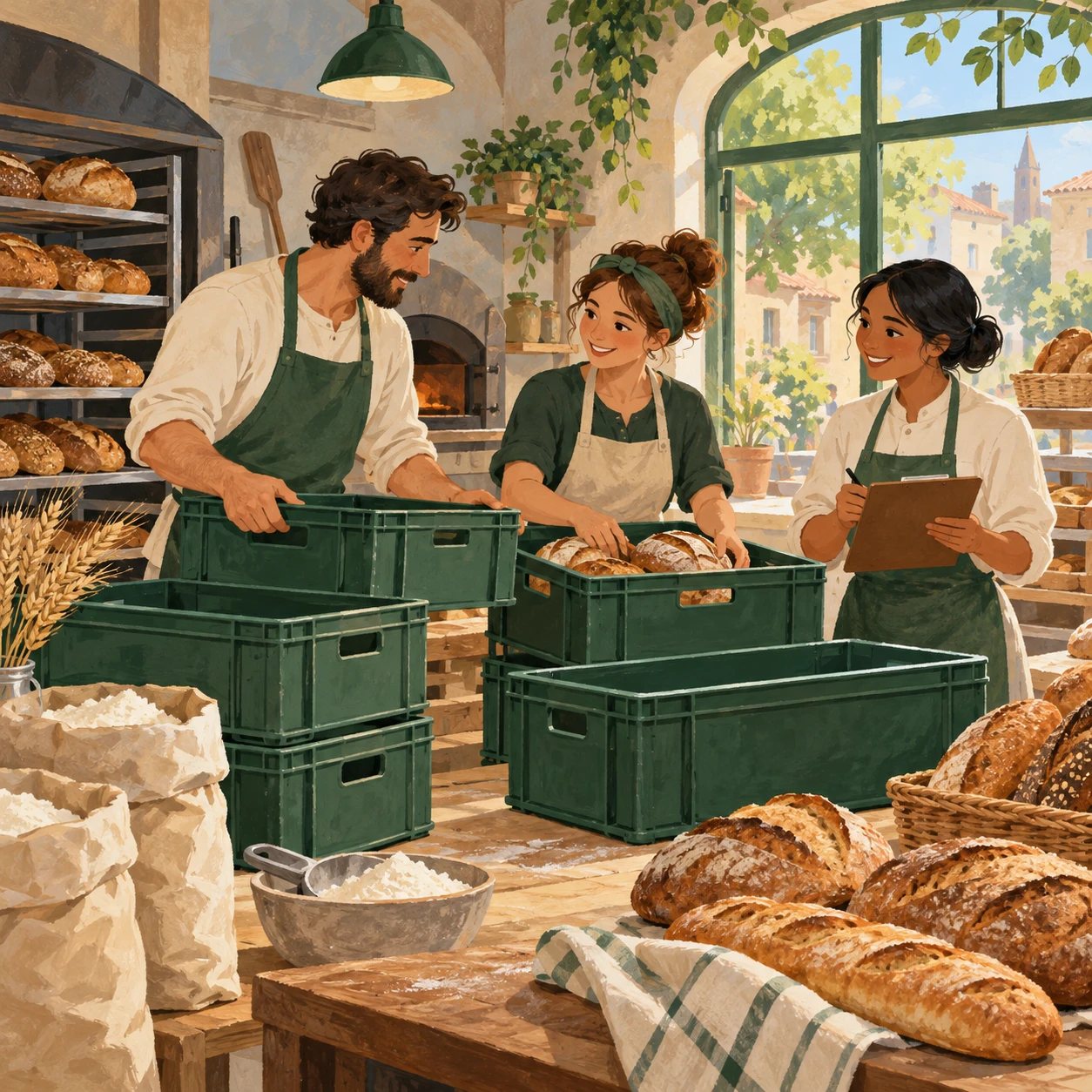
For two weeks, deliveries to the three cafes on North Road will use returnable plastic crates instead of single-use cardboard boxes. The crates are already owned by the bakery, so we do not need to buy more for this trial. Delivery staff must count them at each stop. Cafe staff will leave empty crates ready for collection the next morning. Please do not stack full crates above the marked line in the van; the lower loaves can be damaged by too much weight.
We considered asking all home-delivery customers to return packaging as well. For now, that would add too much time to the route. We will review the cafe trial before changing home deliveries. A successful result for three regular business stops would not automatically mean the same system works for dozens of separate homes.
At the shop, slices left from sandwich preparation will be set aside for our usual food partner, but only if they meet the existing food-handling rules. This is not permission to keep food for longer than we normally allow. Any uncertainty should go to the shift supervisor, not be settled by guessing that a donation is better than disposal.
At the end of the trial, we will compare damaged packaging, missing crates and the extra minutes spent collecting them. We will also ask the cafe staff whether storing the empties caused problems. Lower rubbish totals are important, but the system must be safe and manageable for the people using it. Please bring suggestions to Friday’s meeting, including anything that makes recording the information difficult.
Marta, manager
Keep the requested person, time, place or amount attached to the correct event. Combine the actual clues without adding an unsupported fact.
The doors open at eight. The class starts at nine.
Use the reason actually given; a plausible reason from outside the text is not enough. Keep the requested person, time, place or amount attached to the correct event.
We meet inside because it is raining.
Separate supported claims from what the evidence leaves unknown. No mention does not prove absence. Look for evaluations and reservations; do not turn a positive fact into unconditional approval.
The notice gives a price, but says nothing about delivery.
Read the original English material and answer with evidence. The level is an editorial guide, not a certified result.
To the team,
During last month’s stock review, we found that we were counting unsold loaves but not the damaged packaging we threw away each day. From Monday, we will record both. This will give us a clearer picture of where waste occurs, rather than assuming that every problem starts with making too much bread.
For two weeks, deliveries to the three cafes on North Road will use returnable plastic crates instead of single-use cardboard boxes. The crates are already owned by the bakery, so we do not need to buy more for this trial. Delivery staff must count them at each stop. Cafe staff will leave empty crates ready for collection the next morning. Please do not stack full crates above the marked line in the van; the lower loaves can be damaged by too much weight.
We considered asking all home-delivery customers to return packaging as well. For now, that would add too much time to the route. We will review the cafe trial before changing home deliveries. A successful result for three regular business stops would not automatically mean the same system works for dozens of separate homes.
At the shop, slices left from sandwich preparation will be set aside for our usual food partner, but only if they meet the existing food-handling rules. This is not permission to keep food for longer than we normally allow. Any uncertainty should go to the shift supervisor, not be settled by guessing that a donation is better than disposal.
At the end of the trial, we will compare damaged packaging, missing crates and the extra minutes spent collecting them. We will also ask the cafe staff whether storing the empties caused problems. Lower rubbish totals are important, but the system must be safe and manageable for the people using it. Please bring suggestions to Friday’s meeting, including anything that makes recording the information difficult.
Marta, manager
Reducing waste at a bakery
Keep the requested person, time, place or amount attached to the correct event. Combine the actual clues without adding an unsupported fact.
The doors open at eight. The class starts at nine.Use the reason actually given; a plausible reason from outside the text is not enough. Keep the requested person, time, place or amount attached to the correct event.
We meet inside because it is raining.Separate supported claims from what the evidence leaves unknown. No mention does not prove absence. Look for evaluations and reservations; do not turn a positive fact into unconditional approval.
The notice gives a price, but says nothing about delivery.Keep your first attempt, check the evidence and try another question. A follow-up on the same material does not prove transfer to a new text.
No practice notes yet. Try a short warm-up.
Keep the requested person, time, place or amount attached to the correct event. Combine the actual clues without adding an unsupported fact.
The doors open at eight. The class starts at nine.Use the reason actually given; a plausible reason from outside the text is not enough. Keep the requested person, time, place or amount attached to the correct event.
We meet inside because it is raining.Separate supported claims from what the evidence leaves unknown. No mention does not prove absence. Look for evaluations and reservations; do not turn a positive fact into unconditional approval.
The notice gives a price, but says nothing about delivery.Opening an answer records help for that question.
Reducing waste at a bakery
Answer: “The bakery already owns them.”. Evidence: “The crates are already owned by the bakery”. Check “Each cafe already owns the crates it will receive.”: This gives the action or role to the wrong person or group. Check “Existing cardboard boxes can be made returnable.”: This is not the item named for this action.
Reducing waste at a bakery
Answer: “Both unsold loaves and damaged packaging will be recorded.”. Evidence: “From Monday, we will record both.”. Check “Only packaging will be recorded.”: This says the opposite of the relevant detail. Evidence: “During last month’s stock review, we found that we were counting unsold loaves but not the damaged packaging we threw away each day.”. Check “Unsold bread will stop being recorded once packaging is counted.”: This says the opposite of the relevant detail.
Reducing waste at a bakery
Answer: “Three cafes on North Road.”. Evidence: “deliveries to the three cafes on North Road will use returnable plastic crates”. Check “Deliveries of bread slices to the usual food partner.”: This is not the item named for this action. Evidence: “slices left from sandwich preparation will be set aside for our usual food partner”. Check “All cafes that buy from the bakery.”: This makes the statement wider or stronger than the text allows.
Reducing waste at a bakery
Answer: “Damaged packaging was not being counted.”. Evidence: “we were counting unsold loaves but not the damaged packaging we threw away each day.”. Check “The bakery had counted packaging but not unsold loaves.”: This says the opposite of the relevant detail. Check “Unsold loaves had never been recorded.”: This says the opposite of the relevant detail.
Reducing waste at a bakery
Answer: “The next morning.”. Evidence: “Cafe staff will leave empty crates ready for collection the next morning.”. Check “Only at the end of the two-week trial.”: This is not the time asked for. Check “On the next Friday after the trial ends.”: This is not the time asked for.
Reducing waste at a bakery
Answer: “A system working for three cafes must also work for many homes.”. Evidence: “A successful result for three regular business stops would not automatically mean the same system works for dozens of separate homes.”. Check “Returnable crates can never work for a home-delivery customer.”: This makes the statement wider or stronger than the text allows. Evidence: “We will review the cafe trial before changing home deliveries.”. Check “Packaging can become damaged.”: This is a stated fact, not the assumption that the memo warns against making. Evidence: “the damaged packaging we threw away each day.”.
Reducing waste at a bakery
Answer: “Returning packaging would add too much route time.”. Evidence: “For now, that would add too much time to the route.”. Check “The manager has already measured every home route and found them unsuitable.”: This makes the statement wider or stronger than the text allows. Check “All home customers have agreed to a later start date.”: The text does not give this detail. Do not add it.
Reducing waste at a bakery
Answer: “Too much weight can damage the lower loaves.”. Evidence: “the lower loaves can be damaged by too much weight.”. Check “The marked line shows how many loaves the cafe ordered.”: The text does not give this detail. Do not add it. Check “The cafe staff cannot store empty crates.”: The text does not give this detail. Do not add it.
Reducing waste at a bakery
Answer: “The existing food-handling rules.”. Evidence: “only if they meet the existing food-handling rules.”. Check “A longer storage limit whenever food is donated.”: This says the opposite of the relevant detail. Evidence: “This is not permission to keep food for longer than we normally allow.”. Check “Asking a supervisor before every donation, even with no uncertainty.”: This makes the statement wider or stronger than the text allows. Evidence: “Any uncertainty should go to the shift supervisor”.
Reducing waste at a bakery
Answer: “The shift supervisor.”. Evidence: “Any uncertainty should go to the shift supervisor”. Check “The cafe staff storing the empty crates.”: This gives the action or role to the wrong person or group. Check “Whichever delivery worker arrives first.”: This gives the action or role to the wrong person or group.
Reducing waste at a bakery
Answer: “Missing crates, collection time and storage difficulties.”. Evidence: “we will compare damaged packaging, missing crates and the extra minutes spent collecting them. We will also ask the cafe staff whether storing the empties caused problems.”. Check “Only whether the three cafes bought more bread.”: This uses a different test of success from the one in the text. Check “Only the number of crates originally owned by the bakery.”: This uses a different test of success from the one in the text. Evidence: “The crates are already owned by the bakery”.
Reducing waste at a bakery
Answer: “Waste reduction must also be safe and practical.”. Evidence: “the system must be safe and manageable for the people using it.”. Check “Less rubbish is enough, even when handling becomes unsafe.”: This uses a different test of success from the one in the text. Check “Safety rules may be relaxed if all spare food is donated.”: This says the opposite of the relevant detail. Evidence: “only if they meet the existing food-handling rules.”.