A1

Rotinas diárias: exercícios

Sobre esta lição

Rotinas diárias · A1. Use a situação para distinguir estes sentidos: wake up = acordar; get dressed = se vestir; brush my teeth = escovar meus dentes; wash my face = lavar meu rosto.

Pratique Rotinas diárias em situações curtas. Leia a pista, escolha ou escreva uma forma e confira a explicação. O nível é uma orientação editorial. Explore 12 cartões e 24 questões contextualizadas, com novas situações de revisão e aplicação.

24 questões
Salve para encontrar em Minha coleção.
Vocabulário

Cartões de estudo

1/12
wake up
wake up
A1
01 / 12
Salve para encontrar em Minha coleção.

wake up

acordar

To stop sleeping.

Em uma frase

I wake up earlier when sunlight enters the room.

Acordo mais cedo quando a luz do sol entra no quarto.

Combinações úteis
wake up earlywake up at seven

Formas e família de palavras

woke upwoken upwaking up

Sentidos próximos e paráfrases

awaken

Estas indicações se referem a este sentido. Palavras da mesma família podem mudar de sentido; expressões próximas nem sempre são intercambiáveis.

Use “wake up” para acordar. Compare com “get dressed” (se vestir); os sentidos são diferentes.

0 Palavras salvas

Um pouco de clareza

acordar · se vestir · escovar meus dentes · lavar meu rosto

Use a situação para distinguir estes sentidos: wake up = acordar; get dressed = se vestir; brush my teeth = escovar meus dentes; wash my face = lavar meu rosto.

When my sleep ends at seven, I wake up.

tomar café da manhã · almoçar · jantar · ir trabalhar

Use a situação para distinguir estes sentidos: have breakfast = tomar café da manhã; have lunch = almoçar; have dinner = jantar; go to work = ir trabalhar.

I eat my first meal in the morning. I have breakfast.

ir para a cama · adormecer · programar um alarme · apagar a luz

Use a situação para distinguir estes sentidos: go to bed = ir para a cama; fall asleep = adormecer; set an alarm = programar um alarme; turn off the light = apagar a luz.

At ten I put on my pyjamas and get under the covers. I go to bed.

0/24
Questões
01 / 24D01Salve para encontrar em Minha coleção.

When my sleep ends at seven, I ___.

Choose the option that completes the gap in this situation.

Sua resposta
1 / 24

Seu caminho de aprendizagem

01
Etapa 1 · Aquecimento

Aquecimento

0/3
02
Etapa 2 · Praticar a habilidade

acordar · se vestir · escovar meus dentes · lavar meu rosto

0/2

Use a situação para distinguir estes sentidos: wake up = acordar; get dressed = se vestir; brush my teeth = escovar meus dentes; wash my face = lavar meu rosto.

When my sleep ends at seven, I wake up.

03
Etapa 3 · Praticar a habilidade

tomar café da manhã · almoçar · jantar · ir trabalhar

0/1

Use a situação para distinguir estes sentidos: have breakfast = tomar café da manhã; have lunch = almoçar; have dinner = jantar; go to work = ir trabalhar.

I eat my first meal in the morning. I have breakfast.
04
Etapa 4 · Praticar a habilidade

ir para a cama · adormecer · programar um alarme · apagar a luz

0/1

Use a situação para distinguir estes sentidos: go to bed = ir para a cama; fall asleep = adormecer; set an alarm = programar um alarme; turn off the light = apagar a luz.

At ten I put on my pyjamas and get under the covers. I go to bed.
05
Etapa 5 · Novos contextos

Novos contextos

0/9
06
Etapa 6 · Um novo desafio

Um novo desafio

0/8
Revisões desta unidade

Transforme erros em aprendizado.

Guarde a primeira tentativa, entenda a mudança e confira em outra situação.

0

Ainda não há revisões. Faça um aquecimento curto.

Perguntas e respostas

Abrir uma resposta registra ajuda para essa questão.

D01 · Aquecimento

When my sleep ends at seven, I ___.

Choose the option that completes the gap in this situation.

  1. brush my teeth
  2. get dressed
  3. wash my face
  4. wake up
Resposta e explicação
wake up

Observe “sleep ends”. Aqui precisamos de “acordar”: “wake up”. Deitar-se, adormecer e acordar são diferentes. Ajustar alarme ou apagar luz são outras ações. Frase completa: “When my sleep ends at seven, I wake up.”.

D02 · Aquecimento

I eat my first meal in the morning. I ___.

Choose the option that completes the gap in this situation.

  1. go to work
  2. have lunch
  3. have breakfast
  4. have dinner
Resposta e explicação
have breakfast

Observe “first meal in the morning”. Aqui precisamos de “tomar café da manhã”: “have breakfast”. Use o horário da refeição indicado. Ir ao trabalho é um trajeto, não uma refeição. Frase completa: “I eat my first meal in the morning. I have breakfast.”.

D03 · Aquecimento

At ten I put on my pyjamas and get under the covers. I ___.

Choose the option that completes the gap in this situation.

  1. go to bed
  2. set an alarm
  3. turn off the light
  4. fall asleep
Resposta e explicação
go to bed

Observe “get under the covers”. Aqui precisamos de “ir para a cama”: “go to bed”. Deitar-se, adormecer e acordar são diferentes. Ajustar alarme ou apagar luz são outras ações. Frase completa: “At ten I put on my pyjamas and get under the covers. I go to bed.”.

P01 · Praticar a habilidade

After my shower, I put on my clothes. I ___.

Choose the option that completes the gap in this situation.

  1. wake up
  2. brush my teeth
  3. wash my face
  4. get dressed
Resposta e explicação
get dressed

Observe “put on my clothes”. Aqui precisamos de “se vestir”: “get dressed”. Use parte do corpo e ação: vestir-se, limpar dentes ou lavar o rosto. Frase completa: “After my shower, I put on my clothes. I get dressed.”.

P02 · Praticar a habilidade

In my family, dinner means the evening meal. At midday I eat a sandwich as my main meal. I ___.

Choose the option that completes the gap in this situation.

  1. have lunch
  2. go to work
  3. have breakfast
  4. have dinner
Resposta e explicação
have lunch

Observe “At midday”. Aqui precisamos de “almoçar”: “have lunch”. Use o horário da refeição indicado. Ir ao trabalho é um trajeto, não uma refeição. Frase completa: “In my family, dinner means the evening meal. At midday I eat a sandwich as my main meal. I have lunch.” / “At midday I eat a sandwich as my main meal. I have lunch.”.

P03 · Praticar a habilidade

I close my eyes and stop being awake. I ___.

Choose the option that completes the gap in this situation.

  1. set an alarm
  2. turn off the light
  3. fall asleep
  4. go to bed
Resposta e explicação
fall asleep

Observe “stop being awake”. Aqui precisamos de “adormecer”: “fall asleep”. Deitar-se, adormecer e acordar são diferentes. Ajustar alarme ou apagar luz são outras ações. Frase completa: “I close my eyes and stop being awake. I fall asleep.”.

P04 · Praticar a habilidade

I use a toothbrush and toothpaste. I ___.

Choose the option that completes the gap in this situation.

  1. wake up
  2. get dressed
  3. wash my face
  4. brush my teeth
Resposta e explicação
brush my teeth

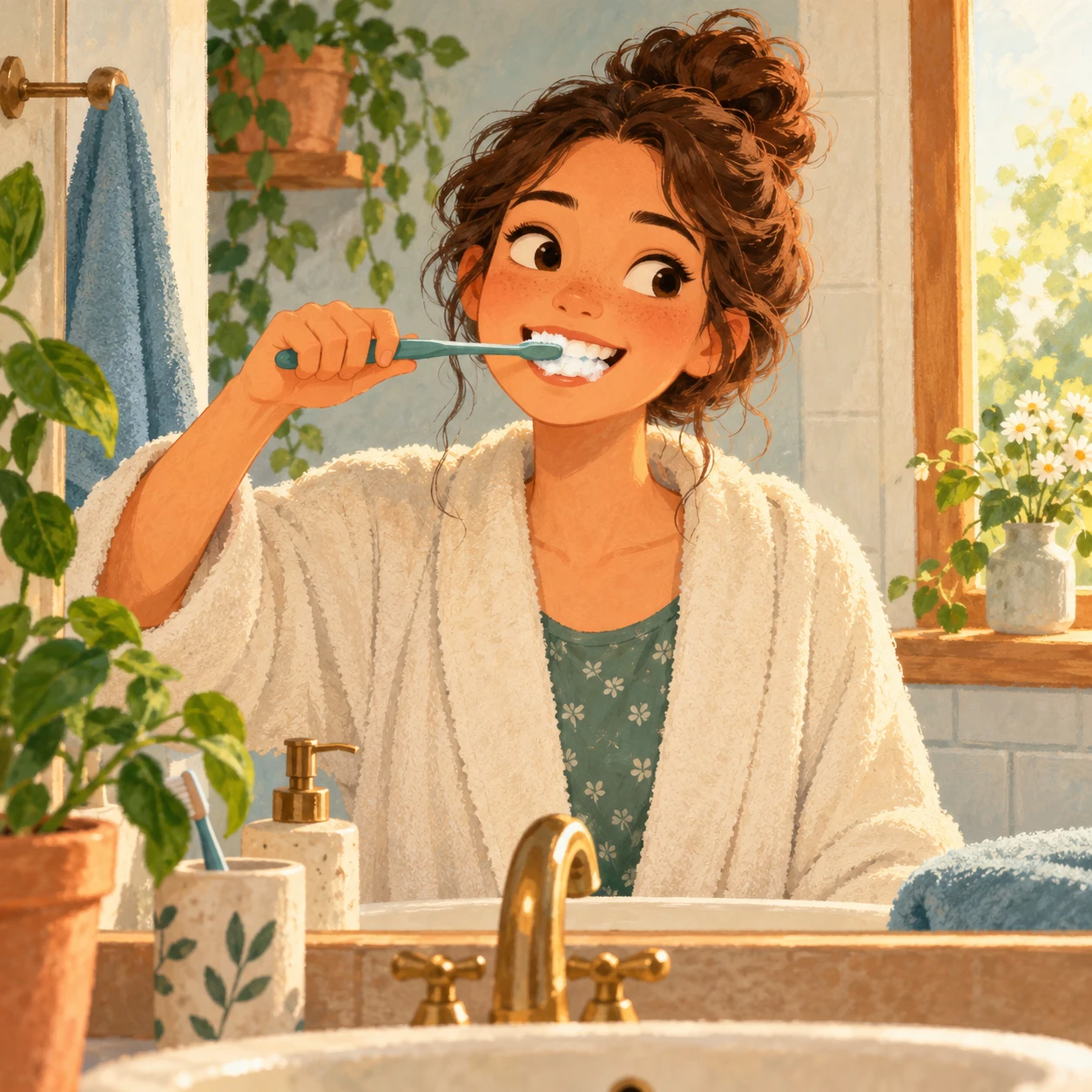
Observe “toothbrush and toothpaste”. Aqui precisamos de “escovar meus dentes”: “brush my teeth”. Use parte do corpo e ação: vestir-se, limpar dentes ou lavar o rosto. Frase completa: “I use a toothbrush and toothpaste. I brush my teeth.”.

R01 · Novos contextos

I clean my cheeks and forehead with water. I ___.

Choose the option that completes the gap in this situation.

  1. get dressed
  2. wash my face
  3. wake up
  4. brush my teeth
Resposta e explicação
wash my face

Observe “cheeks and forehead”. Aqui precisamos de “lavar meu rosto”: “wash my face”. Use parte do corpo e ação: vestir-se, limpar dentes ou lavar o rosto. Frase completa: “I clean my cheeks and forehead with water. I wash my face.”.

R02 · Novos contextos

In the evening I sit down for my final main meal. I ___.

Choose the option that completes the gap in this situation.

  1. go to work
  2. have dinner
  3. have lunch
  4. have breakfast
Resposta e explicação
have dinner

Observe “final main meal”. Aqui precisamos de “jantar”: “have dinner”. Use o horário da refeição indicado. Ir ao trabalho é um trajeto, não uma refeição. Frase completa: “In the evening I sit down for my final main meal. I have dinner.”.

R03 · Novos contextos

I program my phone to ring at six tomorrow. I ___.

Choose the option that completes the gap in this situation.

  1. turn off the light
  2. fall asleep
  3. set an alarm
  4. go to bed
Resposta e explicação
set an alarm

Observe “phone to ring at six”. Aqui precisamos de “programar um alarme”: “set an alarm”. Deitar-se, adormecer e acordar são diferentes. Ajustar alarme ou apagar luz são outras ações. Frase completa: “I program my phone to ring at six tomorrow. I set an alarm.”.

X01 · Um novo desafio

I leave home and travel to my office for my job. I ___.

Choose the option that completes the gap in this situation.

  1. have dinner
  2. go to work
  3. have lunch
  4. have breakfast
Resposta e explicação
go to work

Observe “travel to my office”. Aqui precisamos de “ir trabalhar”: “go to work”. Use o horário da refeição indicado. Ir ao trabalho é um trajeto, não uma refeição. Frase completa: “I leave home and travel to my office for my job. I go to work.”.

X02 · Um novo desafio

I press the switch so the bedroom becomes dark. I ___.

Choose the option that completes the gap in this situation.

  1. turn off the light
  2. fall asleep
  3. set an alarm
  4. go to bed
Resposta e explicação
turn off the light

Observe “room becomes dark”. Aqui precisamos de “apagar a luz”: “turn off the light”. Deitar-se, adormecer e acordar são diferentes. Ajustar alarme ou apagar luz são outras ações. Frase completa: “I press the switch so the bedroom becomes dark. I turn off the light.”.

R04 · Novos contextos

My sleep ends at six, but I stay in bed for a minute. I ___ at six.

Choose the option that completes the gap in this situation.

  1. wake up
  2. get dressed
  3. brush my teeth
  4. wash my face
Resposta e explicação
wake up

Observe “sleep ends”. Aqui precisamos de “acordar”: “wake up”. Deitar-se, adormecer e acordar são diferentes. Ajustar alarme ou apagar luz são outras ações. Frase completa: “My sleep ends at six, but I stay in bed for a minute. I wake up at six.”.

R05 · Novos contextos

In the morning, I sit down for my first meal. I ___ before school.

Choose the option that completes the gap in this situation.

  1. have dinner
  2. go to work
  3. have lunch
  4. have breakfast
Resposta e explicação
have breakfast

Observe “first meal”. Aqui precisamos de “tomar café da manhã”: “have breakfast”. Use o horário da refeição indicado. Ir ao trabalho é um trajeto, não uma refeição. Frase completa: “In the morning, I sit down for my first meal. I have breakfast before school.”.

R06 · Novos contextos

Which phrase means getting into bed to rest, even if you stay awake for a while? I ___.

Choose the option that completes the gap in this situation.

  1. set an alarm
  2. go to bed
  3. fall asleep
  4. turn off the light
Resposta e explicação
go to bed

Observe “even if you stay awake”. Aqui precisamos de “ir para a cama”: “go to bed”. Deitar-se, adormecer e acordar são diferentes. Ajustar alarme ou apagar luz são outras ações. Frase completa: “Which phrase means getting into bed to rest, even if you stay awake for a while? I go to bed.”.

R07 · Novos contextos

Before I leave my bedroom, I put on my clothes. I ___.

Choose the option that completes the gap in this situation.

  1. wash my face
  2. get dressed
  3. wake up
  4. brush my teeth
Resposta e explicação
get dressed

Observe “put on my clothes”. Aqui precisamos de “se vestir”: “get dressed”. Use parte do corpo e ação: vestir-se, limpar dentes ou lavar o rosto. Frase completa: “Before I leave my bedroom, I put on my clothes. I get dressed.”.

R08 · Novos contextos

In my family, breakfast is at seven in the morning and dinner means our evening meal. For the main meal between them, I ___ with my work friends.

Choose the option that completes the gap in this situation.

  1. have dinner
  2. have breakfast
  3. go to work
  4. have lunch
Resposta e explicação
have lunch

Observe “main meal between them”. Aqui precisamos de “almoçar”: “have lunch”. Use o horário da refeição indicado. Ir ao trabalho é um trajeto, não uma refeição. Frase completa: “In my family, breakfast is at seven in the morning and dinner means our evening meal. For the main meal between them, I have lunch with my work friends.”.

R09 · Novos contextos

I am awake at first, but then I begin to sleep. I ___.

Choose the option that completes the gap in this situation.

  1. turn off the light
  2. go to bed
  3. fall asleep
  4. set an alarm
Resposta e explicação
fall asleep

Observe “begin to sleep”. Aqui precisamos de “adormecer”: “fall asleep”. Deitar-se, adormecer e acordar são diferentes. Ajustar alarme ou apagar luz são outras ações. Frase completa: “I am awake at first, but then I begin to sleep. I fall asleep.”.

X03 · Um novo desafio

I use a toothbrush and toothpaste when I ___.

Choose the option that completes the gap in this situation.

  1. wash my face
  2. brush my teeth
  3. get dressed
  4. wake up
Resposta e explicação
brush my teeth

Observe “toothbrush and toothpaste”. Aqui precisamos de “escovar meus dentes”: “brush my teeth”. Use parte do corpo e ação: vestir-se, limpar dentes ou lavar o rosto. Frase completa: “I use a toothbrush and toothpaste when I brush my teeth.”.

X04 · Um novo desafio

I put water on my cheeks and nose when I ___.

Choose the option that completes the gap in this situation.

  1. get dressed
  2. brush my teeth
  3. wake up
  4. wash my face
Resposta e explicação
wash my face

Observe “water on my cheeks and nose”. Aqui precisamos de “lavar meu rosto”: “wash my face”. Use parte do corpo e ação: vestir-se, limpar dentes ou lavar o rosto. Frase completa: “I put water on my cheeks and nose when I wash my face.”.

X05 · Um novo desafio

In the evening, I sit down for my main meal. I ___ at seven.

Choose the option that completes the gap in this situation.

  1. go to work
  2. have lunch
  3. have dinner
  4. have breakfast
Resposta e explicação
have dinner

Observe “main meal”. Aqui precisamos de “jantar”: “have dinner”. Use o horário da refeição indicado. Ir ao trabalho é um trajeto, não uma refeição. Frase completa: “In the evening, I sit down for my main meal. I have dinner at seven.”.

X06 · Um novo desafio

I want my phone to wake me at six. Before bed, I ___.

Choose the option that completes the gap in this situation.

  1. turn off the light
  2. go to bed
  3. set an alarm
  4. fall asleep
Resposta e explicação
set an alarm

Observe “phone to wake me”. Aqui precisamos de “programar um alarme”: “set an alarm”. Deitar-se, adormecer e acordar são diferentes. Ajustar alarme ou apagar luz são outras ações. Frase completa: “I want my phone to wake me at six. Before bed, I set an alarm.”.

X07 · Um novo desafio

On weekday mornings, I leave home and travel to my office. I ___.

Choose the option that completes the gap in this situation.

  1. go to work
  2. have dinner
  3. have lunch
  4. have breakfast
Resposta e explicação
go to work

Observe “travel to my office”. Aqui precisamos de “ir trabalhar”: “go to work”. Use o horário da refeição indicado. Ir ao trabalho é um trajeto, não uma refeição. Frase completa: “On weekday mornings, I leave home and travel to my office. I go to work.”.

X08 · Um novo desafio

When I leave a bright room, I press the switch to make it dark. I ___.

Choose the option that completes the gap in this situation.

  1. go to bed
  2. fall asleep
  3. turn off the light
  4. set an alarm
Resposta e explicação
turn off the light

Observe “make it dark”. Aqui precisamos de “apagar a luz”: “turn off the light”. Deitar-se, adormecer e acordar são diferentes. Ajustar alarme ou apagar luz são outras ações. Frase completa: “When I leave a bright room, I press the switch to make it dark. I turn off the light.”.

Rotinas diárias: praticar em outro contexto

Um exemplo original em inglês

I set an alarm at night because I want to wake up early.

O que conferir

Leia o exemplo considerando estes significados. Relacione cada expressão ao seu papel na situação e depois tente usá-la em outra frase.

set an alarm — programar um alarme

wake up — acordar