01Concordância com o sujeito
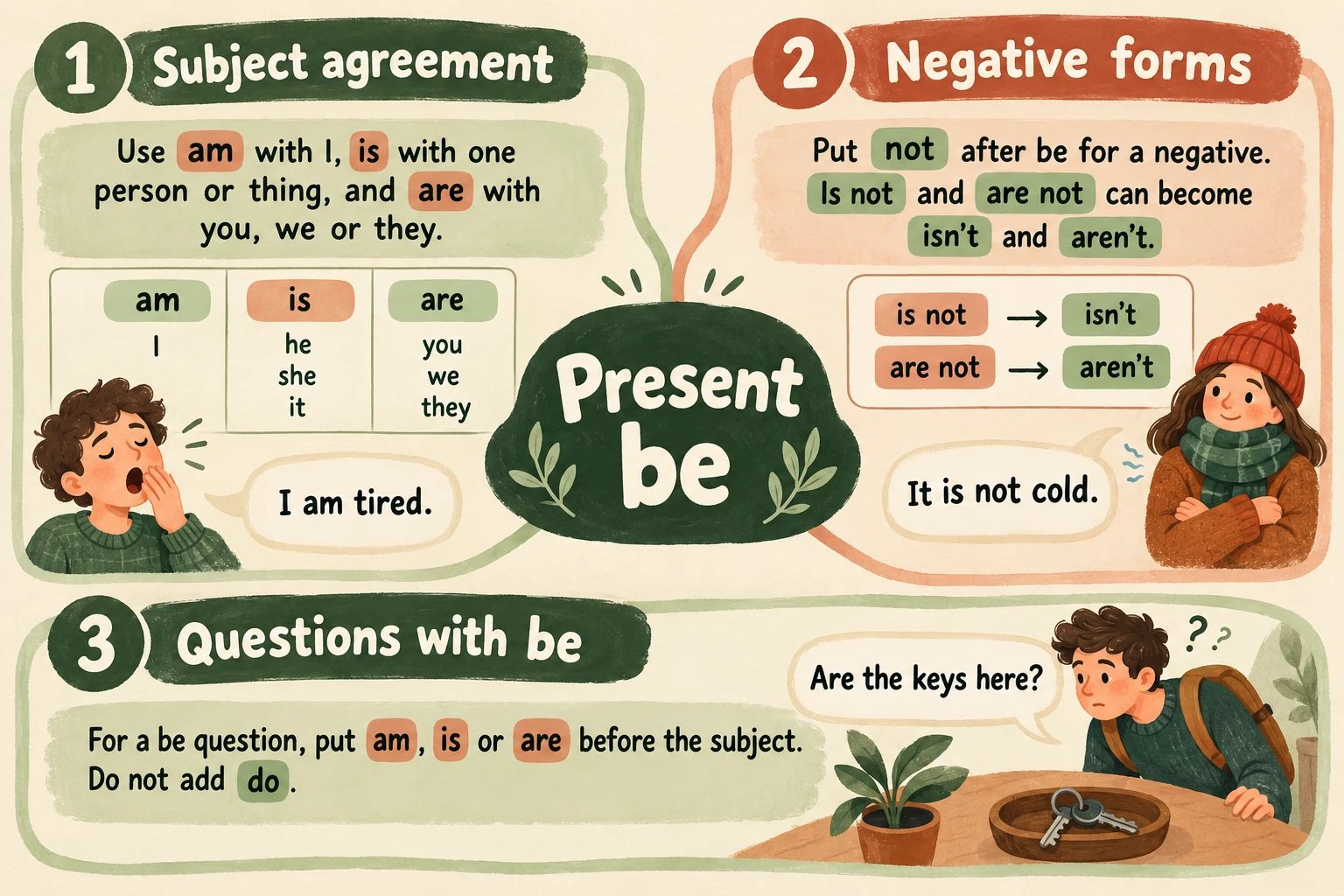
Use am com I, is com uma pessoa ou coisa e are com you, we ou they.
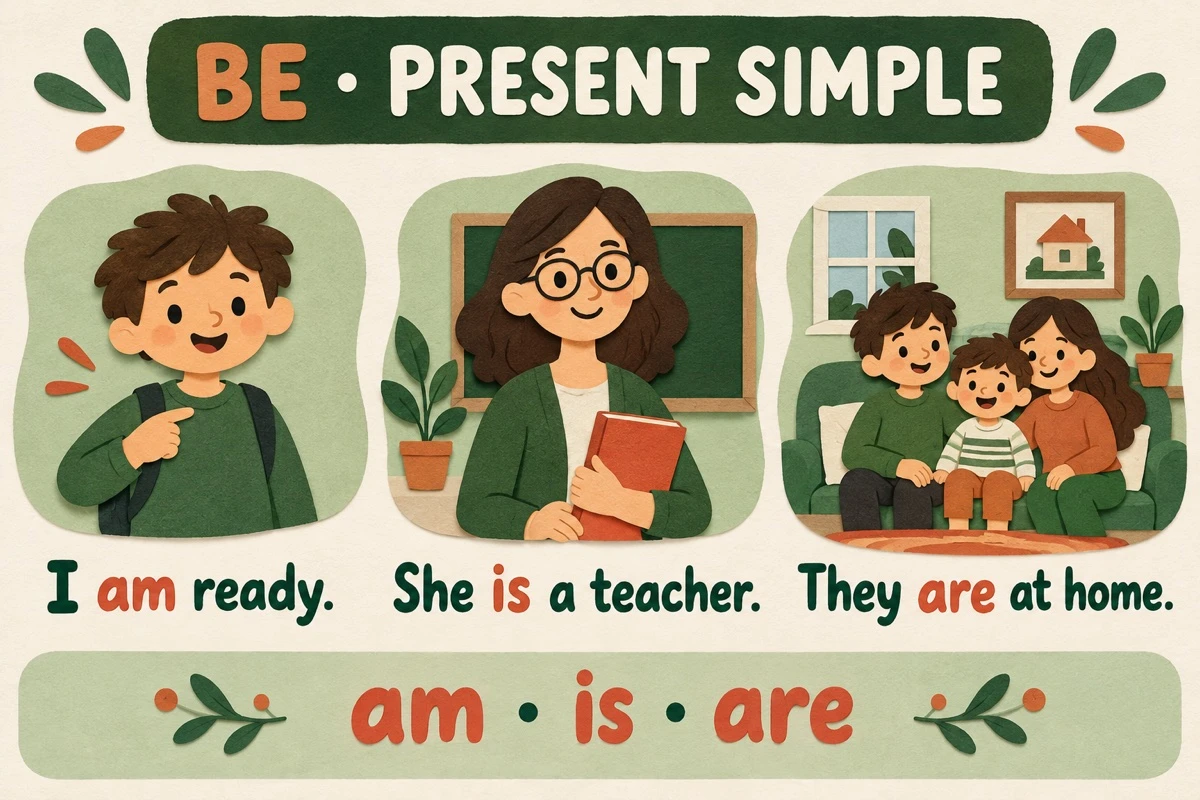
I am · you/we/they are · he/she/it is
Be no presente · A1. Use am com I, is com uma pessoa ou coisa e are com you, we ou they.
Pratique Be no presente em situações curtas. Leia a pista, escolha ou escreva uma forma e confira a explicação. O nível é uma orientação editorial.
Use am com I, is com uma pessoa ou coisa e are com you, we ou they.
I am · you/we/they are · he/she/it isColoque not depois de be para negar. Is not e are not podem virar isn’t e aren’t.
am/is/are + notEm perguntas com be, ponha am, is ou are antes do sujeito. Não acrescente do.
Am/Is/Are + subject …?I am ready.She is ready.They are ready.
I am not ready.She is not ready.They are not ready.
Am I ready?Is she ready?Are they ready?
Yes, I am.Yes, she is.No, they aren’t.
I ___ the new student in room 4.
Use am com I, is com uma pessoa ou coisa e are com you, we ou they.
I am tired.Coloque not depois de be para negar. Is not e are not podem virar isn’t e aren’t.
It is not cold.Em perguntas com be, ponha am, is ou are antes do sujeito. Não acrescente do.
Are the keys here?Guarde a primeira tentativa, entenda a mudança e confira em outra situação.
Ainda não há revisões. Faça um aquecimento curto.
Use am com I, is com uma pessoa ou coisa e are com you, we ou they.
I am tired.Coloque not depois de be para negar. Is not e are not podem virar isn’t e aren’t.
It is not cold.Em perguntas com be, ponha am, is ou are antes do sujeito. Não acrescente do.
Are the keys here?Abrir uma resposta registra ajuda para essa questão.
I ___ the new student in room 4.
Observe “I ___ the new student in room 4.”. I usa am; he/she/it e nomes singulares usam is; you/we/they e plurais usam are. Not vem após be. Frase completa: “I am the new student in room 4.”.
The library is closed, so it ___ open today.
Observe “The library is closed, so it ___ open today.”. I usa am; he/she/it e nomes singulares usam is; you/we/they e plurais usam are. Not vem após be. Frase completa: “The library is closed, so it is not open today.”.
___ your parents at home now?
Observe “___ your parents at home now?”. I usa am; he/she/it e nomes singulares usam is; you/we/they e plurais usam are. Not vem após be. Frase completa: “Are your parents at home now?”.
My sister ___ a bus driver.
Frase de referência: “My sister is a bus driver.”. Use am com I, is com uma pessoa ou coisa e are com you, we ou they. Também são aceitas estas variantes revisadas: 's. A lista não cobre todas as expressões possíveis.
We are on holiday; we ___ at work today.
Observe “We are on holiday; we ___ at work today.”. I usa am; he/she/it e nomes singulares usam is; you/we/they e plurais usam are. Not vem após be. Frase completa: “We are on holiday; we are not at work today.”.
___ I in the right queue for tickets?
Observe “___ I in the right queue for tickets?”. I usa am; he/she/it e nomes singulares usam is; you/we/they e plurais usam are. Not vem após be. Frase completa: “Am I in the right queue for tickets?”.
These seats ___ free; nobody is sitting here.
Frase de referência: “These seats are free; nobody is sitting here.”. Use am com I, is com uma pessoa ou coisa e are com you, we ou they.
The two boxes ___ heavy.
Observe “The two boxes ___ heavy.”. I usa am; he/she/it e nomes singulares usam is; you/we/they e plurais usam are. Not vem após be. Frase completa: “The two boxes are heavy.”.
Ben and I are students; we ___ teachers.
Observe “Ben and I are students; we ___ teachers.”. I usa am; he/she/it e nomes singulares usam is; you/we/they e plurais usam are. Not vem após be. Frase completa: “Ben and I are students; we are not teachers.”.
___ the station near this hotel?
Frase de referência: “Is the station near this hotel?”. Em perguntas com be, ponha am, is ou are antes do sujeito. Não acrescente do.
The lights are off. The shop ___ open.
Observe “The lights are off. The shop ___ open.”. I usa am; he/she/it e nomes singulares usam is; you/we/they e plurais usam are. Not vem após be. Frase completa: “The lights are off. The shop is not open.”.
___ you ready to order, madam?
Frase de referência: “Are you ready to order, madam?”. Em perguntas com be, ponha am, is ou are antes do sujeito. Não acrescente do.