01Concordancia con el sujeto
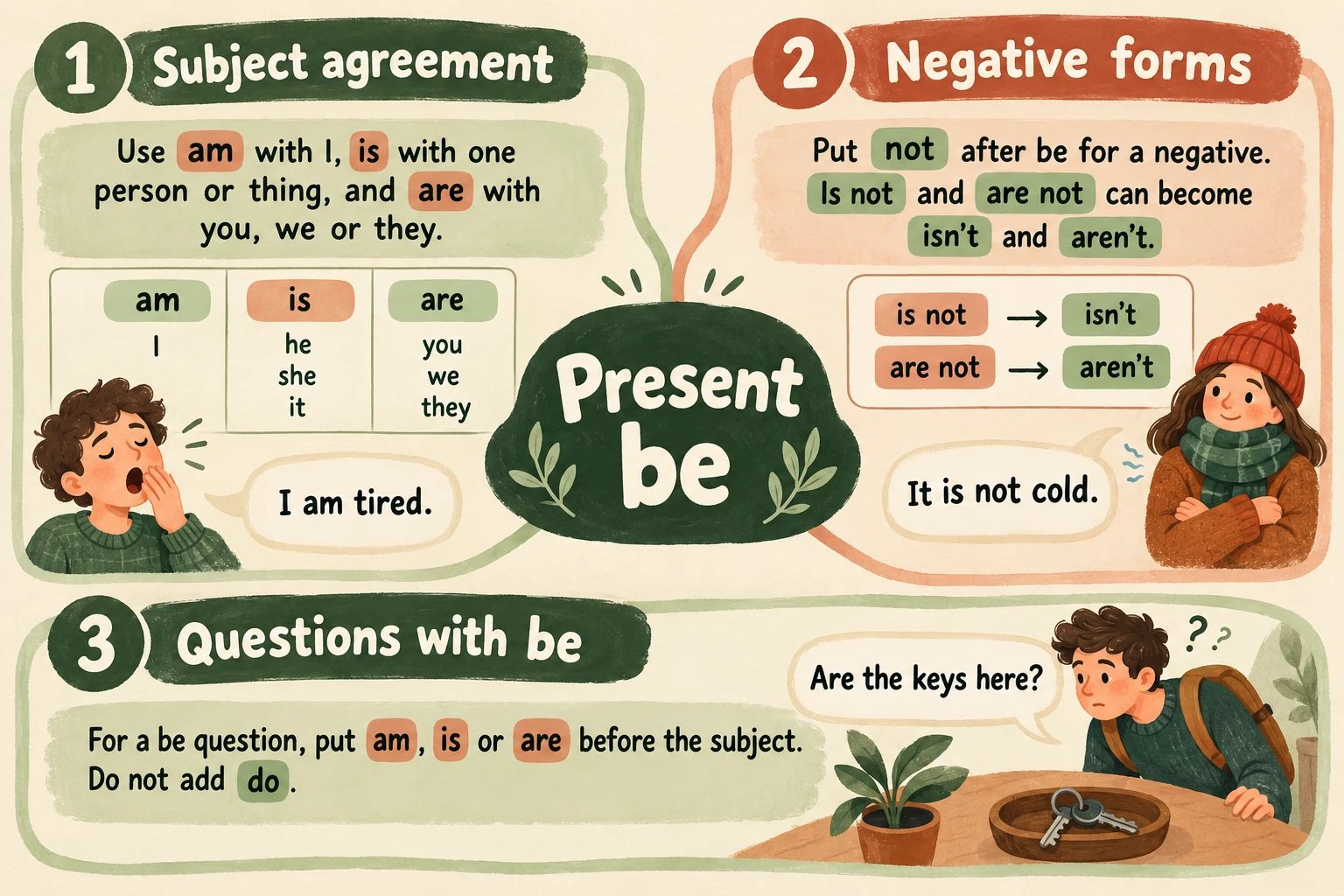
Usa am con I, is con una persona o cosa y are con you, we o they.
I am · you/we/they are · he/she/it is
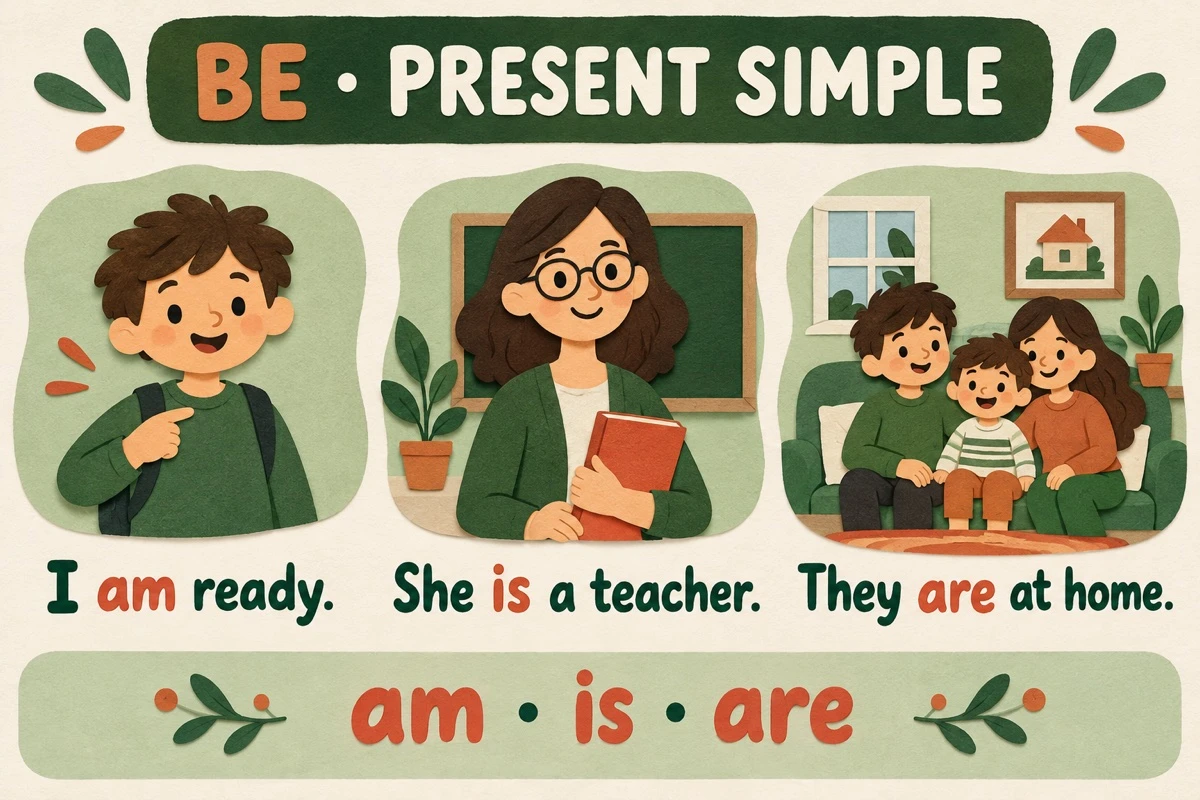
Be en presente · A1. Usa am con I, is con una persona o cosa y are con you, we o they.
Practica Be en presente en situaciones breves. Lee la pista, elige o escribe una forma y revisa la explicación. El nivel es una orientación editorial.
Usa am con I, is con una persona o cosa y are con you, we o they.
I am · you/we/they are · he/she/it isColoca not después de be para negar. Is not y are not pueden contraerse a isn’t y aren’t.
am/is/are + notEn preguntas con be, coloca am, is o are antes del sujeto. No añadas do.
Am/Is/Are + subject …?I am ready.She is ready.They are ready.
I am not ready.She is not ready.They are not ready.
Am I ready?Is she ready?Are they ready?
Yes, I am.Yes, she is.No, they aren’t.
I ___ the new student in room 4.
Usa am con I, is con una persona o cosa y are con you, we o they.
I am tired.Coloca not después de be para negar. Is not y are not pueden contraerse a isn’t y aren’t.
It is not cold.En preguntas con be, coloca am, is o are antes del sujeto. No añadas do.
Are the keys here?Conserva el primer intento, entiende el cambio y compruébalo en otra situación.
Aún no hay repasos. Prueba un calentamiento corto.
Usa am con I, is con una persona o cosa y are con you, we o they.
I am tired.Coloca not después de be para negar. Is not y are not pueden contraerse a isn’t y aren’t.
It is not cold.En preguntas con be, coloca am, is o are antes del sujeto. No añadas do.
Are the keys here?Abrir una respuesta registra ayuda para esa pregunta.
I ___ the new student in room 4.
Mira «I ___ the new student in room 4.». I lleva am; he/she/it y nombres singulares llevan is; you/we/they y plurales llevan are. Not va tras be. Oración completa: «I am the new student in room 4.».
The library is closed, so it ___ open today.
Mira «The library is closed, so it ___ open today.». I lleva am; he/she/it y nombres singulares llevan is; you/we/they y plurales llevan are. Not va tras be. Oración completa: «The library is closed, so it is not open today.».
___ your parents at home now?
Mira «___ your parents at home now?». I lleva am; he/she/it y nombres singulares llevan is; you/we/they y plurales llevan are. Not va tras be. Oración completa: «Are your parents at home now?».
My sister ___ a bus driver.
Oración de referencia: «My sister is a bus driver.». Usa am con I, is con una persona o cosa y are con you, we o they. También se admiten estas variantes revisadas: 's. No es una lista de todas las expresiones posibles.
We are on holiday; we ___ at work today.
Mira «We are on holiday; we ___ at work today.». I lleva am; he/she/it y nombres singulares llevan is; you/we/they y plurales llevan are. Not va tras be. Oración completa: «We are on holiday; we are not at work today.».
___ I in the right queue for tickets?
Mira «___ I in the right queue for tickets?». I lleva am; he/she/it y nombres singulares llevan is; you/we/they y plurales llevan are. Not va tras be. Oración completa: «Am I in the right queue for tickets?».
These seats ___ free; nobody is sitting here.
Oración de referencia: «These seats are free; nobody is sitting here.». Usa am con I, is con una persona o cosa y are con you, we o they.
The two boxes ___ heavy.
Mira «The two boxes ___ heavy.». I lleva am; he/she/it y nombres singulares llevan is; you/we/they y plurales llevan are. Not va tras be. Oración completa: «The two boxes are heavy.».
Ben and I are students; we ___ teachers.
Mira «Ben and I are students; we ___ teachers.». I lleva am; he/she/it y nombres singulares llevan is; you/we/they y plurales llevan are. Not va tras be. Oración completa: «Ben and I are students; we are not teachers.».
___ the station near this hotel?
Oración de referencia: «Is the station near this hotel?». En preguntas con be, coloca am, is o are antes del sujeto. No añadas do.
The lights are off. The shop ___ open.
Mira «The lights are off. The shop ___ open.». I lleva am; he/she/it y nombres singulares llevan is; you/we/they y plurales llevan are. Not va tras be. Oración completa: «The lights are off. The shop is not open.».
___ you ready to order, madam?
Oración de referencia: «Are you ready to order, madam?». En preguntas con be, coloca am, is o are antes del sujeto. No añadas do.