01المطابقة مع الفاعل
نستخدم am مع I وis مع المفرد وare مع you وwe وthey.
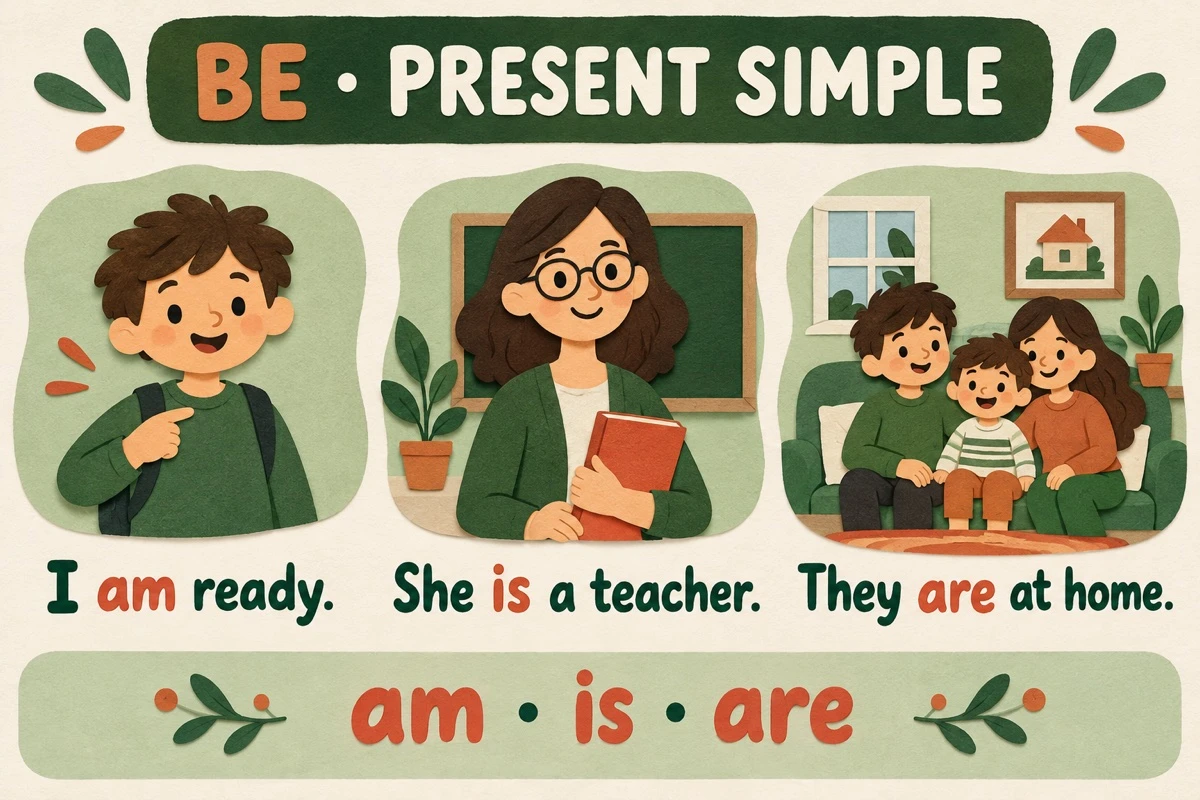
I am · you/we/they are · he/she/it is
فعل be في المضارع · A1. نستخدم am مع I وis مع المفرد وare مع you وwe وthey.
تدرّب على فعل be في المضارع في مواقف قصيرة. اقرأ القرينة واختر الصيغة أو اكتبها، ثم راجع السبب. المستوى دليل تحريري تقريبي.
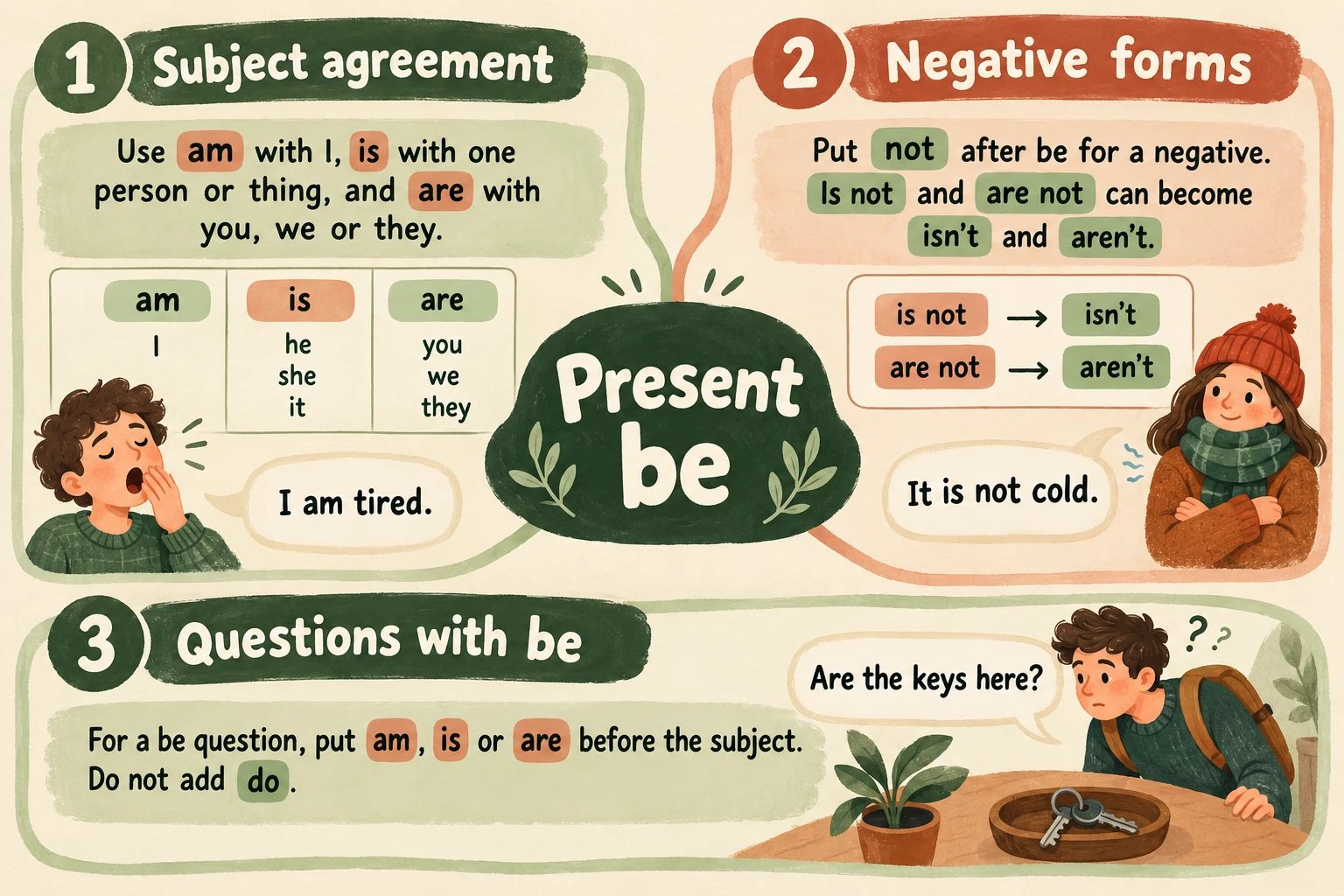
نستخدم am مع I وis مع المفرد وare مع you وwe وthey.
I am · you/we/they are · he/she/it isفي النفي نضع not بعد be، ويمكن اختصار is not إلى isn’t وare not إلى aren’t.
am/is/are + notفي سؤال be يأتي am أوis أوare قبل الفاعل، ولا نضيف do.
Am/Is/Are + subject …?I am ready.She is ready.They are ready.
I am not ready.She is not ready.They are not ready.
Am I ready?Is she ready?Are they ready?
Yes, I am.Yes, she is.No, they aren’t.
I ___ the new student in room 4.
نستخدم am مع I وis مع المفرد وare مع you وwe وthey.
I am tired.في النفي نضع not بعد be، ويمكن اختصار is not إلى isn’t وare not إلى aren’t.
It is not cold.في سؤال be يأتي am أوis أوare قبل الفاعل، ولا نضيف do.
Are the keys here?احتفظ بالمحاولة الأولى، وافهم التغيير، ثم اختبر فهمك في موقف جديد.
لا توجد ملاحظات بعد. جرّب تهيئة قصيرة.
نستخدم am مع I وis مع المفرد وare مع you وwe وthey.
I am tired.في النفي نضع not بعد be، ويمكن اختصار is not إلى isn’t وare not إلى aren’t.
It is not cold.في سؤال be يأتي am أوis أوare قبل الفاعل، ولا نضيف do.
Are the keys here?فتح إجابة يسجّل استخدام المساعدة لذلك السؤال.
I ___ the new student in room 4.
انظر إلى «I ___ the new student in room 4.». نستخدم am مع I وis مع he/she/it والأسماء المفردة، وare مع you/we/they والجمع. تأتي not بعد be لنفي الحالة. الجملة المكتملة: «I am the new student in room 4.».
The library is closed, so it ___ open today.
انظر إلى «The library is closed, so it ___ open today.». نستخدم am مع I وis مع he/she/it والأسماء المفردة، وare مع you/we/they والجمع. تأتي not بعد be لنفي الحالة. الجملة المكتملة: «The library is closed, so it is not open today.».
___ your parents at home now?
انظر إلى «___ your parents at home now?». نستخدم am مع I وis مع he/she/it والأسماء المفردة، وare مع you/we/they والجمع. تأتي not بعد be لنفي الحالة. الجملة المكتملة: «Are your parents at home now?».
My sister ___ a bus driver.
إكمال مرجعي: «My sister is a bus driver.». نستخدم am مع I وis مع المفرد وare مع you وwe وthey. تُقبل أيضاً هذه البدائل المراجَعة في هذه المهمة: 's. ليست القائمة حصرية لكل صياغة إنجليزية ممكنة.
We are on holiday; we ___ at work today.
انظر إلى «We are on holiday; we ___ at work today.». نستخدم am مع I وis مع he/she/it والأسماء المفردة، وare مع you/we/they والجمع. تأتي not بعد be لنفي الحالة. الجملة المكتملة: «We are on holiday; we are not at work today.».
___ I in the right queue for tickets?
انظر إلى «___ I in the right queue for tickets?». نستخدم am مع I وis مع he/she/it والأسماء المفردة، وare مع you/we/they والجمع. تأتي not بعد be لنفي الحالة. الجملة المكتملة: «Am I in the right queue for tickets?».
These seats ___ free; nobody is sitting here.
إكمال مرجعي: «These seats are free; nobody is sitting here.». نستخدم am مع I وis مع المفرد وare مع you وwe وthey.
The two boxes ___ heavy.
انظر إلى «The two boxes ___ heavy.». نستخدم am مع I وis مع he/she/it والأسماء المفردة، وare مع you/we/they والجمع. تأتي not بعد be لنفي الحالة. الجملة المكتملة: «The two boxes are heavy.».
Ben and I are students; we ___ teachers.
انظر إلى «Ben and I are students; we ___ teachers.». نستخدم am مع I وis مع he/she/it والأسماء المفردة، وare مع you/we/they والجمع. تأتي not بعد be لنفي الحالة. الجملة المكتملة: «Ben and I are students; we are not teachers.».
___ the station near this hotel?
إكمال مرجعي: «Is the station near this hotel?». في سؤال be يأتي am أوis أوare قبل الفاعل، ولا نضيف do.
The lights are off. The shop ___ open.
انظر إلى «The lights are off. The shop ___ open.». نستخدم am مع I وis مع he/she/it والأسماء المفردة، وare مع you/we/they والجمع. تأتي not بعد be لنفي الحالة. الجملة المكتملة: «The lights are off. The shop is not open.».
___ you ready to order, madam?
إكمال مرجعي: «Are you ready to order, madam?». في سؤال be يأتي am أوis أوare قبل الفاعل، ولا نضيف do.