
B2

Sharing a public square

About this lesson

Sharing a public square · B2. Look for evaluations and reservations; do not turn a positive fact into unconditional approval. Keep the requested person, time, place or amount attached to the correct event.

Listen to the original English recording, answer the questions, then open the transcript to check the evidence. These related questions use the same recording; the level is an editorial guide, not a certified result.

10 items
Save it to find it in My collection.
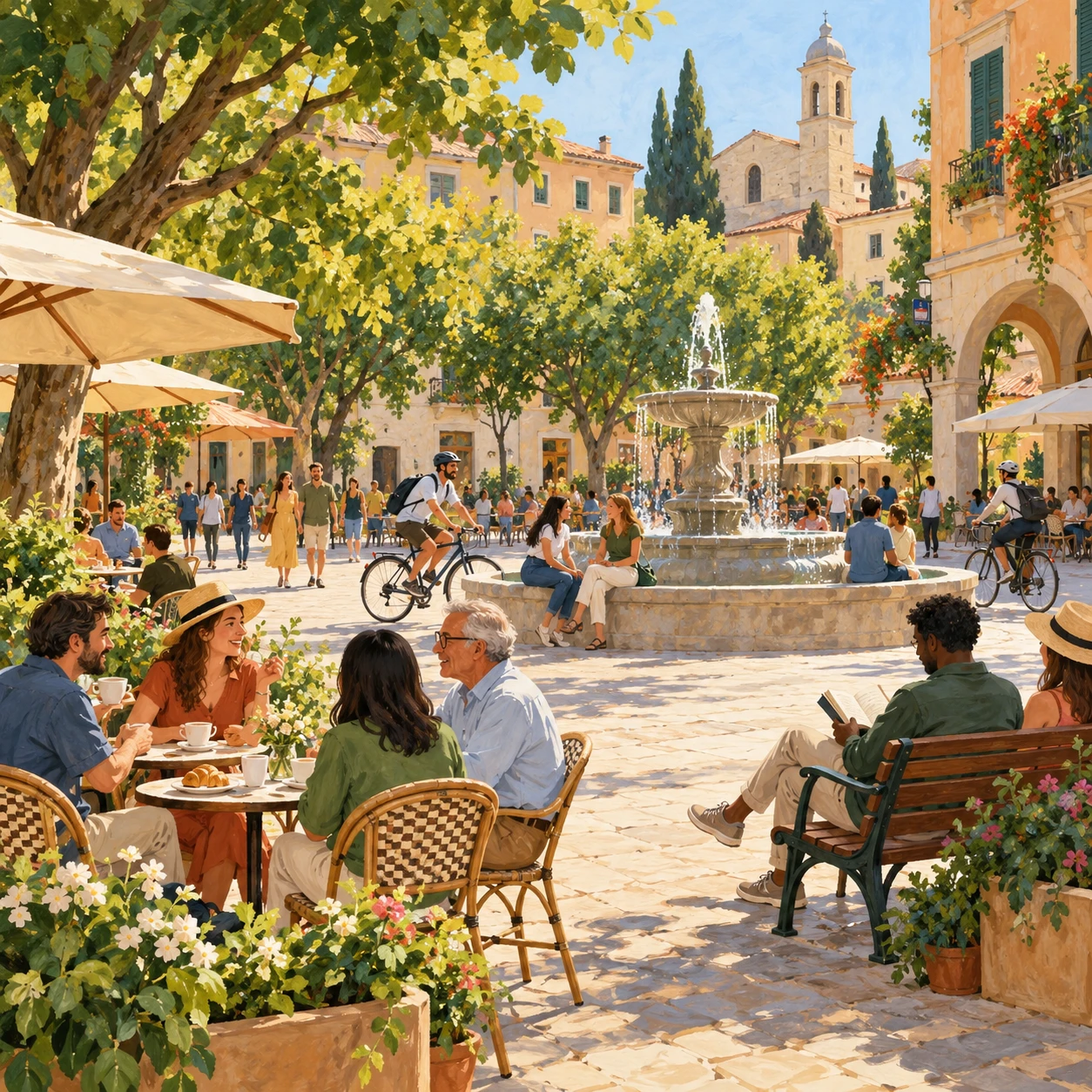
Sharing a public square — context illustration
ListeningB2

A square with more than one purpose

Listen to the original English recording, answer the questions, then open the transcript to check the evidence. These related questions use the same recording; the level is an editorial guide, not a certified result.

A little clarity first

Viewpoint and evaluation · Stated details

Look for evaluations and reservations; do not turn a positive fact into unconditional approval. Keep the requested person, time, place or amount attached to the correct event.

The writer likes the idea but asks for one change.

Limits of the evidence · Reasons

Separate supported claims from what the evidence leaves unknown. No mention does not prove absence. Use the reason actually given; a plausible reason from outside the text is not enough.

The notice gives a price, but says nothing about delivery.

Limits of the evidence · Viewpoint and evaluation · Conditions and permissions

Separate supported claims from what the evidence leaves unknown. No mention does not prove absence. Look for evaluations and reservations; do not turn a positive fact into unconditional approval. Keep the stated condition or permission; a rule does not prove that an event happened.

The notice gives a price, but says nothing about delivery.

Learning material
Sharing a public square — context illustration
ListeningB2

A square with more than one purpose

Listen to the original English recording, answer the questions, then open the transcript to check the evidence. These related questions use the same recording; the level is an editorial guide, not a certified result.

0/10
Questions
01 / 10D01Save it to find it in My collection.

A square with more than one purpose

What does the speaker criticise about the initial debate?

Your answer
1 / 10

Your learning route

01
Step 1 · Warm-up

Warm-up

0/3
02
Step 2 · Build the skill

Viewpoint and evaluation · Stated details

0/1

Look for evaluations and reservations; do not turn a positive fact into unconditional approval. Keep the requested person, time, place or amount attached to the correct event.

The writer likes the idea but asks for one change.
03
Step 3 · Build the skill

Limits of the evidence · Reasons

0/1

Separate supported claims from what the evidence leaves unknown. No mention does not prove absence. Use the reason actually given; a plausible reason from outside the text is not enough.

The notice gives a price, but says nothing about delivery.
04
Step 4 · Build the skill

Limits of the evidence · Viewpoint and evaluation · Conditions and permissions

0/1

Separate supported claims from what the evidence leaves unknown. No mention does not prove absence. Look for evaluations and reservations; do not turn a positive fact into unconditional approval. Keep the stated condition or permission; a rule does not prove that an event happened.

The notice gives a price, but says nothing about delivery.
05
Step 5 · Related practice

Related practice

0/2
06
Step 6 · Text challenge

Text challenge

0/2
Practice notes in this unit

Make mistakes useful.

Keep your first attempt, check the evidence and try another question. A follow-up on the same material does not prove transfer to a new text.

0

No practice notes yet. Try a short warm-up.

Lesson map

Sharing a public square

B2
Sharing a public square

Lesson points

01

Viewpoint and evaluation · Stated details

Look for evaluations and reservations; do not turn a positive fact into unconditional approval. Keep the requested person, time, place or amount attached to the correct event.

The writer likes the idea but asks for one change.
02

Limits of the evidence · Reasons

Separate supported claims from what the evidence leaves unknown. No mention does not prove absence. Use the reason actually given; a plausible reason from outside the text is not enough.

The notice gives a price, but says nothing about delivery.
03

Limits of the evidence · Viewpoint and evaluation · Conditions and permissions

Separate supported claims from what the evidence leaves unknown. No mention does not prove absence. Look for evaluations and reservations; do not turn a positive fact into unconditional approval. Keep the stated condition or permission; a rule does not prove that an event happened.

The notice gives a price, but says nothing about delivery.

Questions & answers

Opening an answer records help for that question.

D01 · Warm-up

A square with more than one purpose

What does the speaker criticise about the initial debate?

  1. It relied on detailed sales figures before investigating seating.
  2. It reduced varied needs to a simple lively-versus-quiet choice.
  3. It treated the delivery issue as the sole measure of success.
  4. It proposed a square without commercial uses as the only viable solution.
Answer & explanation
It reduced varied needs to a simple lively-versus-quiet choice.

The supported answer is “It reduced varied needs to a simple lively-versus-quiet choice.”. Evidence: “presenting those needs as a choice between two simple alternatives has made the debate less useful.”. Compare the alternative “It relied on detailed sales figures before investigating seating.”. This substitutes a different outcome for the one that was measured or reported. Compare the alternative “It treated the delivery issue as the sole measure of success.”. This makes one indicator sufficient on its own, although the passage calls for a broader assessment.

D02 · Warm-up

A square with more than one purpose

Why did some older residents reject the description of the space as unused?

  1. They relied on the area for access to their own cafe tables.
  2. They had used it to meet without buying anything.
  3. They had used the centre principally to reach the library quickly.
  4. They saw the existing public benches as unnecessary alongside cafe seats.
Answer & explanation
They had used it to meet without buying anything.

The supported answer is “They had used it to meet without buying anything.”. Evidence: “the space had not been unused to them, because it was where they met without having to buy anything.”. Compare the alternative “They saw the existing public benches as unnecessary alongside cafe seats.”. This reverses the relationship stated in the passage. Compare the alternative “They had used the centre principally to reach the library quickly.”. This assigns a feature or action to the wrong group or speaker.

D03 · Warm-up

A square with more than one purpose

What can be concluded about the effect on total cafe sales?

  1. The speaker lacks reliable figures to establish a change.
  2. Later drink purchases establish an increase in overall sales.
  3. Sitting on public benches made visitors less likely to purchase drinks.
  4. Owners’ privacy concerns establish that total sales declined.
Answer & explanation
The speaker lacks reliable figures to establish a change.

The supported answer is “The speaker lacks reliable figures to establish a change.”. Evidence: “we have no reliable figures showing whether total sales changed.”. Compare the alternative “Sitting on public benches made visitors less likely to purchase drinks.”. This extends a qualified finding into a claim without exceptions. Compare the alternative “Later drink purchases establish an increase in overall sales.”. A few later drink purchases or concerns about privacy do not establish a change in total sales. Reliable figures for that overall change are missing. Check the source wording “people sitting on public benches sometimes bought a drink later” against the question and the claim “Later drink purchases establish an increase in overall sales.”.

P01 · Build the skill

A square with more than one purpose

What did residents request after trying the new arrangement?

  1. A reduction in the public seating among the cafe tables.
  2. A route reserved for early-morning deliveries throughout the day.
  3. More private seating for paying customers.
  4. More shade.
Answer & explanation
More shade.

The supported answer is “More shade.”. Evidence: “Residents welcomed the benches but asked for more shade.”. Compare the alternative “A reduction in the public seating among the cafe tables.”. This reverses the relationship stated in the passage. Compare the alternative “A route reserved for early-morning deliveries throughout the day.”. This adds a specific detail that the account does not provide; plausibility is not textual evidence.

P02 · Build the skill

A square with more than one purpose

Why is the trial’s busiest afternoon weak evidence for the furniture design alone?

  1. The observations were limited to visitors using the clear walking route.
  2. Heavy rain had emptied the square.
  3. The public benches had been removed before the event began.
  4. A free music event also drew people there.
Answer & explanation
A free music event also drew people there.

The supported answer is “A free music event also drew people there.”. Evidence: “It took place during a free music event, so high attendance cannot be attributed to the furniture arrangement alone.”. Compare the alternative “Heavy rain had emptied the square.”. This confuses two stages of the account: the initial situation and a later check or decision. Compare the alternative “The observations were limited to visitors using the clear walking route.”. This adds a specific detail that the account does not provide; plausibility is not textual evidence.

P03 · Build the skill

A square with more than one purpose

What principle does the speaker use to judge a shared square?

  1. How well it accommodates overlapping activities.
  2. Whether public seats contribute directly to cafe revenue.
  3. Whether observations produce the same attendance in rain and dry weather.
  4. Whether the trial settles the debate in one group’s favour.
Answer & explanation
How well it accommodates overlapping activities.

The supported answer is “How well it accommodates overlapping activities.”. Evidence: “a shared space should be judged by how it accommodates overlapping activities, not by whether one group can claim it has finally won.”. Compare the alternative “Whether observations produce the same attendance in rain and dry weather.”. This replaces the stated basis for judging a decision with a different criterion. Compare the alternative “Whether public seats contribute directly to cafe revenue.”. This replaces the stated basis for judging a decision with a different criterion.

R01 · Related practice

A square with more than one purpose

Which group’s needs had been largely missing from the first consultation?

  1. People attending the later free music event.
  2. Business owners concerned about customers’ privacy.
  3. Older residents who wanted to stay without buying a drink.
  4. People simply walking across the square.
Answer & explanation
People simply walking across the square.

The supported answer is “People simply walking across the square.”. Evidence: “That route mattered to people who were not stopping to enjoy the square at all, a group largely absent from the first consultation meeting.”. Compare the alternative “People attending the later free music event.”. This confuses two stages of the account: the initial situation and a later check or decision. Compare the alternative “Business owners concerned about customers’ privacy.”. This assigns a feature or action to the wrong group or speaker.

R02 · Related practice

A square with more than one purpose

What difficulty did delivery drivers report?

  1. The temporary shade reduced the privacy of customers sitting at tables.
  2. The new layout made early-morning access harder.
  3. The clear crossing route prevented pedestrians reaching the bus stop.
  4. Supplies could no longer be delivered during any part of the day.
Answer & explanation
The new layout made early-morning access harder.

The supported answer is “The new layout made early-morning access harder.”. Evidence: “Delivery drivers said the revised layout made early-morning access more difficult.”. Compare the alternative “The clear crossing route prevented pedestrians reaching the bus stop.”. This adds a specific detail that the account does not provide; plausibility is not textual evidence. Compare the alternative “Supplies could no longer be delivered during any part of the day.”. This extends a qualified finding into a claim without exceptions.

X01 · Text challenge

A square with more than one purpose

Under what condition would the proposed arrangement need review?

  1. If some users stayed in the square without buying refreshments.
  2. If the clear walking route became obstructed.
  3. If cafe owners continued to disagree with residents about seating.
  4. If the specific early-morning delivery route proved useful.
Answer & explanation
If the clear walking route became obstructed.

The supported answer is “If the clear walking route became obstructed.”. Evidence: “it would need to be reviewed if the clear walking route became obstructed.”. Compare the alternative “If the specific early-morning delivery route proved useful.”. This confuses the reason for an action with its possible consequence or a separate response. Compare the alternative “If some users stayed in the square without buying refreshments.”. This replaces the stated basis for judging a decision with a different criterion.

X02 · Text challenge

A square with more than one purpose

What package of next steps does the speaker recommend?

  1. Retain the layout but observe it only during further music events.
  2. A longer mixed-seating trial, temporary shade and an agreed morning delivery route.
  3. Make the cafe seating permanent before reviewing the clear walking route.
  4. Judge ordinary weeks by the trial’s busiest afternoon without changing the facilities.
Answer & explanation
A longer mixed-seating trial, temporary shade and an agreed morning delivery route.

The supported answer is “A longer mixed-seating trial, temporary shade and an agreed morning delivery route.”. Evidence: “My recommendation is to retain the mixed seating for a longer trial, add temporary shade, and agree a specific early-morning delivery route.”. Compare the alternative “Retain the layout but observe it only during further music events.”. This reverses the relationship stated in the passage. Compare the alternative “Judge ordinary weeks by the trial’s busiest afternoon without changing the facilities.”. This makes one indicator sufficient on its own, although the passage calls for a broader assessment.