01현재 증거에 근거한 과거에 대한 강한 추론
must have + past participle 구조를 사용합니다. 의미: 현재 증거에 근거한 과거에 대한 강한 추론.
He must have taken the ferry.
완료형 조동사 · B2. must have + past participle 구조를 사용합니다. 의미: 현재 증거에 근거한 과거에 대한 강한 추론.
새로 만든 12문제입니다. 상황에서 의도를 파악하고 형태를 연습한 뒤 새로운 맥락에 적용하세요.
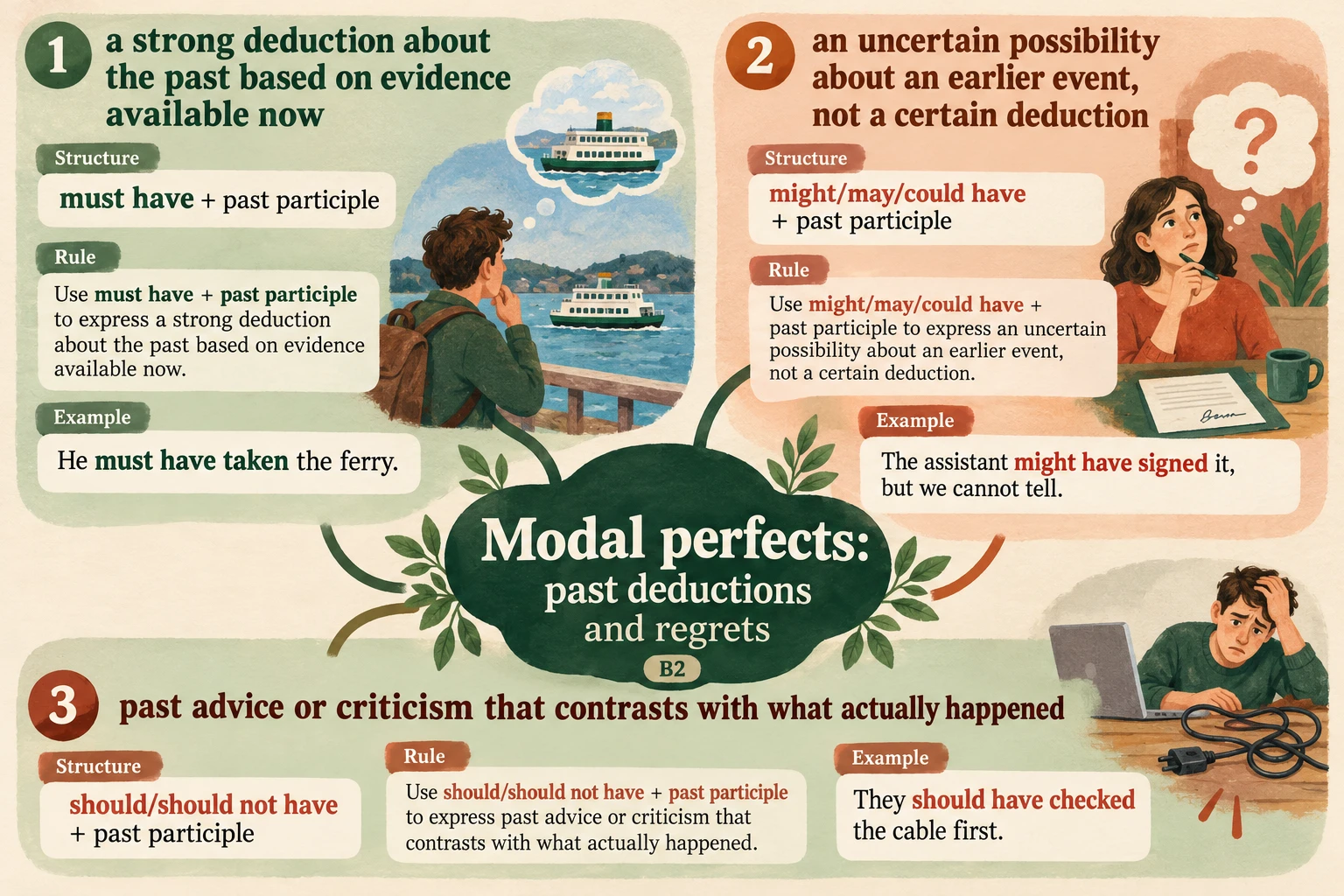
must have + past participle 구조를 사용합니다. 의미: 현재 증거에 근거한 과거에 대한 강한 추론.
He must have taken the ferry.might/may/could have + past participle 구조를 사용합니다. 의미: 확신이 아닌 과거 사건의 불확실한 가능성.
The assistant might have signed it, but we cannot tell.should/should not have + past participle 구조를 사용합니다. 의미: 실제 과거 사실과 대비되는 조언이나 비판.
They should have checked the cable first.
The only bridge was closed all day, yet he reached the island; strong past deduction.
must have + past participle 구조를 사용합니다. 의미: 현재 증거에 근거한 과거에 대한 강한 추론.
He must have taken the ferry.might/may/could have + past participle 구조를 사용합니다. 의미: 확신이 아닌 과거 사건의 불확실한 가능성.
The assistant might have signed it, but we cannot tell.should/should not have + past participle 구조를 사용합니다. 의미: 실제 과거 사실과 대비되는 조언이나 비판.
They should have checked the cable first.첫 시도를 남기고 변화의 이유를 이해한 뒤 새로운 상황에서 확인해 보세요.
아직 복습 노트가 없어요. 짧은 워밍업부터 해보세요.
must have + past participle 구조를 사용합니다. 의미: 현재 증거에 근거한 과거에 대한 강한 추론.
He must have taken the ferry.might/may/could have + past participle 구조를 사용합니다. 의미: 확신이 아닌 과거 사건의 불확실한 가능성.
The assistant might have signed it, but we cannot tell.should/should not have + past participle 구조를 사용합니다. 의미: 실제 과거 사실과 대비되는 조언이나 비판.
They should have checked the cable first.정답을 열면 해당 문제에 도움 사용이 기록돼요.
The only bridge was closed all day, yet he reached the island; strong past deduction.
판단 단서는 “The only bridge was closed all day, yet he reached the island; strong past deduction.”입니다. must have + past participle 구조를 사용합니다. 의미: 현재 증거에 근거한 과거에 대한 강한 추론. 이 과제의 완성 문장은 “He must have taken the ferry.”입니다.
The signature is unclear; there is only an uncertain possibility.
판단 단서는 “The signature is unclear; there is only an uncertain possibility.”입니다. might/may/could have + past participle 구조를 사용합니다. 의미: 확신이 아닌 과거 사건의 불확실한 가능성. 이 과제의 완성 문장은 “The assistant might have signed it, but we cannot tell.”입니다.
They ignored an available safety check and an avoidable accident followed.
판단 단서는 “They ignored an available safety check and an avoidable accident followed.”입니다. should/should not have + past participle 구조를 사용합니다. 의미: 실제 과거 사실과 대비되는 조언이나 비판. 이 과제의 완성 문장은 “They should have checked the cable first.”입니다.
The sealed envelope is empty now and no one else could access it; strong deduction.
판단 단서는 “The sealed envelope is empty now and no one else could access it; strong deduction.”입니다. must have + past participle 구조를 사용합니다. 의미: 현재 증거에 근거한 과거에 대한 강한 추론. 이 과제의 완성 문장은 “Someone must have removed the letter before sealing it.”입니다.
Use a perfect possibility modal with take: the cause is possible, not established.
완성 문장: “The visitor might have taken the wrong corridor; we are not sure.” might/may/could have + past participle 구조를 사용합니다. 의미: 확신이 아닌 과거 사건의 불확실한 가능성. 과제의 주어·시간·의미에 맞춘 형태입니다. 검토한 답만 자동으로 확인하며, 다른 표현을 자동으로 틀렸다고 하지 않습니다.
You shared a confidential file, contrary to good advice.
판단 단서는 “You shared a confidential file, contrary to good advice.”입니다. should/should not have + past participle 구조를 사용합니다. 의미: 실제 과거 사실과 대비되는 조언이나 비판. 이 과제의 완성 문장은 “You should not have sent that file outside the company.”입니다.
Use a perfect strong-deduction modal with misunderstand for a past conversation.
완성 문장: “He arrived two hours early; he must have misunderstood the time.” must have + past participle 구조를 사용합니다. 의미: 현재 증거에 근거한 과거에 대한 강한 추론. 과제의 주어·시간·의미에 맞춘 형태입니다. 검토한 답만 자동으로 확인하며, 다른 표현을 자동으로 틀렸다고 하지 않습니다.
All the food is gone and the guests have left; strong evidence of a completed meal.
판단 단서는 “All the food is gone and the guests have left; strong evidence of a completed meal.”입니다. must have + past participle 구조를 사용합니다. 의미: 현재 증거에 근거한 과거에 대한 강한 추론. 이 과제의 완성 문장은 “They must have eaten already.”입니다.
Use a perfect possibility modal with overlook for an uncertain past event.
완성 문장: “The committee may have overlooked the attachment; we cannot be certain.” might/may/could have + past participle 구조를 사용합니다. 의미: 확신이 아닌 과거 사건의 불확실한 가능성. 과제의 주어·시간·의미에 맞춘 형태입니다. 검토한 답만 자동으로 확인하며, 다른 표현을 자동으로 틀렸다고 하지 않습니다.
The driver failed to rest before a long journey; retrospective criticism.
판단 단서는 “The driver failed to rest before a long journey; retrospective criticism.”입니다. should/should not have + past participle 구조를 사용합니다. 의미: 실제 과거 사실과 대비되는 조언이나 비판. 이 과제의 완성 문장은 “He should have taken a break before setting off.”입니다.
An earlier cause is possible, but the records are missing.
판단 단서는 “An earlier cause is possible, but the records are missing.”입니다. might/may/could have + past participle 구조를 사용합니다. 의미: 확신이 아닌 과거 사건의 불확실한 가능성. 이 과제의 완성 문장은 “The figures might have been entered twice.”입니다.
Use a negative perfect advice modal with reveal to criticise a completed disclosure.
완성 문장: “You should not have revealed the witness’s identity.” should/should not have + past participle 구조를 사용합니다. 의미: 실제 과거 사실과 대비되는 조언이나 비판. 과제의 주어·시간·의미에 맞춘 형태입니다. 검토한 답만 자동으로 확인하며, 다른 표현을 자동으로 틀렸다고 하지 않습니다.