01規則複数の-sと-es
通常は-sを付けます。-sh・-ch・-s・-xで終わる語には-esを付けます。
Two cups are clean.
単数形と複数形 · A1. 通常は-sを付けます。-sh・-ch・-s・-xで終わる語には-esを付けます。
短い場面で「単数形と複数形」を練習します。手がかりを読み、形を選ぶか入力してから理由を確認しましょう。レベルは編集上の目安です。
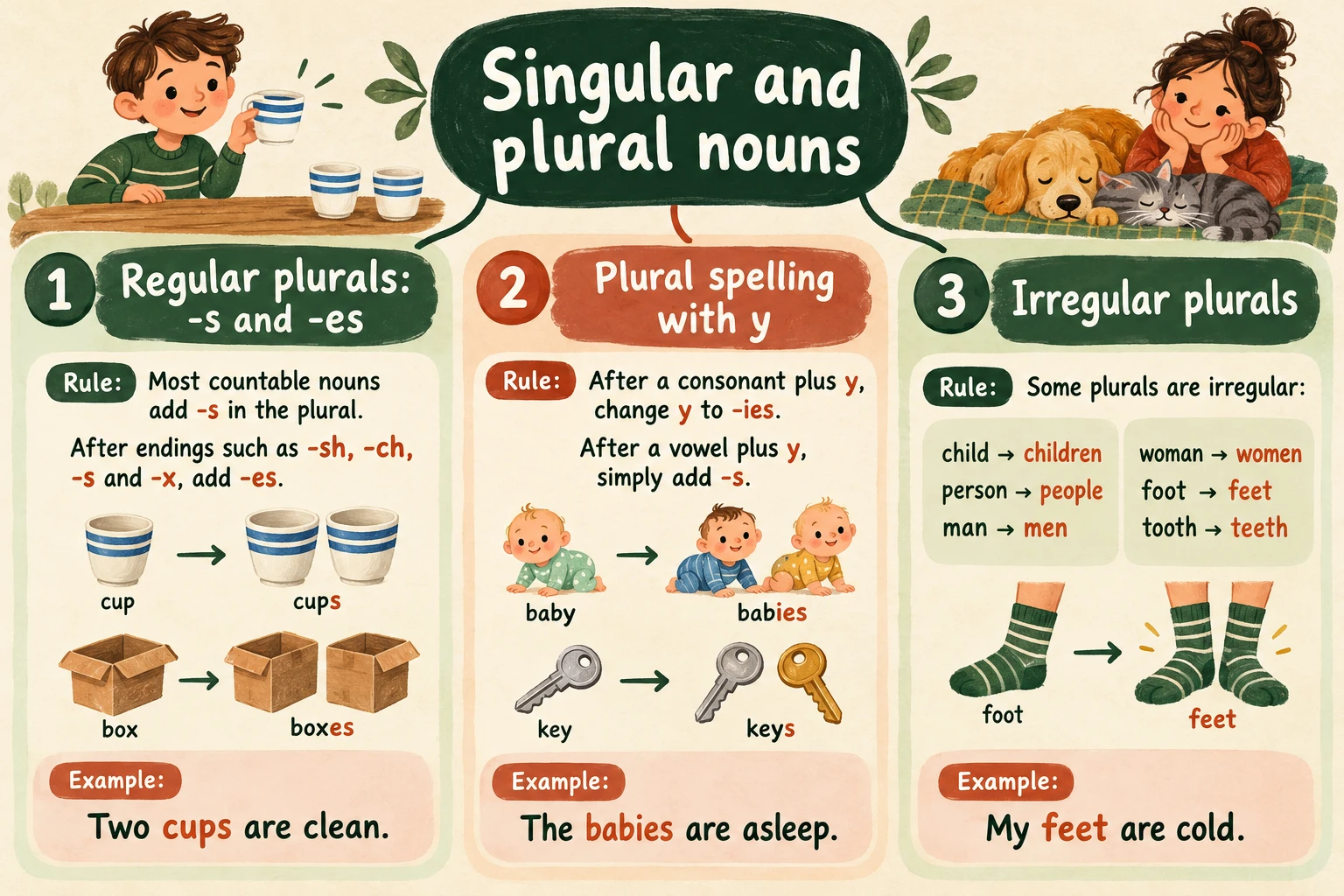
通常は-sを付けます。-sh・-ch・-s・-xで終わる語には-esを付けます。
Two cups are clean.子音字+yはyを-iesに変え、母音字+yはそのまま-sを付けます。
The babies are asleep.不規則な複数形にはchild→children、person→people、man→men、woman→women、foot→feet、tooth→teethがあります。
My feet are cold.
The removal team carried three large ___ upstairs. (box)
通常は-sを付けます。-sh・-ch・-s・-xで終わる語には-esを付けます。
Two cups are clean.子音字+yはyを-iesに変え、母音字+yはそのまま-sを付けます。
The babies are asleep.不規則な複数形にはchild→children、person→people、man→men、woman→women、foot→feet、tooth→teethがあります。
My feet are cold.初回答を残し、変化の理由を理解して、別の場面で確かめます。
まだ復習ノートはありません。まずは短いウォームアップを。
通常は-sを付けます。-sh・-ch・-s・-xで終わる語には-esを付けます。
Two cups are clean.子音字+yはyを-iesに変え、母音字+yはそのまま-sを付けます。
The babies are asleep.不規則な複数形にはchild→children、person→people、man→men、woman→women、foot→feet、tooth→teethがあります。
My feet are cold.解答を開くと、その問題にヒント利用が記録されます。
The removal team carried three large ___ upstairs. (box)
「The removal team carried three large ___ upstairs. (box)」に注目しましょう。通常は-sを付けます。-sh・-ch・-s・-xで終わる語には-esを付けます。 完成文:「The removal team carried three large boxes upstairs. (box)」。
Our street has two new ___. (family)
「Our street has two new ___. (family)」に注目しましょう。子音字+yはyを-iesに変え、母音字+yはそのまま-sを付けます。 完成文:「Our street has two new families. (family)」。
The school has sixty ___. (child)
「The school has sixty ___. (child)」に注目しましょう。不規則な複数形にはchild→children、person→people、man→men、woman→women、foot→feet、tooth→teethがあります。 完成文:「The school has sixty children. (child)」。
There are four ___ on this route. (bus)
完成例:「There are four buses on this route. (bus)」。通常は-sを付けます。-sh・-ch・-s・-xで終わる語には-esを付けます。 通常はbusesを学びますが、bussesもbusの標準的な複数のつづりとして認めます。
The twins share their ___. (toy)
「The twins share their ___. (toy)」に注目しましょう。課題は複数形です。toyは母音字+yなのでyを残して-sを加え、toysにします。 完成文:「The twins share their toys. (toy)」。
Five ___ work in the laboratory. (woman)
「Five ___ work in the laboratory. (woman)」に注目しましょう。不規則な複数形にはchild→children、person→people、man→men、woman→women、foot→feet、tooth→teethがあります。 完成文:「Five women work in the laboratory. (woman)」。
I washed six ___ after lunch. (dish)
完成例:「I washed six dishes after lunch. (dish)」。通常は-sを付けます。-sh・-ch・-s・-xで終わる語には-esを付けます。
We packed eight ___ for the art class. (brush)
「We packed eight ___ for the art class. (brush)」に注目しましょう。通常は-sを付けます。-sh・-ch・-s・-xで終わる語には-esを付けます。 完成文:「We packed eight brushes for the art class. (brush)」。
The library serves three nearby ___. (city)
「The library serves three nearby ___. (city)」に注目しましょう。子音字+yはyを-iesに変え、母音字+yはそのまま-sを付けます。 完成文:「The library serves three nearby cities. (city)」。
The baby has two new ___. (tooth)
完成例:「The baby has two new teeth. (tooth)」。不規則な複数形にはchild→children、person→people、man→men、woman→women、foot→feet、tooth→teethがあります。
The shop sells small ___ for doors. (key)
「The shop sells small ___ for doors. (key)」に注目しましょう。子音字+yはyを-iesに変え、母音字+yはそのまま-sを付けます。 完成文:「The shop sells small keys for doors. (key)」。
Two ___ are waiting at reception. (person)
twoの後には複数形が必要です。personの日常的な複数形はpeopleですが、より改まった標準的な複数形personsも認めます。 この問題では次の別表現も確認済みです:persons。可能な英語表現をすべて列挙したものではありません。