01명사가 진행 동작을 수행하는 능동 관계절 축약
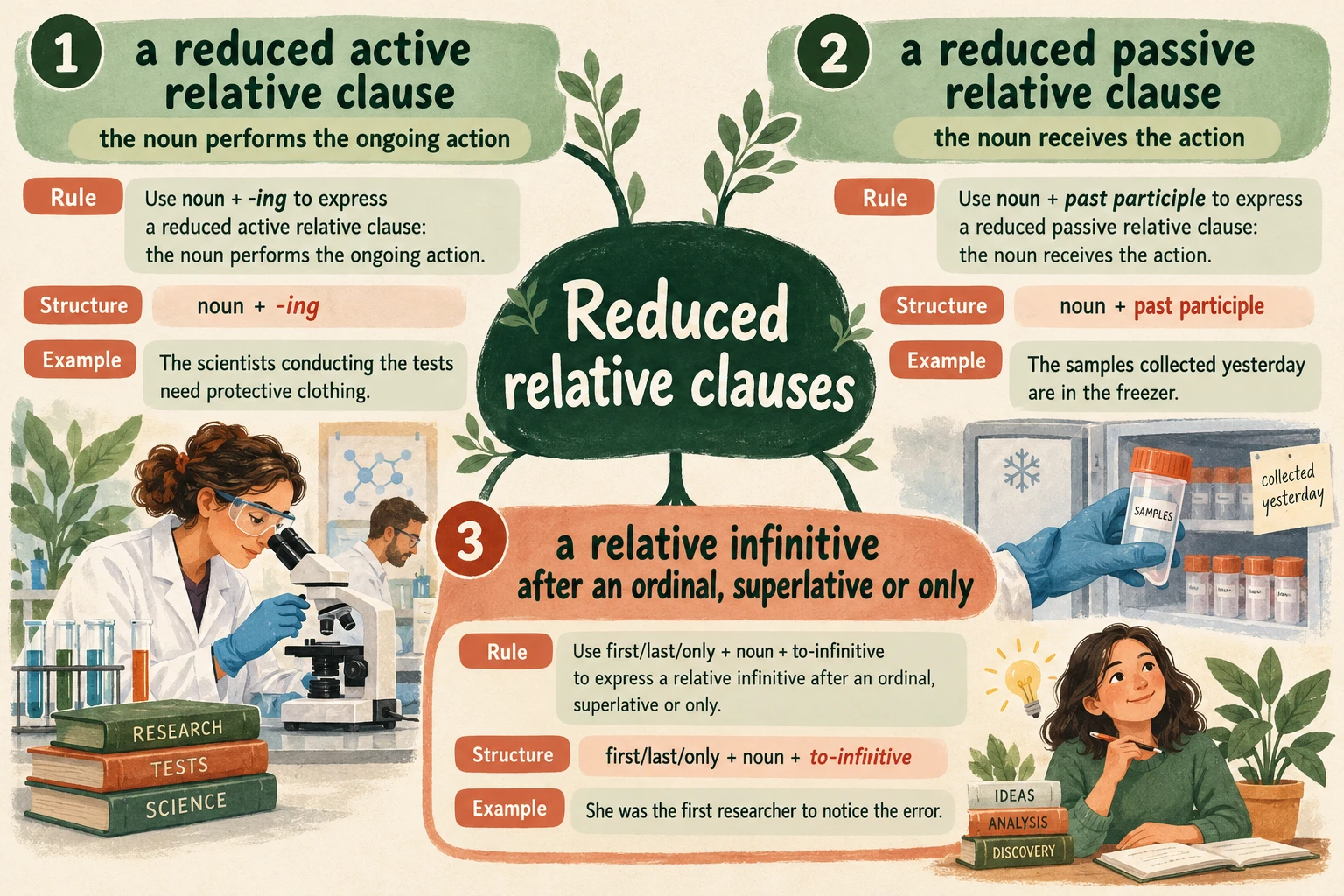
noun + -ing 구조를 사용합니다. 의미: 명사가 진행 동작을 수행하는 능동 관계절 축약.
The scientists conducting the tests need protective clothing.
축약 관계절 · B2. noun + -ing 구조를 사용합니다. 의미: 명사가 진행 동작을 수행하는 능동 관계절 축약.
새로 만든 12문제입니다. 상황에서 의도를 파악하고 형태를 연습한 뒤 새로운 맥락에 적용하세요.
noun + -ing 구조를 사용합니다. 의미: 명사가 진행 동작을 수행하는 능동 관계절 축약.
The scientists conducting the tests need protective clothing.noun + past participle 구조를 사용합니다. 의미: 명사가 동작을 받는 수동 관계절 축약.
The samples collected yesterday are in the freezer.first/last/only + noun + to-infinitive 구조를 사용합니다. 의미: 서수·최상급·only 뒤의 관계적 부정사.
She was the first researcher to notice the error.
The scientists are carrying out the tests themselves.
noun + -ing 구조를 사용합니다. 의미: 명사가 진행 동작을 수행하는 능동 관계절 축약.
The scientists conducting the tests need protective clothing.noun + past participle 구조를 사용합니다. 의미: 명사가 동작을 받는 수동 관계절 축약.
The samples collected yesterday are in the freezer.first/last/only + noun + to-infinitive 구조를 사용합니다. 의미: 서수·최상급·only 뒤의 관계적 부정사.
She was the first researcher to notice the error.첫 시도를 남기고 변화의 이유를 이해한 뒤 새로운 상황에서 확인해 보세요.
아직 복습 노트가 없어요. 짧은 워밍업부터 해보세요.
noun + -ing 구조를 사용합니다. 의미: 명사가 진행 동작을 수행하는 능동 관계절 축약.
The scientists conducting the tests need protective clothing.noun + past participle 구조를 사용합니다. 의미: 명사가 동작을 받는 수동 관계절 축약.
The samples collected yesterday are in the freezer.first/last/only + noun + to-infinitive 구조를 사용합니다. 의미: 서수·최상급·only 뒤의 관계적 부정사.
She was the first researcher to notice the error.정답을 열면 해당 문제에 도움 사용이 기록돼요.
The scientists are carrying out the tests themselves.
판단 단서는 “The scientists are carrying out the tests themselves.”입니다. noun + -ing 구조를 사용합니다. 의미: 명사가 진행 동작을 수행하는 능동 관계절 축약. 이 과제의 완성 문장은 “The scientists conducting the tests need protective clothing.”입니다.
The samples receive the action, performed yesterday.
판단 단서는 “The samples receive the action, performed yesterday.”입니다. noun + past participle 구조를 사용합니다. 의미: 명사가 동작을 받는 수동 관계절 축약. 이 과제의 완성 문장은 “The samples collected yesterday are in the freezer.”입니다.
An ordinal identifies the first person who acted.
판단 단서는 “An ordinal identifies the first person who acted.”입니다. first/last/only + noun + to-infinitive 구조를 사용합니다. 의미: 서수·최상급·only 뒤의 관계적 부정사. 이 과제의 완성 문장은 “She was the first researcher to notice the error.”입니다.
People are currently queuing outside.
판단 단서는 “People are currently queuing outside.”입니다. noun + -ing 구조를 사용합니다. 의미: 명사가 진행 동작을 수행하는 능동 관계절 축약. 이 과제의 완성 문장은 “Anyone waiting outside should move under the shelter.”입니다.
Use a reduced passive relative clause with approve; the plan receives the board’s approval.
완성 문장: “The plan approved by the board includes a new laboratory.” noun + past participle 구조를 사용합니다. 의미: 명사가 동작을 받는 수동 관계절 축약. 과제의 주어·시간·의미에 맞춘 형태입니다. 검토한 답만 자동으로 확인하며, 다른 표현을 자동으로 틀렸다고 하지 않습니다.
Only plus a noun takes a relative infinitive.
판단 단서는 “Only plus a noun takes a relative infinitive.”입니다. first/last/only + noun + to-infinitive 구조를 사용합니다. 의미: 서수·최상급·only 뒤의 관계적 부정사. 이 과제의 완성 문장은 “The only person to respond was the caretaker.”입니다.
Use a reduced active relative clause with carry; the passengers perform the action.
완성 문장: “Passengers carrying large bags must use the lift.” noun + -ing 구조를 사용합니다. 의미: 명사가 진행 동작을 수행하는 능동 관계절 축약. 과제의 주어·시간·의미에 맞춘 형태입니다. 검토한 답만 자동으로 확인하며, 다른 표현을 자동으로 틀렸다고 하지 않습니다.
The engineers themselves work on the bridge.
판단 단서는 “The engineers themselves work on the bridge.”입니다. noun + -ing 구조를 사용합니다. 의미: 명사가 진행 동작을 수행하는 능동 관계절 축약. 이 과제의 완성 문장은 “The engineers working on the bridge need permits.”입니다.
Use a reduced passive relative clause with damage.
완성 문장: “The houses damaged in the storm will be inspected.” noun + past participle 구조를 사용합니다. 의미: 명사가 동작을 받는 수동 관계절 축약. 과제의 주어·시간·의미에 맞춘 형태입니다. 검토한 답만 자동으로 확인하며, 다른 표현을 자동으로 틀렸다고 하지 않습니다.
The final person who leaves should switch off the lights.
판단 단서는 “The final person who leaves should switch off the lights.”입니다. first/last/only + noun + to-infinitive 구조를 사용합니다. 의미: 서수·최상급·only 뒤의 관계적 부정사. 이 과제의 완성 문장은 “The last person to leave must switch off the lights.”입니다.
The emails receive automated generation.
판단 단서는 “The emails receive automated generation.”입니다. noun + past participle 구조를 사용합니다. 의미: 명사가 동작을 받는 수동 관계절 축약. 이 과제의 완성 문장은 “Emails generated by this system cannot be replied to.”입니다.
Use a to-infinitive of reach after the first team, rather than a full finite relative clause.
완성 문장: “They were the first team to reach the remote camp.” first/last/only + noun + to-infinitive 구조를 사용합니다. 의미: 서수·최상급·only 뒤의 관계적 부정사. 과제의 주어·시간·의미에 맞춘 형태입니다. 검토한 답만 자동으로 확인하며, 다른 표현을 자동으로 틀렸다고 하지 않습니다.