01una relativa activa reducida: el nombre realiza la acción en curso
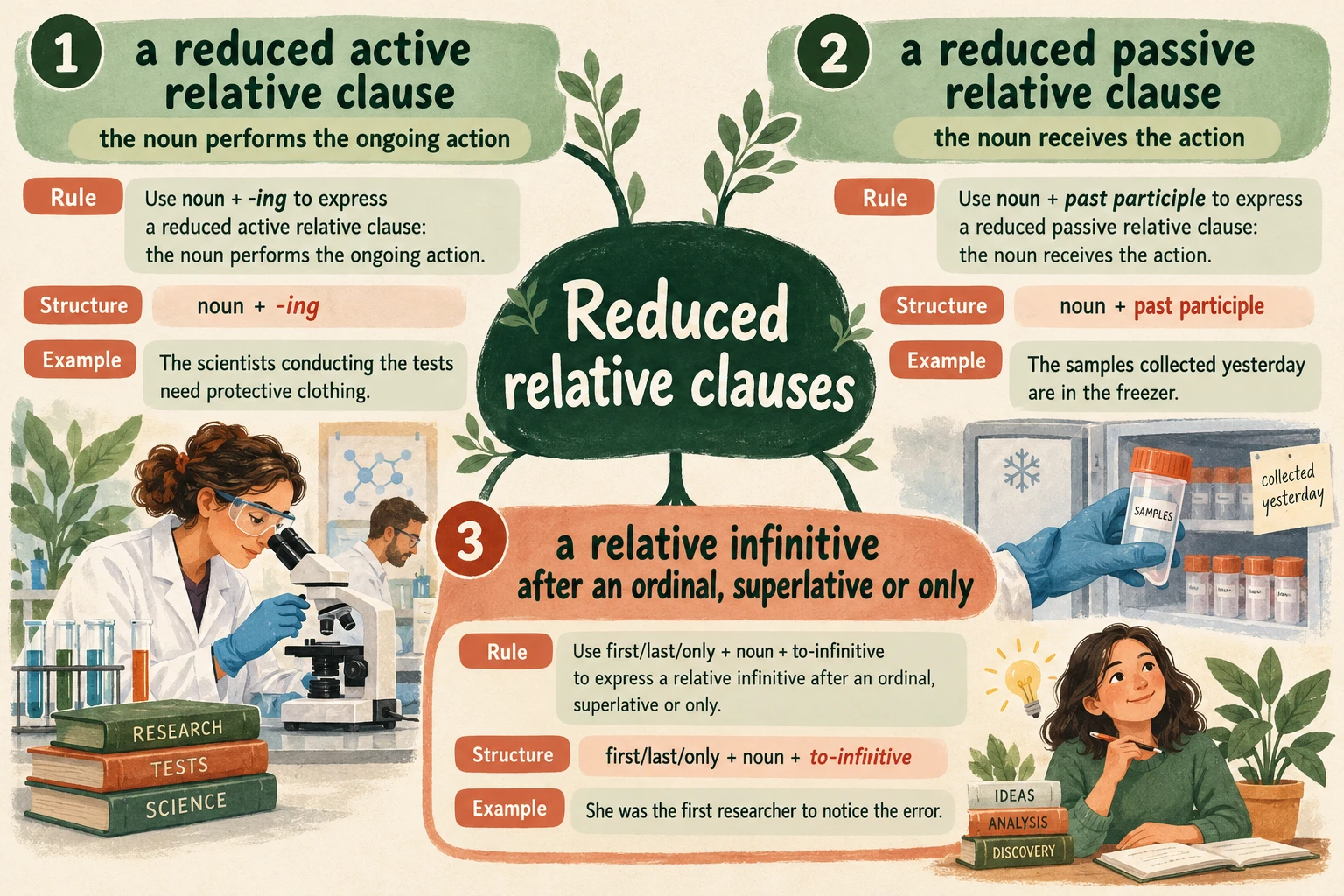
Usa noun + -ing para expresar una relativa activa reducida: el nombre realiza la acción en curso.
The scientists conducting the tests need protective clothing.
Relativas reducidas · B2. Usa noun + -ing para expresar una relativa activa reducida: el nombre realiza la acción en curso.
Completa 12 tareas originales. Deduce el sentido por la situación, practica la forma y aplícala en un contexto nuevo.
Usa noun + -ing para expresar una relativa activa reducida: el nombre realiza la acción en curso.
The scientists conducting the tests need protective clothing.Usa noun + past participle para expresar una relativa pasiva reducida: el nombre recibe la acción.
The samples collected yesterday are in the freezer.Usa first/last/only + noun + to-infinitive para expresar un infinitivo relativo tras ordinal, superlativo u only.
She was the first researcher to notice the error.
The scientists are carrying out the tests themselves.
Usa noun + -ing para expresar una relativa activa reducida: el nombre realiza la acción en curso.
The scientists conducting the tests need protective clothing.Usa noun + past participle para expresar una relativa pasiva reducida: el nombre recibe la acción.
The samples collected yesterday are in the freezer.Usa first/last/only + noun + to-infinitive para expresar un infinitivo relativo tras ordinal, superlativo u only.
She was the first researcher to notice the error.Conserva el primer intento, entiende el cambio y compruébalo en otra situación.
Aún no hay repasos. Prueba un calentamiento corto.
Usa noun + -ing para expresar una relativa activa reducida: el nombre realiza la acción en curso.
The scientists conducting the tests need protective clothing.Usa noun + past participle para expresar una relativa pasiva reducida: el nombre recibe la acción.
The samples collected yesterday are in the freezer.Usa first/last/only + noun + to-infinitive para expresar un infinitivo relativo tras ordinal, superlativo u only.
She was the first researcher to notice the error.Abrir una respuesta registra ayuda para esa pregunta.
The scientists are carrying out the tests themselves.
La pista decisiva es «The scientists are carrying out the tests themselves.». Usa noun + -ing para expresar una relativa activa reducida: el nombre realiza la acción en curso. En esta tarea, la oración completa es «The scientists conducting the tests need protective clothing.».
The samples receive the action, performed yesterday.
La pista decisiva es «The samples receive the action, performed yesterday.». Usa noun + past participle para expresar una relativa pasiva reducida: el nombre recibe la acción. En esta tarea, la oración completa es «The samples collected yesterday are in the freezer.».
An ordinal identifies the first person who acted.
La pista decisiva es «An ordinal identifies the first person who acted.». Usa first/last/only + noun + to-infinitive para expresar un infinitivo relativo tras ordinal, superlativo u only. En esta tarea, la oración completa es «She was the first researcher to notice the error.».
People are currently queuing outside.
La pista decisiva es «People are currently queuing outside.». Usa noun + -ing para expresar una relativa activa reducida: el nombre realiza la acción en curso. En esta tarea, la oración completa es «Anyone waiting outside should move under the shelter.».
Use a reduced passive relative clause with approve; the plan receives the board’s approval.
Oración completa: «The plan approved by the board includes a new laboratory.» Usa noun + past participle para expresar una relativa pasiva reducida: el nombre recibe la acción. El sujeto, el tiempo y el sentido de la tarea determinan la forma. Solo se cotejan automáticamente las respuestas revisadas; otra redacción no es automáticamente incorrecta.
Only plus a noun takes a relative infinitive.
La pista decisiva es «Only plus a noun takes a relative infinitive.». Usa first/last/only + noun + to-infinitive para expresar un infinitivo relativo tras ordinal, superlativo u only. En esta tarea, la oración completa es «The only person to respond was the caretaker.».
Use a reduced active relative clause with carry; the passengers perform the action.
Oración completa: «Passengers carrying large bags must use the lift.» Usa noun + -ing para expresar una relativa activa reducida: el nombre realiza la acción en curso. El sujeto, el tiempo y el sentido de la tarea determinan la forma. Solo se cotejan automáticamente las respuestas revisadas; otra redacción no es automáticamente incorrecta.
The engineers themselves work on the bridge.
La pista decisiva es «The engineers themselves work on the bridge.». Usa noun + -ing para expresar una relativa activa reducida: el nombre realiza la acción en curso. En esta tarea, la oración completa es «The engineers working on the bridge need permits.».
Use a reduced passive relative clause with damage.
Oración completa: «The houses damaged in the storm will be inspected.» Usa noun + past participle para expresar una relativa pasiva reducida: el nombre recibe la acción. El sujeto, el tiempo y el sentido de la tarea determinan la forma. Solo se cotejan automáticamente las respuestas revisadas; otra redacción no es automáticamente incorrecta.
The final person who leaves should switch off the lights.
La pista decisiva es «The final person who leaves should switch off the lights.». Usa first/last/only + noun + to-infinitive para expresar un infinitivo relativo tras ordinal, superlativo u only. En esta tarea, la oración completa es «The last person to leave must switch off the lights.».
The emails receive automated generation.
La pista decisiva es «The emails receive automated generation.». Usa noun + past participle para expresar una relativa pasiva reducida: el nombre recibe la acción. En esta tarea, la oración completa es «Emails generated by this system cannot be replied to.».
Use a to-infinitive of reach after the first team, rather than a full finite relative clause.
Oración completa: «They were the first team to reach the remote camp.» Usa first/last/only + noun + to-infinitive para expresar un infinitivo relativo tras ordinal, superlativo u only. El sujeto, el tiempo y el sentido de la tarea determinan la forma. Solo se cotejan automáticamente las respuestas revisadas; otra redacción no es automáticamente incorrecta.