01일반동사 앞 위치
usually나 often 등은 보통 일반동사 앞에 둡니다.
We usually eat at seven.
빈도부사 · A1. usually나 often 등은 보통 일반동사 앞에 둡니다.
짧은 상황에서 ‘빈도부사’을 연습합니다. 단서를 읽고 형태를 고르거나 쓴 뒤 이유를 확인하세요. 수준은 편집상 안내입니다.
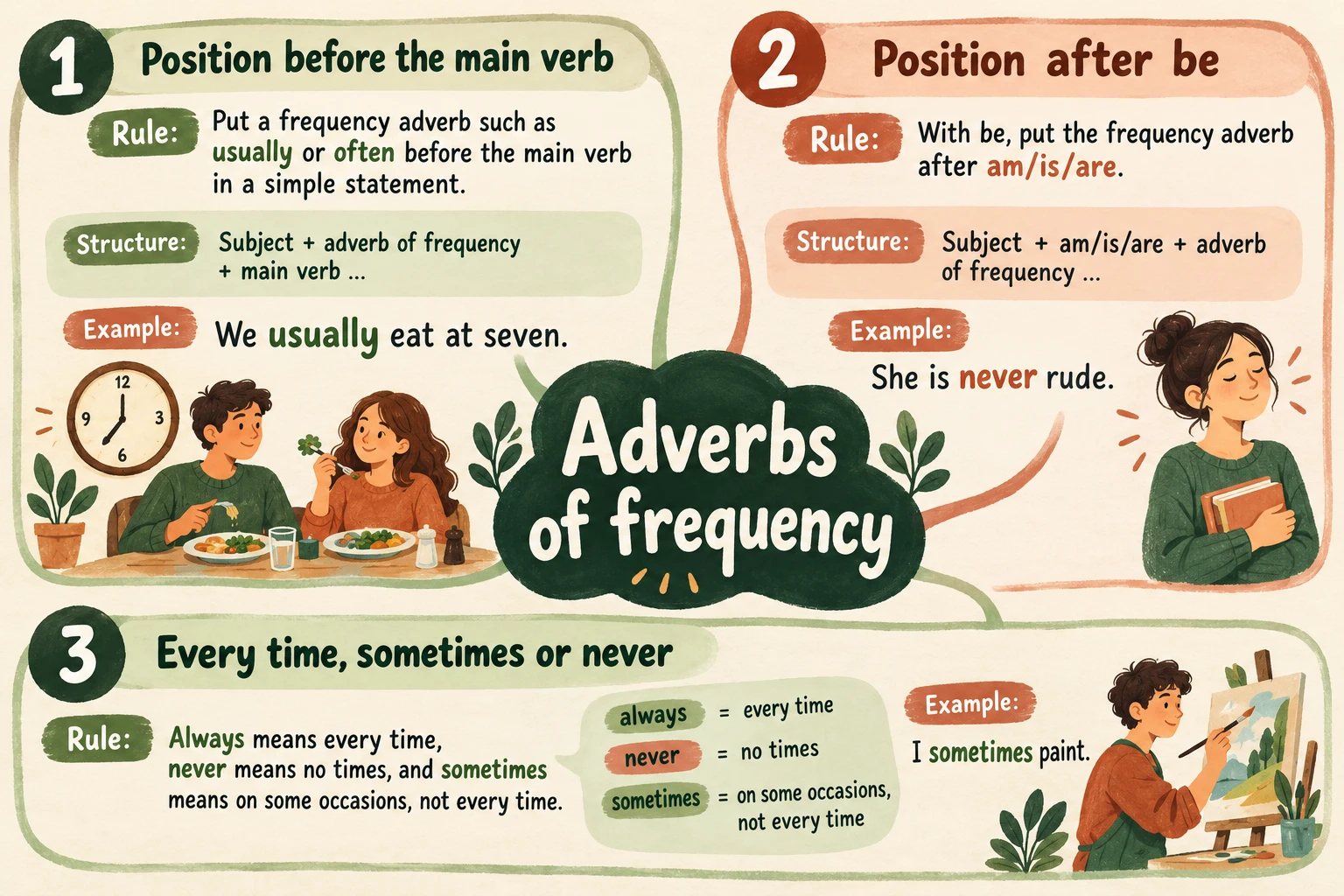
usually나 often 등은 보통 일반동사 앞에 둡니다.
We usually eat at seven.be동사에서는 빈도부사를 am/is/are 뒤에 둡니다.
She is never rude.always는 매번, never는 한 번도 없음, sometimes는 때때로를 뜻합니다.
I sometimes paint.
Choose the normal word order: I ___ before breakfast.
usually나 often 등은 보통 일반동사 앞에 둡니다.
We usually eat at seven.be동사에서는 빈도부사를 am/is/are 뒤에 둡니다.
She is never rude.always는 매번, never는 한 번도 없음, sometimes는 때때로를 뜻합니다.
I sometimes paint.첫 시도를 남기고 변화의 이유를 이해한 뒤 새로운 상황에서 확인해 보세요.
아직 복습 노트가 없어요. 짧은 워밍업부터 해보세요.
usually나 often 등은 보통 일반동사 앞에 둡니다.
We usually eat at seven.be동사에서는 빈도부사를 am/is/are 뒤에 둡니다.
She is never rude.always는 매번, never는 한 번도 없음, sometimes는 때때로를 뜻합니다.
I sometimes paint.정답을 열면 해당 문제에 도움 사용이 기록돼요.
Choose the normal word order: I ___ before breakfast.
“Choose the normal word order: I ___ before breakfast.”를 보세요. usually나 often 등은 보통 일반동사 앞에 둡니다. 완성 문장: “Choose the normal word order: I usually shower before breakfast.”.
Complete the sentence: Sam ___ often early for class.
“Complete the sentence: Sam ___ often early for class.”를 보세요. be동사에서는 빈도부사를 am/is/are 뒤에 둡니다. 완성 문장: “Complete the sentence: Sam is often early for class.”.
Ted takes the bus every single day. He ___ takes the bus.
“Ted takes the bus every single day. He ___ takes the bus.”를 보세요. always는 매번, never는 한 번도 없음, sometimes는 때때로를 뜻합니다. 완성 문장: “Ted takes the bus every single day. He always takes the bus.”.
Complete the normal order: We ___ cook together on Fridays. (usually)
완성 예문: “Complete the normal order: We usually cook together on Fridays. (usually)”. usually나 often 등은 보통 일반동사 앞에 둡니다.
Complete the normal order: My keys are ___ in this drawer. (usually)
“Complete the normal order: My keys are ___ in this drawer. (usually)”를 보세요. be동사에서는 빈도부사를 am/is/are 뒤에 둡니다. 완성 문장: “Complete the normal order: My keys are usually in this drawer. (usually)”.
I have not eaten meat at any time in my life. I ___ eat meat.
“I have not eaten meat at any time in my life. I ___ eat meat.”를 보세요. always는 매번, never는 한 번도 없음, sometimes는 때때로를 뜻합니다. 완성 문장: “I have not eaten meat at any time in my life. I never eat meat.”.
Complete the normal order: Ana ___ walks to school. (often)
완성 예문: “Complete the normal order: Ana often walks to school. (often)”. usually나 often 등은 보통 일반동사 앞에 둡니다.
Choose the normal word order: Our neighbours ___ after lunch.
“Choose the normal word order: Our neighbours ___ after lunch.”를 보세요. usually나 often 등은 보통 일반동사 앞에 둡니다. 완성 문장: “Choose the normal word order: Our neighbours often walk after lunch.”.
Choose the normal word order: The train ___ on Mondays.
“Choose the normal word order: The train ___ on Mondays.”를 보세요. be동사에서는 빈도부사를 am/is/are 뒤에 둡니다. 완성 문장: “Choose the normal word order: The train is usually crowded on Mondays.”.
Only on some evenings, not every evening, we watch a film. We ___ watch films.
완성 예문: “Only on some evenings, not every evening, we watch a film. We sometimes watch films.”. always는 매번, never는 한 번도 없음, sometimes는 때때로를 뜻합니다.
Complete the normal order: I am ___ tired after swimming. (often)
“Complete the normal order: I am ___ tired after swimming. (often)”를 보세요. be동사에서는 빈도부사를 am/is/are 뒤에 둡니다. 완성 문장: “Complete the normal order: I am often tired after swimming. (often)”.
Our team has won every match this season. So far, it has ___ won.
완성 예문: “Our team has won every match this season. So far, it has always won.”. always는 매번, never는 한 번도 없음, sometimes는 때때로를 뜻합니다. 이 문제에서는 다음 표현도 확인된 답으로 인정합니다: consistently / invariably. 가능한 모든 영어 표현의 목록은 아닙니다.