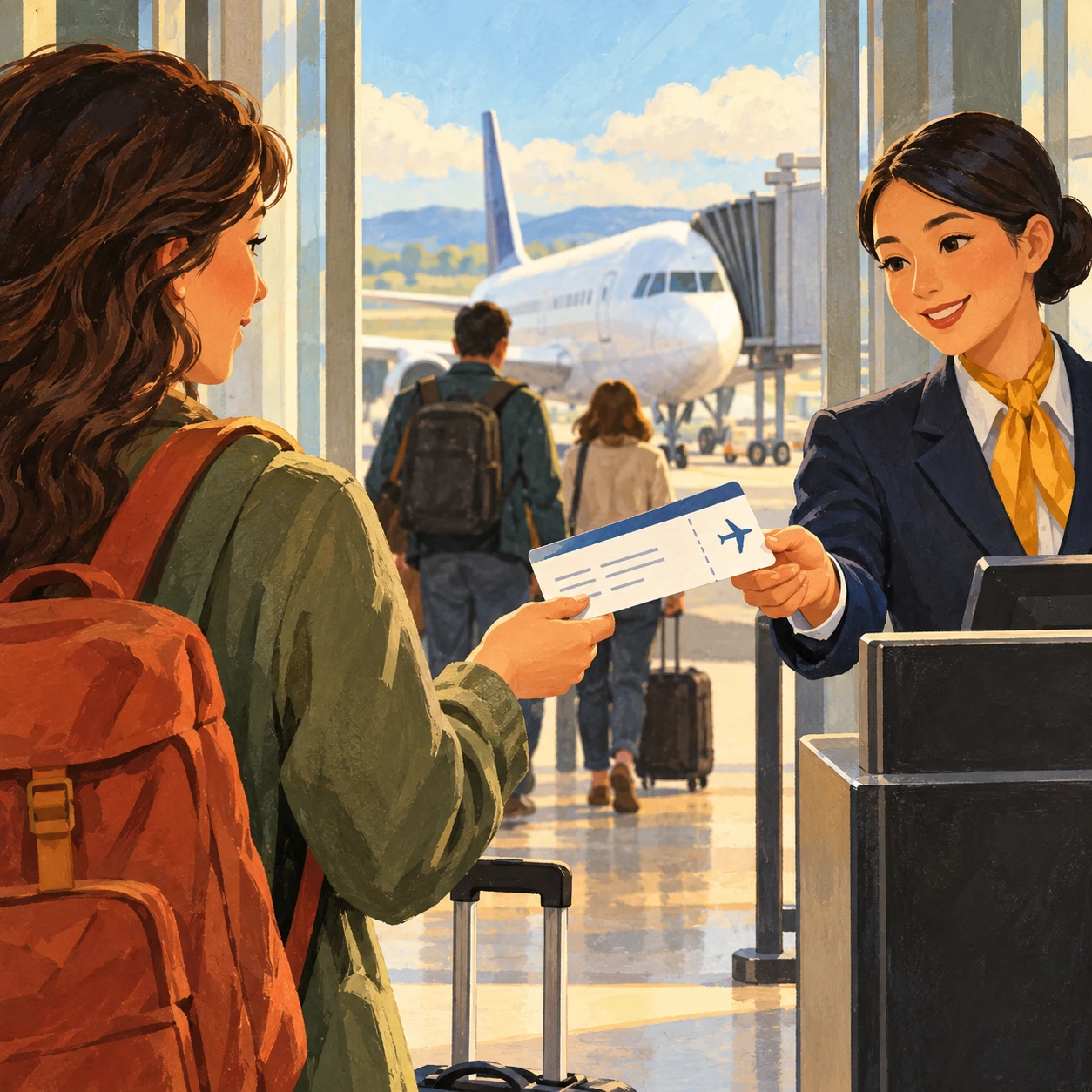
運賃 · 往復切符 · 片道切符 · 搭乗券
場面の手がかりから次の意味を区別しましょう:fare = 運賃; return ticket = 往復切符; single ticket = 片道切符; boarding pass = 搭乗券。
The amount you pay for a bus journey is the fare.

旅行と交通 · A2. 場面の手がかりから次の意味を区別しましょう:fare = 運賃; return ticket = 往復切符; single ticket = 片道切符; boarding pass = 搭乗券。
短い場面で「旅行と交通」を練習します。手がかりを読み、形を選ぶか入力してから理由を確認しましょう。レベルは編集上の目安です。 12枚の学習カードと24問の場面問題で学びます。新しい復習・応用問題も含みます。

The price paid for a journey on public transport.
The ferry fare includes one bicycle.
フェリーの運賃には自転車1台分が含まれます。
このカードの意味に合わせた表現です。関連語では意味が変わる場合があり、言い換えがいつも使えるとは限りません。
「運賃」には「fare」を使います。「return ticket」(往復切符)とは意味が違います。
場面の手がかりから次の意味を区別しましょう:fare = 運賃; return ticket = 往復切符; single ticket = 片道切符; boarding pass = 搭乗券。
The amount you pay for a bus journey is the fare.
場面の手がかりから次の意味を区別しましょう:platform = ホーム; departure = 出発; arrival = 到着; delay = 遅れ。
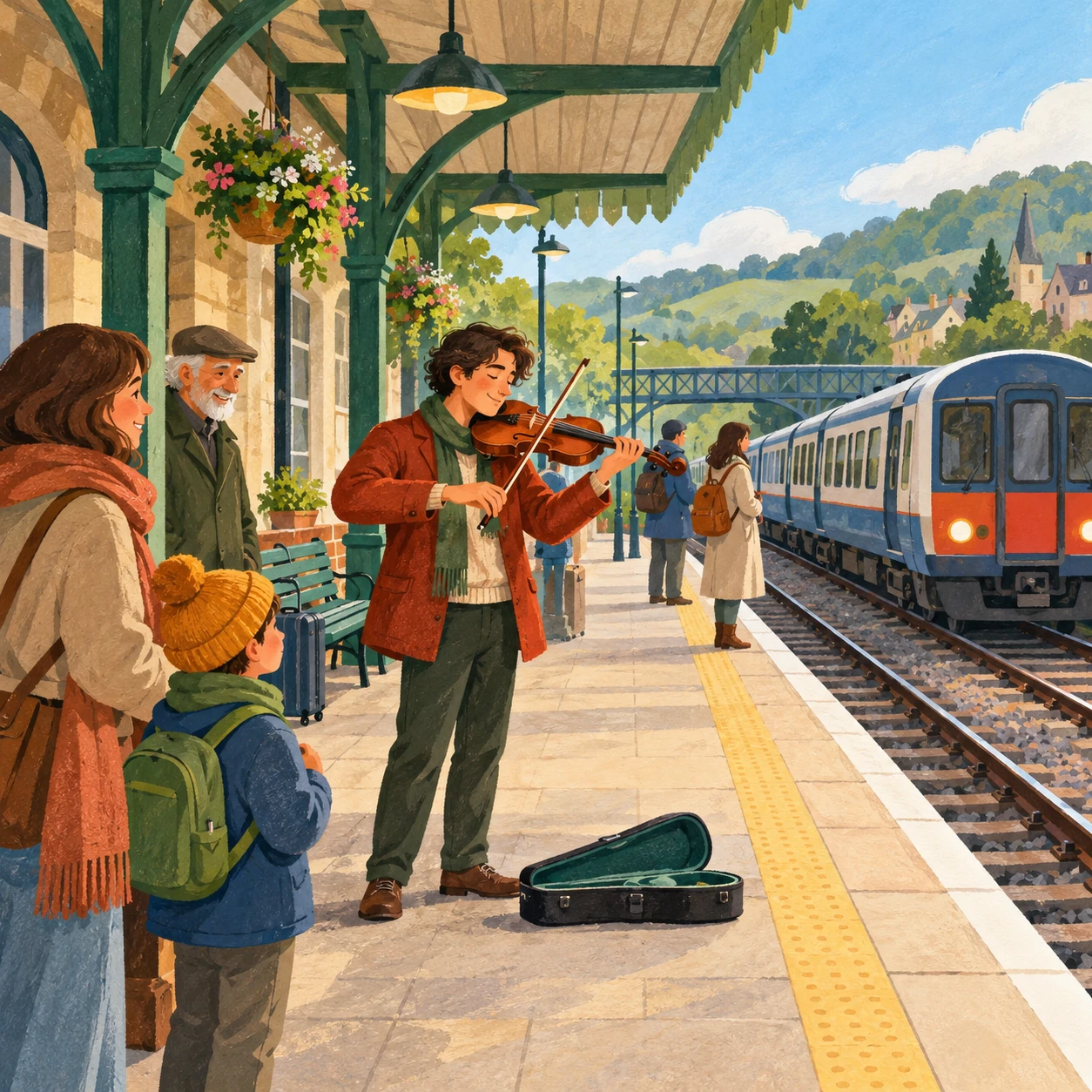
At the station, the raised area beside the train track is the platform.
場面の手がかりから次の意味を区別しましょう:luggage = 手荷物; passport = パスポート; suitcase = スーツケース; passenger = 乗客。
The general uncountable word for the bags we take on a trip is luggage.
The amount you pay for a bus journey is the ___.
場面の手がかりから次の意味を区別しましょう:fare = 運賃; return ticket = 往復切符; single ticket = 片道切符; boarding pass = 搭乗券。
The amount you pay for a bus journey is the fare.場面の手がかりから次の意味を区別しましょう:platform = ホーム; departure = 出発; arrival = 到着; delay = 遅れ。
At the station, the raised area beside the train track is the platform.場面の手がかりから次の意味を区別しましょう:luggage = 手荷物; passport = パスポート; suitcase = スーツケース; passenger = 乗客。
The general uncountable word for the bags we take on a trip is luggage.初回答を残し、変化の理由を理解して、別の場面で確かめます。
まだ復習ノートはありません。まずは短いウォームアップを。
解答を開くと、その問題にヒント利用が記録されます。
The amount you pay for a bus journey is the ___.
「amount you pay」に注目します。ここで必要なのは「運賃」を表す「fare」です。料金と切符、片道と往復を区別します。搭乗券は特定の便に搭乗するためのものです。完成した文:「The amount you pay for a bus journey is the fare.」。
At the station, the raised area beside the train track is the ___.
「beside the train track」に注目します。ここで必要なのは「ホーム」を表す「platform」です。出発・到着・遅れは別の出来事です。ホームは時刻の出来事ではなく場所です。完成した文:「At the station, the raised area beside the train track is the platform.」。
The general uncountable word for the bags we take on a trip is ___.
「general uncountable word」に注目します。ここで必要なのは「手荷物」を表す「luggage」です。荷物全体、一個のケース、身分証明書、旅行する人を区別します。完成した文:「The general uncountable word for the bags we take on a trip is luggage.」。
I need a ticket to go to York and come back: a ___.
「go to York and come back」に注目します。ここで必要なのは「往復切符」を表す「return ticket」です。料金と切符、片道と往復を区別します。搭乗券は特定の便に搭乗するためのものです。完成した文:「I need a ticket to go to York and come back: a return ticket.」。
The train leaves at six. Its ___ time is six.
「train leaves」に注目します。ここで必要なのは「出発」を表す「departure」です。出発・到着・遅れは別の出来事です。ホームは時刻の出来事ではなく場所です。完成した文:「The train leaves at six. Its departure time is six.」。
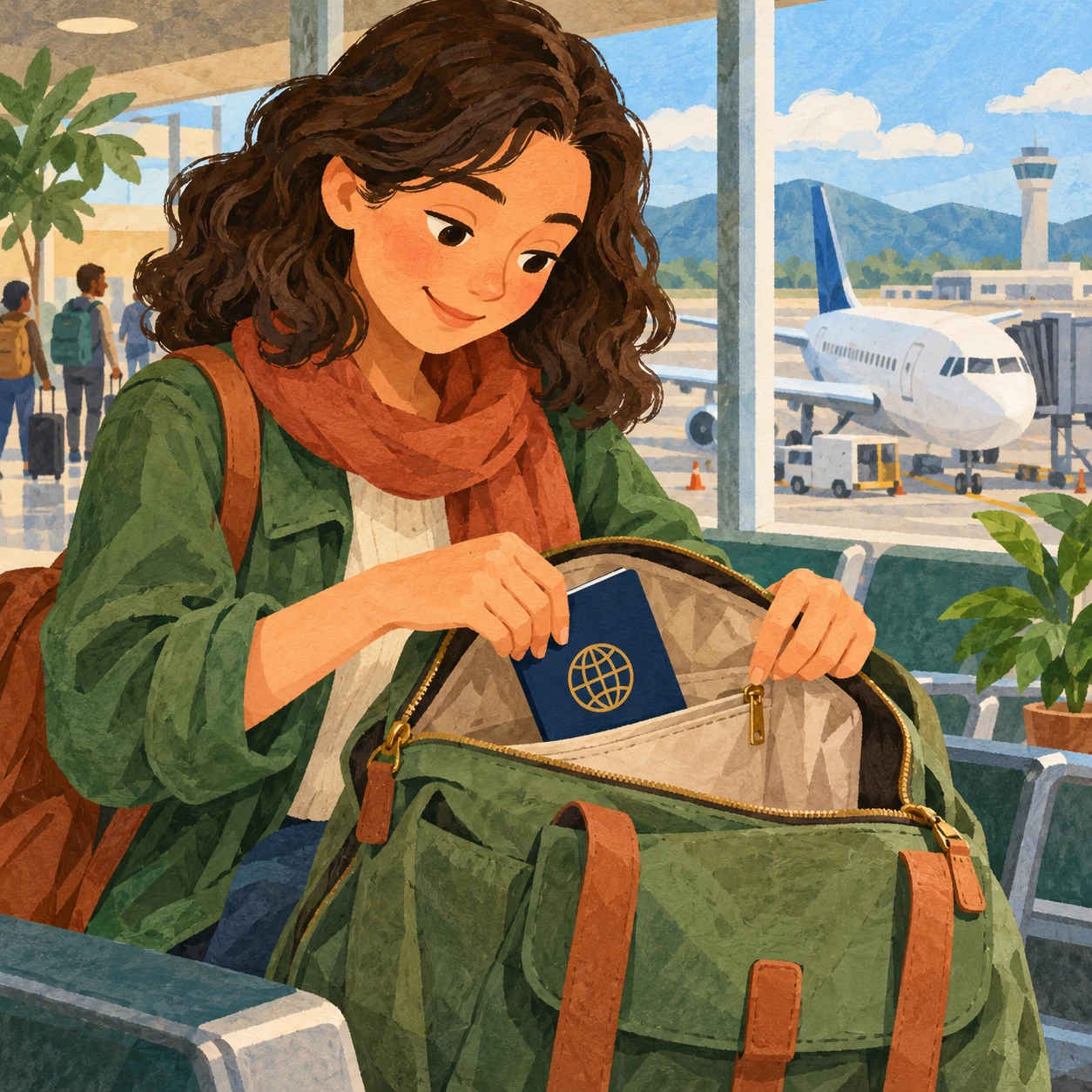
This official document identifies you when you cross national borders: a ___.
「official document」に注目します。ここで必要なのは「パスポート」を表す「passport」です。荷物全体、一個のケース、身分証明書、旅行する人を区別します。完成した文:「This official document identifies you when you cross national borders: a passport.」。
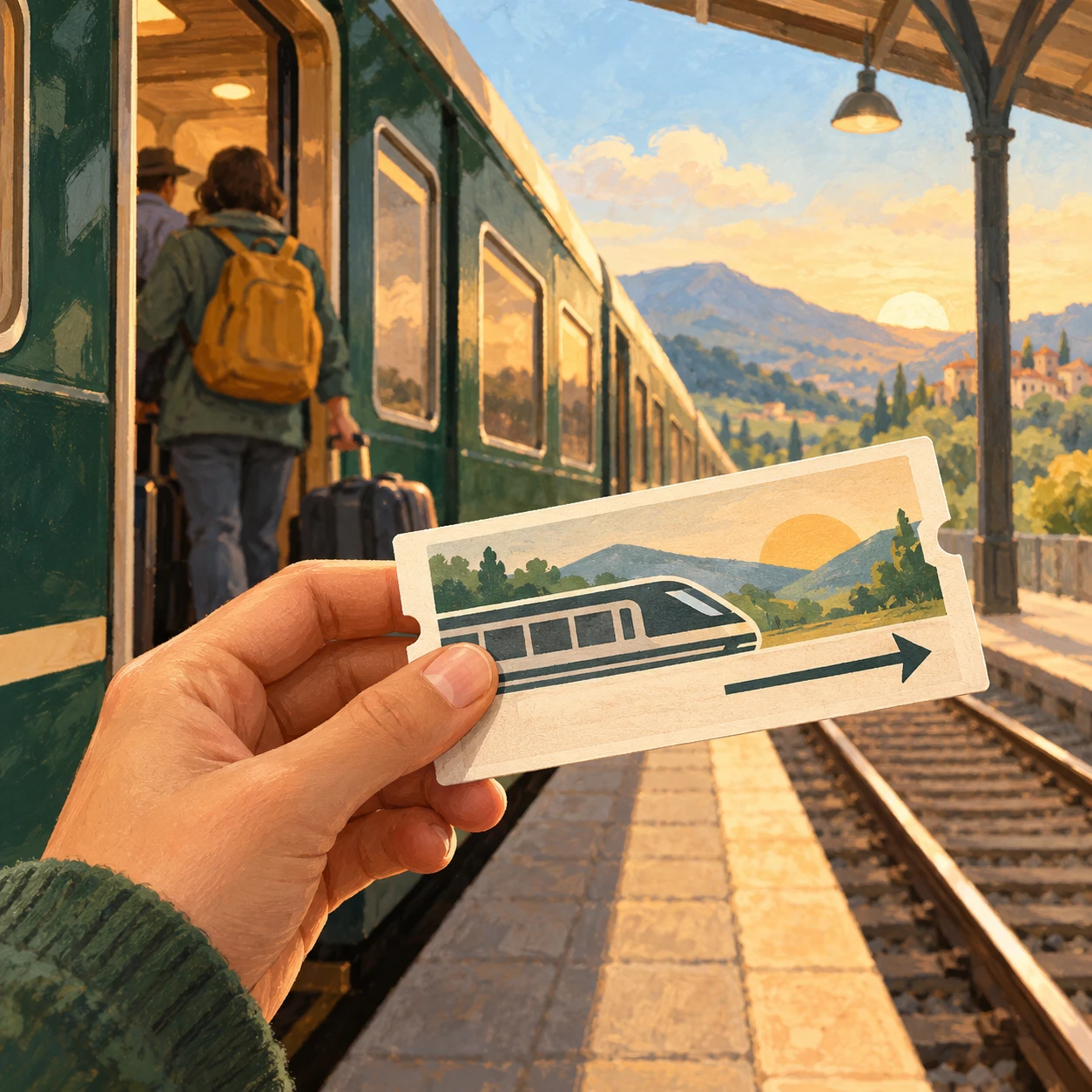
I am buying a train ticket for a journey in one direction only, with no return journey included. I need a ___.
「train ticket for a journey in one direction only」に注目します。ここで必要なのは「片道切符」を表す「single ticket」です。料金と切符、片道と往復を区別します。搭乗券は特定の便に搭乗するためのものです。完成した文:「I am buying a train ticket for a journey in one direction only, with no return journey included. I need a single ticket.” / “I am travelling only one way and not coming back. I need a single ticket.」。
After checking in, I receive the document with my flight seat and gate: my ___.
「flight seat and gate」に注目します。ここで必要なのは「搭乗券」を表す「boarding pass」です。料金と切符、片道と往復を区別します。搭乗券は特定の便に搭乗するためのものです。完成した文:「After checking in, I receive the document with my flight seat and gate: my boarding pass.」。
The plane reaches our airport at ten. Its ___ time is ten.
「plane reaches」に注目します。ここで必要なのは「到着」を表す「arrival」です。出発・到着・遅れは別の出来事です。ホームは時刻の出来事ではなく場所です。完成した文:「The plane reaches our airport at ten. Its arrival time is ten.」。
I pack clothes in one large rectangular case with a handle: a ___.
「one large rectangular case」に注目します。ここで必要なのは「スーツケース」を表す「suitcase」です。荷物全体、一個のケース、身分証明書、旅行する人を区別します。完成した文:「I pack clothes in one large rectangular case with a handle: a suitcase.」。
The train is forty minutes late. There is a forty-minute ___.
「forty minutes late」に注目します。ここで必要なのは「遅れ」を表す「delay」です。出発・到着・遅れは別の出来事です。ホームは時刻の出来事ではなく場所です。完成した文:「The train is forty minutes late. There is a forty-minute delay.」。
A person travelling in a vehicle but not driving it is a ___.
「not driving」に注目します。ここで必要なのは「乗客」を表す「passenger」です。荷物全体、一個のケース、身分証明書、旅行する人を区別します。完成した文:「A person travelling in a vehicle but not driving it is a passenger.」。
On this bus, children pay a lower ___ than adults.
「children pay a lower」に注目します。ここで必要なのは「運賃」を表す「fare」です。料金と切符、片道と往復を区別します。搭乗券は特定の便に搭乗するためのものです。完成した文:「On this bus, children pay a lower fare than adults.」。
The passengers wait beside the railway track on the ___.
「beside the railway track」に注目します。ここで必要なのは「ホーム」を表す「platform」です。出発・到着・遅れは別の出来事です。ホームは時刻の出来事ではなく場所です。完成した文:「The passengers wait beside the railway track on the platform.」。
All the bags and cases you take on a trip are your ___.
「All the bags and cases」に注目します。ここで必要なのは「手荷物」を表す「luggage」です。荷物全体、一個のケース、身分証明書、旅行する人を区別します。完成した文:「All the bags and cases you take on a trip are your luggage.」。
I need one train ticket for the journey there and back. I buy a ___.
「there and back」に注目します。ここで必要なのは「往復切符」を表す「return ticket」です。料金と切符、片道と往復を区別します。搭乗券は特定の便に搭乗するためのものです。完成した文:「I need one train ticket for the journey there and back. I buy a return ticket.」。
The plane leaves at 14:10. The board shows 14:10 as its ___ time.
「plane leaves」に注目します。ここで必要なのは「出発」を表す「departure」です。出発・到着・遅れは別の出来事です。ホームは時刻の出来事ではなく場所です。完成した文:「The plane leaves at 14:10. The board shows 14:10 as its departure time.」。
At the border, I show the official document with my photo and nationality: my ___.
「photo and nationality」に注目します。ここで必要なのは「パスポート」を表す「passport」です。荷物全体、一個のケース、身分証明書、旅行する人を区別します。完成した文:「At the border, I show the official document with my photo and nationality: my passport.」。
I am buying a train ticket for one journey to my destination, with no journey back included. I buy a ___.
「train ticket for one journey to my destination」に注目します。ここで必要なのは「片道切符」を表す「single ticket」です。料金と切符、片道と往復を区別します。搭乗券は特定の便に搭乗するためのものです。完成した文:「I am buying a train ticket for one journey to my destination, with no journey back included. I buy a single ticket.” / “I am only travelling one way. I buy a single ticket.」。
After checking in, I receive the document with my seat number that lets me enter the plane: my ___.
「seat number」に注目します。ここで必要なのは「搭乗券」を表す「boarding pass」です。料金と切符、片道と往復を区別します。搭乗券は特定の便に搭乗するためのものです。完成した文:「After checking in, I receive the document with my seat number that lets me enter the plane: my boarding pass.」。
Our train reaches its final station at 17:30. Its ___ time is 17:30.
「reaches its final station」に注目します。ここで必要なのは「到着」を表す「arrival」です。出発・到着・遅れは別の出来事です。ホームは時刻の出来事ではなく場所です。完成した文:「Our train reaches its final station at 17:30. Its arrival time is 17:30.」。
I pack my clothes into a large rectangular ___ with wheels and a handle.
「wheels and a handle」に注目します。ここで必要なのは「スーツケース」を表す「suitcase」です。荷物全体、一個のケース、身分証明書、旅行する人を区別します。完成した文:「I pack my clothes into a large rectangular suitcase with wheels and a handle.」。
The train is twenty minutes late. There is a twenty-minute ___.
「twenty minutes late」に注目します。ここで必要なのは「遅れ」を表す「delay」です。出発・到着・遅れは別の出来事です。ホームは時刻の出来事ではなく場所です。完成した文:「The train is twenty minutes late. There is a twenty-minute delay.」。
I am travelling on the bus, but I am not driving it. I am a ___.
「not driving」に注目します。ここで必要なのは「乗客」を表す「passenger」です。荷物全体、一個のケース、身分証明書、旅行する人を区別します。完成した文:「I am travelling on the bus, but I am not driving it. I am a passenger.」。