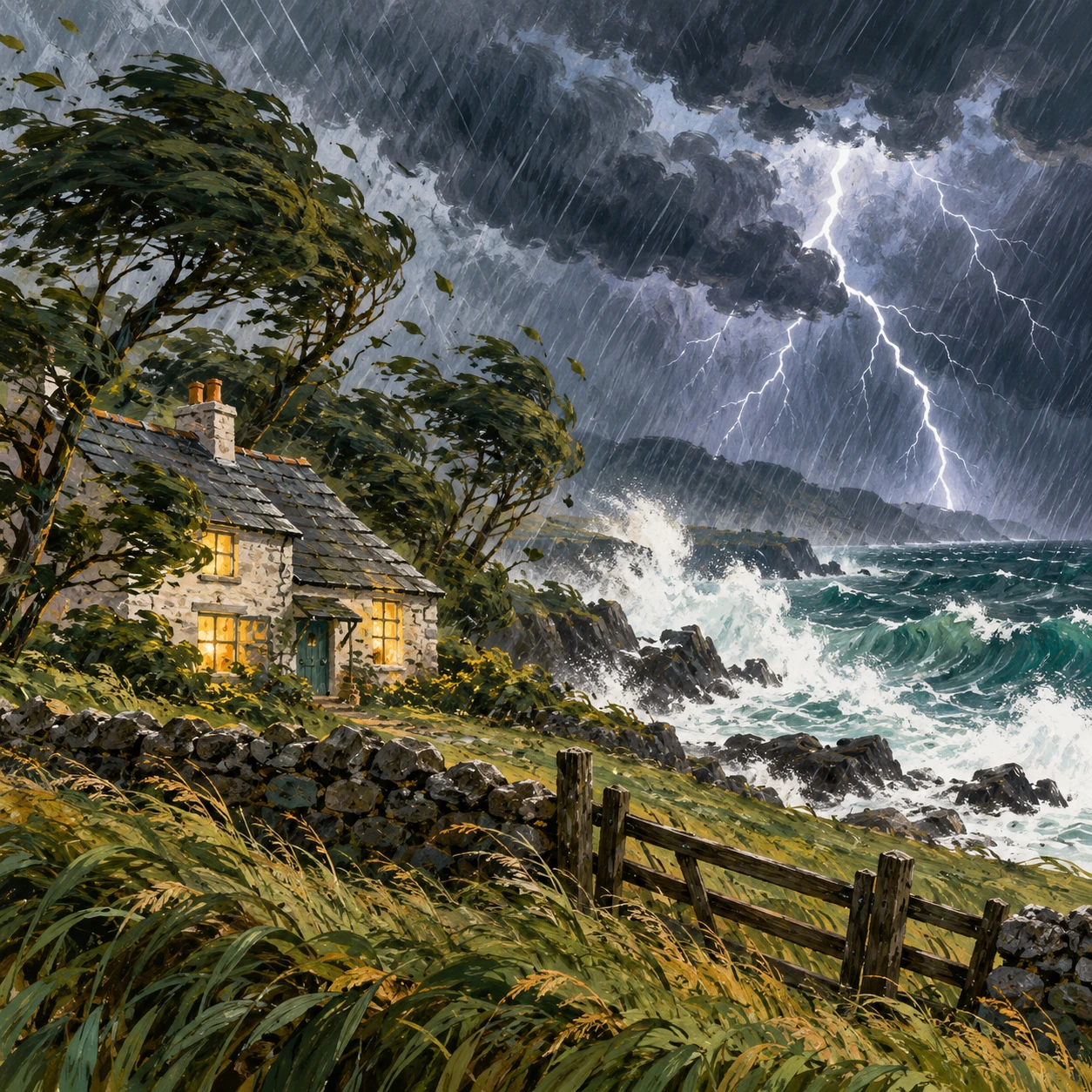
曇った · 風の強い · 晴れた · 霧の深い
場面の手がかりから次の意味を区別しましょう:cloudy = 曇った; windy = 風の強い; sunny = 晴れた; foggy = 霧の深い。
There are many clouds covering the sky. It is cloudy.

天気と季節 · A2. 場面の手がかりから次の意味を区別しましょう:cloudy = 曇った; windy = 風の強い; sunny = 晴れた; foggy = 霧の深い。
短い場面で「天気と季節」を練習します。手がかりを読み、形を選ぶか入力してから理由を確認しましょう。レベルは編集上の目安です。 12枚の学習カードと24問の場面問題で学びます。新しい復習・応用問題も含みます。

With many clouds in the sky.
The morning was cloudy, but the afternoon was clear.
朝は曇っていましたが、午後は晴れました。
このカードの意味に合わせた表現です。関連語では意味が変わる場合があり、言い換えがいつも使えるとは限りません。
「曇った」には「cloudy」を使います。「windy」(風の強い)とは意味が違います。
場面の手がかりから次の意味を区別しましょう:cloudy = 曇った; windy = 風の強い; sunny = 晴れた; foggy = 霧の深い。
There are many clouds covering the sky. It is cloudy.
場面の手がかりから次の意味を区別しましょう:spring = 春; summer = 夏; autumn = 秋; winter = 冬。
The season after winter and before summer is spring.
場面の手がかりから次の意味を区別しましょう:forecast = 天気予報; temperature = 気温; storm = 嵐; shower = にわか雨。
A report predicting tomorrow’s weather is a weather forecast.
Clouds cover the sky, but there is no fog near the ground and the air is still. It is ___.
場面の手がかりから次の意味を区別しましょう:cloudy = 曇った; windy = 風の強い; sunny = 晴れた; foggy = 霧の深い。
There are many clouds covering the sky. It is cloudy.場面の手がかりから次の意味を区別しましょう:spring = 春; summer = 夏; autumn = 秋; winter = 冬。
The season after winter and before summer is spring.場面の手がかりから次の意味を区別しましょう:forecast = 天気予報; temperature = 気温; storm = 嵐; shower = にわか雨。
A report predicting tomorrow’s weather is a weather forecast.初回答を残し、変化の理由を理解して、別の場面で確かめます。
まだ復習ノートはありません。まずは短いウォームアップを。
解答を開くと、その問題にヒント利用が記録されます。
Clouds cover the sky, but there is no fog near the ground and the air is still. It is ___.
「Clouds cover the sky」に注目します。ここで必要なのは「曇った」を表す「cloudy」です。これらの天気は共存します。別の状態もあり得るかではなく、問われた特徴に答えます。完成した文:「Clouds cover the sky, but there is no fog near the ground and the air is still. It is cloudy.” / “There are many clouds covering the sky. It is cloudy.」。
The season after winter and before summer is ___.
「after winter and before summer」に注目します。ここで必要なのは「春」を表す「spring」です。春・夏・秋・冬という順序で考えます。完成した文:「The season after winter and before summer is spring.」。
A report predicting tomorrow’s weather is a weather ___.
「predicting tomorrow’s weather」に注目します。ここで必要なのは「天気予報」を表す「forecast」です。予報は測定値や出来事とは別です。短い雨と激しい荒天も区別します。完成した文:「A report predicting tomorrow’s weather is a weather forecast.」。
The sky is not clear and there is no fog near the ground. Which word describes the strong movement of air blowing my hat away? It is ___.
「strong movement of air」に注目します。ここで必要なのは「風の強い」を表す「windy」です。これらの天気は共存します。別の状態もあり得るかではなく、問われた特徴に答えます。完成した文:「The sky is not clear and there is no fog near the ground. Which word describes the strong movement of air blowing my hat away? It is windy.” / “The air is moving strongly and blowing my hat away. It is windy.」。
The season after spring and before autumn is ___.
「after spring and before autumn」に注目します。ここで必要なのは「夏」を表す「summer」です。春・夏・秋・冬という順序で考えます。完成した文:「The season after spring and before autumn is summer.」。
The number of degrees showing how hot or cold the air is is its ___.
「number of degrees」に注目します。ここで必要なのは「気温」を表す「temperature」です。予報は測定値や出来事とは別です。短い雨と激しい荒天も区別します。完成した文:「The number of degrees showing how hot or cold the air is is its temperature.」。
Which word describes the bright sun shining from a clear sky? It is ___.
「bright sun」に注目します。ここで必要なのは「晴れた」を表す「sunny」です。これらの天気は共存します。別の状態もあり得るかではなく、問われた特徴に答えます。完成した文:「Which word describes the bright sun shining from a clear sky? It is sunny.” / “The sun is shining brightly from a clear sky. It is sunny.」。
Which word specifically describes low cloud near the ground making the road hard to see? It is ___.
「low cloud near the ground」に注目します。ここで必要なのは「霧の深い」を表す「foggy」です。これらの天気は共存します。別の状態もあり得るかではなく、問われた特徴に答えます。完成した文:「Which word specifically describes low cloud near the ground making the road hard to see? It is foggy.” / “Low cloud near the ground makes it hard to see the road. It is foggy.」。
The season after summer and before winter is ___.
「after summer and before winter」に注目します。ここで必要なのは「秋」を表す「autumn」です。春・夏・秋・冬という順序で考えます。完成した文:「The season after summer and before winter is autumn.」。
There is violent weather with thunder, lightning and strong wind: a ___.
「thunder, lightning and strong wind」に注目します。ここで必要なのは「嵐」を表す「storm」です。予報は測定値や出来事とは別です。短い雨と激しい荒天も区別します。完成した文:「There is violent weather with thunder, lightning and strong wind: a storm.」。
The season after autumn and before spring is ___.
「after autumn and before spring」に注目します。ここで必要なのは「冬」を表す「winter」です。春・夏・秋・冬という順序で考えます。完成した文:「The season after autumn and before spring is winter.」。
A short period of rain that soon stops is a ___.
「short period of rain」に注目します。ここで必要なのは「にわか雨」を表す「shower」です。予報は測定値や出来事とは別です。短い雨と激しい荒天も区別します。完成した文:「A short period of rain that soon stops is a shower.」。
A thick layer of clouds covers the sky; the air is still and there is no ground-level fog. It is ___.
「layer of clouds」に注目します。ここで必要なのは「曇った」を表す「cloudy」です。これらの天気は共存します。別の状態もあり得るかではなく、問われた特徴に答えます。完成した文:「A thick layer of clouds covers the sky; the air is still and there is no ground-level fog. It is cloudy.” / “A thick layer of clouds covers the sky. It is cloudy.」。
In Britain, this season comes after winter and before summer. It is ___.
「after winter and before summer」に注目します。ここで必要なのは「春」を表す「spring」です。春・夏・秋・冬という順序で考えます。完成した文:「In Britain, this season comes after winter and before summer. It is spring.」。
The report of tomorrow’s weather is the weather ___.
「report of tomorrow’s weather」に注目します。ここで必要なのは「天気予報」を表す「forecast」です。予報は測定値や出来事とは別です。短い雨と激しい荒天も区別します。完成した文:「The report of tomorrow’s weather is the weather forecast.」。
Which word describes the strong movement of air that bends the trees? It is ___.
「strong movement of air」に注目します。ここで必要なのは「風の強い」を表す「windy」です。これらの天気は共存します。別の状態もあり得るかではなく、問われた特徴に答えます。完成した文:「Which word describes the strong movement of air that bends the trees? It is windy.” / “The air is moving strongly and the trees are bending. It is windy.」。
In Britain, the season after spring and before autumn is ___.
「after spring and before autumn」に注目します。ここで必要なのは「夏」を表す「summer」です。春・夏・秋・冬という順序で考えます。完成した文:「In Britain, the season after spring and before autumn is summer.」。
The thermometer shows 22 degrees. It measures the ___.
「thermometer」に注目します。ここで必要なのは「気温」を表す「temperature」です。予報は測定値や出来事とは別です。短い雨と激しい荒天も区別します。完成した文:「The thermometer shows 22 degrees. It measures the temperature.」。
Which word describes bright sunshine from a clear sky? It is ___.
「bright sunshine」に注目します。ここで必要なのは「晴れた」を表す「sunny」です。これらの天気は共存します。別の状態もあり得るかではなく、問われた特徴に答えます。完成した文:「Which word describes bright sunshine from a clear sky? It is sunny.” / “The sun is shining in a clear sky. It is sunny.」。
Which word specifically describes fog near the ground making the road hard to see? It is ___.
「fog near the ground」に注目します。ここで必要なのは「霧の深い」を表す「foggy」です。これらの天気は共存します。別の状態もあり得るかではなく、問われた特徴に答えます。完成した文:「Which word specifically describes fog near the ground making the road hard to see? It is foggy.” / “Fog makes it hard to see the road. It is foggy.」。
In Britain, the season after summer and before winter is ___.
「after summer and before winter」に注目します。ここで必要なのは「秋」を表す「autumn」です。春・夏・秋・冬という順序で考えます。完成した文:「In Britain, the season after summer and before winter is autumn.」。
For several hours, severe wind, heavy rain and thunder affect the whole town, rather than a brief burst of rain. A ___ is passing over it.
「severe wind, heavy rain and thunder」に注目します。ここで必要なのは「嵐」を表す「storm」です。予報は測定値や出来事とは別です。短い雨と激しい荒天も区別します。完成した文:「For several hours, severe wind, heavy rain and thunder affect the whole town, rather than a brief burst of rain. A storm is passing over it.」。
In Britain, the season after autumn and before spring is ___.
「after autumn and before spring」に注目します。ここで必要なのは「冬」を表す「winter」です。春・夏・秋・冬という順序で考えます。完成した文:「In Britain, the season after autumn and before spring is winter.」。
A short period of light rain begins, then quickly ends. It is a ___.
「quickly ends」に注目します。ここで必要なのは「にわか雨」を表す「shower」です。予報は測定値や出来事とは別です。短い雨と激しい荒天も区別します。完成した文:「A short period of light rain begins, then quickly ends. It is a shower.」。