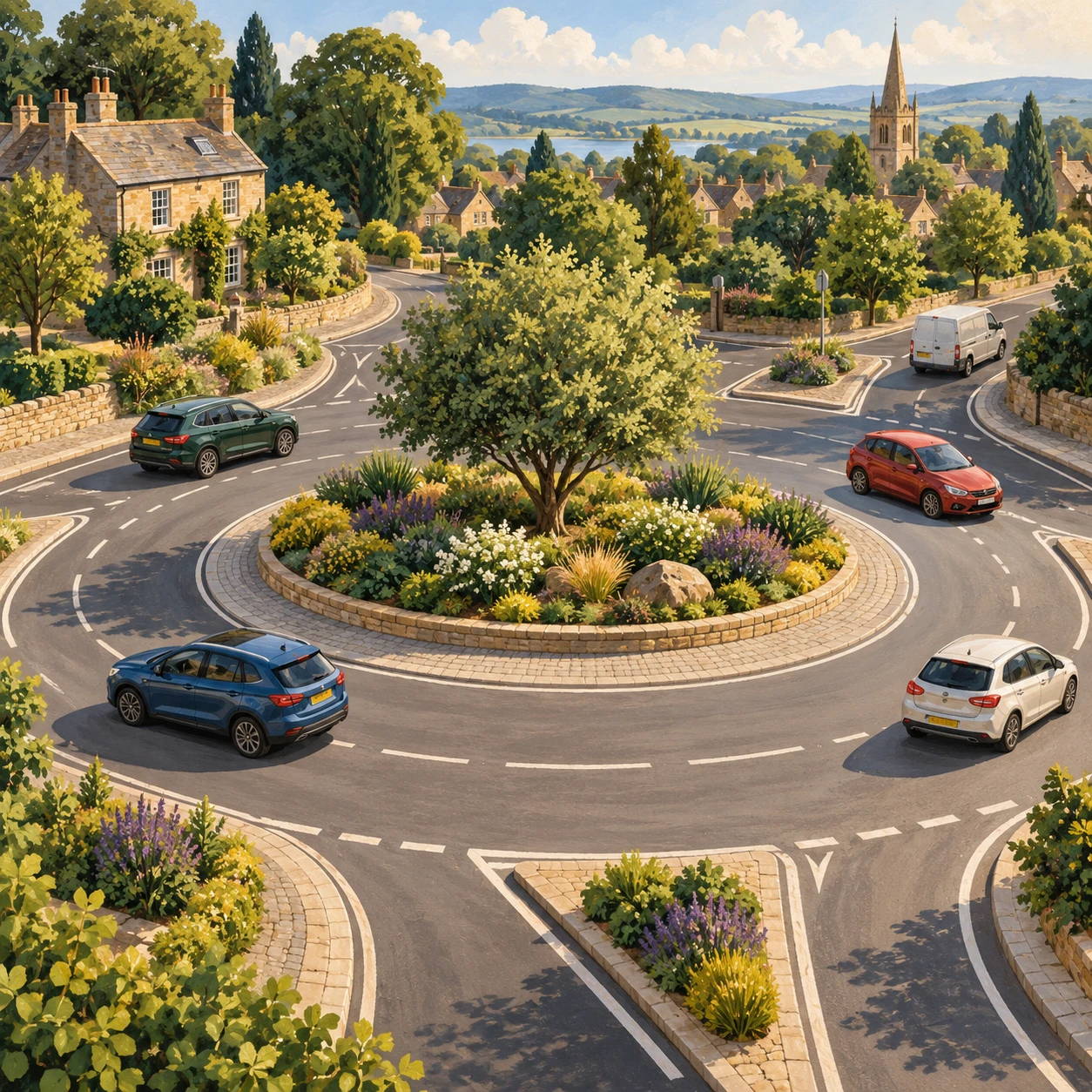
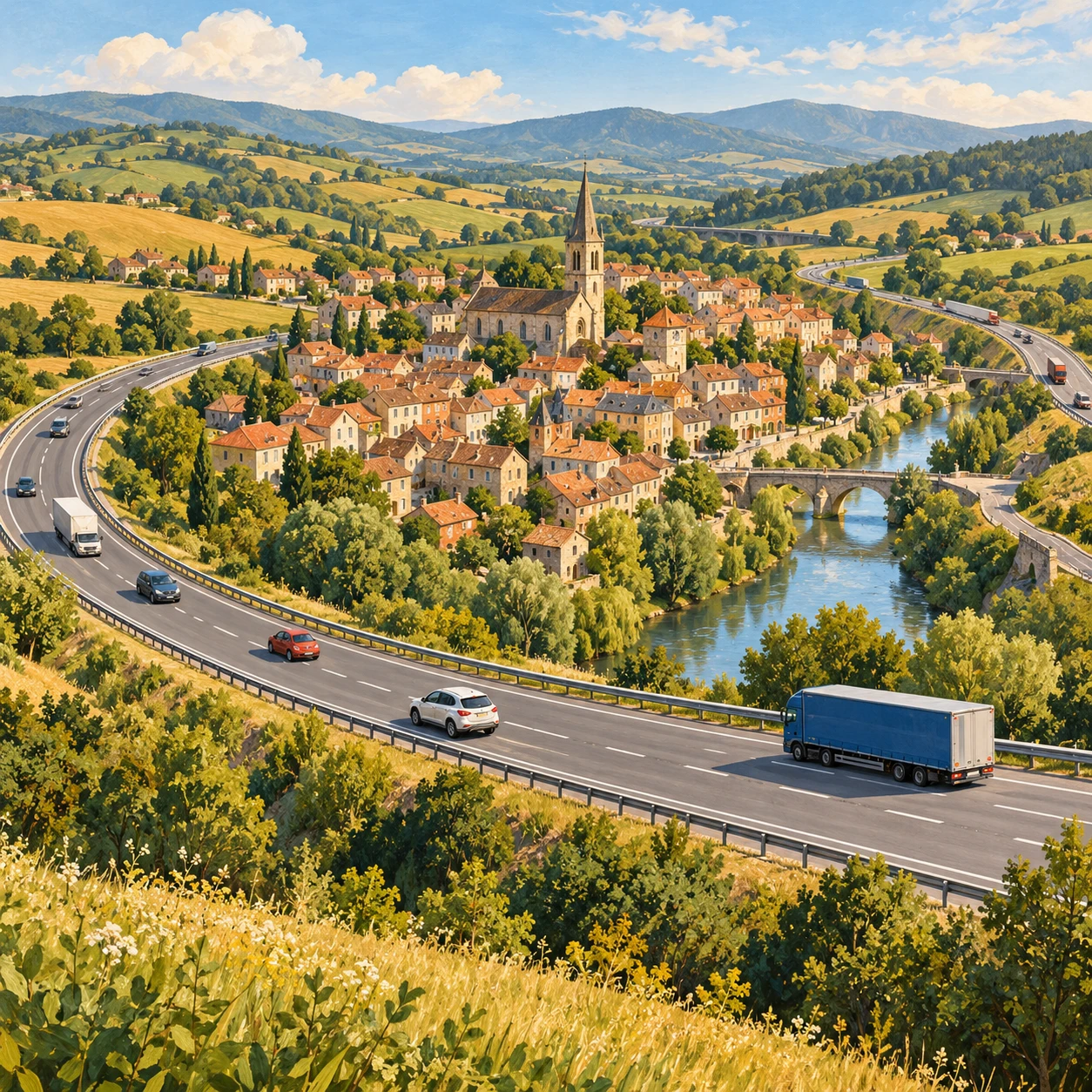
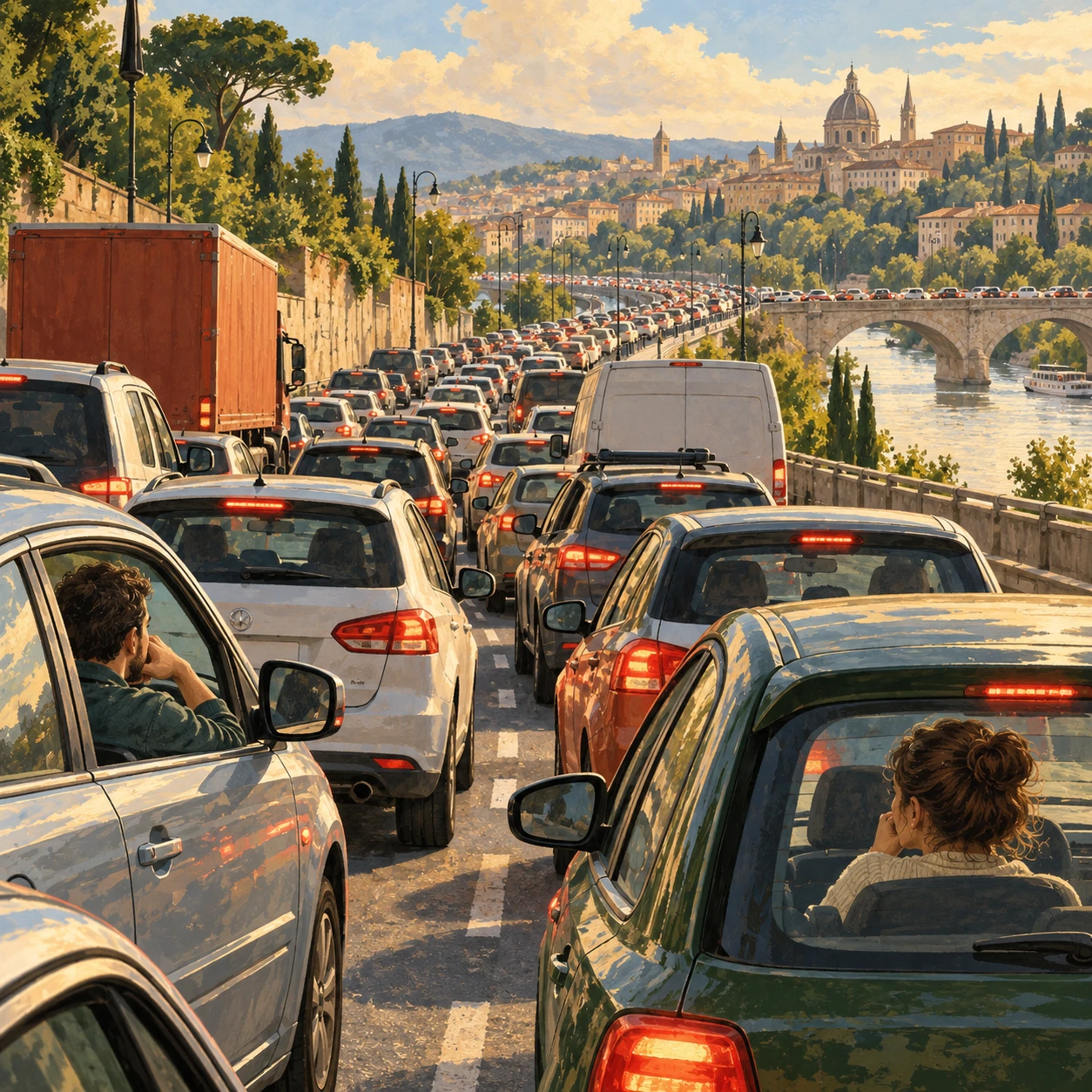
道路の合流点や交差点 · 環状交差点 · 市街地を迂回する道路 · 十字路
場面から次の意味を区別しましょう:junction = 道路の合流点や交差点; roundabout = 環状交差点; bypass = 市街地を迂回する道路; crossroads = 十字路。
Turn left at the next junction.

道路と交通 · B2. 場面から次の意味を区別しましょう:junction = 道路の合流点や交差点; roundabout = 環状交差点; bypass = 市街地を迂回する道路; crossroads = 十字路。
このテーマの便利な12語を学びます。独立した例文を読んでから、新しい場面で練習しましょう。レベルは編集上の目安であり、認定ではありません。

a place where roads meet
Turn left at the next junction.
次の交差点で左に曲がってください。
このカードの意味に合わせた表現です。関連語では意味が変わる場合があり、言い換えがいつも使えるとは限りません。
「a T-junction」を語の組み合わせとして練習しましょう。この単元で「junction」は「道路の合流点や交差点」です。
場面から次の意味を区別しましょう:junction = 道路の合流点や交差点; roundabout = 環状交差点; bypass = 市街地を迂回する道路; crossroads = 十字路。
Turn left at the next junction.
場面から次の意味を区別しましょう:congestion = 交通渋滞; diversion = 臨時の迂回路; collision = 衝突事故; breakdown = 車の故障。
Traffic congestion makes the journey longer.
場面から次の意味を区別しましょう:pedestrian = 歩行者; cyclist = 自転車に乗る人; motorist = 自動車の運転者; commuter = 通勤者。
The pedestrian waited for the green light.
The side road ends where it meets the main road, forming a T-___.
場面から次の意味を区別しましょう:junction = 道路の合流点や交差点; roundabout = 環状交差点; bypass = 市街地を迂回する道路; crossroads = 十字路。
Turn left at the next junction.場面から次の意味を区別しましょう:congestion = 交通渋滞; diversion = 臨時の迂回路; collision = 衝突事故; breakdown = 車の故障。
Traffic congestion makes the journey longer.場面から次の意味を区別しましょう:pedestrian = 歩行者; cyclist = 自転車に乗る人; motorist = 自動車の運転者; commuter = 通勤者。
The pedestrian waited for the green light.初回答を残し、変化の理由を理解して、別の場面で確かめます。
まだ復習ノートはありません。まずは短いウォームアップを。
解答を開くと、その問題にヒント利用が記録されます。
The side road ends where it meets the main road, forming a T-___.
決め手は「T-」です。これは「道路の合流点や交差点」を示しています。道路の交点という一般分類、特定の交差点の形、中心部を避ける道路の違いを確認すると、この場面では「junction」がその意味を表します。完成した表現:「The side road ends where it meets the main road, forming a T-junction.」。
Too many cars trying to use the same road caused severe ___.
決め手は「Too many cars」です。これは「交通渋滞」を示しています。道路の形、問題の原因、または明示された移動の方法を確認すると、この場面では「congestion」がその意味を表します。完成した表現:「Too many cars trying to use the same road caused severe congestion.」。
A ___ travels on foot, rather than on a bicycle or in a vehicle.
決め手は「on foot」です。これは「歩行者」を示しています。移動の目的や繰り返しと、その場での移動手段の違いを確認すると、この場面では「pedestrian」がその意味を表します。完成した表現:「A pedestrian travels on foot, rather than on a bicycle or in a vehicle.」。
What is the specific name for a circular road junction where traffic moves around a central island? ___
決め手は「circular road junction」です。これは「環状交差点」を示しています。道路の交点という一般分類、特定の交差点の形、中心部を避ける道路の違いを確認すると、この場面では「roundabout」がその意味を表します。完成した表現:「What is the specific name for a circular road junction where traffic moves around a central island? roundabout」。
Use the ___ to travel around the town instead of through its centre.
決め手は「around the town」です。これは「市街地を迂回する道路」を示しています。道路の交点という一般分類、特定の交差点の形、中心部を避ける道路の違いを確認すると、この場面では「bypass」がその意味を表します。完成した表現:「Use the bypass to travel around the town instead of through its centre.」。
The most specific name for a junction where two straight roads cross at right angles is a ___.
決め手は「most specific name」です。これは「十字路」を示しています。道路の交点という一般分類、特定の交差点の形、中心部を避ける道路の違いを確認すると、この場面では「crossroads」がその意味を表します。完成した表現:「The most specific name for a junction where two straight roads cross at right angles is a crossroads.」。
The bridge is closed for repairs, so follow the temporary ___.
決め手は「temporary」です。これは「臨時の迂回路」を示しています。道路の形、問題の原因、または明示された移動の方法を確認すると、この場面では「diversion」がその意味を表します。完成した表現:「The bridge is closed for repairs, so follow the temporary diversion.」。
Two cars hit each other at the crossing in a head-on ___.
決め手は「hit each other」です。これは「衝突事故」を示しています。道路の形、問題の原因、または明示された移動の方法を確認すると、この場面では「collision」がその意味を表します。完成した表現:「Two cars hit each other at the crossing in a head-on collision.」。
The engine stopped working, so we called for ___ assistance.
決め手は「engine stopped working」です。これは「車の故障」を示しています。道路の形、問題の原因、または明示された移動の方法を確認すると、この場面では「breakdown」がその意味を表します。完成した表現:「The engine stopped working, so we called for breakdown assistance.」。
The ___ pedalled up the hill in the cycle lane.
決め手は「pedalled」です。これは「自転車に乗る人」を示しています。移動の目的や繰り返しと、その場での移動手段の違いを確認すると、この場面では「cyclist」がその意味を表します。完成した表現:「The cyclist pedalled up the hill in the cycle lane.」。
A ___ is specifically a person driving a car, not someone walking or cycling.
決め手は「person driving a car」です。これは「自動車の運転者」を示しています。移動の目的や繰り返しと、その場での移動手段の違いを確認すると、この場面では「motorist」がその意味を表します。完成した表現:「A motorist is specifically a person driving a car, not someone walking or cycling.」。
Someone who regularly travels from home to a workplace is a ___.
決め手は「regularly travels」です。これは「通勤者」を示しています。移動の目的や繰り返しと、その場での移動手段の違いを確認すると、この場面では「commuter」がその意味を表します。完成した表現:「Someone who regularly travels from home to a workplace is a commuter.」。
A road ___ is the general term for a point where roads meet, including T-shaped layouts.
決め手は「general term」です。これは「道路の合流点や交差点」を示しています。道路の交点という一般分類、特定の交差点の形、中心部を避ける道路の違いを確認すると、この場面では「junction」がその意味を表します。完成した表現:「A road junction is the general term for a point where roads meet, including T-shaped layouts.」。
Drivers follow circular arrows around a central island and choose an exit. What is the specific name of this type of junction? ___
決め手は「central island」です。これは「環状交差点」を示しています。道路の交点という一般分類、特定の交差点の形、中心部を避ける道路の違いを確認すると、この場面では「roundabout」がその意味を表します。完成した表現:「Drivers follow circular arrows around a central island and choose an exit. What is the specific name of this type of junction? roundabout」。
Rush-hour ___ eased when fewer vehicles entered the city centre.
決め手は「fewer vehicles」です。これは「交通渋滞」を示しています。道路の形、問題の原因、または明示された移動の方法を確認すると、この場面では「congestion」がその意味を表します。完成した表現:「Rush-hour congestion eased when fewer vehicles entered the city centre.」。
Yellow signs mark a ___ that takes drivers around the roadworks.
決め手は「roadworks」です。これは「臨時の迂回路」を示しています。道路の形、問題の原因、または明示された移動の方法を確認すると、この場面では「diversion」がその意味を表します。完成した表現:「Yellow signs mark a diversion that takes drivers around the roadworks.」。
What term classifies a person’s current mode of travel when they use the pavement and cross the road on foot, regardless of their usual driving habits? ___
決め手は「current mode of travel」です。これは「歩行者」を示しています。移動の目的や繰り返しと、その場での移動手段の違いを確認すると、この場面では「pedestrian」がその意味を表します。完成した表現:「What term classifies a person’s current mode of travel when they use the pavement and cross the road on foot, regardless of their usual driving habits? pedestrian」。
A ___ on a bicycle rang her bell to warn people ahead.
決め手は「on a bicycle」です。これは「自転車に乗る人」を示しています。移動の目的や繰り返しと、その場での移動手段の違いを確認すると、この場面では「cyclist」がその意味を表します。完成した表現:「A cyclist on a bicycle rang her bell to warn people ahead.」。
The council built a permanent ___ so lorries could avoid the town’s narrow streets.
決め手は「permanent」です。これは「市街地を迂回する道路」を示しています。道路の交点という一般分類、特定の交差点の形、中心部を避ける道路の違いを確認すると、この場面では「bypass」がその意味を表します。完成した表現:「The council built a permanent bypass so lorries could avoid the town’s narrow streets.」。
The most specific name for the four-armed shape where two straight roads cross is a ___.
決め手は「four-armed shape」です。これは「十字路」を示しています。道路の交点という一般分類、特定の交差点の形、中心部を避ける道路の違いを確認すると、この場面では「crossroads」がその意味を表します。完成した表現:「The most specific name for the four-armed shape where two straight roads cross is a crossroads.」。
The driver avoided a ___ by braking before hitting the vehicle ahead.
決め手は「hitting the vehicle ahead」です。これは「衝突事故」を示しています。道路の形、問題の原因、または明示された移動の方法を確認すると、この場面では「collision」がその意味を表します。完成した表現:「The driver avoided a collision by braking before hitting the vehicle ahead.」。
There was no crash; a mechanical ___ simply prevented the car from moving.
決め手は「mechanical」です。これは「車の故障」を示しています。道路の形、問題の原因、または明示された移動の方法を確認すると、この場面では「breakdown」がその意味を表します。完成した表現:「There was no crash; a mechanical breakdown simply prevented the car from moving.」。
The word ___ means a car driver, whether that person is travelling to work, shopping or on holiday.
決め手は「whether that person is travelling」です。これは「自動車の運転者」を示しています。移動の目的や繰り返しと、その場での移動手段の違いを確認すると、この場面では「motorist」がその意味を表します。完成した表現:「The word motorist means a car driver, whether that person is travelling to work, shopping or on holiday.」。
She regularly travels from home to her city office every weekday. Which term classifies her by that repeated home-to-work journey, rather than by whether she walks, cycles or drives? ___
決め手は「repeated home-to-work journey」です。これは「通勤者」を示しています。移動の目的や繰り返しと、その場での移動手段の違いを確認すると、この場面では「commuter」がその意味を表します。完成した表現:「She regularly travels from home to her city office every weekday. Which term classifies her by that repeated home-to-work journey, rather than by whether she walks, cycles or drives? commuter」。