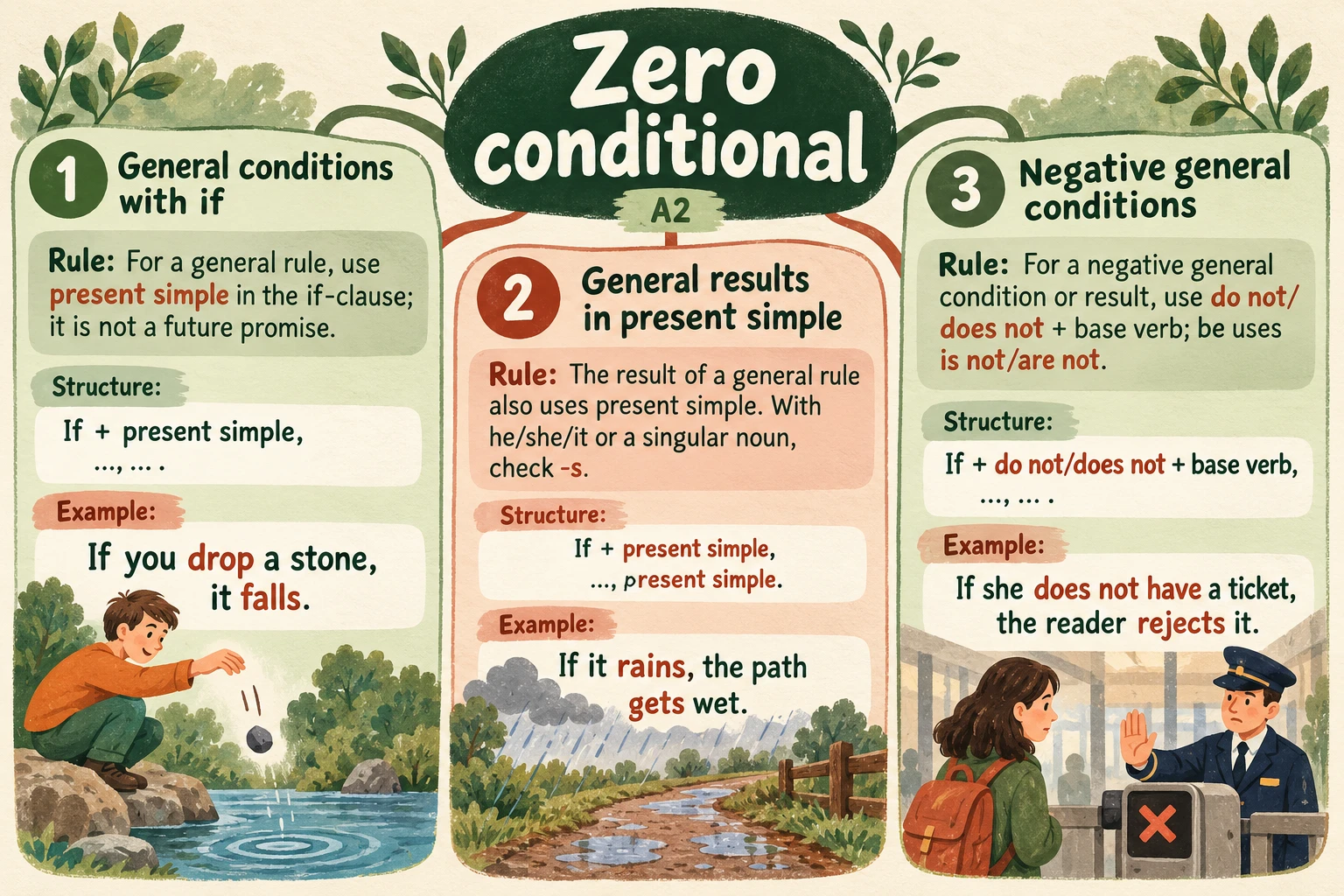
01ifの一般的な条件
一般的な法則のif節は現在形で、将来の約束ではありません。
If you drop a stone, it falls.
ゼロ条件文 · A2. 一般的な法則のif節は現在形で、将来の約束ではありません。
短い場面で「ゼロ条件文」を練習します。手がかりを読み、形を選ぶか入力してから理由を確認しましょう。レベルは編集上の目安です。
一般的な法則のif節は現在形で、将来の約束ではありません。
If you drop a stone, it falls.一般則の結果節も現在形です。he/she/itや単数名詞では-sを確認します。
If it rains, the path gets wet.一般的な条件・結果の否定はdo not/does not+原形、beはis not/are notです。
If she does not have a ticket, the reader rejects it.
General fact: if you ___ ice above its melting point, it melts. (heat)
一般的な法則のif節は現在形で、将来の約束ではありません。
If you drop a stone, it falls.一般則の結果節も現在形です。he/she/itや単数名詞では-sを確認します。
If it rains, the path gets wet.一般的な条件・結果の否定はdo not/does not+原形、beはis not/are notです。
If she does not have a ticket, the reader rejects it.初回答を残し、変化の理由を理解して、別の場面で確かめます。
まだ復習ノートはありません。まずは短いウォームアップを。
一般的な法則のif節は現在形で、将来の約束ではありません。
If you drop a stone, it falls.一般則の結果節も現在形です。he/she/itや単数名詞では-sを確認します。
If it rains, the path gets wet.一般的な条件・結果の否定はdo not/does not+原形、beはis not/are notです。
If she does not have a ticket, the reader rejects it.解答を開くと、その問題にヒント利用が記録されます。
General fact: if you ___ ice above its melting point, it melts. (heat)
「General fact: if you ___ ice above its melting point, it melts. (heat)」に注目しましょう。一般的な法則のif節は現在形で、将来の約束ではありません。 完成文:「General fact: if you heat ice above its melting point, it melts. (heat)」。
This machine always works like this: if you press START, the light ___ on. (come)
「This machine always works like this: if you press START, the light ___ on. (come)」に注目しましょう。一般則の結果節も現在形です。he/she/itや単数名詞では-sを確認します。 完成文:「This machine always works like this: if you press START, the light comes on. (come)」。
Plants die if they ___ get water for too long. (negative do)
「Plants die if they ___ get water for too long. (negative do)」に注目しましょう。一般的な条件・結果の否定はdo not/does not+原形、beはis not/are notです。 完成文:「Plants die if they do not get water for too long. (negative do)」。
General rule: if water ___ below zero Celsius under normal conditions, it freezes. (cool)
完成例:「General rule: if water cools below zero Celsius under normal conditions, it freezes. (cool)」。一般的な法則のif節は現在形で、将来の約束ではありません。
The shop’s usual rule is: if an item is damaged, we ___ it. (replace)
「The shop’s usual rule is: if an item is damaged, we ___ it. (replace)」に注目しましょう。一般則の結果節も現在形です。he/she/itや単数名詞では-sを確認します。 完成文:「The shop’s usual rule is: if an item is damaged, we replace it. (replace)」。
This alarm sounds if the door ___ closed. (negative be)
「This alarm sounds if the door ___ closed. (negative be)」に注目しましょう。一般的な条件・結果の否定はdo not/does not+原形、beはis not/are notです。 完成文:「This alarm sounds if the door is not closed. (negative be)」。
General fact: if a person ___ no air, they cannot breathe. (have)
完成例:「General fact: if a person has no air, they cannot breathe. (have)」。一般的な法則のif節は現在形で、将来の約束ではありません。
General rule: if you ___ red and white paint, you get pink. (mix)
「General rule: if you ___ red and white paint, you get pink. (mix)」に注目しましょう。一般的な法則のif節は現在形で、将来の約束ではありません。 完成文:「General rule: if you mix red and white paint, you get pink. (mix)」。
The printer’s usual behaviour: if the paper runs out, it ___. (stop)
「The printer’s usual behaviour: if the paper runs out, it ___. (stop)」に注目しましょう。一般則の結果節も現在形です。he/she/itや単数名詞では-sを確認します。 完成文:「The printer’s usual behaviour: if the paper runs out, it stops. (stop)」。
The scanner rejects a card if it ___ have a valid code. (negative do)
完成例:「The scanner rejects a card if it does not have a valid code. (negative do)」。一般的な条件・結果の否定はdo not/does not+原形、beはis not/are notです。
General fact: if a metal bar gets hotter, it usually ___. (expand)
「General fact: if a metal bar gets hotter, it usually ___. (expand)」に注目しましょう。一般則の結果節も現在形です。he/she/itや単数名詞では-sを確認します。 完成文:「General fact: if a metal bar gets hotter, it usually expands. (expand)」。
This automatic gate stays shut if the sensor ___ detect a car. (negative do)
完成例:「This automatic gate stays shut if the sensor does not detect a car. (negative do)」。一般的な条件・結果の否定はdo not/does not+原形、beはis not/are notです。