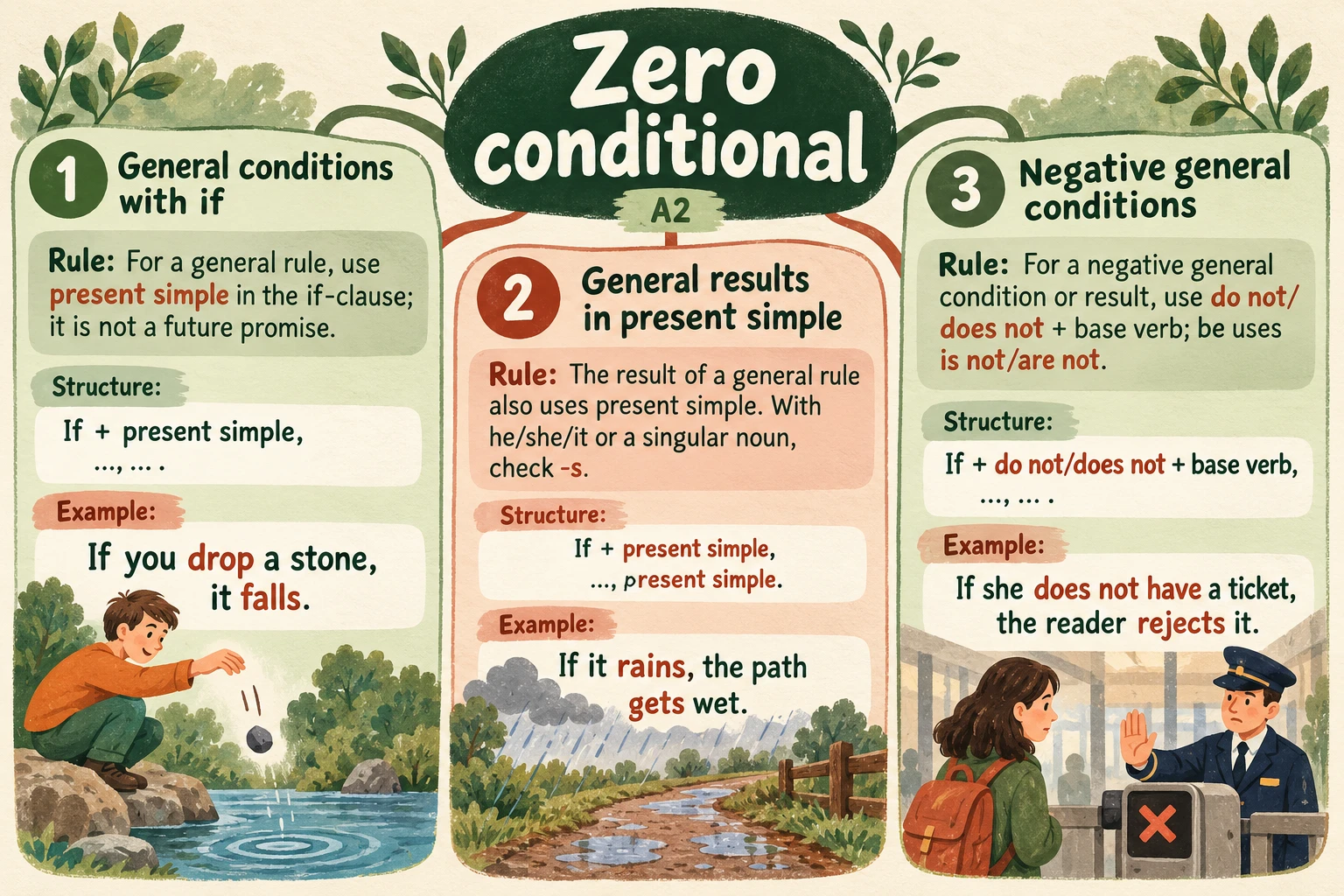
01الشروط العامة مع if
للقاعدة العامة نستخدم المضارع البسيط في جملة if، لاوعدًا مستقبليًا.
If you drop a stone, it falls.
الشرط الصفري · A2. للقاعدة العامة نستخدم المضارع البسيط في جملة if، لاوعدًا مستقبليًا.
تدرّب على الشرط الصفري في مواقف قصيرة. اقرأ القرينة واختر الصيغة أو اكتبها، ثم راجع السبب. المستوى دليل تحريري تقريبي.
للقاعدة العامة نستخدم المضارع البسيط في جملة if، لاوعدًا مستقبليًا.
If you drop a stone, it falls.نتيجة القاعدة العامة تكون بالمضارع البسيط أيضًا، مع مراعاة s للمفرد.
If it rains, the path gets wet.للنفي العام نستخدم do not/does not ثم الفعل الأساسي، ومع be نستخدم is not/are not.
If she does not have a ticket, the reader rejects it.
General fact: if you ___ ice above its melting point, it melts. (heat)
للقاعدة العامة نستخدم المضارع البسيط في جملة if، لاوعدًا مستقبليًا.
If you drop a stone, it falls.نتيجة القاعدة العامة تكون بالمضارع البسيط أيضًا، مع مراعاة s للمفرد.
If it rains, the path gets wet.للنفي العام نستخدم do not/does not ثم الفعل الأساسي، ومع be نستخدم is not/are not.
If she does not have a ticket, the reader rejects it.احتفظ بالمحاولة الأولى، وافهم التغيير، ثم اختبر فهمك في موقف جديد.
لا توجد ملاحظات بعد. جرّب تهيئة قصيرة.
للقاعدة العامة نستخدم المضارع البسيط في جملة if، لاوعدًا مستقبليًا.
If you drop a stone, it falls.نتيجة القاعدة العامة تكون بالمضارع البسيط أيضًا، مع مراعاة s للمفرد.
If it rains, the path gets wet.للنفي العام نستخدم do not/does not ثم الفعل الأساسي، ومع be نستخدم is not/are not.
If she does not have a ticket, the reader rejects it.فتح إجابة يسجّل استخدام المساعدة لذلك السؤال.
General fact: if you ___ ice above its melting point, it melts. (heat)
انظر إلى «General fact: if you ___ ice above its melting point, it melts. (heat)». للقاعدة العامة نستخدم المضارع البسيط في جملة if، لاوعدًا مستقبليًا. الجملة المكتملة: «General fact: if you heat ice above its melting point, it melts. (heat)».
This machine always works like this: if you press START, the light ___ on. (come)
انظر إلى «This machine always works like this: if you press START, the light ___ on. (come)». نتيجة القاعدة العامة تكون بالمضارع البسيط أيضًا، مع مراعاة s للمفرد. الجملة المكتملة: «This machine always works like this: if you press START, the light comes on. (come)».
Plants die if they ___ get water for too long. (negative do)
انظر إلى «Plants die if they ___ get water for too long. (negative do)». للنفي العام نستخدم do not/does not ثم الفعل الأساسي، ومع be نستخدم is not/are not. الجملة المكتملة: «Plants die if they do not get water for too long. (negative do)».
General rule: if water ___ below zero Celsius under normal conditions, it freezes. (cool)
إكمال مرجعي: «General rule: if water cools below zero Celsius under normal conditions, it freezes. (cool)». للقاعدة العامة نستخدم المضارع البسيط في جملة if، لاوعدًا مستقبليًا.
The shop’s usual rule is: if an item is damaged, we ___ it. (replace)
انظر إلى «The shop’s usual rule is: if an item is damaged, we ___ it. (replace)». نتيجة القاعدة العامة تكون بالمضارع البسيط أيضًا، مع مراعاة s للمفرد. الجملة المكتملة: «The shop’s usual rule is: if an item is damaged, we replace it. (replace)».
This alarm sounds if the door ___ closed. (negative be)
انظر إلى «This alarm sounds if the door ___ closed. (negative be)». للنفي العام نستخدم do not/does not ثم الفعل الأساسي، ومع be نستخدم is not/are not. الجملة المكتملة: «This alarm sounds if the door is not closed. (negative be)».
General fact: if a person ___ no air, they cannot breathe. (have)
إكمال مرجعي: «General fact: if a person has no air, they cannot breathe. (have)». للقاعدة العامة نستخدم المضارع البسيط في جملة if، لاوعدًا مستقبليًا.
General rule: if you ___ red and white paint, you get pink. (mix)
انظر إلى «General rule: if you ___ red and white paint, you get pink. (mix)». للقاعدة العامة نستخدم المضارع البسيط في جملة if، لاوعدًا مستقبليًا. الجملة المكتملة: «General rule: if you mix red and white paint, you get pink. (mix)».
The printer’s usual behaviour: if the paper runs out, it ___. (stop)
انظر إلى «The printer’s usual behaviour: if the paper runs out, it ___. (stop)». نتيجة القاعدة العامة تكون بالمضارع البسيط أيضًا، مع مراعاة s للمفرد. الجملة المكتملة: «The printer’s usual behaviour: if the paper runs out, it stops. (stop)».
The scanner rejects a card if it ___ have a valid code. (negative do)
إكمال مرجعي: «The scanner rejects a card if it does not have a valid code. (negative do)». للنفي العام نستخدم do not/does not ثم الفعل الأساسي، ومع be نستخدم is not/are not.
General fact: if a metal bar gets hotter, it usually ___. (expand)
انظر إلى «General fact: if a metal bar gets hotter, it usually ___. (expand)». نتيجة القاعدة العامة تكون بالمضارع البسيط أيضًا، مع مراعاة s للمفرد. الجملة المكتملة: «General fact: if a metal bar gets hotter, it usually expands. (expand)».
This automatic gate stays shut if the sensor ___ detect a car. (negative do)
إكمال مرجعي: «This automatic gate stays shut if the sensor does not detect a car. (negative do)». للنفي العام نستخدم do not/does not ثم الفعل الأساسي، ومع be نستخدم is not/are not.