01特定された人への補足。whose は所有、who は主語を表す
who / whose を用います。表す内容:特定された人への補足。whose は所有、who は主語を表す。
Mara, who manages the archive, is on leave.
非制限用法の関係節 · B1. who / whose を用います。表す内容:特定された人への補足。whose は所有、who は主語を表す。
12問のオリジナル問題です。状況から意味を読み取り、形を練習して、新しい場面で応用します。
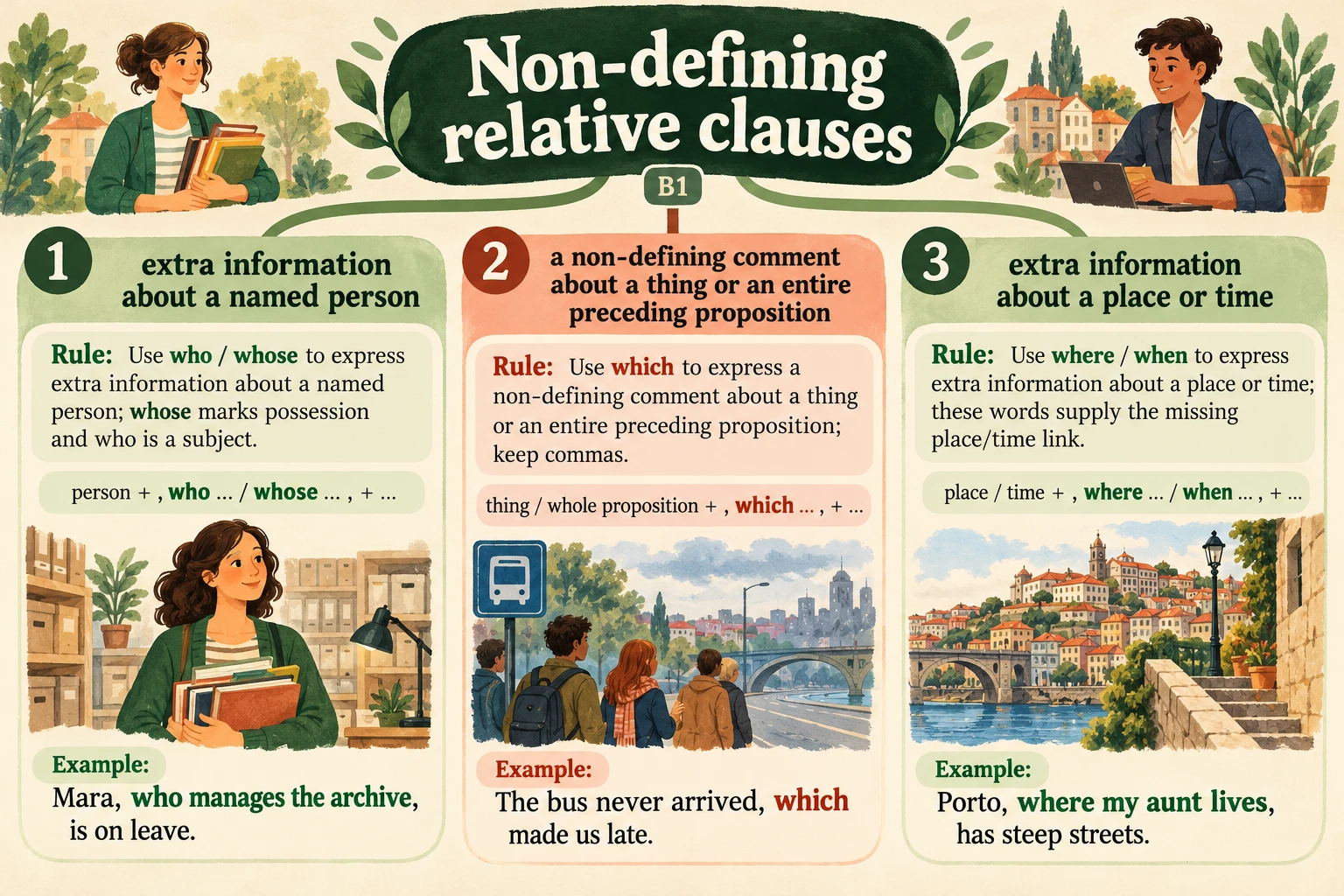
who / whose を用います。表す内容:特定された人への補足。whose は所有、who は主語を表す。
Mara, who manages the archive, is on leave.which を用います。表す内容:物や前の文全体への補足。コンマを保つ。
The bus never arrived, which made us late.where / when を用います。表す内容:場所や時への補足。where・when 自体が場所・時の関係を示す。
Porto, where my aunt lives, has steep streets.
Mara is already identified. Add information about her job.
who / whose を用います。表す内容:特定された人への補足。whose は所有、who は主語を表す。
Mara, who manages the archive, is on leave.which を用います。表す内容:物や前の文全体への補足。コンマを保つ。
The bus never arrived, which made us late.where / when を用います。表す内容:場所や時への補足。where・when 自体が場所・時の関係を示す。
Porto, where my aunt lives, has steep streets.初回答を残し、変化の理由を理解して、別の場面で確かめます。
まだ復習ノートはありません。まずは短いウォームアップを。
who / whose を用います。表す内容:特定された人への補足。whose は所有、who は主語を表す。
Mara, who manages the archive, is on leave.which を用います。表す内容:物や前の文全体への補足。コンマを保つ。
The bus never arrived, which made us late.where / when を用います。表す内容:場所や時への補足。where・when 自体が場所・時の関係を示す。
Porto, where my aunt lives, has steep streets.解答を開くと、その問題にヒント利用が記録されます。
Mara is already identified. Add information about her job.
「Mara, ___ manages the archive, is on leave.」に注目しましょう。who / whose を用います。表す内容:特定された人への補足。whose は所有、who は主語を表す。 完成文:「Mara, who manages the archive, is on leave.」。
The comment concerns the whole preceding fact.
「The bus never arrived, ___ made us late.」に注目しましょう。which を用います。表す内容:物や前の文全体への補足。コンマを保つ。 完成文:「The bus never arrived, which made us late.」。
The missing word links an already identified place to activity there.
「Porto, ___ my aunt lives, has steep streets.」に注目しましょう。where / when を用います。表す内容:場所や時への補足。where・when 自体が場所・時の関係を示す。 完成文:「Porto, where my aunt lives, has steep streets.」。
The colleague is already identified; the gap shows possession of a bike.
「Jon, ___ bike was stolen, has reported it.」に注目しましょう。who / whose を用います。表す内容:特定された人への補足。whose は所有、who は主語を表す。 完成文:「Jon, whose bike was stolen, has reported it.」。
Add a non-defining comment about the entire preceding event. Supply a relative pronoun.
完成文:「The team cancelled the launch, which surprised investors.」 which を用います。表す内容:物や前の文全体への補足。コンマを保つ。 問題の主語・時間・意味に合わせた形です。確認済みの解答だけを自動照合します。別の表現を自動的に誤りとはしません。
A time reference is needed; no place is described.
「In June, ___ the school closes, we will travel.」に注目しましょう。where / when を用います。表す内容:場所や時への補足。where・when 自体が場所・時の関係を示す。 完成文:「In June, when the school closes, we will travel.」。
Supply a relative determiner expressing the named person’s ownership.
完成文:「Aisha, whose studio faces the river, painted the view.」 who / whose を用います。表す内容:特定された人への補足。whose は所有、who は主語を表す。 問題の主語・時間・意味に合わせた形です。確認済みの解答だけを自動照合します。別の表現を自動的に誤りとはしません。
A named scientist receives additional subject information.
「Dr Lee, ___ discovered the error, will explain it.」に注目しましょう。who / whose を用います。表す内容:特定された人への補足。whose は所有、who は主語を表す。 完成文:「Dr Lee, who discovered the error, will explain it.」。
Supply a relative pronoun as the subject referring to the identified machine.
完成文:「The old generator, which still works, powers the shed.」 which を用います。表す内容:物や前の文全体への補足。コンマを保つ。 問題の主語・時間・意味に合わせた形です。確認済みの解答だけを自動照合します。別の表現を自動的に誤りとはしません。
The gap represents the place where they first met.
「The old library, ___ we first met, is being restored.」に注目しましょう。where / when を用います。表す内容:場所や時への補足。where・when 自体が場所・時の関係を示す。 完成文:「The old library, where we first met, is being restored.」。
A named building receives additional subject information.
「The lighthouse, ___ was built in 1890, is open today.」に注目しましょう。which を用います。表す内容:物や前の文全体への補足。コンマを保つ。 完成文:「The lighthouse, which was built in 1890, is open today.」。
Supply a relative time word for additional information about the specified year.
完成文:「In 2014, when the bridge opened, traffic patterns changed.」 where / when を用います。表す内容:場所や時への補足。where・when 自体が場所・時の関係を示す。 問題の主語・時間・意味に合わせた形です。確認済みの解答だけを自動照合します。別の表現を自動的に誤りとはしません。