01특정된 사람에 대한 부가 정보. whose는 소유, who는 주어
who / whose 구조를 사용합니다. 의미: 특정된 사람에 대한 부가 정보. whose는 소유, who는 주어.
Mara, who manages the archive, is on leave.
계속적 용법의 관계절 · B1. who / whose 구조를 사용합니다. 의미: 특정된 사람에 대한 부가 정보. whose는 소유, who는 주어.
새로 만든 12문제입니다. 상황에서 의도를 파악하고 형태를 연습한 뒤 새로운 맥락에 적용하세요.
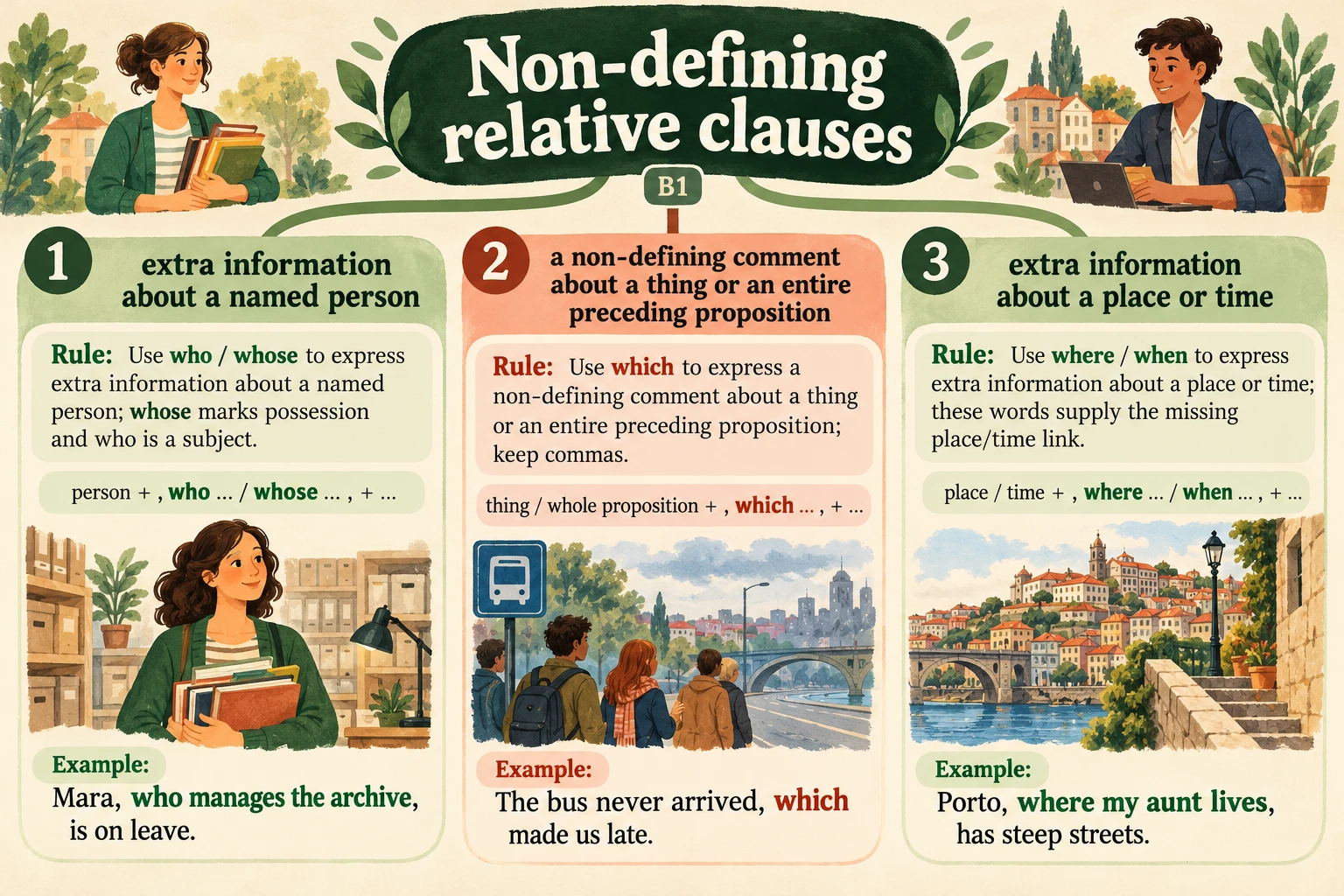
who / whose 구조를 사용합니다. 의미: 특정된 사람에 대한 부가 정보. whose는 소유, who는 주어.
Mara, who manages the archive, is on leave.which 구조를 사용합니다. 의미: 사물이나 앞 문장 전체에 대한 부가 설명. 쉼표 유지.
The bus never arrived, which made us late.where / when 구조를 사용합니다. 의미: 장소나 시간에 대한 부가 정보. where·when이 빠진 관계를 나타냄.
Porto, where my aunt lives, has steep streets.
Mara is already identified. Add information about her job.
who / whose 구조를 사용합니다. 의미: 특정된 사람에 대한 부가 정보. whose는 소유, who는 주어.
Mara, who manages the archive, is on leave.which 구조를 사용합니다. 의미: 사물이나 앞 문장 전체에 대한 부가 설명. 쉼표 유지.
The bus never arrived, which made us late.where / when 구조를 사용합니다. 의미: 장소나 시간에 대한 부가 정보. where·when이 빠진 관계를 나타냄.
Porto, where my aunt lives, has steep streets.첫 시도를 남기고 변화의 이유를 이해한 뒤 새로운 상황에서 확인해 보세요.
아직 복습 노트가 없어요. 짧은 워밍업부터 해보세요.
who / whose 구조를 사용합니다. 의미: 특정된 사람에 대한 부가 정보. whose는 소유, who는 주어.
Mara, who manages the archive, is on leave.which 구조를 사용합니다. 의미: 사물이나 앞 문장 전체에 대한 부가 설명. 쉼표 유지.
The bus never arrived, which made us late.where / when 구조를 사용합니다. 의미: 장소나 시간에 대한 부가 정보. where·when이 빠진 관계를 나타냄.
Porto, where my aunt lives, has steep streets.정답을 열면 해당 문제에 도움 사용이 기록돼요.
Mara is already identified. Add information about her job.
“Mara, ___ manages the archive, is on leave.”를 보세요. who / whose 구조를 사용합니다. 의미: 특정된 사람에 대한 부가 정보. whose는 소유, who는 주어. 완성 문장: “Mara, who manages the archive, is on leave.”.
The comment concerns the whole preceding fact.
“The bus never arrived, ___ made us late.”를 보세요. which 구조를 사용합니다. 의미: 사물이나 앞 문장 전체에 대한 부가 설명. 쉼표 유지. 완성 문장: “The bus never arrived, which made us late.”.
The missing word links an already identified place to activity there.
“Porto, ___ my aunt lives, has steep streets.”를 보세요. where / when 구조를 사용합니다. 의미: 장소나 시간에 대한 부가 정보. where·when이 빠진 관계를 나타냄. 완성 문장: “Porto, where my aunt lives, has steep streets.”.
The colleague is already identified; the gap shows possession of a bike.
“Jon, ___ bike was stolen, has reported it.”를 보세요. who / whose 구조를 사용합니다. 의미: 특정된 사람에 대한 부가 정보. whose는 소유, who는 주어. 완성 문장: “Jon, whose bike was stolen, has reported it.”.
Add a non-defining comment about the entire preceding event. Supply a relative pronoun.
완성 문장: “The team cancelled the launch, which surprised investors.” which 구조를 사용합니다. 의미: 사물이나 앞 문장 전체에 대한 부가 설명. 쉼표 유지. 과제의 주어·시간·의미에 맞춘 형태입니다. 검토한 답만 자동으로 확인하며, 다른 표현을 자동으로 틀렸다고 하지 않습니다.
A time reference is needed; no place is described.
“In June, ___ the school closes, we will travel.”를 보세요. where / when 구조를 사용합니다. 의미: 장소나 시간에 대한 부가 정보. where·when이 빠진 관계를 나타냄. 완성 문장: “In June, when the school closes, we will travel.”.
Supply a relative determiner expressing the named person’s ownership.
완성 문장: “Aisha, whose studio faces the river, painted the view.” who / whose 구조를 사용합니다. 의미: 특정된 사람에 대한 부가 정보. whose는 소유, who는 주어. 과제의 주어·시간·의미에 맞춘 형태입니다. 검토한 답만 자동으로 확인하며, 다른 표현을 자동으로 틀렸다고 하지 않습니다.
A named scientist receives additional subject information.
“Dr Lee, ___ discovered the error, will explain it.”를 보세요. who / whose 구조를 사용합니다. 의미: 특정된 사람에 대한 부가 정보. whose는 소유, who는 주어. 완성 문장: “Dr Lee, who discovered the error, will explain it.”.
Supply a relative pronoun as the subject referring to the identified machine.
완성 문장: “The old generator, which still works, powers the shed.” which 구조를 사용합니다. 의미: 사물이나 앞 문장 전체에 대한 부가 설명. 쉼표 유지. 과제의 주어·시간·의미에 맞춘 형태입니다. 검토한 답만 자동으로 확인하며, 다른 표현을 자동으로 틀렸다고 하지 않습니다.
The gap represents the place where they first met.
“The old library, ___ we first met, is being restored.”를 보세요. where / when 구조를 사용합니다. 의미: 장소나 시간에 대한 부가 정보. where·when이 빠진 관계를 나타냄. 완성 문장: “The old library, where we first met, is being restored.”.
A named building receives additional subject information.
“The lighthouse, ___ was built in 1890, is open today.”를 보세요. which 구조를 사용합니다. 의미: 사물이나 앞 문장 전체에 대한 부가 설명. 쉼표 유지. 완성 문장: “The lighthouse, which was built in 1890, is open today.”.
Supply a relative time word for additional information about the specified year.
완성 문장: “In 2014, when the bridge opened, traffic patterns changed.” where / when 구조를 사용합니다. 의미: 장소나 시간에 대한 부가 정보. where·when이 빠진 관계를 나타냄. 과제의 주어·시간·의미에 맞춘 형태입니다. 검토한 답만 자동으로 확인하며, 다른 표현을 자동으로 틀렸다고 하지 않습니다.