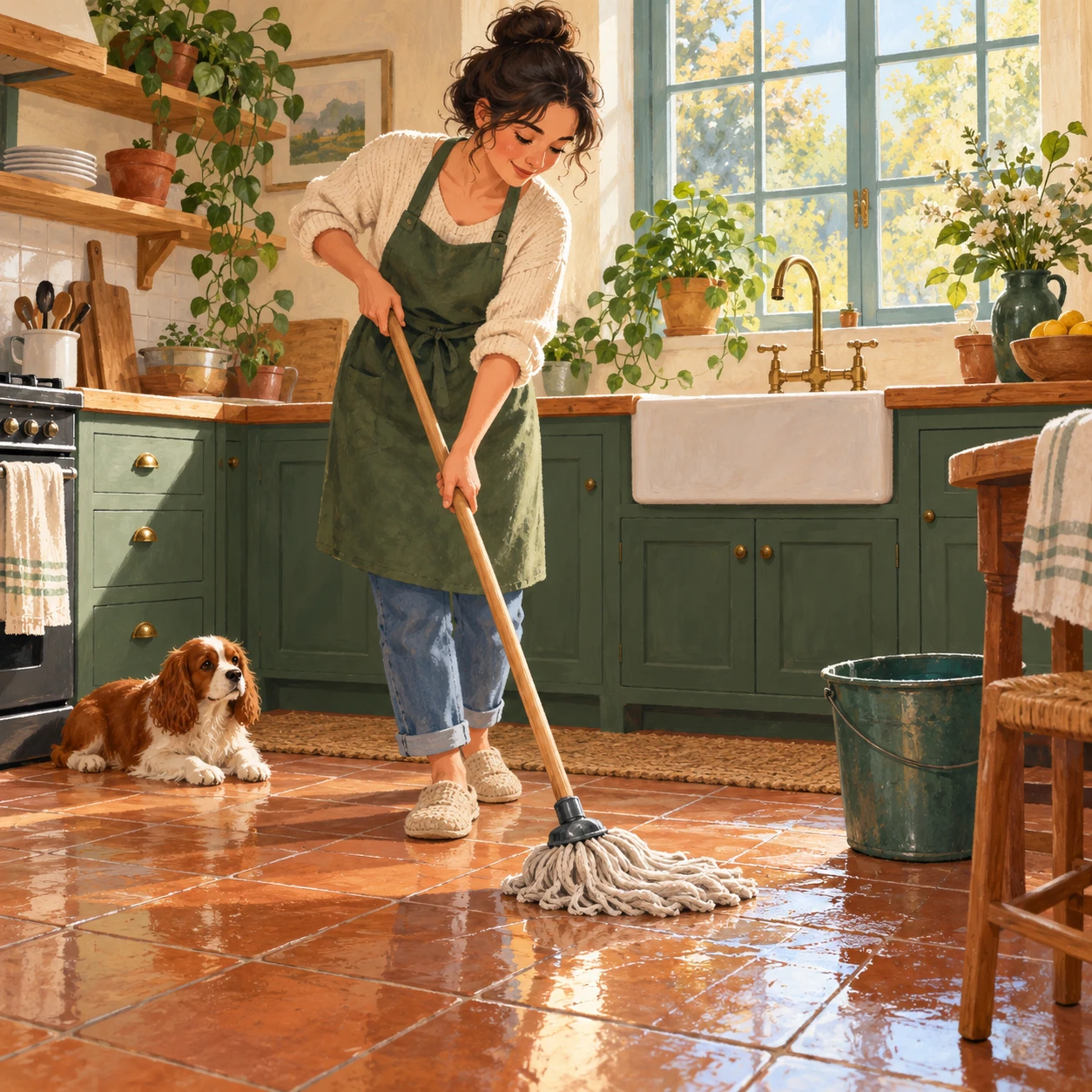
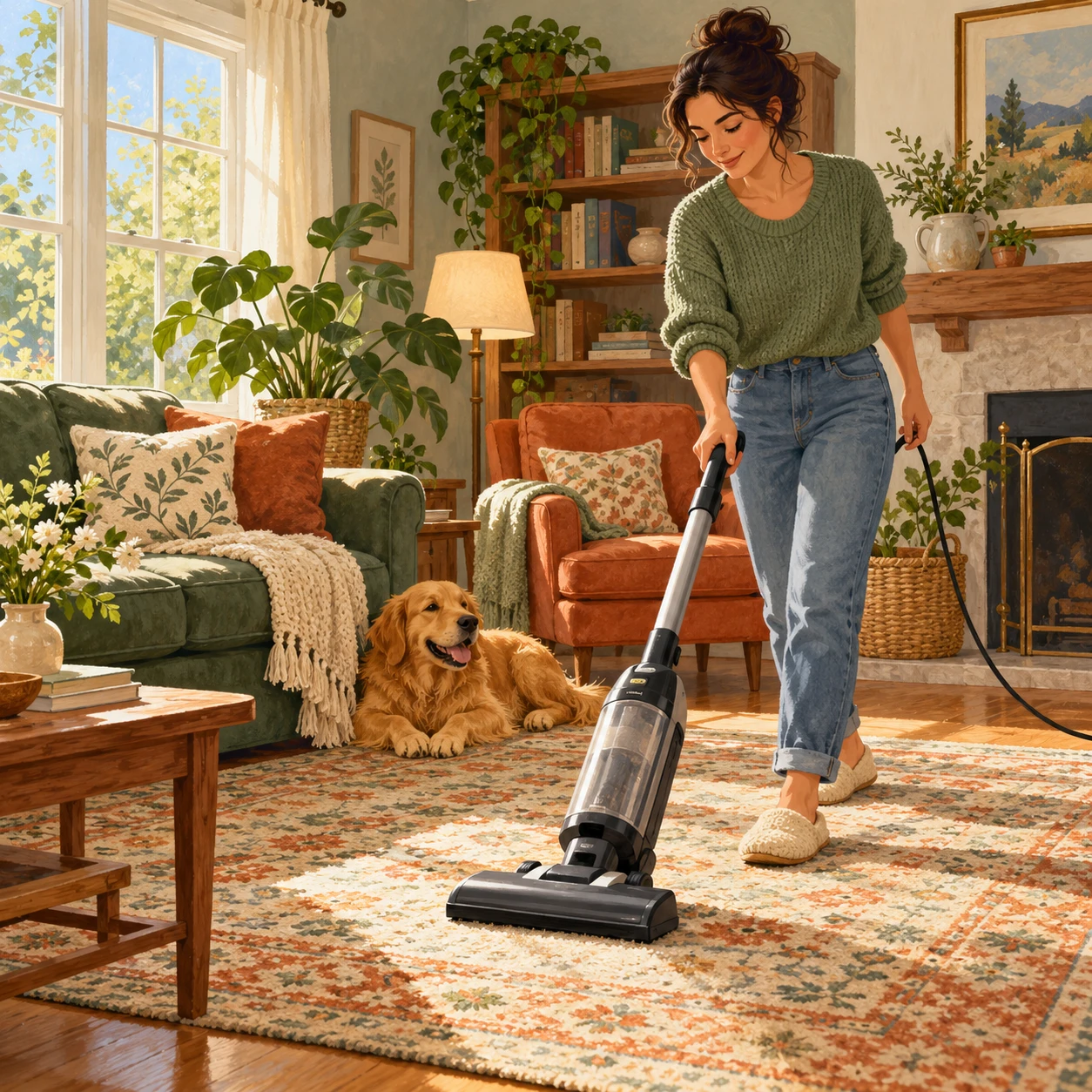
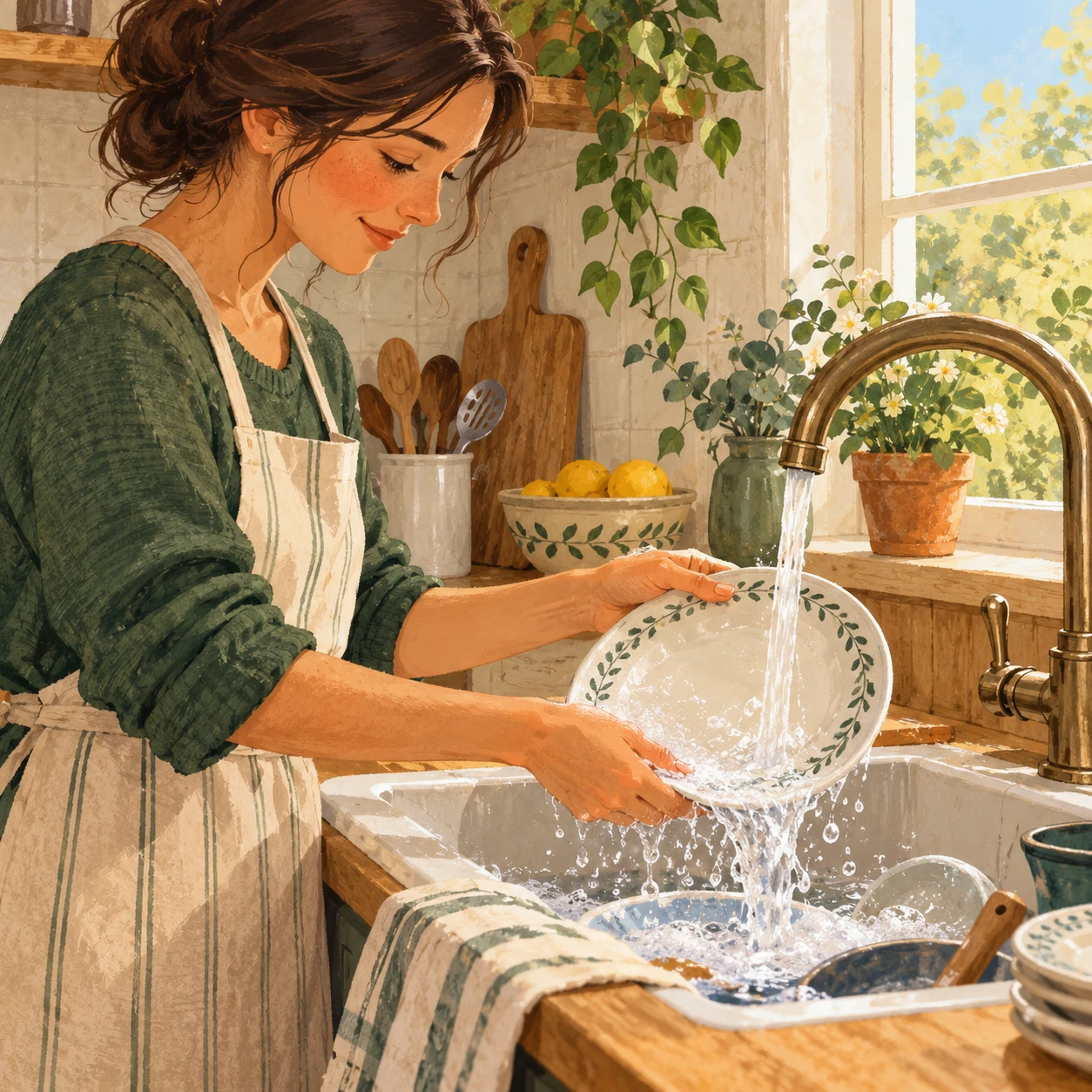
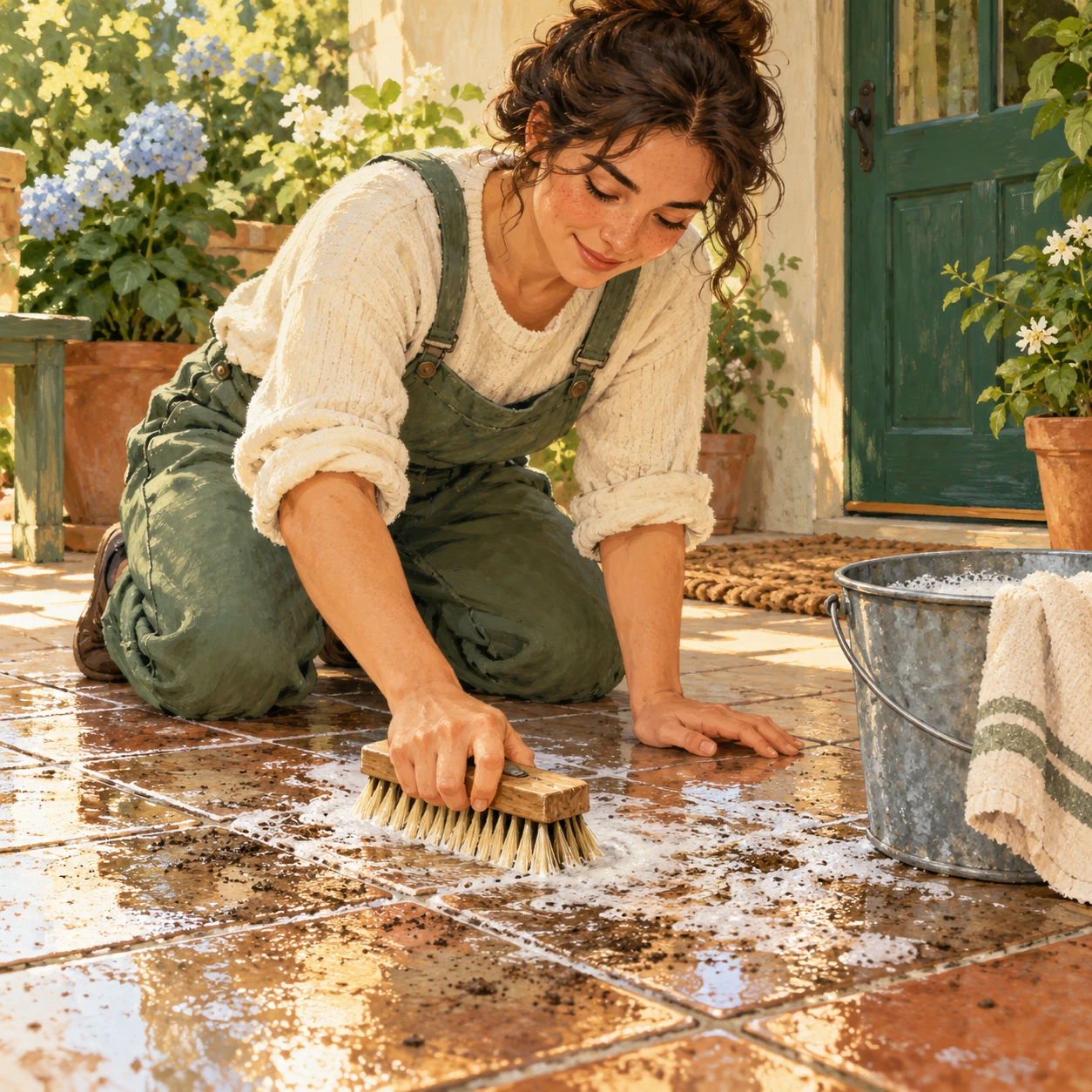
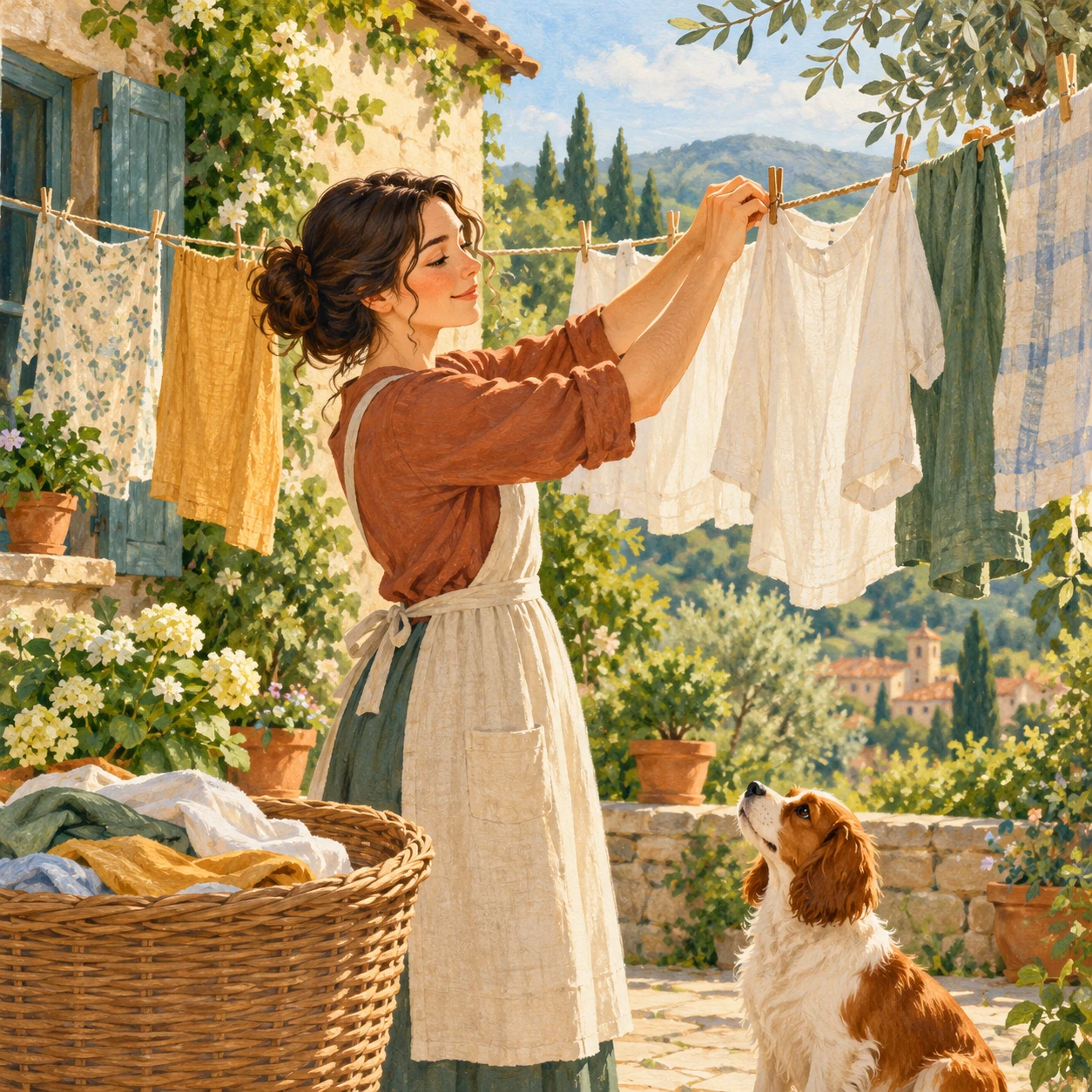
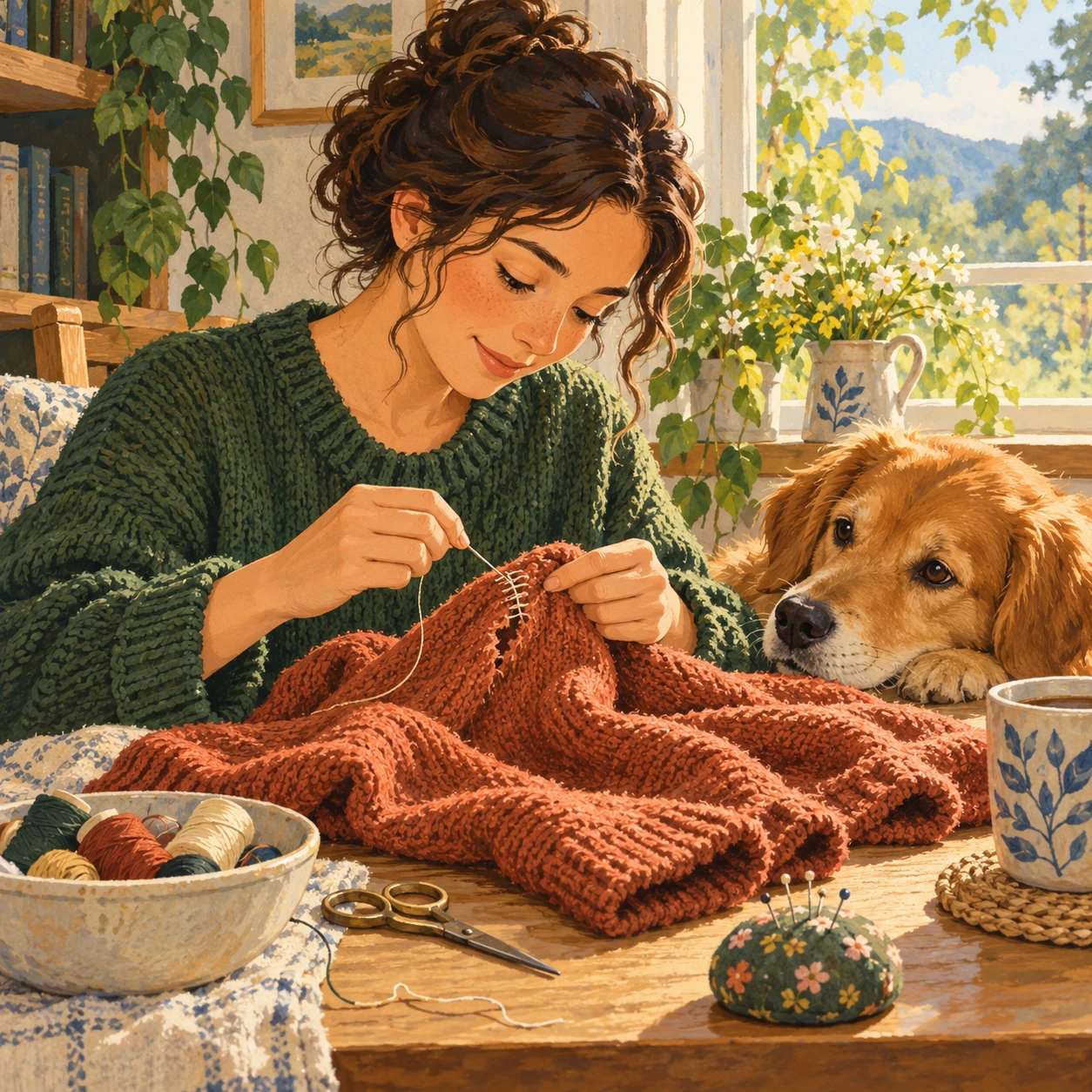
balayer · passer la serpillière · passer l’aspirateur · dépoussiérer
Distinguez ces sens en contexte : sweep = balayer; mop = passer la serpillière; vacuum = passer l’aspirateur; dust = dépoussiérer.
We sweep the kitchen every evening.

Tâches ménagères · A2. Distinguez ces sens en contexte : sweep = balayer; mop = passer la serpillière; vacuum = passer l’aspirateur; dust = dépoussiérer.
Apprenez douze mots utiles sur ce thème. Étudiez des exemples indépendants puis pratiquez de nouvelles situations. Le niveau est indicatif, sans certification.
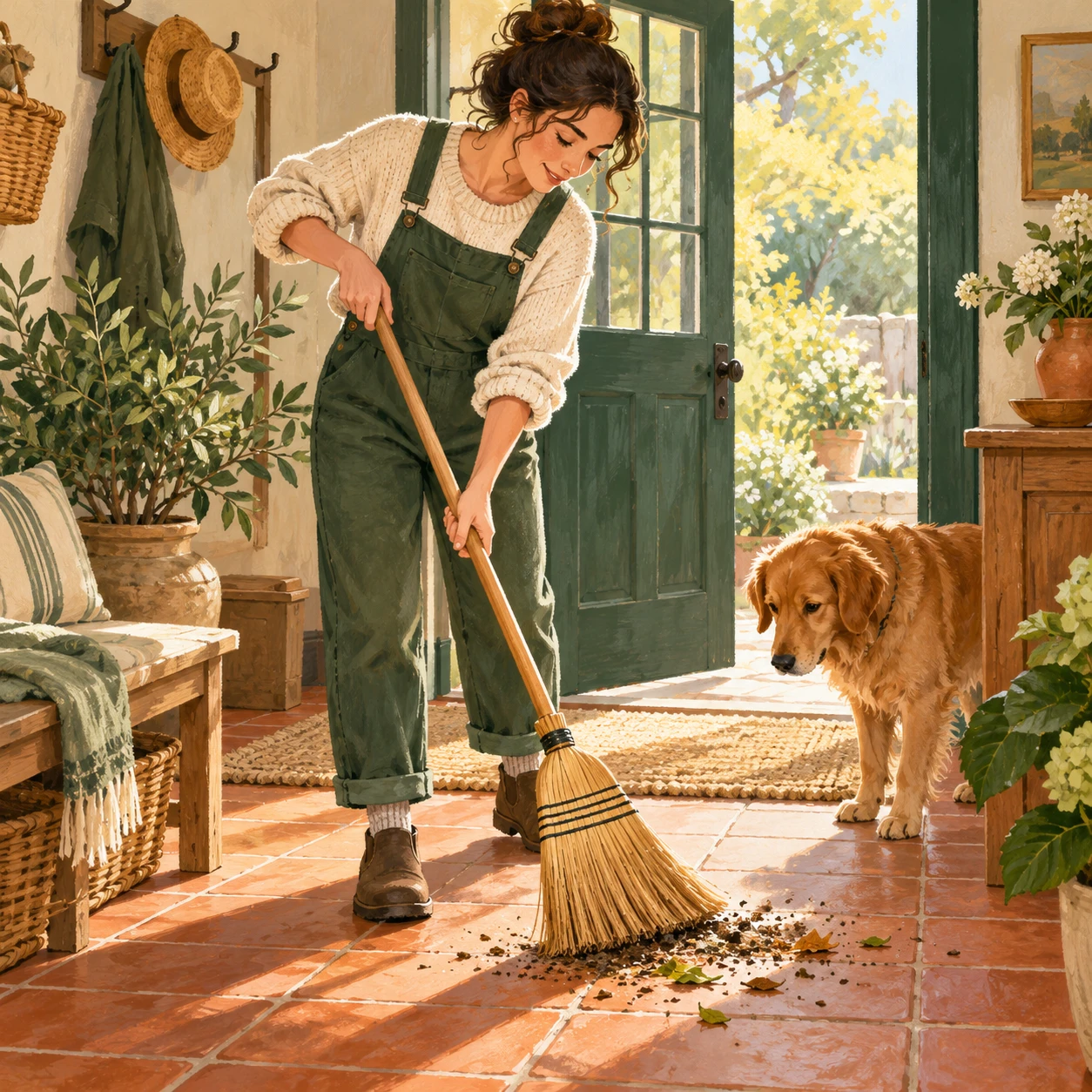
clean a floor using a brush or broom
We sweep the kitchen every evening.
Nous balayons la cuisine tous les soirs.
Ces indications concernent ce sens. Les mots de la famille peuvent changer de sens ; les expressions proches ne sont pas toujours interchangeables.
Travaillez l’association « sweep the floor ». Dans cette unité, « sweep » signifie balayer.
Distinguez ces sens en contexte : sweep = balayer; mop = passer la serpillière; vacuum = passer l’aspirateur; dust = dépoussiérer.
We sweep the kitchen every evening.
Distinguez ces sens en contexte : rinse = rincer; scrub = récurer; soak = faire tremper; wipe = essuyer.
Rinse the cup before you use it.
Distinguez ces sens en contexte : fold = plier; iron = repasser; hang = suspendre; mend = raccommoder.
He folds his shirts carefully.
Use a broom to ___ the dry leaves off the path.
Distinguez ces sens en contexte : sweep = balayer; mop = passer la serpillière; vacuum = passer l’aspirateur; dust = dépoussiérer.
We sweep the kitchen every evening.Distinguez ces sens en contexte : rinse = rincer; scrub = récurer; soak = faire tremper; wipe = essuyer.
Rinse the cup before you use it.Distinguez ces sens en contexte : fold = plier; iron = repasser; hang = suspendre; mend = raccommoder.
He folds his shirts carefully.Gardez la première tentative, comprenez le changement et essayez dans une nouvelle situation.
Pas encore de notes. Essayez un court échauffement.
Ouvrir une réponse enregistre une aide pour cette question.
Use a broom to ___ the dry leaves off the path.
Regarde « broom ». Ici, on cherche « balayer » : « sweep ». L’outil compte : balai, tête humide, aspirateur ou chiffon sec à poussière. Phrase complète : « Use a broom to sweep the dry leaves off the path. ».
After washing the plates, let clean water flow over them to remove the soap, without brushing or rubbing them. This final action is to ___ them.
Regarde « remove the soap ». Ici, on cherche « rincer » : « rinse ». Distingue eau courante, frottement fort répété, trempage et passage d’un chiffon. Phrase complète : « After washing the plates, let clean water flow over them to remove the soap, without brushing or rubbing them. This final action is to rinse them. ».
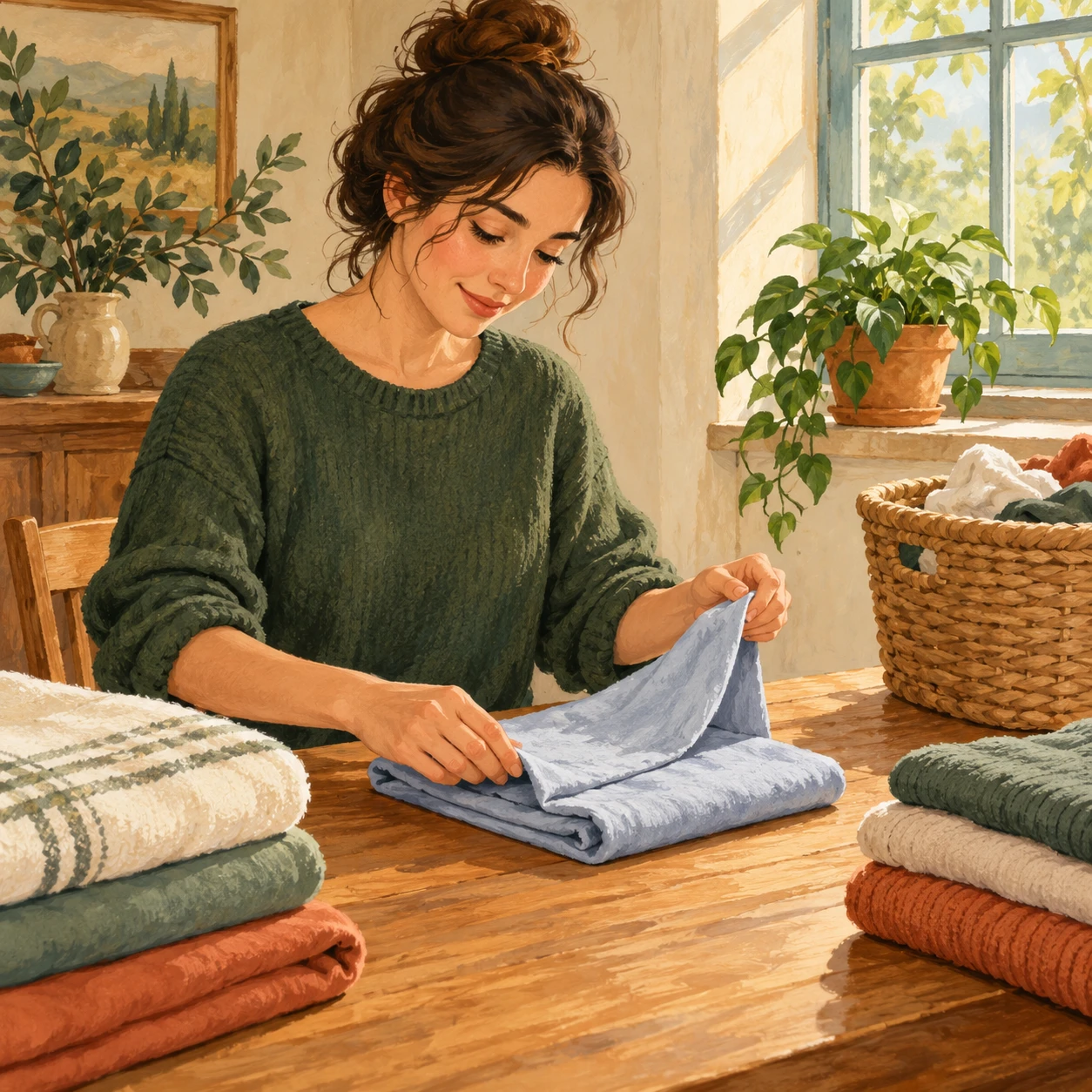
___ each towel in half so it fits neatly on the shelf.
Regarde « in half ». Ici, on cherche « plier » : « fold ». Utilise le changement : plier pour réduire, lisser à chaud, suspendre ou réparer. Phrase complète : « fold each towel in half so it fits neatly on the shelf. ».
Dip the long-handled tool with cloth strips in water and ___ the muddy tiles.
Regarde « cloth strips ». Ici, on cherche « passer la serpillière » : « mop ». L’outil compte : balai, tête humide, aspirateur ou chiffon sec à poussière. Phrase complète : « Dip the long-handled tool with cloth strips in water and mop the muddy tiles. ».
Turn on the machine and ___ the carpet to suck up the dust.
Regarde « suck up ». Ici, on cherche « passer l’aspirateur » : « vacuum ». L’outil compte : balai, tête humide, aspirateur ou chiffon sec à poussière. Phrase complète : « Turn on the machine and vacuum the carpet to suck up the dust. ».
Which verb specifically means removing the fine powder on a bookshelf with a soft dry cloth or feather duster? ___
Regarde « soft dry cloth or feather duster ». Ici, on cherche « dépoussiérer » : « dust ». L’outil compte : balai, tête humide, aspirateur ou chiffon sec à poussière. Phrase complète : « Which verb specifically means removing the fine powder on a bookshelf with a soft dry cloth or feather duster? dust ».
The stain is difficult to remove, so ___ it hard with a stiff brush.
Regarde « stiff brush ». Ici, on cherche « récurer » : « scrub ». Distingue eau courante, frottement fort répété, trempage et passage d’un chiffon. Phrase complète : « The stain is difficult to remove, so scrub it hard with a stiff brush. ».
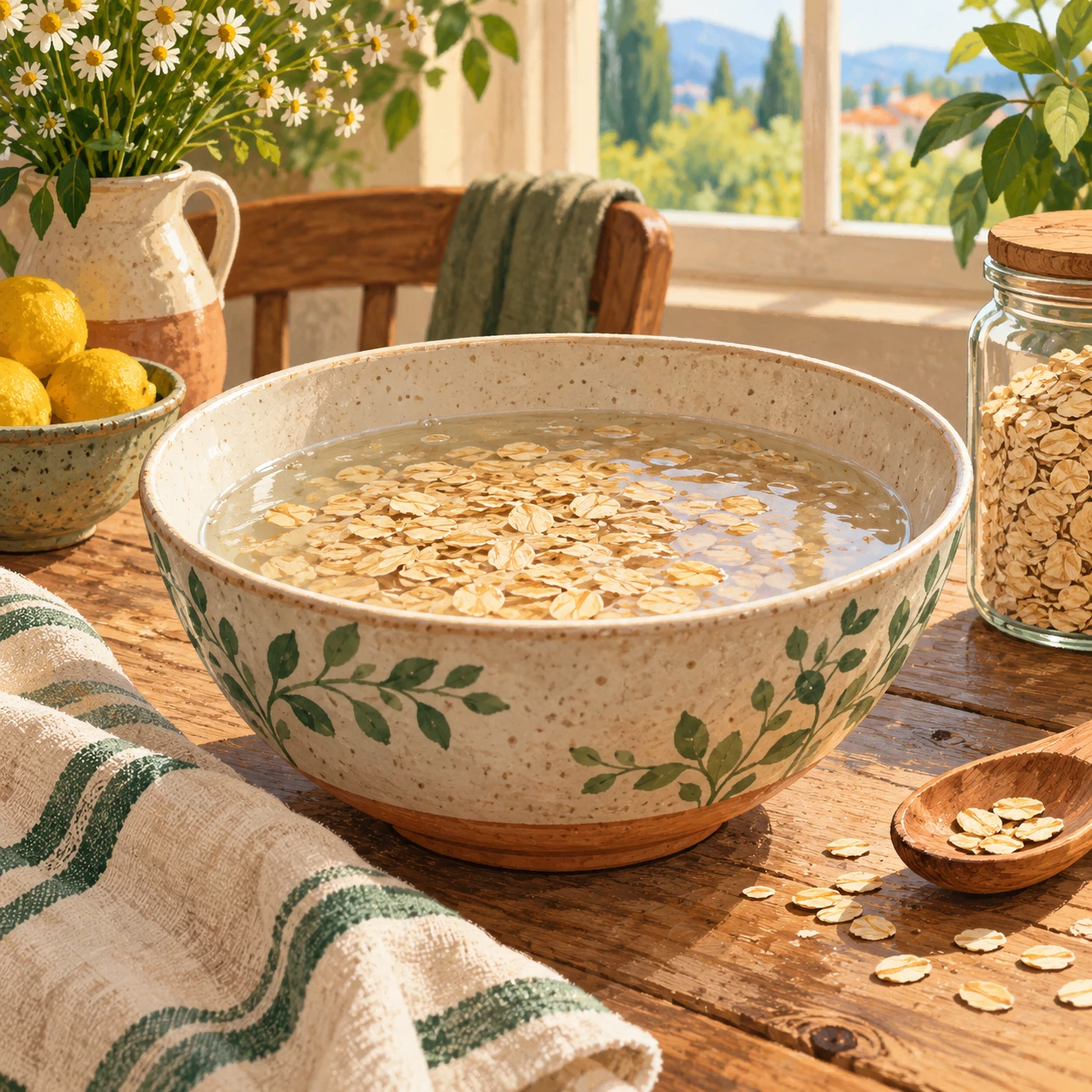
Leave the dirty pan in warm water to ___ for half an hour.
Regarde « half an hour ». Ici, on cherche « faire tremper » : « soak ». Distingue eau courante, frottement fort répété, trempage et passage d’un chiffon. Phrase complète : « Leave the dirty pan in warm water to soak for half an hour. ».
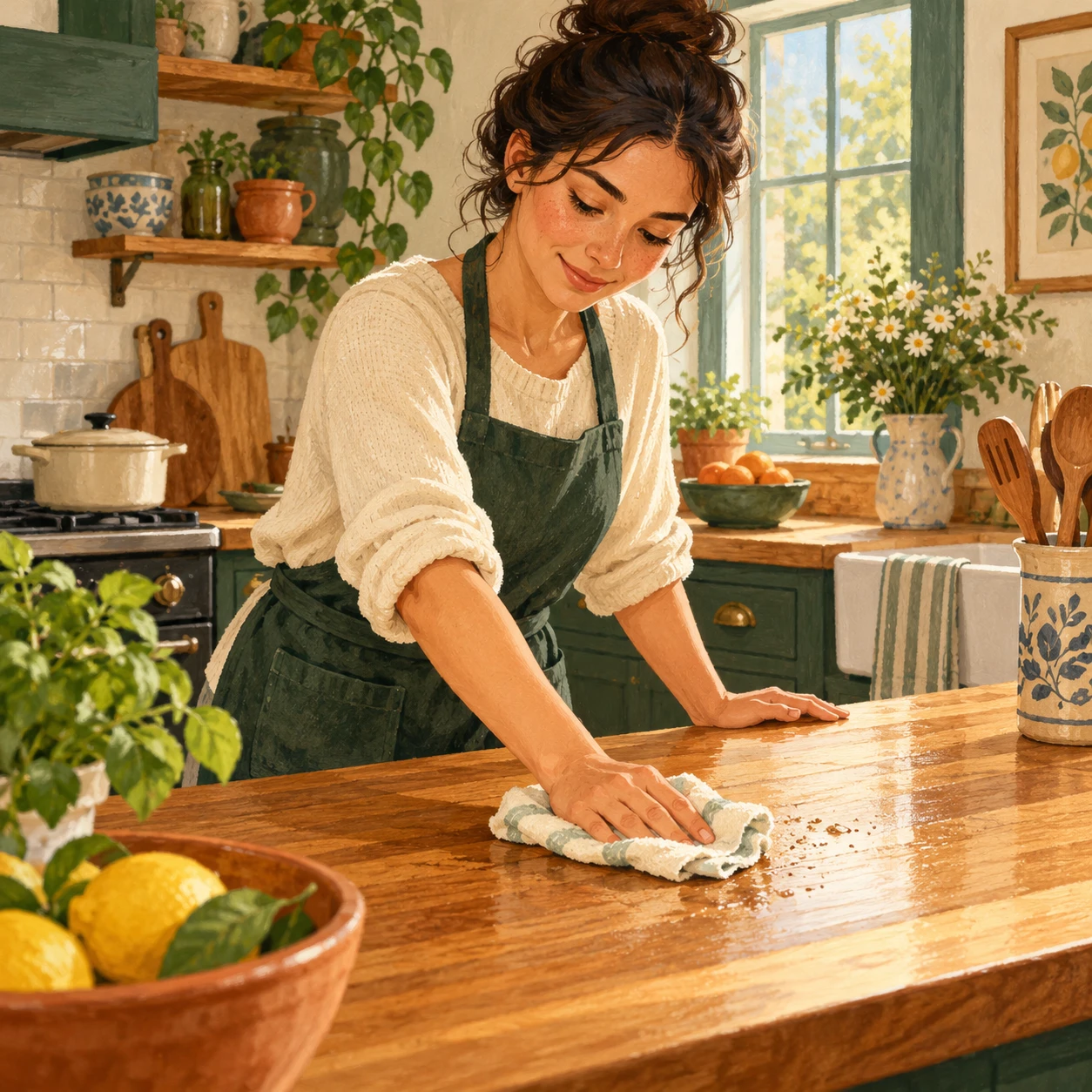
With one gentle pass of a soft cloth, remove the fresh milk from the table without rubbing hard. The verb for this cloth movement is ___.
Regarde « one gentle pass ». Ici, on cherche « essuyer » : « wipe ». Distingue eau courante, frottement fort répété, trempage et passage d’un chiffon. Phrase complète : « With one gentle pass of a soft cloth, remove the fresh milk from the table without rubbing hard. The verb for this cloth movement is wipe. ».
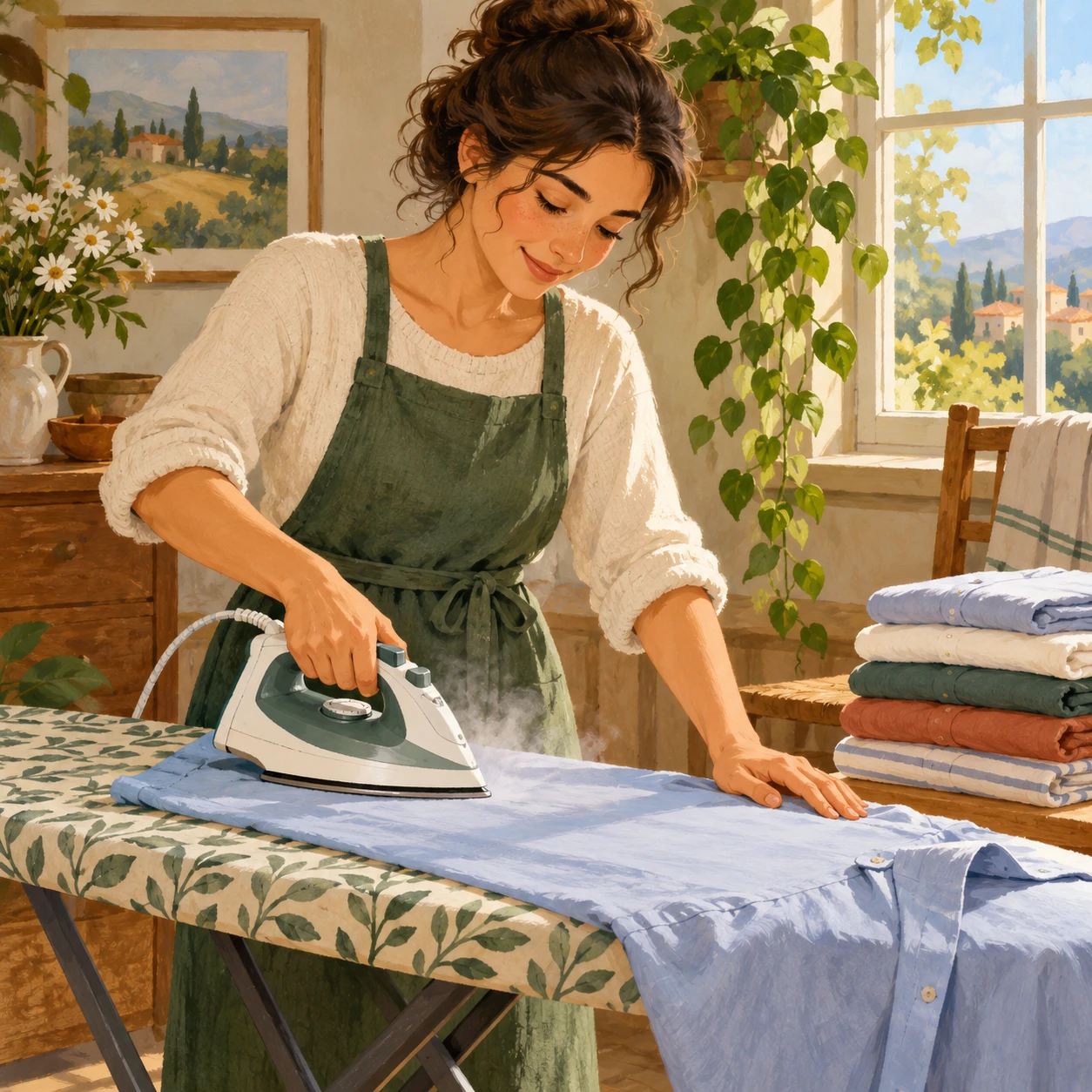
Use the heated flat metal tool to ___ the creases out of the shirt.
Regarde « heated flat metal ». Ici, on cherche « repasser » : « iron ». Utilise le changement : plier pour réduire, lisser à chaud, suspendre ou réparer. Phrase complète : « Use the heated flat metal tool to iron the creases out of the shirt. ».
___ the wet sheets on the washing line to dry.
Regarde « washing line ». Ici, on cherche « suspendre » : « hang ». Utilise le changement : plier pour réduire, lisser à chaud, suspendre ou réparer. Phrase complète : « hang the wet sheets on the washing line to dry. ».
Use a needle and thread to ___ the hole in this shirt.
Regarde « needle and thread ». Ici, on cherche « raccommoder » : « mend ». Utilise le changement : plier pour réduire, lisser à chaud, suspendre ou réparer. Phrase complète : « Use a needle and thread to mend the hole in this shirt. ».
I will ___ the crumbs into a pile with this long-handled brush.
Regarde « crumbs into a pile ». Ici, on cherche « balayer » : « sweep ». L’outil compte : balai, tête humide, aspirateur ou chiffon sec à poussière. Phrase complète : « I will sweep the crumbs into a pile with this long-handled brush. ».
We dip the absorbent cloth strips on a long handle into a bucket, then use that wet head to ___ the kitchen floor.
Regarde « absorbent cloth strips ». Ici, on cherche « passer la serpillière » : « mop ». L’outil compte : balai, tête humide, aspirateur ou chiffon sec à poussière. Phrase complète : « We dip the absorbent cloth strips on a long handle into a bucket, then use that wet head to mop the kitchen floor. ».
Let clean water run over the soapy shirt to carry away the soap, without rubbing or using a brush. You ___ it.
Regarde « carry away the soap ». Ici, on cherche « rincer » : « rinse ». Distingue eau courante, frottement fort répété, trempage et passage d’un chiffon. Phrase complète : « Let clean water run over the soapy shirt to carry away the soap, without rubbing or using a brush. You rinse it. ».
Rub the burned pan repeatedly and firmly with a stiff brush, rather than a soft wiping cloth. You must ___ it.
Regarde « repeatedly and firmly ». Ici, on cherche « récurer » : « scrub ». Distingue eau courante, frottement fort répété, trempage et passage d’un chiffon. Phrase complète : « Rub the burned pan repeatedly and firmly with a stiff brush, rather than a soft wiping cloth. You must scrub it. ».
Bring the two ends of the blanket together to ___ it into a smaller shape.
Regarde « two ends ». Ici, on cherche « plier » : « fold ». Utilise le changement : plier pour réduire, lisser à chaud, suspendre ou réparer. Phrase complète : « Bring the two ends of the blanket together to fold it into a smaller shape. ».
The trousers are wrinkled. Press a heated flat metal base over the fabric to remove the creases: ___ them.
Regarde « heated flat metal base ». Ici, on cherche « repasser » : « iron ». Utilise le changement : plier pour réduire, lisser à chaud, suspendre ou réparer. Phrase complète : « The trousers are wrinkled. Press a heated flat metal base over the fabric to remove the creases: iron them. ».
We need to ___ the rug; the cleaner’s dust bag is empty and ready.
Regarde « cleaner’s dust bag ». Ici, on cherche « passer l’aspirateur » : « vacuum ». L’outil compte : balai, tête humide, aspirateur ou chiffon sec à poussière. Phrase complète : « We need to vacuum the rug; the cleaner’s dust bag is empty and ready. ».
Remove the fine powder from the ornaments by gently passing a soft dry cloth over them, without a machine or liquid. You ___ them.
Regarde « soft dry cloth ». Ici, on cherche « dépoussiérer » : « dust ». L’outil compte : balai, tête humide, aspirateur ou chiffon sec à poussière. Phrase complète : « Remove the fine powder from the ornaments by gently passing a soft dry cloth over them, without a machine or liquid. You dust them. ».
Leave the cloth fully immersed and untouched in still water for ten minutes before washing. You ___ it.
Regarde « fully immersed and untouched ». Ici, on cherche « faire tremper » : « soak ». Distingue eau courante, frottement fort répété, trempage et passage d’un chiffon. Phrase complète : « Leave the cloth fully immersed and untouched in still water for ten minutes before washing. You soak it. ».
Pass a cloth gently over the mirror once to remove fresh fingerprints, without hard repeated rubbing. You ___ the mirror.
Regarde « cloth gently ». Ici, on cherche « essuyer » : « wipe ». Distingue eau courante, frottement fort répété, trempage et passage d’un chiffon. Phrase complète : « Pass a cloth gently over the mirror once to remove fresh fingerprints, without hard repeated rubbing. You wipe the mirror. ».
Put the coat on a hook and ___ it behind the door.
Regarde « hook ». Ici, on cherche « suspendre » : « hang ». Utilise le changement : plier pour réduire, lisser à chaud, suspendre ou réparer. Phrase complète : « Put the coat on a hook and hang it behind the door. ».
I will ___ the torn pocket instead of buying a new jacket.
Regarde « torn pocket ». Ici, on cherche « raccommoder » : « mend ». Utilise le changement : plier pour réduire, lisser à chaud, suspendre ou réparer. Phrase complète : « I will mend the torn pocket instead of buying a new jacket. ».