varrer · passar o esfregão · aspirar · tirar o pó
Diferencie estes sentidos no contexto: sweep = varrer; mop = passar o esfregão; vacuum = aspirar; dust = tirar o pó.
We sweep the kitchen every evening.

Tarefas domésticas · A2. Diferencie estes sentidos no contexto: sweep = varrer; mop = passar o esfregão; vacuum = aspirar; dust = tirar o pó.
Aprenda doze palavras úteis sobre o tema. Estude exemplos independentes e pratique em novas situações. O nível é uma referência editorial, não uma certificação.
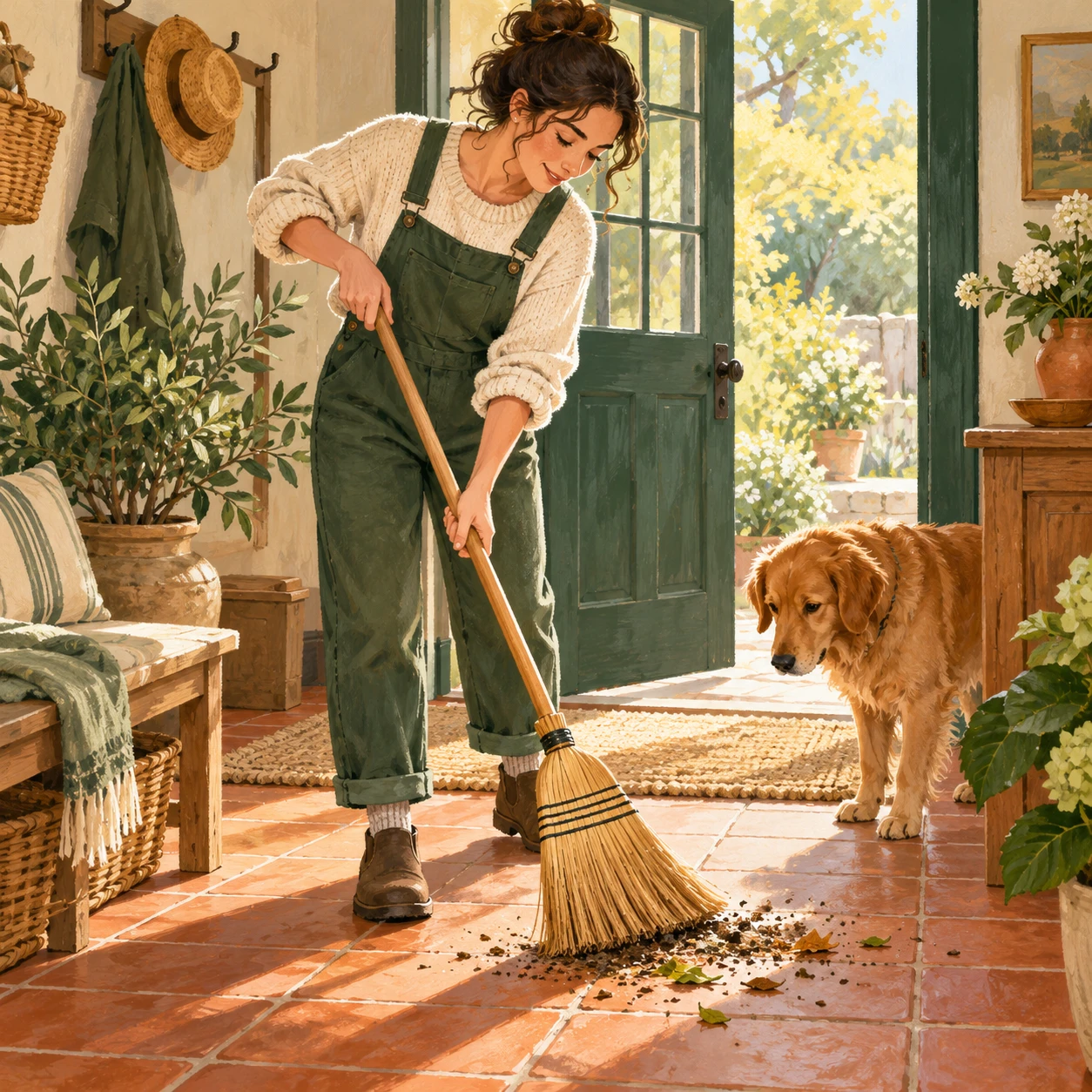
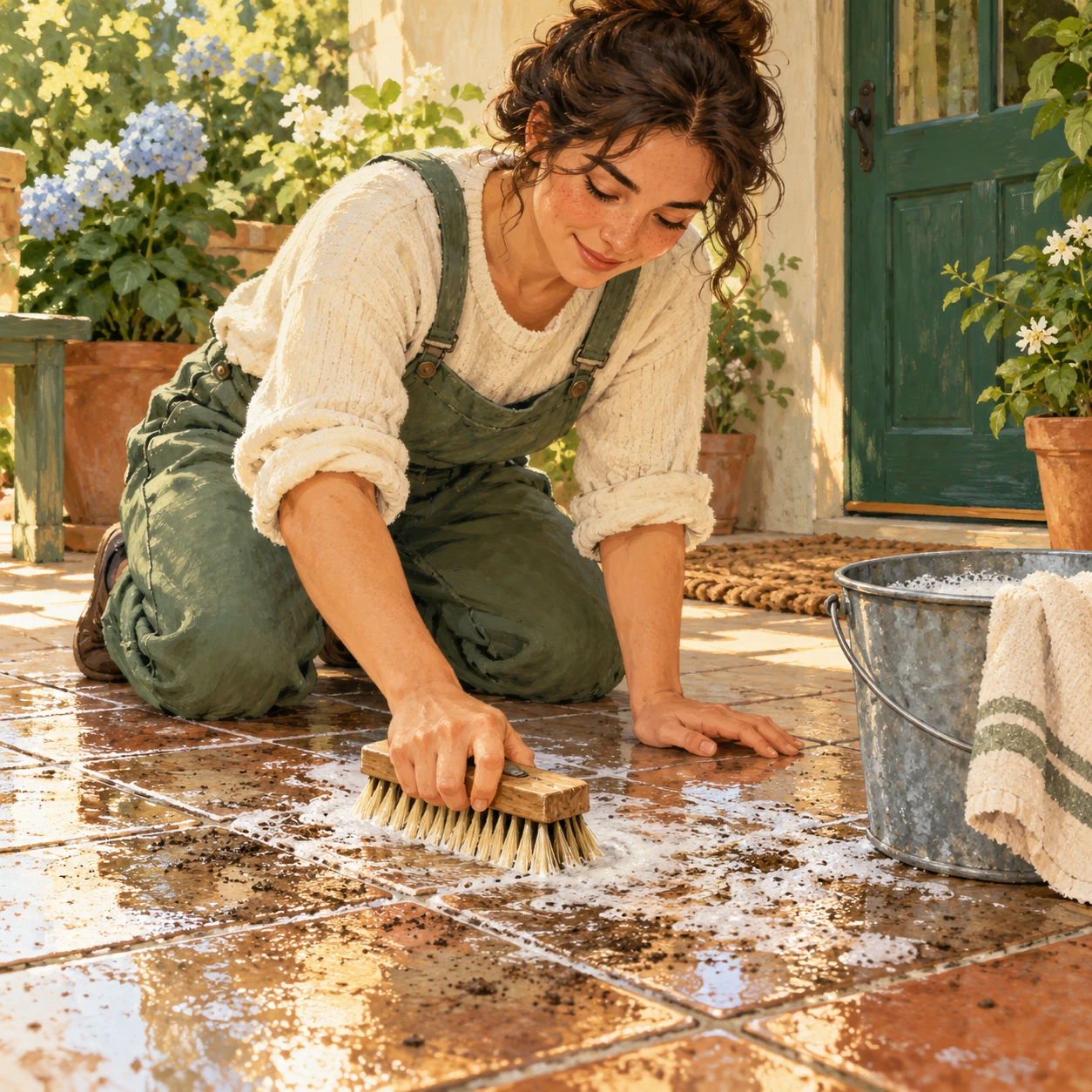
clean a floor using a brush or broom
We sweep the kitchen every evening.
Varremos a cozinha todas as noites.
Estas indicações se referem a este sentido. Palavras da mesma família podem mudar de sentido; expressões próximas nem sempre são intercambiáveis.
Pratique a combinação “sweep the floor”. Nesta unidade, “sweep” significa varrer.
Diferencie estes sentidos no contexto: sweep = varrer; mop = passar o esfregão; vacuum = aspirar; dust = tirar o pó.
We sweep the kitchen every evening.
Diferencie estes sentidos no contexto: rinse = enxaguar; scrub = esfregar com força; soak = deixar de molho; wipe = passar um pano.
Rinse the cup before you use it.
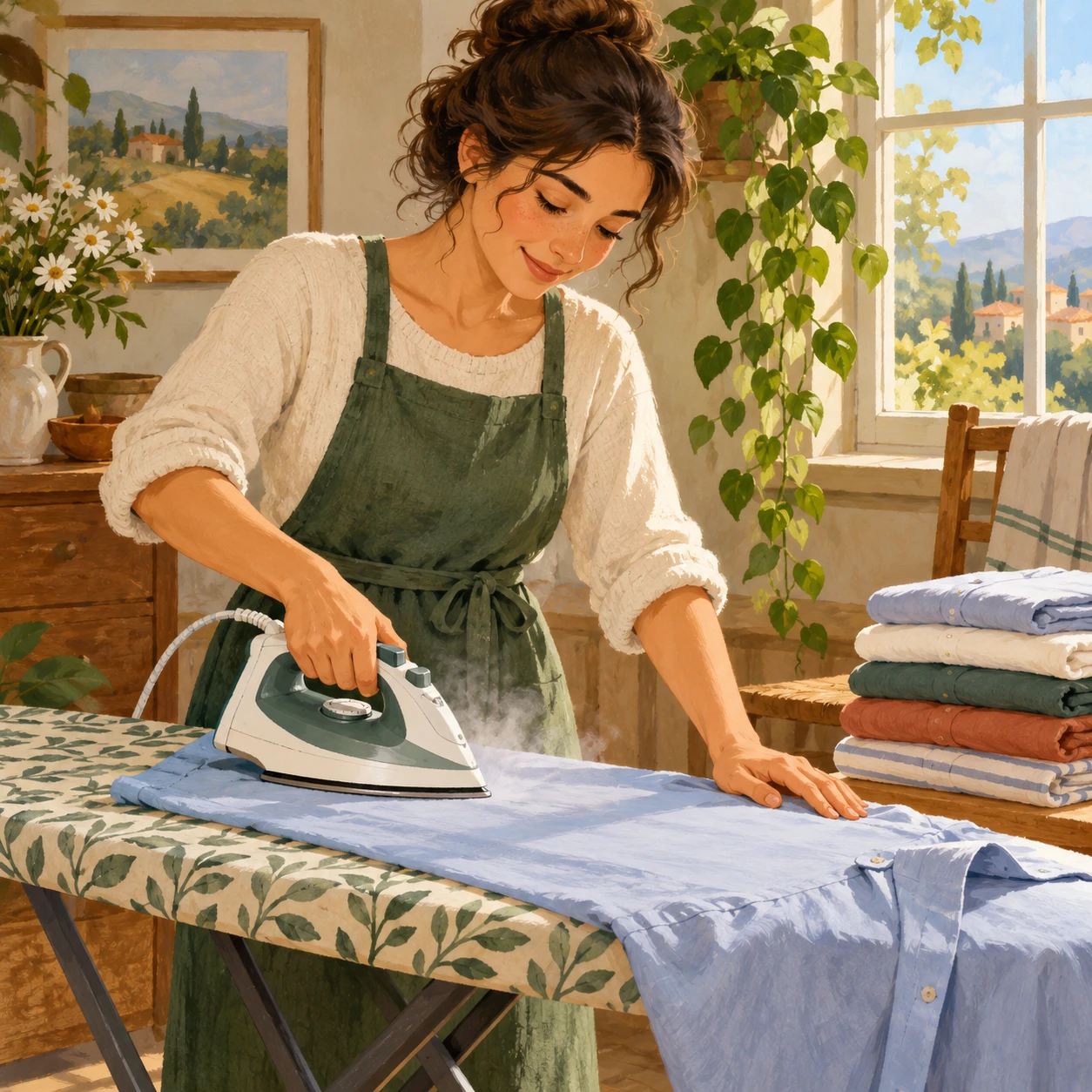
Diferencie estes sentidos no contexto: fold = dobrar; iron = passar a ferro; hang = pendurar; mend = consertar.
He folds his shirts carefully.
Use a broom to ___ the dry leaves off the path.
Diferencie estes sentidos no contexto: sweep = varrer; mop = passar o esfregão; vacuum = aspirar; dust = tirar o pó.
We sweep the kitchen every evening.Diferencie estes sentidos no contexto: rinse = enxaguar; scrub = esfregar com força; soak = deixar de molho; wipe = passar um pano.
Rinse the cup before you use it.Diferencie estes sentidos no contexto: fold = dobrar; iron = passar a ferro; hang = pendurar; mend = consertar.
He folds his shirts carefully.Guarde a primeira tentativa, entenda a mudança e confira em outra situação.
Ainda não há revisões. Faça um aquecimento curto.
Abrir uma resposta registra ajuda para essa questão.
Use a broom to ___ the dry leaves off the path.
Observe “broom”. Aqui precisamos de “varrer”: “sweep”. A ferramenta importa: vassoura, pano molhado, máquina de sucção ou pano seco de pó. Frase completa: “Use a broom to sweep the dry leaves off the path.”.
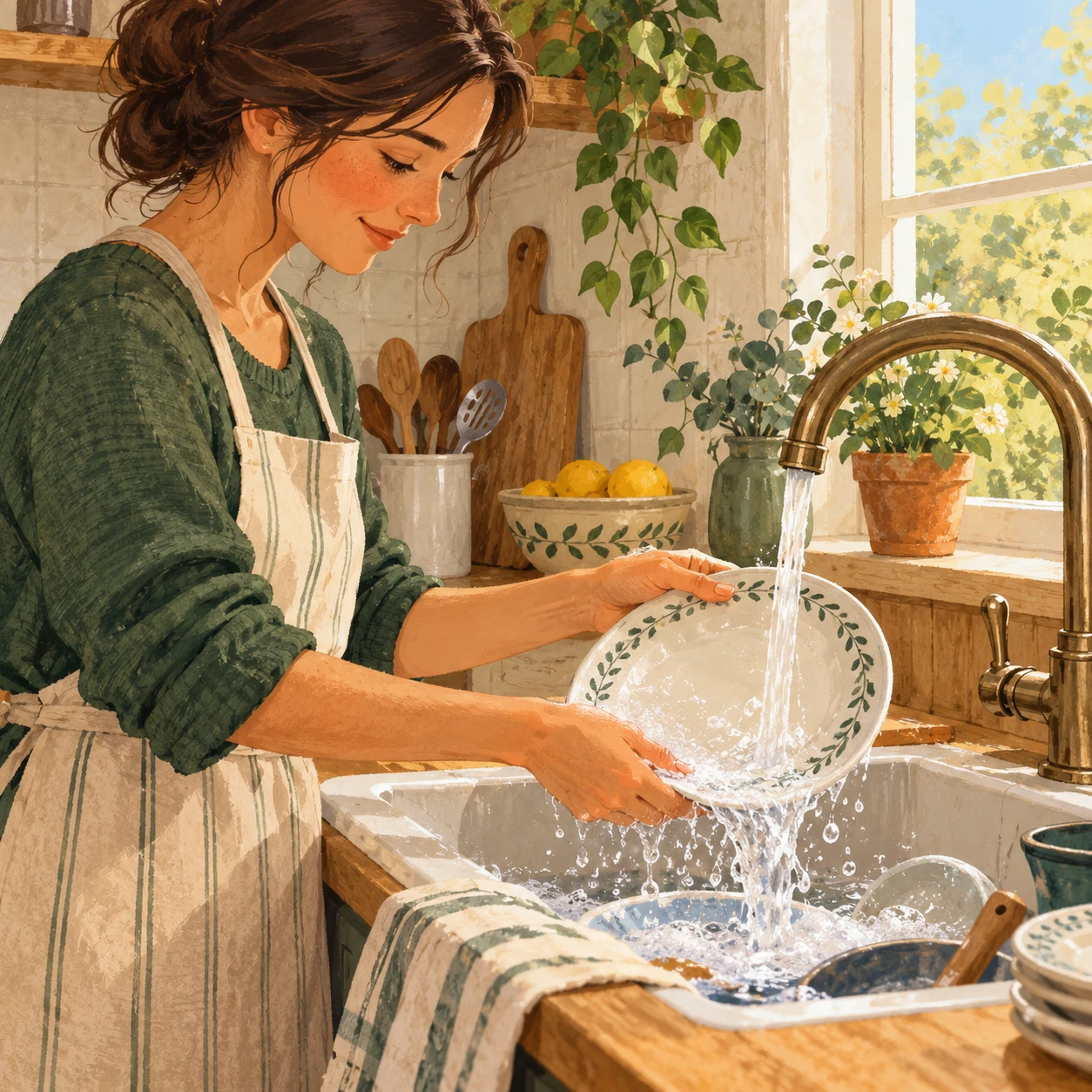
After washing the plates, let clean water flow over them to remove the soap, without brushing or rubbing them. This final action is to ___ them.
Observe “remove the soap”. Aqui precisamos de “enxaguar”: “rinse”. Separe água corrente, esfregar forte repetidamente, deixar de molho e passar pano. Frase completa: “After washing the plates, let clean water flow over them to remove the soap, without brushing or rubbing them. This final action is to rinse them.”.
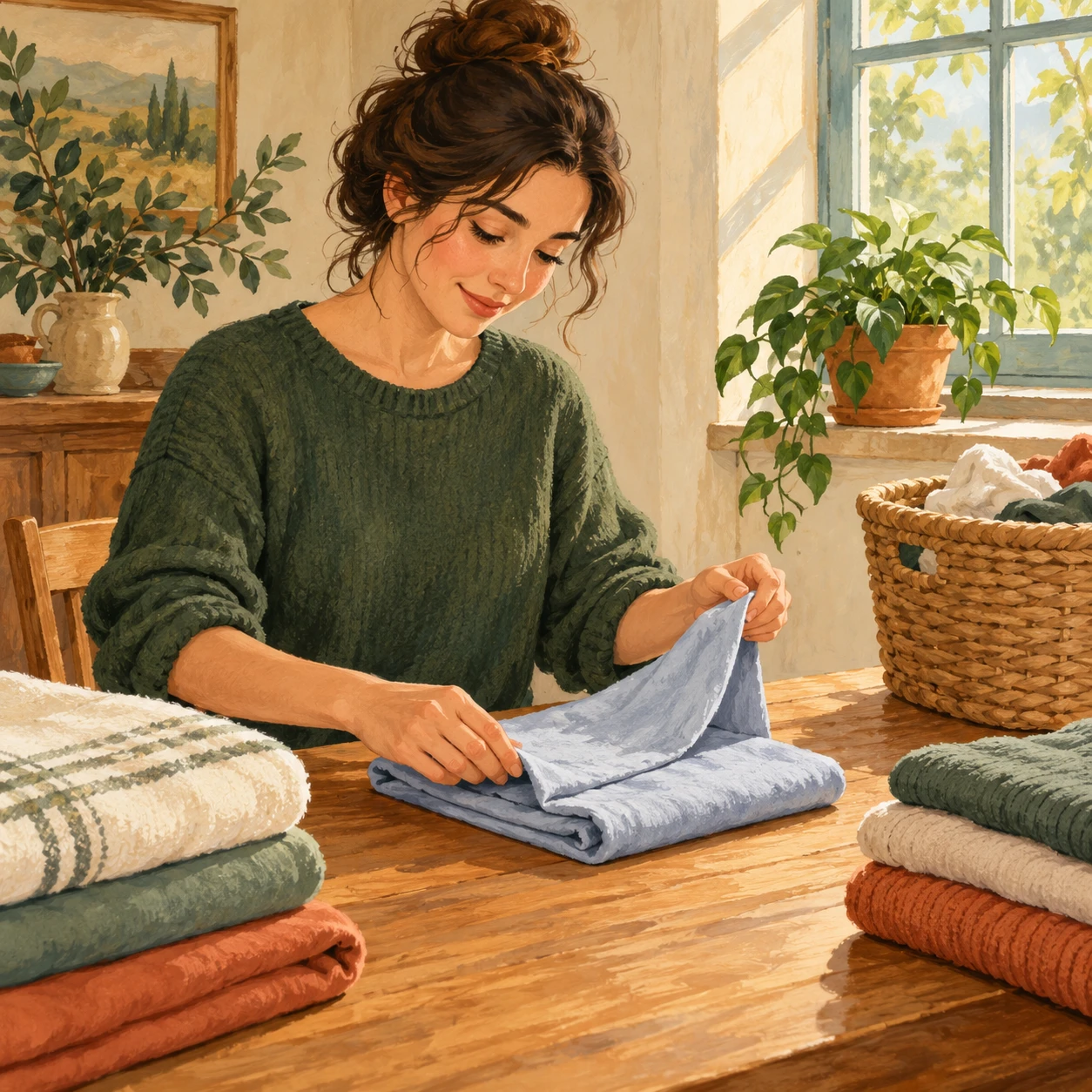
___ each towel in half so it fits neatly on the shelf.
Observe “in half”. Aqui precisamos de “dobrar”: “fold”. Use a mudança: dobrar para diminuir, alisar com calor, suspender ou reparar. Frase completa: “fold each towel in half so it fits neatly on the shelf.”.
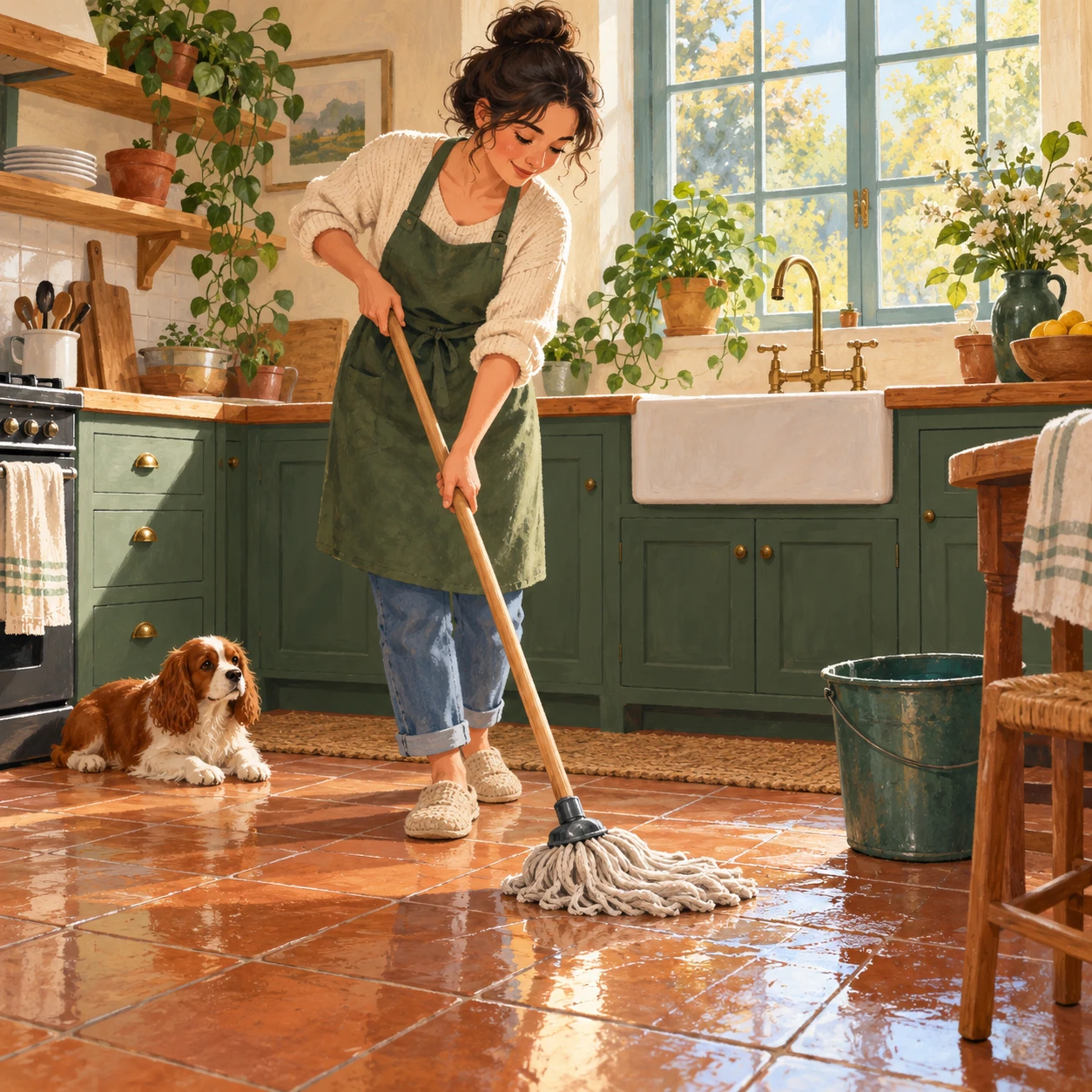
Dip the long-handled tool with cloth strips in water and ___ the muddy tiles.
Observe “cloth strips”. Aqui precisamos de “passar o esfregão”: “mop”. A ferramenta importa: vassoura, pano molhado, máquina de sucção ou pano seco de pó. Frase completa: “Dip the long-handled tool with cloth strips in water and mop the muddy tiles.”.
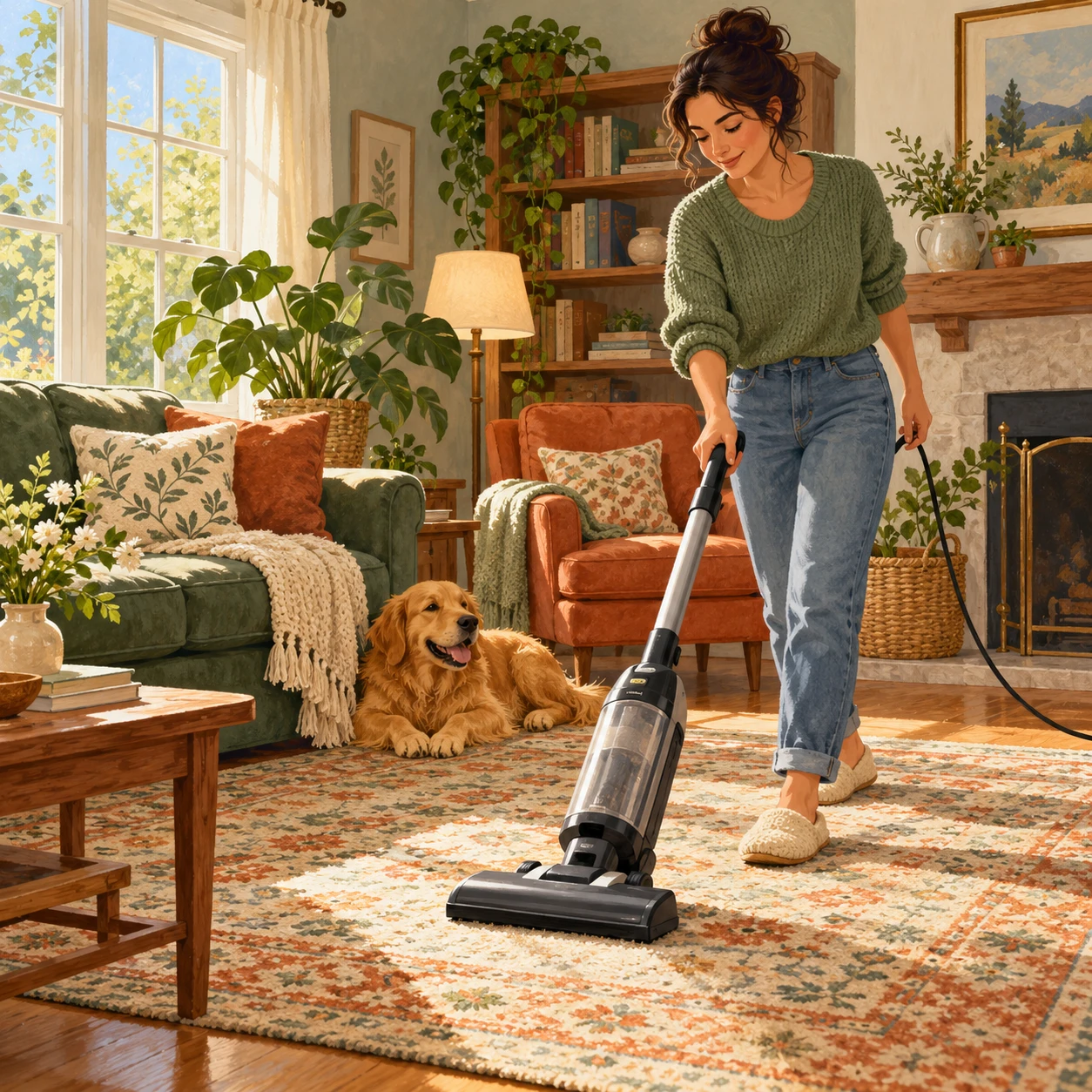
Turn on the machine and ___ the carpet to suck up the dust.
Observe “suck up”. Aqui precisamos de “aspirar”: “vacuum”. A ferramenta importa: vassoura, pano molhado, máquina de sucção ou pano seco de pó. Frase completa: “Turn on the machine and vacuum the carpet to suck up the dust.”.
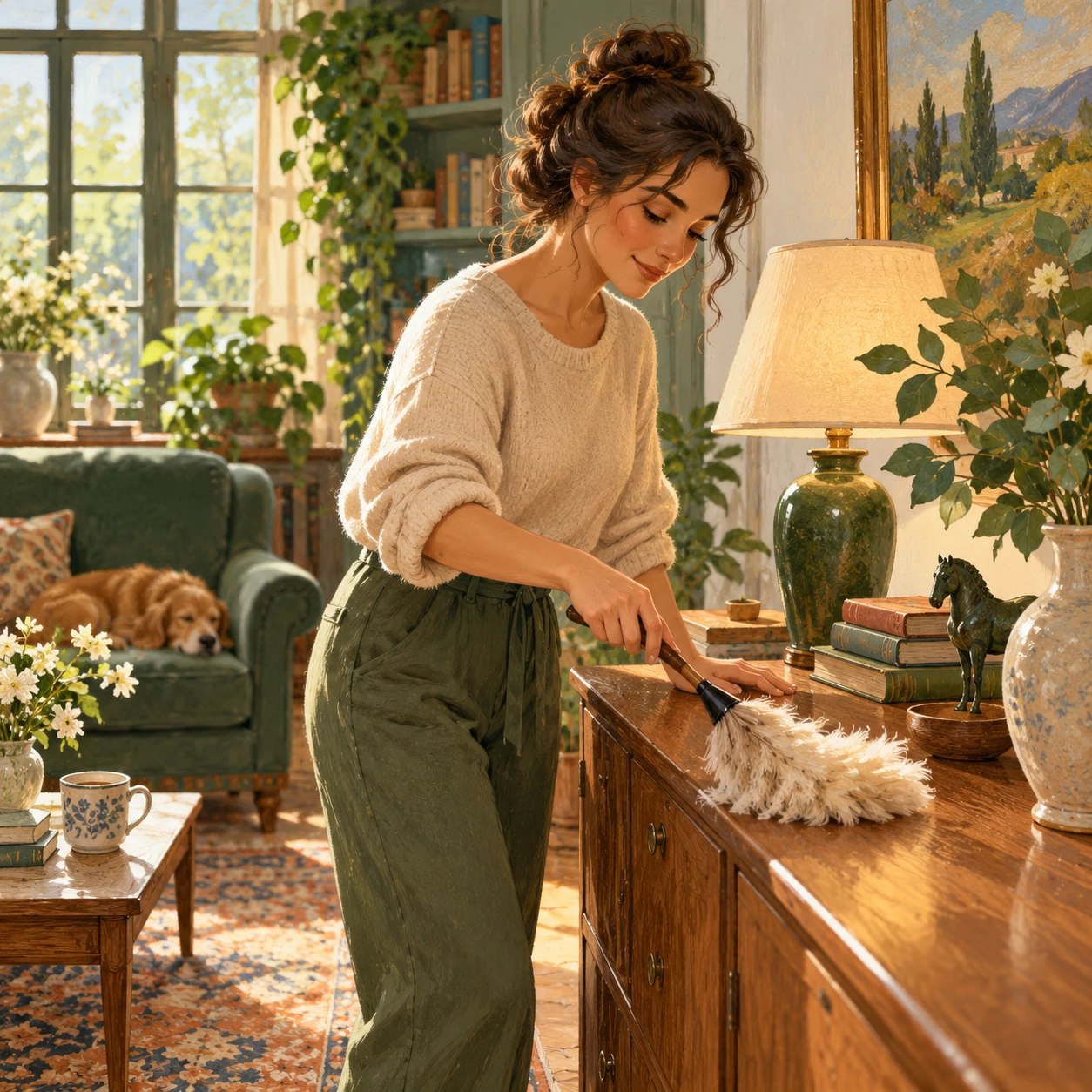
Which verb specifically means removing the fine powder on a bookshelf with a soft dry cloth or feather duster? ___
Observe “soft dry cloth or feather duster”. Aqui precisamos de “tirar o pó”: “dust”. A ferramenta importa: vassoura, pano molhado, máquina de sucção ou pano seco de pó. Frase completa: “Which verb specifically means removing the fine powder on a bookshelf with a soft dry cloth or feather duster? dust”.
The stain is difficult to remove, so ___ it hard with a stiff brush.
Observe “stiff brush”. Aqui precisamos de “esfregar com força”: “scrub”. Separe água corrente, esfregar forte repetidamente, deixar de molho e passar pano. Frase completa: “The stain is difficult to remove, so scrub it hard with a stiff brush.”.
Leave the dirty pan in warm water to ___ for half an hour.
Observe “half an hour”. Aqui precisamos de “deixar de molho”: “soak”. Separe água corrente, esfregar forte repetidamente, deixar de molho e passar pano. Frase completa: “Leave the dirty pan in warm water to soak for half an hour.”.
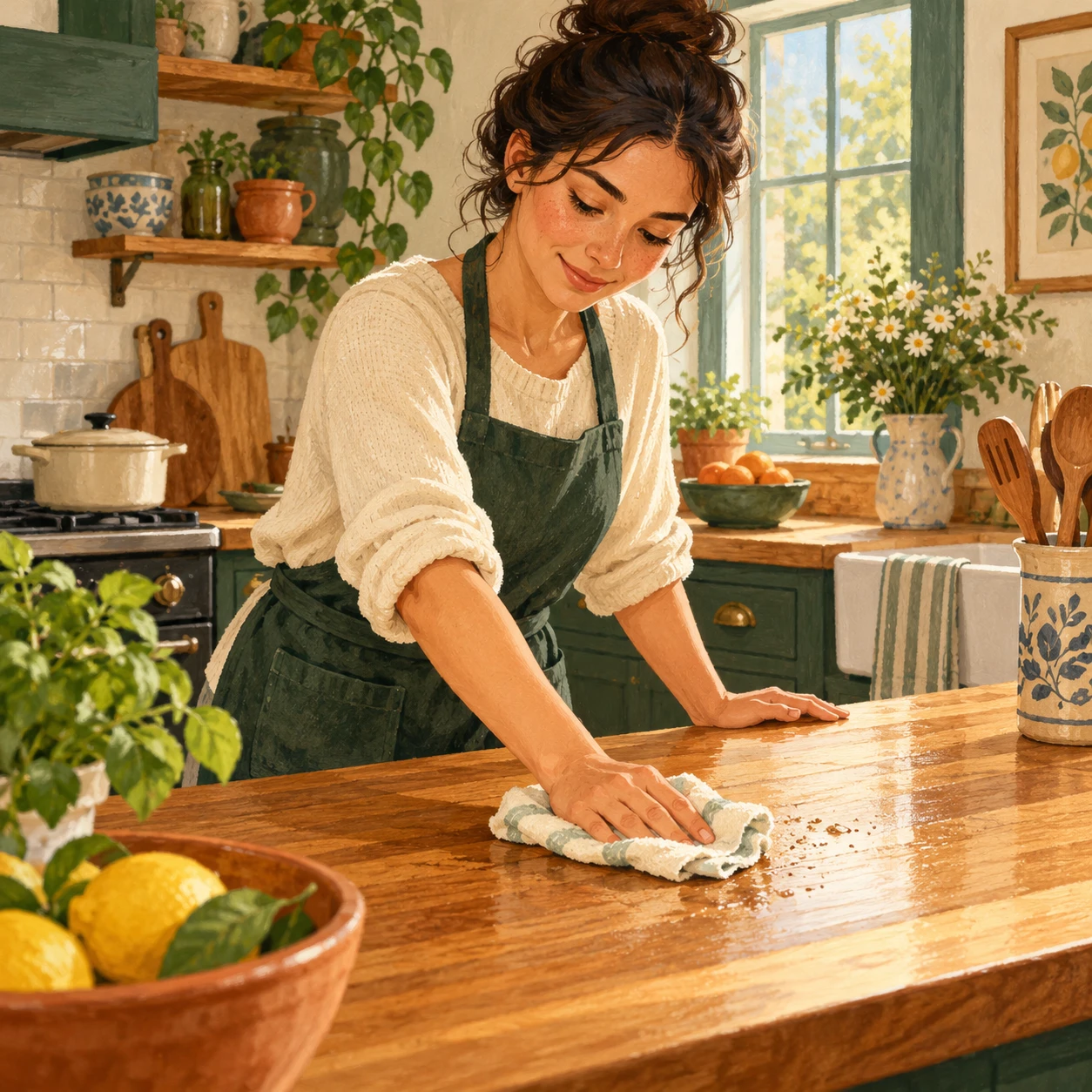
With one gentle pass of a soft cloth, remove the fresh milk from the table without rubbing hard. The verb for this cloth movement is ___.
Observe “one gentle pass”. Aqui precisamos de “passar um pano”: “wipe”. Separe água corrente, esfregar forte repetidamente, deixar de molho e passar pano. Frase completa: “With one gentle pass of a soft cloth, remove the fresh milk from the table without rubbing hard. The verb for this cloth movement is wipe.”.
Use the heated flat metal tool to ___ the creases out of the shirt.
Observe “heated flat metal”. Aqui precisamos de “passar a ferro”: “iron”. Use a mudança: dobrar para diminuir, alisar com calor, suspender ou reparar. Frase completa: “Use the heated flat metal tool to iron the creases out of the shirt.”.
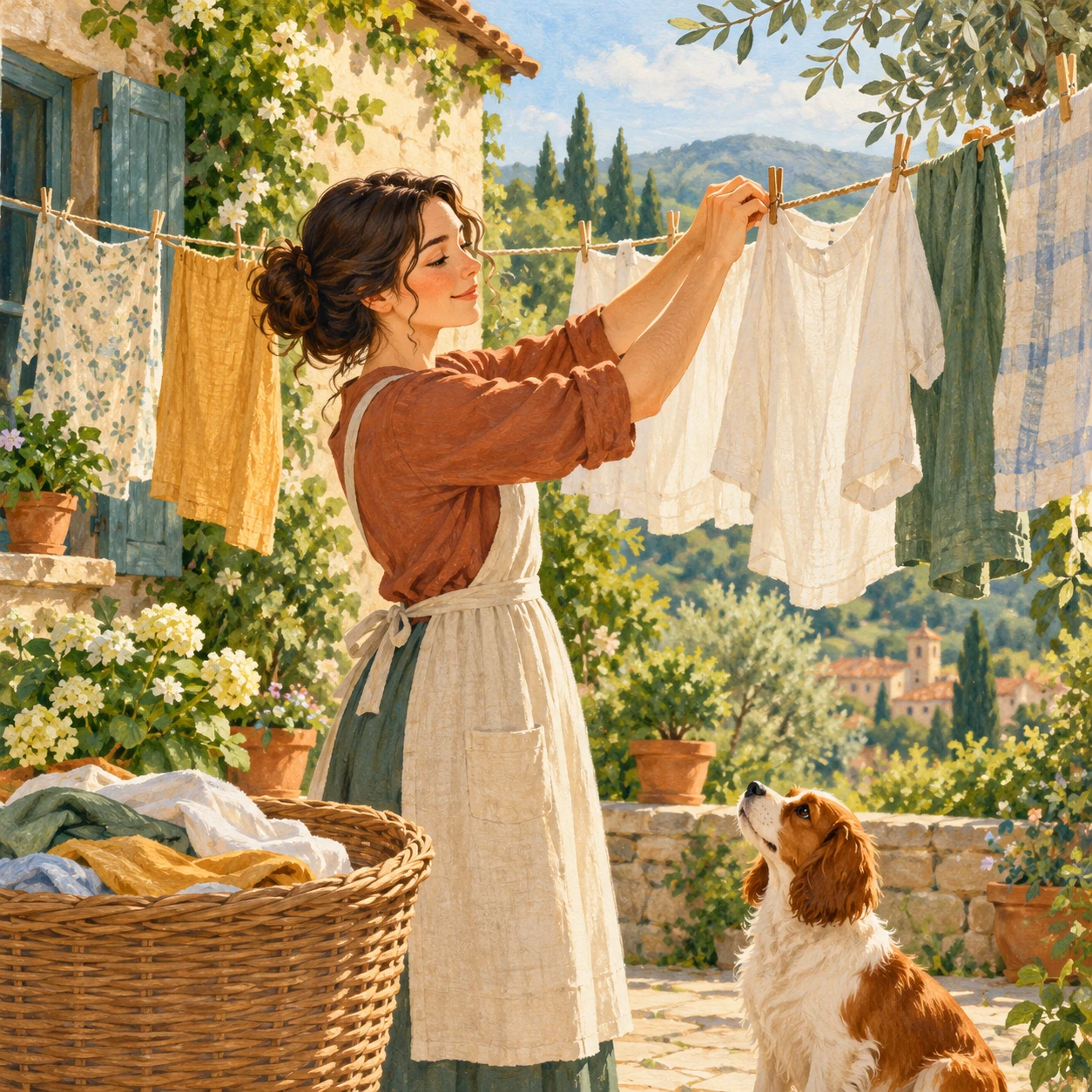
___ the wet sheets on the washing line to dry.
Observe “washing line”. Aqui precisamos de “pendurar”: “hang”. Use a mudança: dobrar para diminuir, alisar com calor, suspender ou reparar. Frase completa: “hang the wet sheets on the washing line to dry.”.
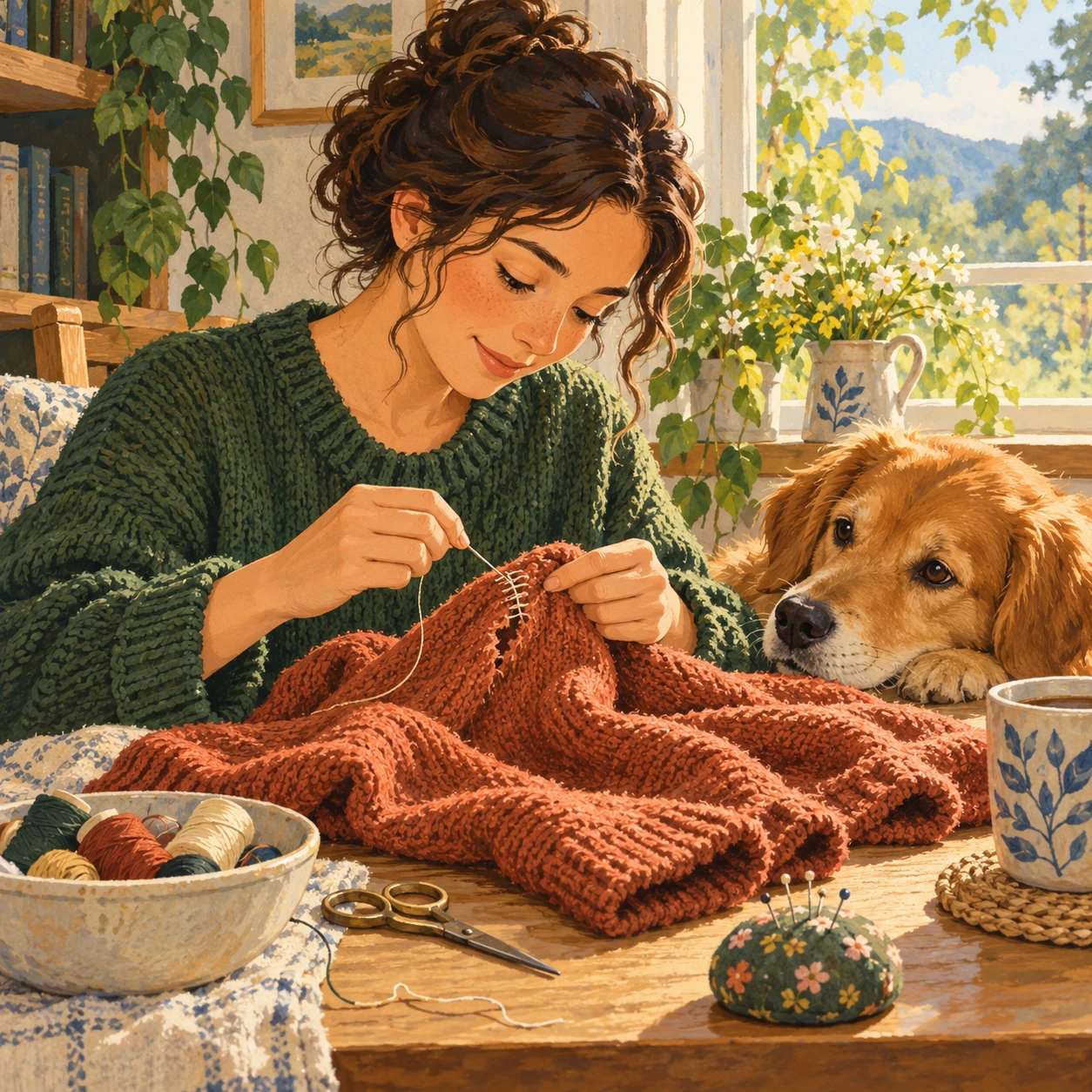
Use a needle and thread to ___ the hole in this shirt.
Observe “needle and thread”. Aqui precisamos de “consertar”: “mend”. Use a mudança: dobrar para diminuir, alisar com calor, suspender ou reparar. Frase completa: “Use a needle and thread to mend the hole in this shirt.”.
I will ___ the crumbs into a pile with this long-handled brush.
Observe “crumbs into a pile”. Aqui precisamos de “varrer”: “sweep”. A ferramenta importa: vassoura, pano molhado, máquina de sucção ou pano seco de pó. Frase completa: “I will sweep the crumbs into a pile with this long-handled brush.”.
We dip the absorbent cloth strips on a long handle into a bucket, then use that wet head to ___ the kitchen floor.
Observe “absorbent cloth strips”. Aqui precisamos de “passar o esfregão”: “mop”. A ferramenta importa: vassoura, pano molhado, máquina de sucção ou pano seco de pó. Frase completa: “We dip the absorbent cloth strips on a long handle into a bucket, then use that wet head to mop the kitchen floor.”.
Let clean water run over the soapy shirt to carry away the soap, without rubbing or using a brush. You ___ it.
Observe “carry away the soap”. Aqui precisamos de “enxaguar”: “rinse”. Separe água corrente, esfregar forte repetidamente, deixar de molho e passar pano. Frase completa: “Let clean water run over the soapy shirt to carry away the soap, without rubbing or using a brush. You rinse it.”.
Rub the burned pan repeatedly and firmly with a stiff brush, rather than a soft wiping cloth. You must ___ it.
Observe “repeatedly and firmly”. Aqui precisamos de “esfregar com força”: “scrub”. Separe água corrente, esfregar forte repetidamente, deixar de molho e passar pano. Frase completa: “Rub the burned pan repeatedly and firmly with a stiff brush, rather than a soft wiping cloth. You must scrub it.”.
Bring the two ends of the blanket together to ___ it into a smaller shape.
Observe “two ends”. Aqui precisamos de “dobrar”: “fold”. Use a mudança: dobrar para diminuir, alisar com calor, suspender ou reparar. Frase completa: “Bring the two ends of the blanket together to fold it into a smaller shape.”.
The trousers are wrinkled. Press a heated flat metal base over the fabric to remove the creases: ___ them.
Observe “heated flat metal base”. Aqui precisamos de “passar a ferro”: “iron”. Use a mudança: dobrar para diminuir, alisar com calor, suspender ou reparar. Frase completa: “The trousers are wrinkled. Press a heated flat metal base over the fabric to remove the creases: iron them.”.
We need to ___ the rug; the cleaner’s dust bag is empty and ready.
Observe “cleaner’s dust bag”. Aqui precisamos de “aspirar”: “vacuum”. A ferramenta importa: vassoura, pano molhado, máquina de sucção ou pano seco de pó. Frase completa: “We need to vacuum the rug; the cleaner’s dust bag is empty and ready.”.
Remove the fine powder from the ornaments by gently passing a soft dry cloth over them, without a machine or liquid. You ___ them.
Observe “soft dry cloth”. Aqui precisamos de “tirar o pó”: “dust”. A ferramenta importa: vassoura, pano molhado, máquina de sucção ou pano seco de pó. Frase completa: “Remove the fine powder from the ornaments by gently passing a soft dry cloth over them, without a machine or liquid. You dust them.”.
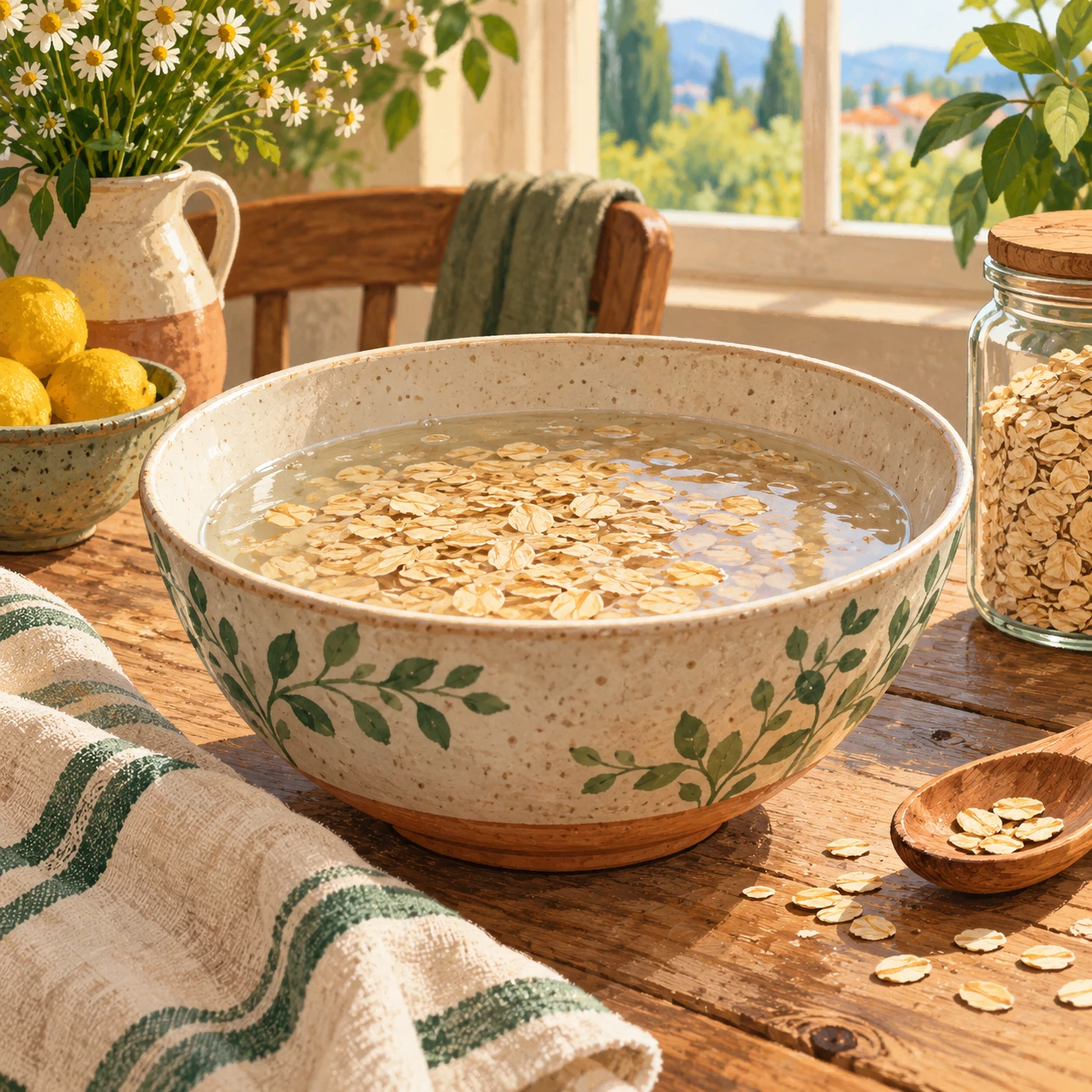
Leave the cloth fully immersed and untouched in still water for ten minutes before washing. You ___ it.
Observe “fully immersed and untouched”. Aqui precisamos de “deixar de molho”: “soak”. Separe água corrente, esfregar forte repetidamente, deixar de molho e passar pano. Frase completa: “Leave the cloth fully immersed and untouched in still water for ten minutes before washing. You soak it.”.
Pass a cloth gently over the mirror once to remove fresh fingerprints, without hard repeated rubbing. You ___ the mirror.
Observe “cloth gently”. Aqui precisamos de “passar um pano”: “wipe”. Separe água corrente, esfregar forte repetidamente, deixar de molho e passar pano. Frase completa: “Pass a cloth gently over the mirror once to remove fresh fingerprints, without hard repeated rubbing. You wipe the mirror.”.
Put the coat on a hook and ___ it behind the door.
Observe “hook”. Aqui precisamos de “pendurar”: “hang”. Use a mudança: dobrar para diminuir, alisar com calor, suspender ou reparar. Frase completa: “Put the coat on a hook and hang it behind the door.”.
I will ___ the torn pocket instead of buying a new jacket.
Observe “torn pocket”. Aqui precisamos de “consertar”: “mend”. Use a mudança: dobrar para diminuir, alisar com calor, suspender ou reparar. Frase completa: “I will mend the torn pocket instead of buying a new jacket.”.