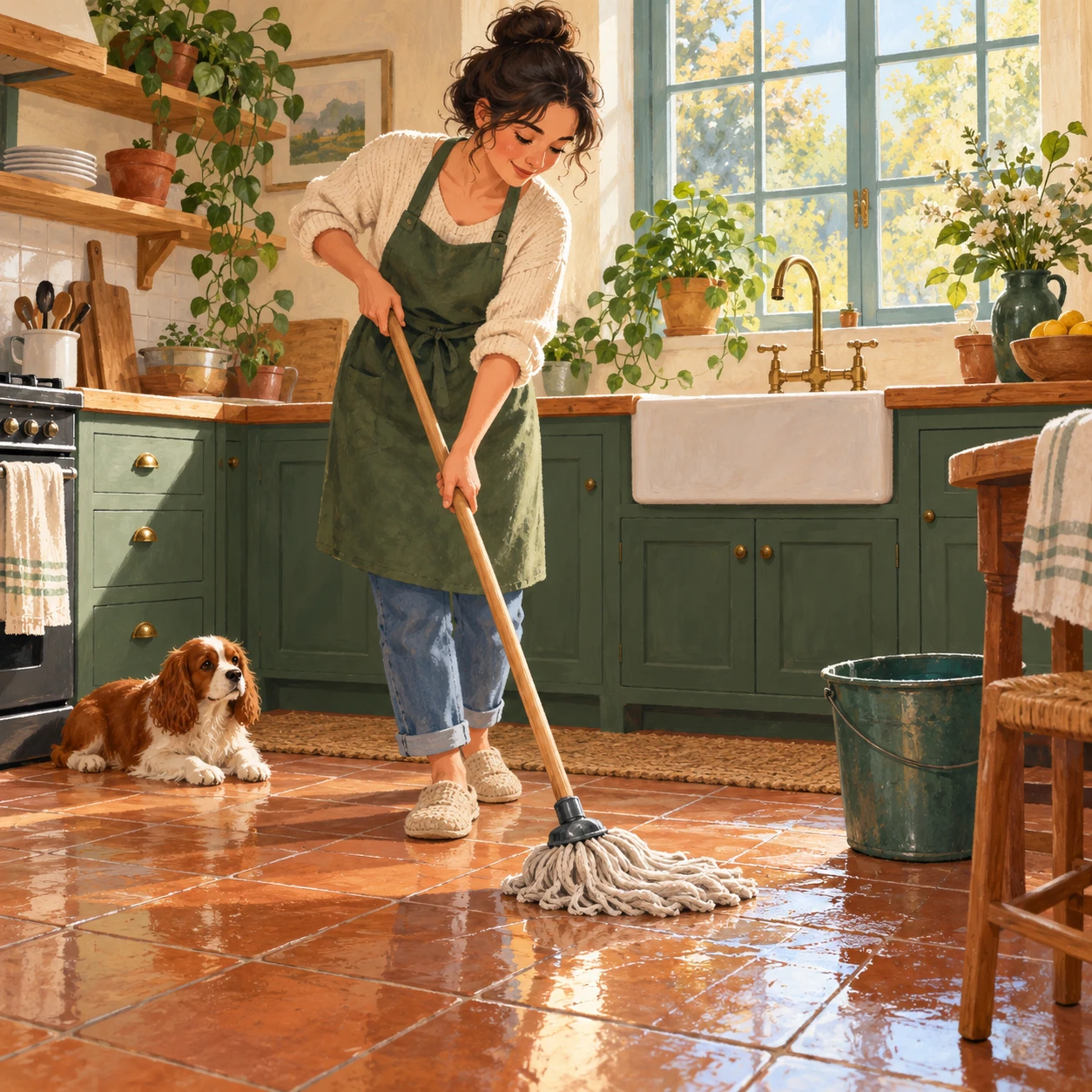
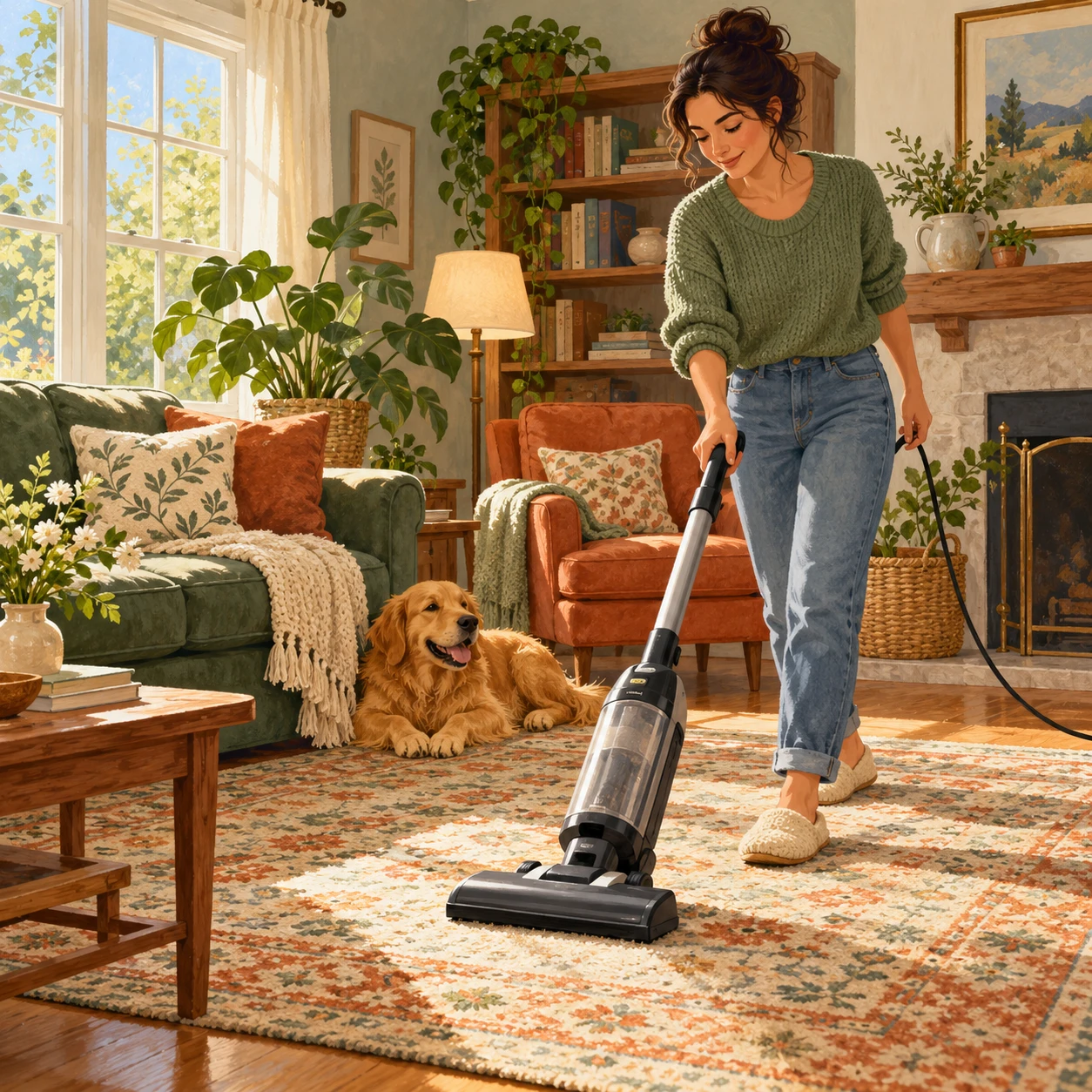
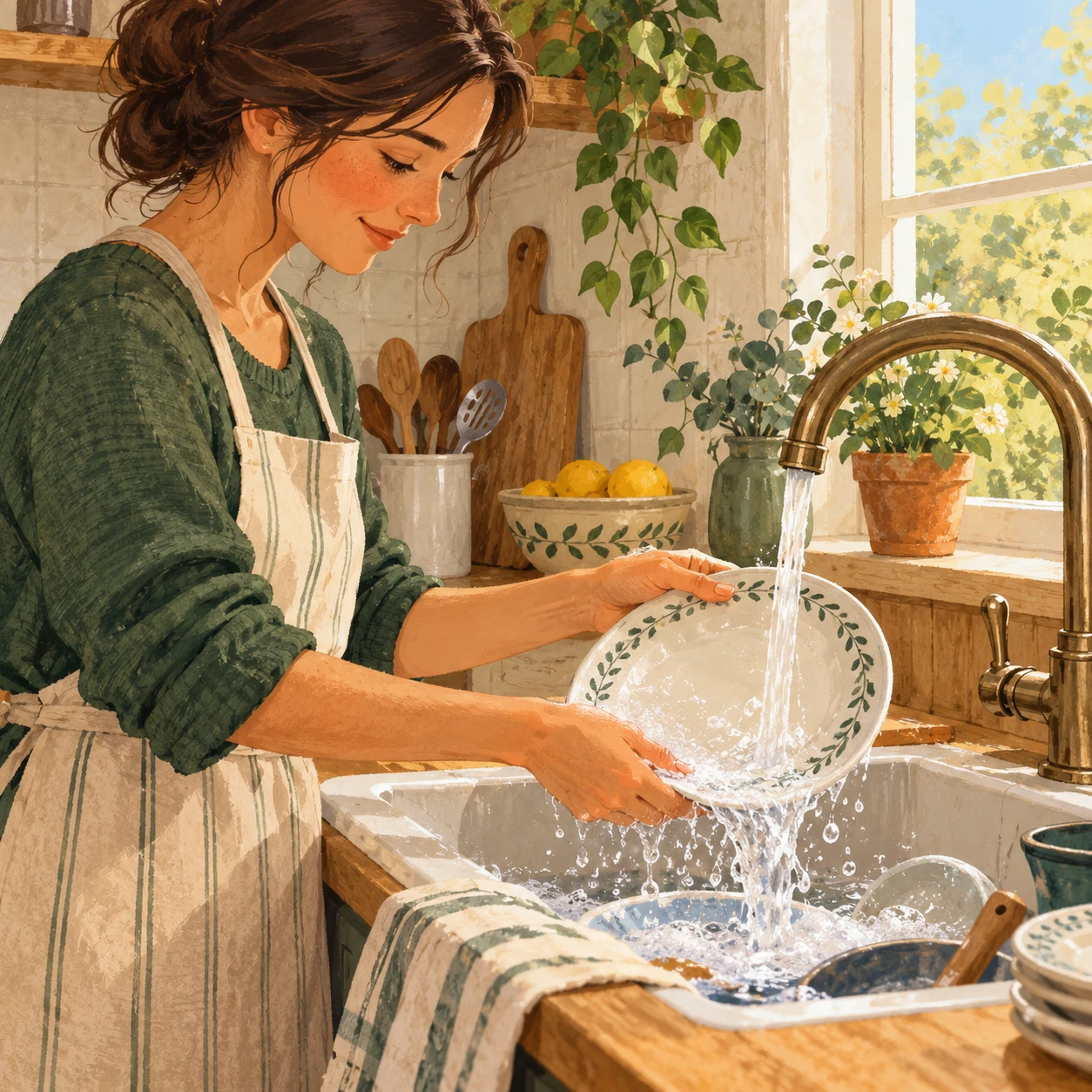
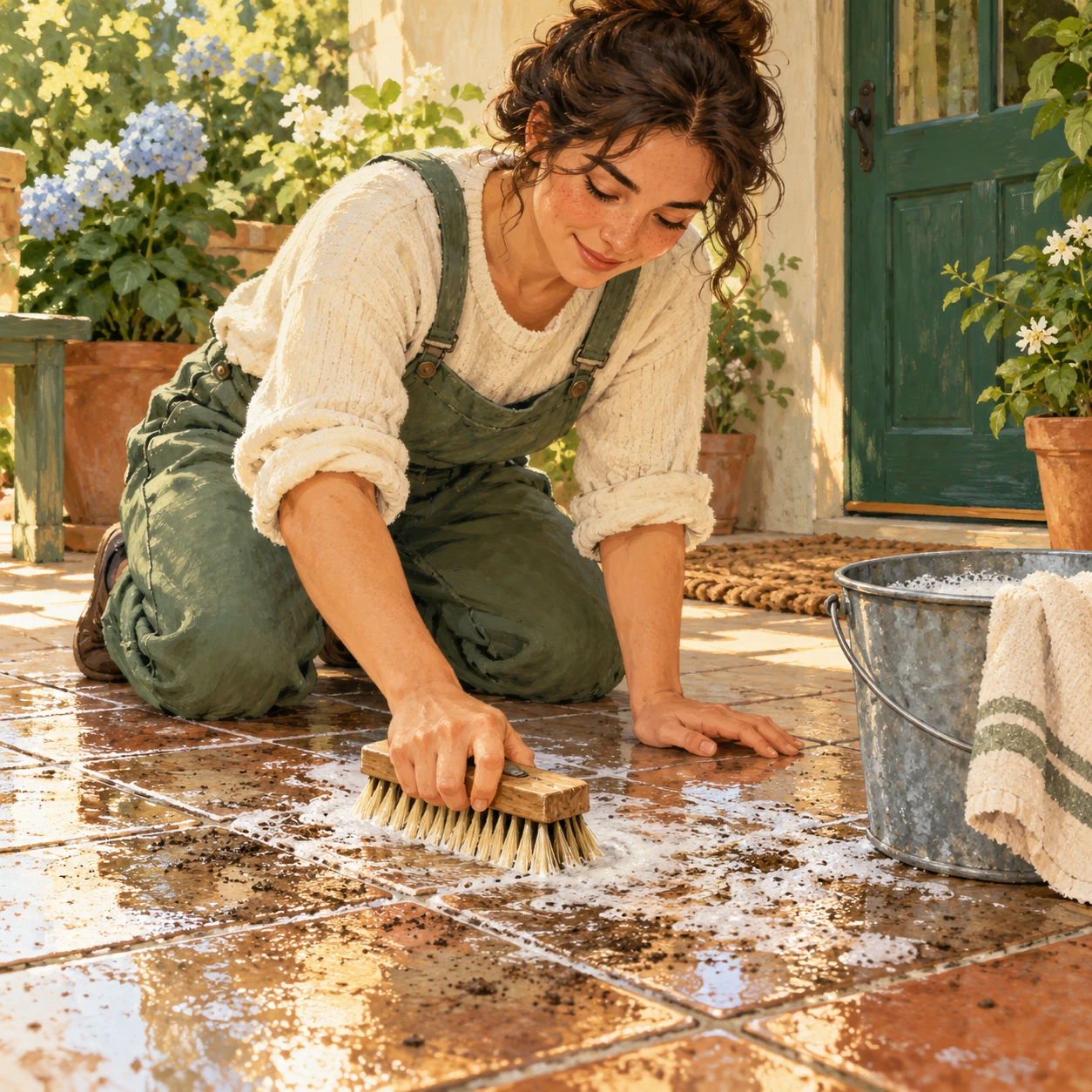
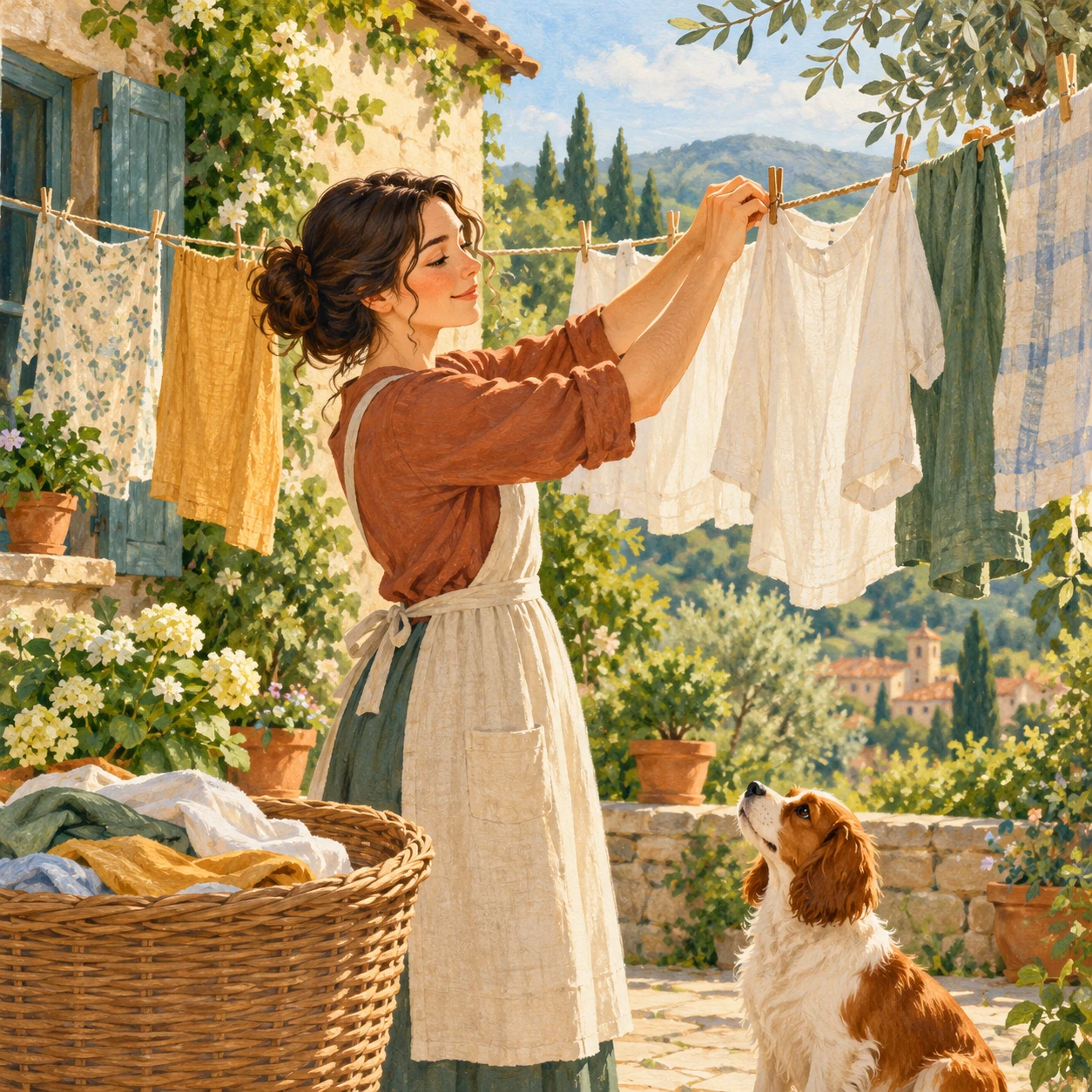
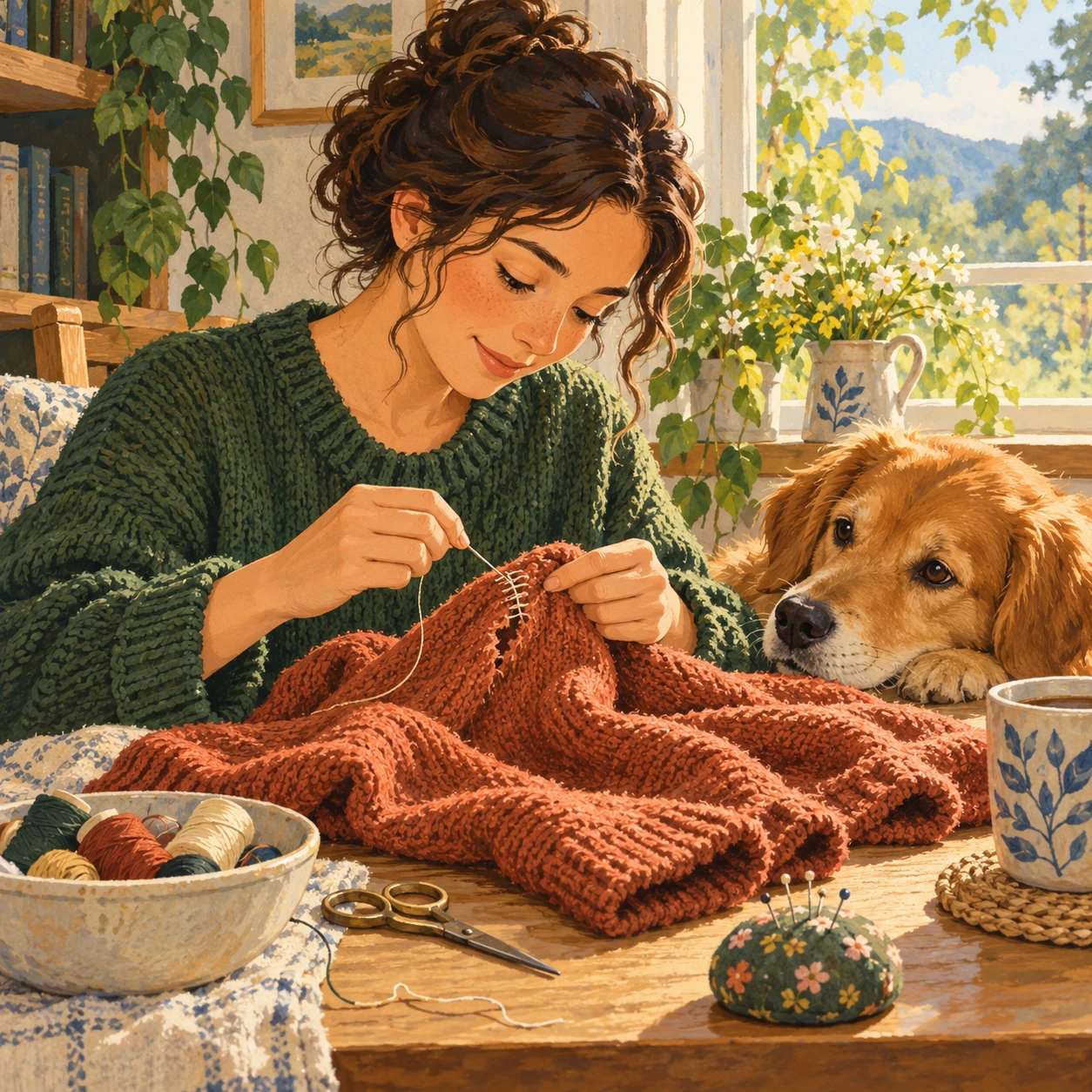
barrer · fregar con fregona · aspirar · quitar el polvo
Distingue estos significados en su contexto: sweep = barrer; mop = fregar con fregona; vacuum = aspirar; dust = quitar el polvo.
We sweep the kitchen every evening.

Tareas domésticas · A2. Distingue estos significados en su contexto: sweep = barrer; mop = fregar con fregona; vacuum = aspirar; dust = quitar el polvo.
Aprende doce palabras útiles del tema. Estudia ejemplos independientes y practica en situaciones nuevas. El nivel es orientativo, no una certificación.
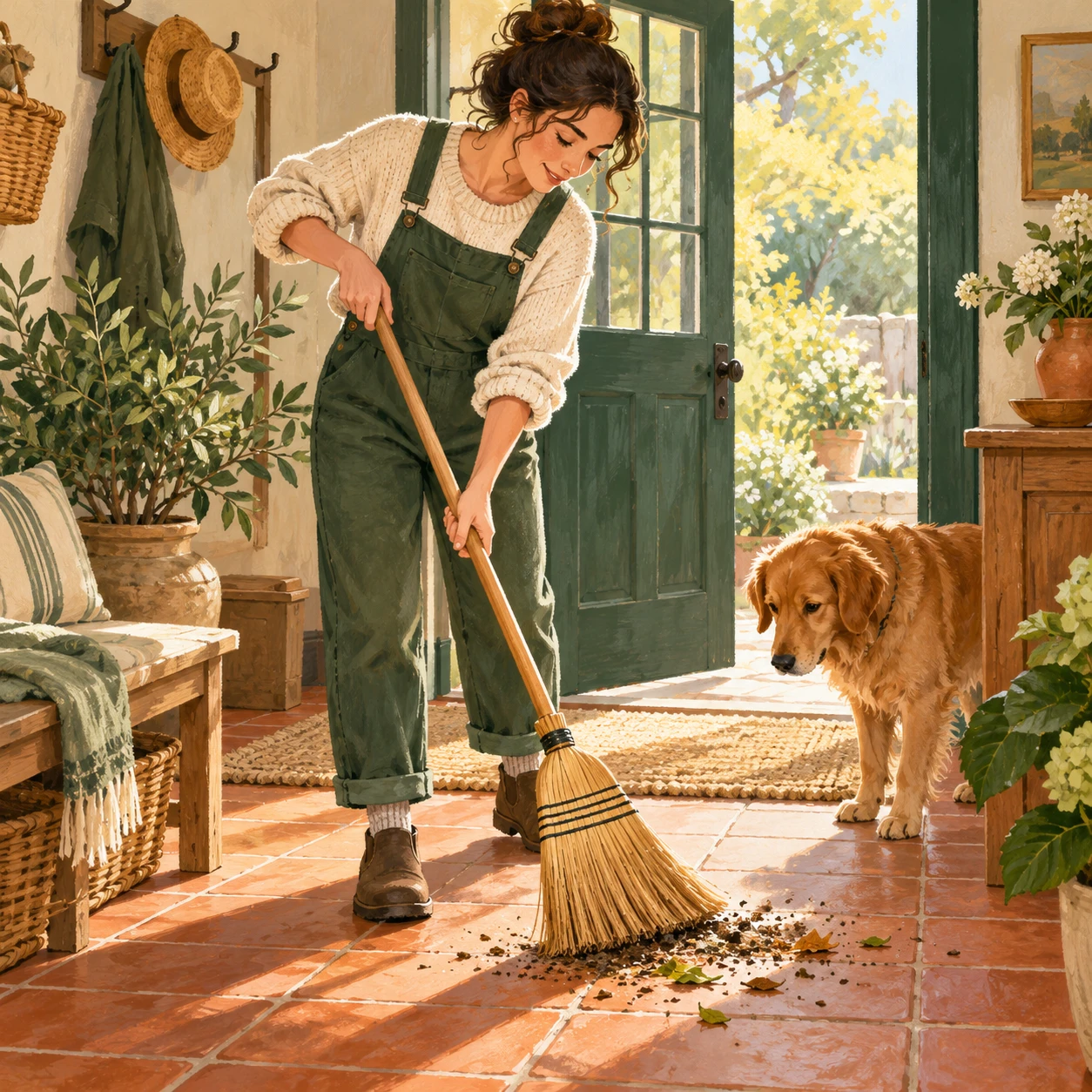
clean a floor using a brush or broom
We sweep the kitchen every evening.
Barremos la cocina cada tarde.
Se refieren a este sentido. La familia puede cambiar de significado; las expresiones próximas no siempre son intercambiables.
Practica «sweep the floor» como combinación. En esta unidad «sweep» significa barrer.
Distingue estos significados en su contexto: sweep = barrer; mop = fregar con fregona; vacuum = aspirar; dust = quitar el polvo.
We sweep the kitchen every evening.
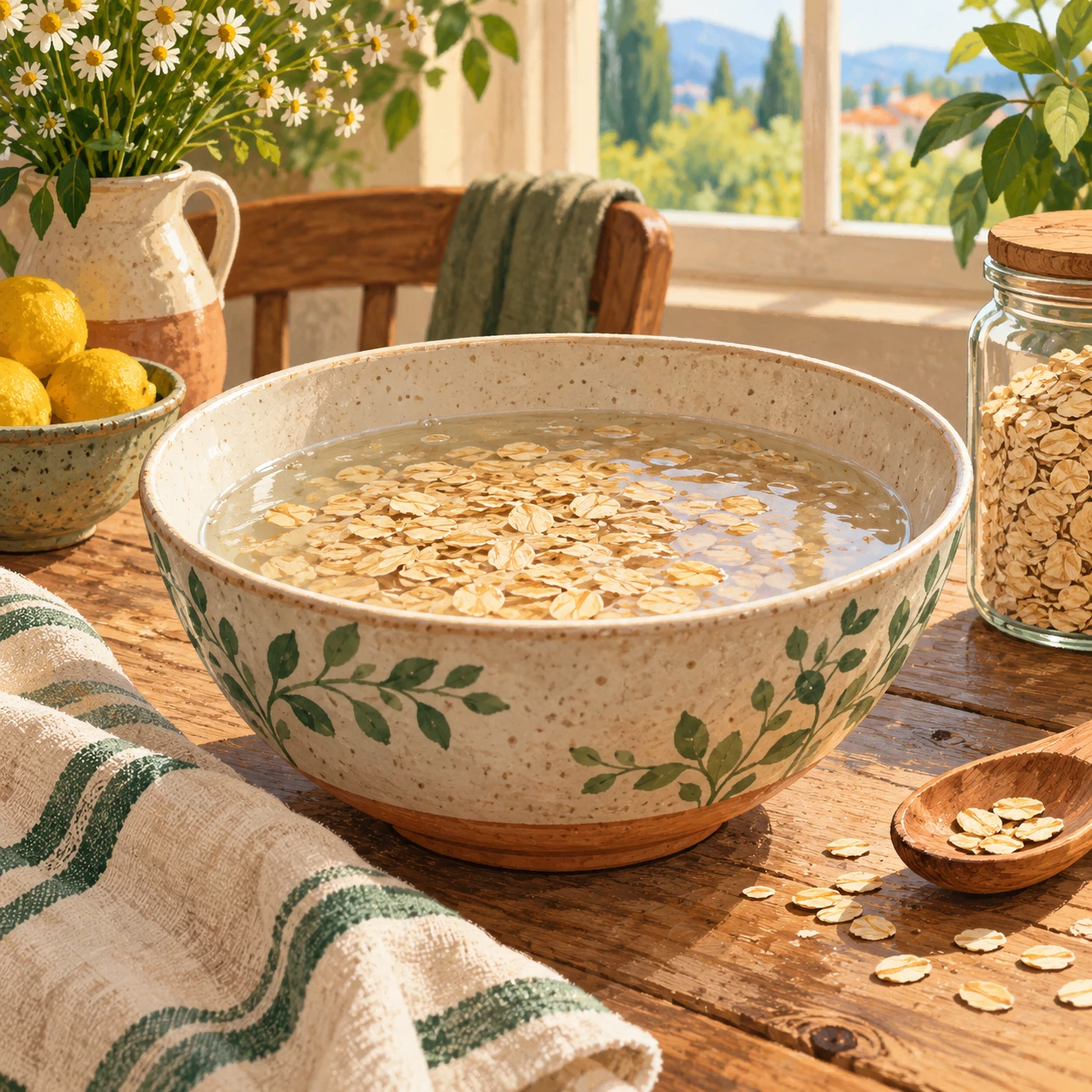
Distingue estos significados en su contexto: rinse = enjuagar; scrub = frotar con un cepillo; soak = dejar en remojo; wipe = pasar un paño.
Rinse the cup before you use it.
Distingue estos significados en su contexto: fold = doblar; iron = planchar; hang = colgar; mend = remendar.
He folds his shirts carefully.
Use a broom to ___ the dry leaves off the path.
Distingue estos significados en su contexto: sweep = barrer; mop = fregar con fregona; vacuum = aspirar; dust = quitar el polvo.
We sweep the kitchen every evening.Distingue estos significados en su contexto: rinse = enjuagar; scrub = frotar con un cepillo; soak = dejar en remojo; wipe = pasar un paño.
Rinse the cup before you use it.Distingue estos significados en su contexto: fold = doblar; iron = planchar; hang = colgar; mend = remendar.
He folds his shirts carefully.Conserva el primer intento, entiende el cambio y compruébalo en otra situación.
Aún no hay repasos. Prueba un calentamiento corto.
Abrir una respuesta registra ayuda para esa pregunta.
Use a broom to ___ the dry leaves off the path.
Fíjate en «broom». Aquí se pide «barrer»: «sweep». Importa la herramienta: escoba, fregona, máquina de succión o paño seco para polvo. Frase completa: «Use a broom to sweep the dry leaves off the path.».
After washing the plates, let clean water flow over them to remove the soap, without brushing or rubbing them. This final action is to ___ them.
Fíjate en «remove the soap». Aquí se pide «enjuagar»: «rinse». Distingue agua corriente, frotar fuerte repetidamente, dejar en agua y pasar un paño por la superficie. Frase completa: «After washing the plates, let clean water flow over them to remove the soap, without brushing or rubbing them. This final action is to rinse them.».
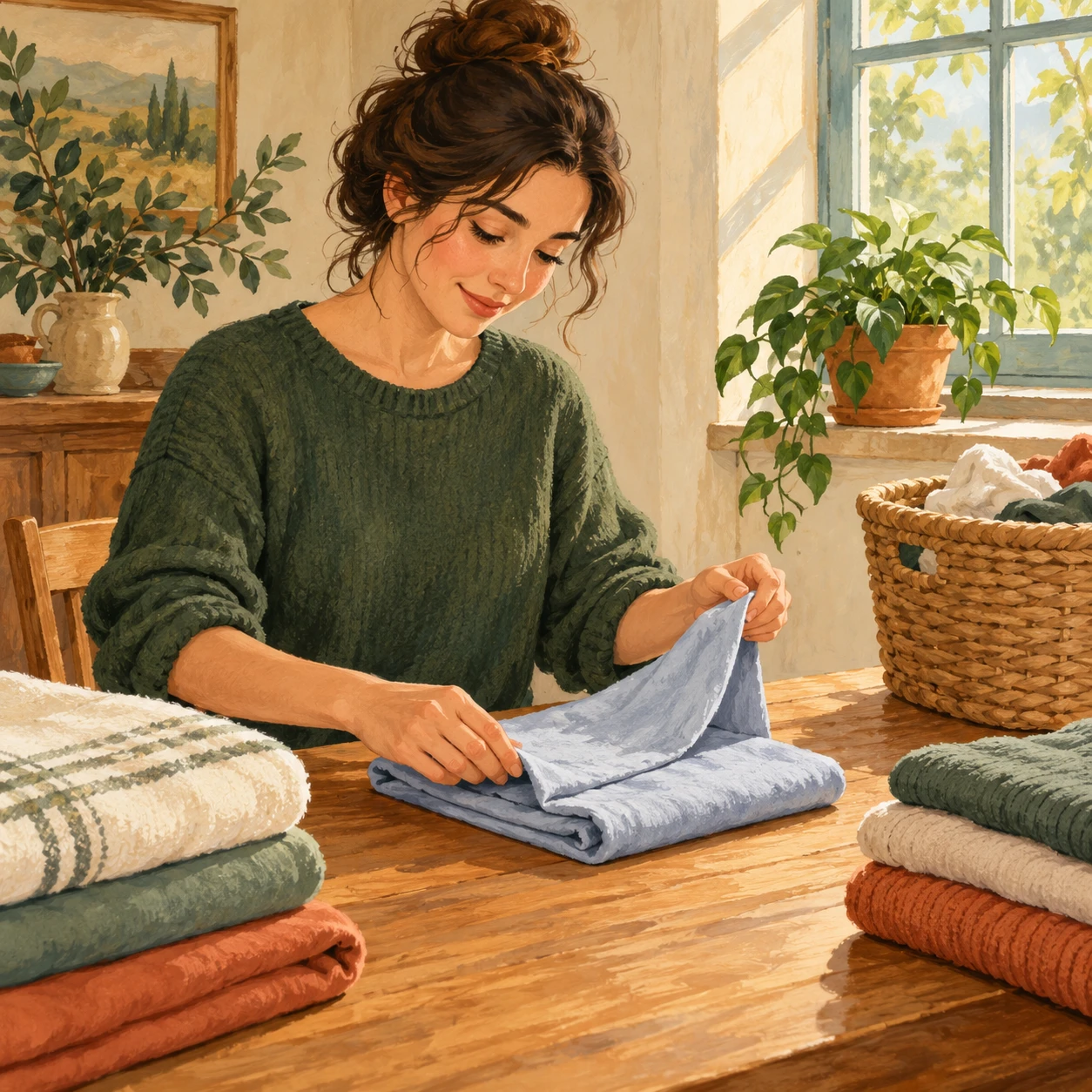
___ each towel in half so it fits neatly on the shelf.
Fíjate en «in half». Aquí se pide «doblar»: «fold». Usa el cambio: doblar para reducir tamaño, alisar con calor, sostener desde arriba o reparar. Frase completa: «fold each towel in half so it fits neatly on the shelf.».
Dip the long-handled tool with cloth strips in water and ___ the muddy tiles.
Fíjate en «cloth strips». Aquí se pide «fregar con fregona»: «mop». Importa la herramienta: escoba, fregona, máquina de succión o paño seco para polvo. Frase completa: «Dip the long-handled tool with cloth strips in water and mop the muddy tiles.».
Turn on the machine and ___ the carpet to suck up the dust.
Fíjate en «suck up». Aquí se pide «aspirar»: «vacuum». Importa la herramienta: escoba, fregona, máquina de succión o paño seco para polvo. Frase completa: «Turn on the machine and vacuum the carpet to suck up the dust.».
Which verb specifically means removing the fine powder on a bookshelf with a soft dry cloth or feather duster? ___
Fíjate en «soft dry cloth or feather duster». Aquí se pide «quitar el polvo»: «dust». Importa la herramienta: escoba, fregona, máquina de succión o paño seco para polvo. Frase completa: «Which verb specifically means removing the fine powder on a bookshelf with a soft dry cloth or feather duster? dust».
The stain is difficult to remove, so ___ it hard with a stiff brush.
Fíjate en «stiff brush». Aquí se pide «frotar con un cepillo»: «scrub». Distingue agua corriente, frotar fuerte repetidamente, dejar en agua y pasar un paño por la superficie. Frase completa: «The stain is difficult to remove, so scrub it hard with a stiff brush.».
Leave the dirty pan in warm water to ___ for half an hour.
Fíjate en «half an hour». Aquí se pide «dejar en remojo»: «soak». Distingue agua corriente, frotar fuerte repetidamente, dejar en agua y pasar un paño por la superficie. Frase completa: «Leave the dirty pan in warm water to soak for half an hour.».
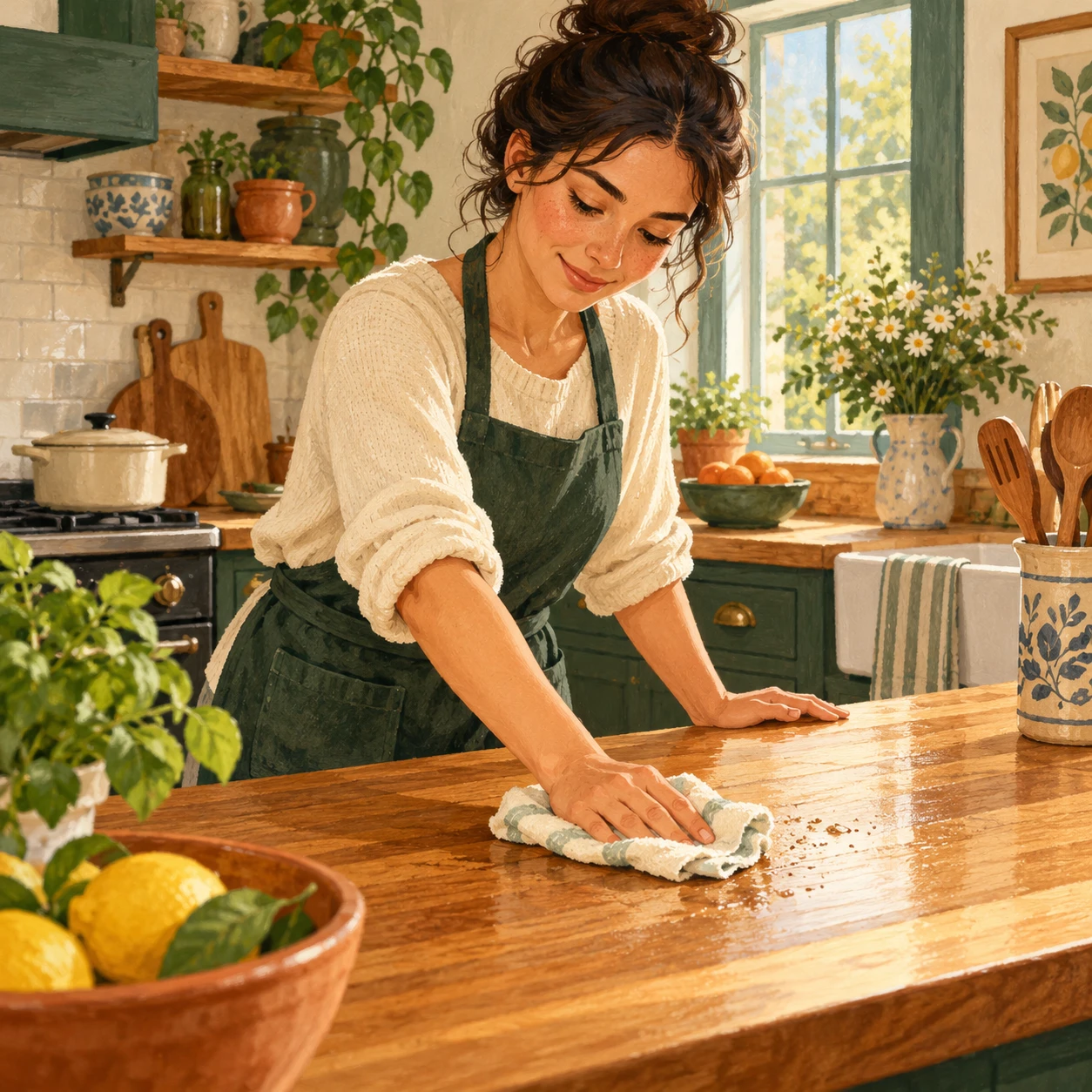
With one gentle pass of a soft cloth, remove the fresh milk from the table without rubbing hard. The verb for this cloth movement is ___.
Fíjate en «one gentle pass». Aquí se pide «pasar un paño»: «wipe». Distingue agua corriente, frotar fuerte repetidamente, dejar en agua y pasar un paño por la superficie. Frase completa: «With one gentle pass of a soft cloth, remove the fresh milk from the table without rubbing hard. The verb for this cloth movement is wipe.».
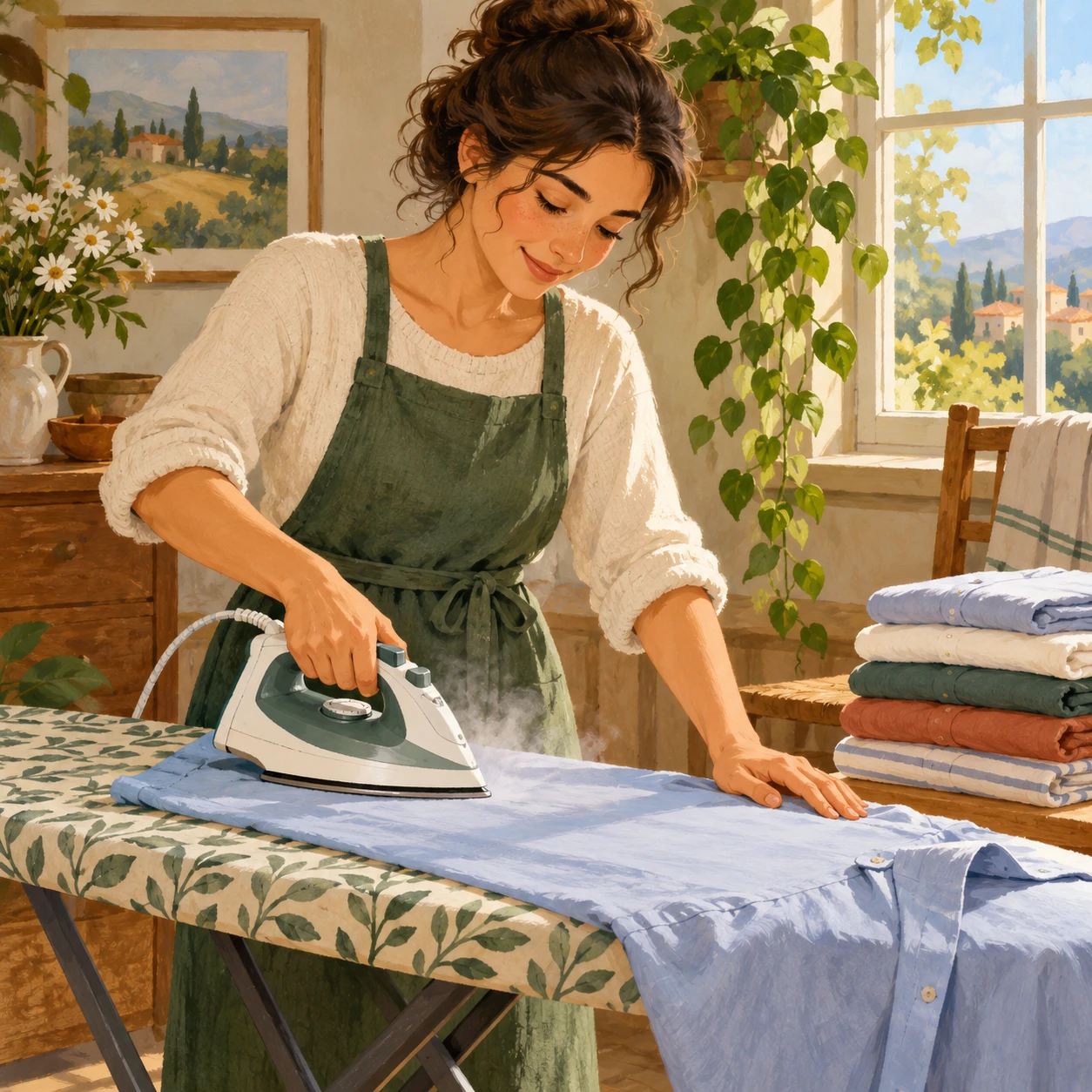
Use the heated flat metal tool to ___ the creases out of the shirt.
Fíjate en «heated flat metal». Aquí se pide «planchar»: «iron». Usa el cambio: doblar para reducir tamaño, alisar con calor, sostener desde arriba o reparar. Frase completa: «Use the heated flat metal tool to iron the creases out of the shirt.».
___ the wet sheets on the washing line to dry.
Fíjate en «washing line». Aquí se pide «colgar»: «hang». Usa el cambio: doblar para reducir tamaño, alisar con calor, sostener desde arriba o reparar. Frase completa: «hang the wet sheets on the washing line to dry.».
Use a needle and thread to ___ the hole in this shirt.
Fíjate en «needle and thread». Aquí se pide «remendar»: «mend». Usa el cambio: doblar para reducir tamaño, alisar con calor, sostener desde arriba o reparar. Frase completa: «Use a needle and thread to mend the hole in this shirt.».
I will ___ the crumbs into a pile with this long-handled brush.
Fíjate en «crumbs into a pile». Aquí se pide «barrer»: «sweep». Importa la herramienta: escoba, fregona, máquina de succión o paño seco para polvo. Frase completa: «I will sweep the crumbs into a pile with this long-handled brush.».
We dip the absorbent cloth strips on a long handle into a bucket, then use that wet head to ___ the kitchen floor.
Fíjate en «absorbent cloth strips». Aquí se pide «fregar con fregona»: «mop». Importa la herramienta: escoba, fregona, máquina de succión o paño seco para polvo. Frase completa: «We dip the absorbent cloth strips on a long handle into a bucket, then use that wet head to mop the kitchen floor.».
Let clean water run over the soapy shirt to carry away the soap, without rubbing or using a brush. You ___ it.
Fíjate en «carry away the soap». Aquí se pide «enjuagar»: «rinse». Distingue agua corriente, frotar fuerte repetidamente, dejar en agua y pasar un paño por la superficie. Frase completa: «Let clean water run over the soapy shirt to carry away the soap, without rubbing or using a brush. You rinse it.».
Rub the burned pan repeatedly and firmly with a stiff brush, rather than a soft wiping cloth. You must ___ it.
Fíjate en «repeatedly and firmly». Aquí se pide «frotar con un cepillo»: «scrub». Distingue agua corriente, frotar fuerte repetidamente, dejar en agua y pasar un paño por la superficie. Frase completa: «Rub the burned pan repeatedly and firmly with a stiff brush, rather than a soft wiping cloth. You must scrub it.».
Bring the two ends of the blanket together to ___ it into a smaller shape.
Fíjate en «two ends». Aquí se pide «doblar»: «fold». Usa el cambio: doblar para reducir tamaño, alisar con calor, sostener desde arriba o reparar. Frase completa: «Bring the two ends of the blanket together to fold it into a smaller shape.».
The trousers are wrinkled. Press a heated flat metal base over the fabric to remove the creases: ___ them.
Fíjate en «heated flat metal base». Aquí se pide «planchar»: «iron». Usa el cambio: doblar para reducir tamaño, alisar con calor, sostener desde arriba o reparar. Frase completa: «The trousers are wrinkled. Press a heated flat metal base over the fabric to remove the creases: iron them.».
We need to ___ the rug; the cleaner’s dust bag is empty and ready.
Fíjate en «cleaner’s dust bag». Aquí se pide «aspirar»: «vacuum». Importa la herramienta: escoba, fregona, máquina de succión o paño seco para polvo. Frase completa: «We need to vacuum the rug; the cleaner’s dust bag is empty and ready.».
Remove the fine powder from the ornaments by gently passing a soft dry cloth over them, without a machine or liquid. You ___ them.
Fíjate en «soft dry cloth». Aquí se pide «quitar el polvo»: «dust». Importa la herramienta: escoba, fregona, máquina de succión o paño seco para polvo. Frase completa: «Remove the fine powder from the ornaments by gently passing a soft dry cloth over them, without a machine or liquid. You dust them.».
Leave the cloth fully immersed and untouched in still water for ten minutes before washing. You ___ it.
Fíjate en «fully immersed and untouched». Aquí se pide «dejar en remojo»: «soak». Distingue agua corriente, frotar fuerte repetidamente, dejar en agua y pasar un paño por la superficie. Frase completa: «Leave the cloth fully immersed and untouched in still water for ten minutes before washing. You soak it.».
Pass a cloth gently over the mirror once to remove fresh fingerprints, without hard repeated rubbing. You ___ the mirror.
Fíjate en «cloth gently». Aquí se pide «pasar un paño»: «wipe». Distingue agua corriente, frotar fuerte repetidamente, dejar en agua y pasar un paño por la superficie. Frase completa: «Pass a cloth gently over the mirror once to remove fresh fingerprints, without hard repeated rubbing. You wipe the mirror.».
Put the coat on a hook and ___ it behind the door.
Fíjate en «hook». Aquí se pide «colgar»: «hang». Usa el cambio: doblar para reducir tamaño, alisar con calor, sostener desde arriba o reparar. Frase completa: «Put the coat on a hook and hang it behind the door.».
I will ___ the torn pocket instead of buying a new jacket.
Fíjate en «torn pocket». Aquí se pide «remendar»: «mend». Usa el cambio: doblar para reducir tamaño, alisar con calor, sostener desde arriba o reparar. Frase completa: «I will mend the torn pocket instead of buying a new jacket.».