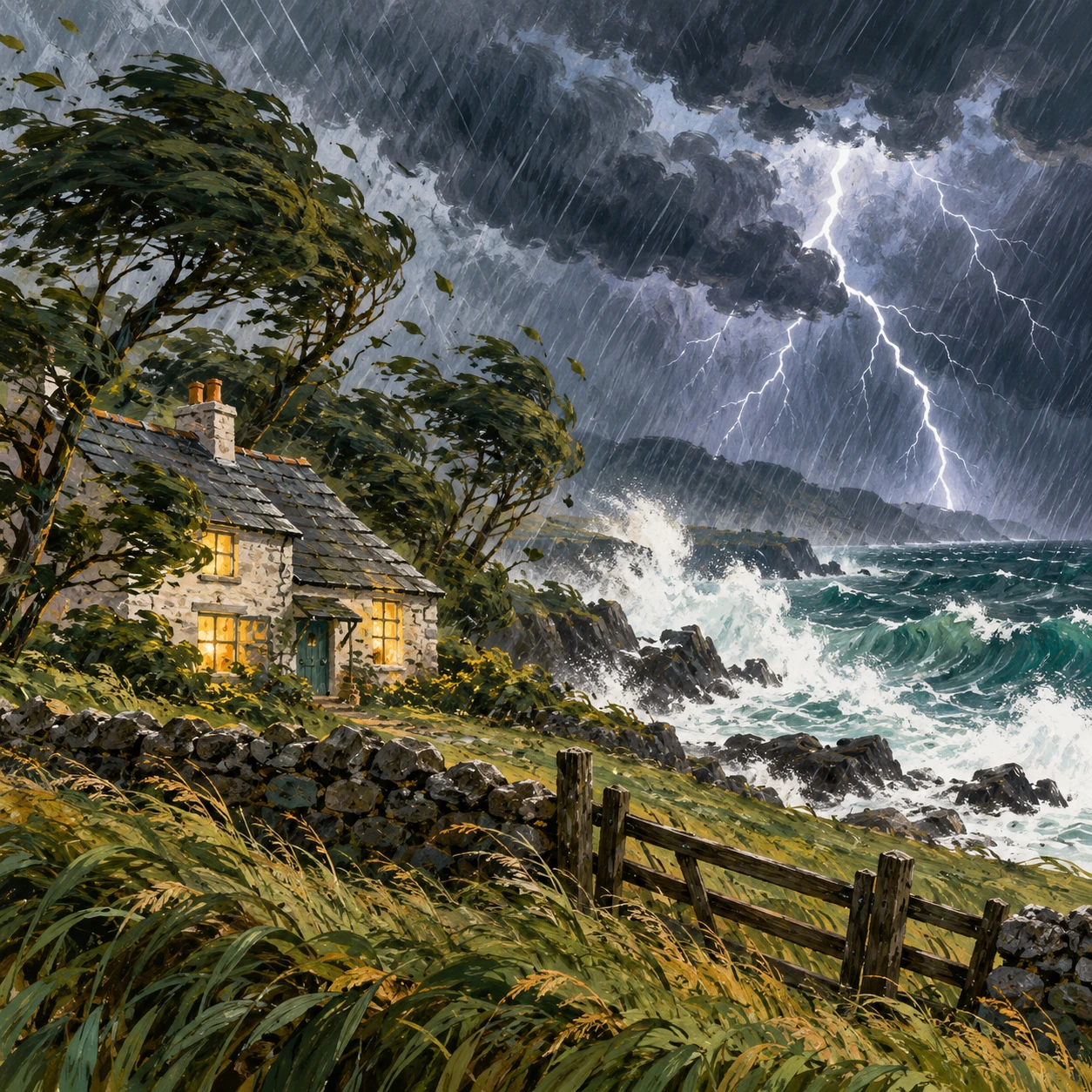
nuageux · venteux · ensoleillé · brumeux
Distingue ces sens à partir de la situation : cloudy = nuageux; windy = venteux; sunny = ensoleillé; foggy = brumeux.
There are many clouds covering the sky. It is cloudy.

Météo et saisons · A2. Distingue ces sens à partir de la situation : cloudy = nuageux; windy = venteux; sunny = ensoleillé; foggy = brumeux.
Travaille Météo et saisons dans de courtes situations. Lis l’indice, choisis ou écris une forme, puis vérifie l’explication. Le niveau est une indication éditoriale. Découvre 12 fiches et 24 questions en contexte, avec de nouvelles situations de révision et de transfert.

With many clouds in the sky.
The morning was cloudy, but the afternoon was clear.
La matinée était nuageuse, mais le ciel s’est dégagé l’après-midi.
Ces indications concernent ce sens. Les mots de la famille peuvent changer de sens ; les expressions proches ne sont pas toujours interchangeables.
Utilise «cloudy» pour nuageux. Compare avec «windy» (venteux) : les sens diffèrent.
Distingue ces sens à partir de la situation : cloudy = nuageux; windy = venteux; sunny = ensoleillé; foggy = brumeux.
There are many clouds covering the sky. It is cloudy.
Distingue ces sens à partir de la situation : spring = printemps; summer = été; autumn = automne; winter = hiver.
The season after winter and before summer is spring.
Distingue ces sens à partir de la situation : forecast = prévision météo; temperature = température; storm = orage; shower = averse.
A report predicting tomorrow’s weather is a weather forecast.
Clouds cover the sky, but there is no fog near the ground and the air is still. It is ___.
Distingue ces sens à partir de la situation : cloudy = nuageux; windy = venteux; sunny = ensoleillé; foggy = brumeux.
There are many clouds covering the sky. It is cloudy.Distingue ces sens à partir de la situation : spring = printemps; summer = été; autumn = automne; winter = hiver.
The season after winter and before summer is spring.Distingue ces sens à partir de la situation : forecast = prévision météo; temperature = température; storm = orage; shower = averse.
A report predicting tomorrow’s weather is a weather forecast.Gardez la première tentative, comprenez le changement et essayez dans une nouvelle situation.
Pas encore de notes. Essayez un court échauffement.
Ouvrir une réponse enregistre une aide pour cette question.
Clouds cover the sky, but there is no fog near the ground and the air is still. It is ___.
Regarde « Clouds cover the sky ». Ici, on cherche « nuageux » : « cloudy ». Ces phénomènes peuvent coexister. Réponds au phénomène demandé, pas à une autre condition possible. Phrase complète : « Clouds cover the sky, but there is no fog near the ground and the air is still. It is cloudy.” / “There are many clouds covering the sky. It is cloudy. ».
The season after winter and before summer is ___.
Regarde « after winter and before summer ». Ici, on cherche « printemps » : « spring ». Utilise l’ordre : printemps, été, automne, hiver. Phrase complète : « The season after winter and before summer is spring. ».
A report predicting tomorrow’s weather is a weather ___.
Regarde « predicting tomorrow’s weather ». Ici, on cherche « prévision météo » : « forecast ». Une prévision n’est ni une mesure ni un événement. Une pluie brève diffère d’un violent système météo. Phrase complète : « A report predicting tomorrow’s weather is a weather forecast. ».
The sky is not clear and there is no fog near the ground. Which word describes the strong movement of air blowing my hat away? It is ___.
Regarde « strong movement of air ». Ici, on cherche « venteux » : « windy ». Ces phénomènes peuvent coexister. Réponds au phénomène demandé, pas à une autre condition possible. Phrase complète : « The sky is not clear and there is no fog near the ground. Which word describes the strong movement of air blowing my hat away? It is windy.” / “The air is moving strongly and blowing my hat away. It is windy. ».
The season after spring and before autumn is ___.
Regarde « after spring and before autumn ». Ici, on cherche « été » : « summer ». Utilise l’ordre : printemps, été, automne, hiver. Phrase complète : « The season after spring and before autumn is summer. ».
The number of degrees showing how hot or cold the air is is its ___.
Regarde « number of degrees ». Ici, on cherche « température » : « temperature ». Une prévision n’est ni une mesure ni un événement. Une pluie brève diffère d’un violent système météo. Phrase complète : « The number of degrees showing how hot or cold the air is is its temperature. ».
Which word describes the bright sun shining from a clear sky? It is ___.
Regarde « bright sun ». Ici, on cherche « ensoleillé » : « sunny ». Ces phénomènes peuvent coexister. Réponds au phénomène demandé, pas à une autre condition possible. Phrase complète : « Which word describes the bright sun shining from a clear sky? It is sunny.” / “The sun is shining brightly from a clear sky. It is sunny. ».
Which word specifically describes low cloud near the ground making the road hard to see? It is ___.
Regarde « low cloud near the ground ». Ici, on cherche « brumeux » : « foggy ». Ces phénomènes peuvent coexister. Réponds au phénomène demandé, pas à une autre condition possible. Phrase complète : « Which word specifically describes low cloud near the ground making the road hard to see? It is foggy.” / “Low cloud near the ground makes it hard to see the road. It is foggy. ».
The season after summer and before winter is ___.
Regarde « after summer and before winter ». Ici, on cherche « automne » : « autumn ». Utilise l’ordre : printemps, été, automne, hiver. Phrase complète : « The season after summer and before winter is autumn. ».
There is violent weather with thunder, lightning and strong wind: a ___.
Regarde « thunder, lightning and strong wind ». Ici, on cherche « orage » : « storm ». Une prévision n’est ni une mesure ni un événement. Une pluie brève diffère d’un violent système météo. Phrase complète : « There is violent weather with thunder, lightning and strong wind: a storm. ».
The season after autumn and before spring is ___.
Regarde « after autumn and before spring ». Ici, on cherche « hiver » : « winter ». Utilise l’ordre : printemps, été, automne, hiver. Phrase complète : « The season after autumn and before spring is winter. ».
A short period of rain that soon stops is a ___.
Regarde « short period of rain ». Ici, on cherche « averse » : « shower ». Une prévision n’est ni une mesure ni un événement. Une pluie brève diffère d’un violent système météo. Phrase complète : « A short period of rain that soon stops is a shower. ».
A thick layer of clouds covers the sky; the air is still and there is no ground-level fog. It is ___.
Regarde « layer of clouds ». Ici, on cherche « nuageux » : « cloudy ». Ces phénomènes peuvent coexister. Réponds au phénomène demandé, pas à une autre condition possible. Phrase complète : « A thick layer of clouds covers the sky; the air is still and there is no ground-level fog. It is cloudy.” / “A thick layer of clouds covers the sky. It is cloudy. ».
In Britain, this season comes after winter and before summer. It is ___.
Regarde « after winter and before summer ». Ici, on cherche « printemps » : « spring ». Utilise l’ordre : printemps, été, automne, hiver. Phrase complète : « In Britain, this season comes after winter and before summer. It is spring. ».
The report of tomorrow’s weather is the weather ___.
Regarde « report of tomorrow’s weather ». Ici, on cherche « prévision météo » : « forecast ». Une prévision n’est ni une mesure ni un événement. Une pluie brève diffère d’un violent système météo. Phrase complète : « The report of tomorrow’s weather is the weather forecast. ».
Which word describes the strong movement of air that bends the trees? It is ___.
Regarde « strong movement of air ». Ici, on cherche « venteux » : « windy ». Ces phénomènes peuvent coexister. Réponds au phénomène demandé, pas à une autre condition possible. Phrase complète : « Which word describes the strong movement of air that bends the trees? It is windy.” / “The air is moving strongly and the trees are bending. It is windy. ».
In Britain, the season after spring and before autumn is ___.
Regarde « after spring and before autumn ». Ici, on cherche « été » : « summer ». Utilise l’ordre : printemps, été, automne, hiver. Phrase complète : « In Britain, the season after spring and before autumn is summer. ».
The thermometer shows 22 degrees. It measures the ___.
Regarde « thermometer ». Ici, on cherche « température » : « temperature ». Une prévision n’est ni une mesure ni un événement. Une pluie brève diffère d’un violent système météo. Phrase complète : « The thermometer shows 22 degrees. It measures the temperature. ».
Which word describes bright sunshine from a clear sky? It is ___.
Regarde « bright sunshine ». Ici, on cherche « ensoleillé » : « sunny ». Ces phénomènes peuvent coexister. Réponds au phénomène demandé, pas à une autre condition possible. Phrase complète : « Which word describes bright sunshine from a clear sky? It is sunny.” / “The sun is shining in a clear sky. It is sunny. ».
Which word specifically describes fog near the ground making the road hard to see? It is ___.
Regarde « fog near the ground ». Ici, on cherche « brumeux » : « foggy ». Ces phénomènes peuvent coexister. Réponds au phénomène demandé, pas à une autre condition possible. Phrase complète : « Which word specifically describes fog near the ground making the road hard to see? It is foggy.” / “Fog makes it hard to see the road. It is foggy. ».
In Britain, the season after summer and before winter is ___.
Regarde « after summer and before winter ». Ici, on cherche « automne » : « autumn ». Utilise l’ordre : printemps, été, automne, hiver. Phrase complète : « In Britain, the season after summer and before winter is autumn. ».
For several hours, severe wind, heavy rain and thunder affect the whole town, rather than a brief burst of rain. A ___ is passing over it.
Regarde « severe wind, heavy rain and thunder ». Ici, on cherche « orage » : « storm ». Une prévision n’est ni une mesure ni un événement. Une pluie brève diffère d’un violent système météo. Phrase complète : « For several hours, severe wind, heavy rain and thunder affect the whole town, rather than a brief burst of rain. A storm is passing over it. ».
In Britain, the season after autumn and before spring is ___.
Regarde « after autumn and before spring ». Ici, on cherche « hiver » : « winter ». Utilise l’ordre : printemps, été, automne, hiver. Phrase complète : « In Britain, the season after autumn and before spring is winter. ».
A short period of light rain begins, then quickly ends. It is a ___.
Regarde « quickly ends ». Ici, on cherche « averse » : « shower ». Une prévision n’est ni une mesure ni un événement. Une pluie brève diffère d’un violent système météo. Phrase complète : « A short period of light rain begins, then quickly ends. It is a shower. ».