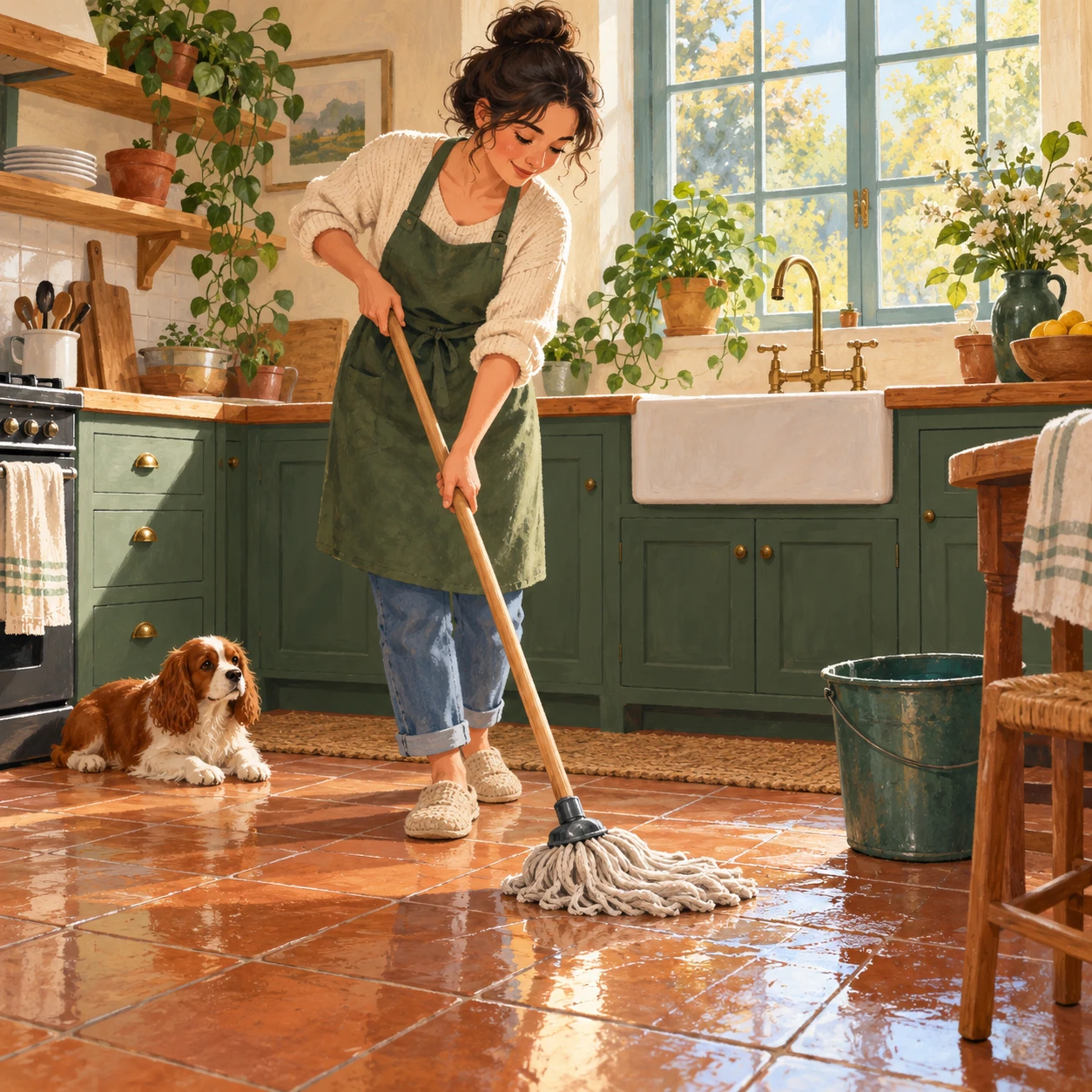
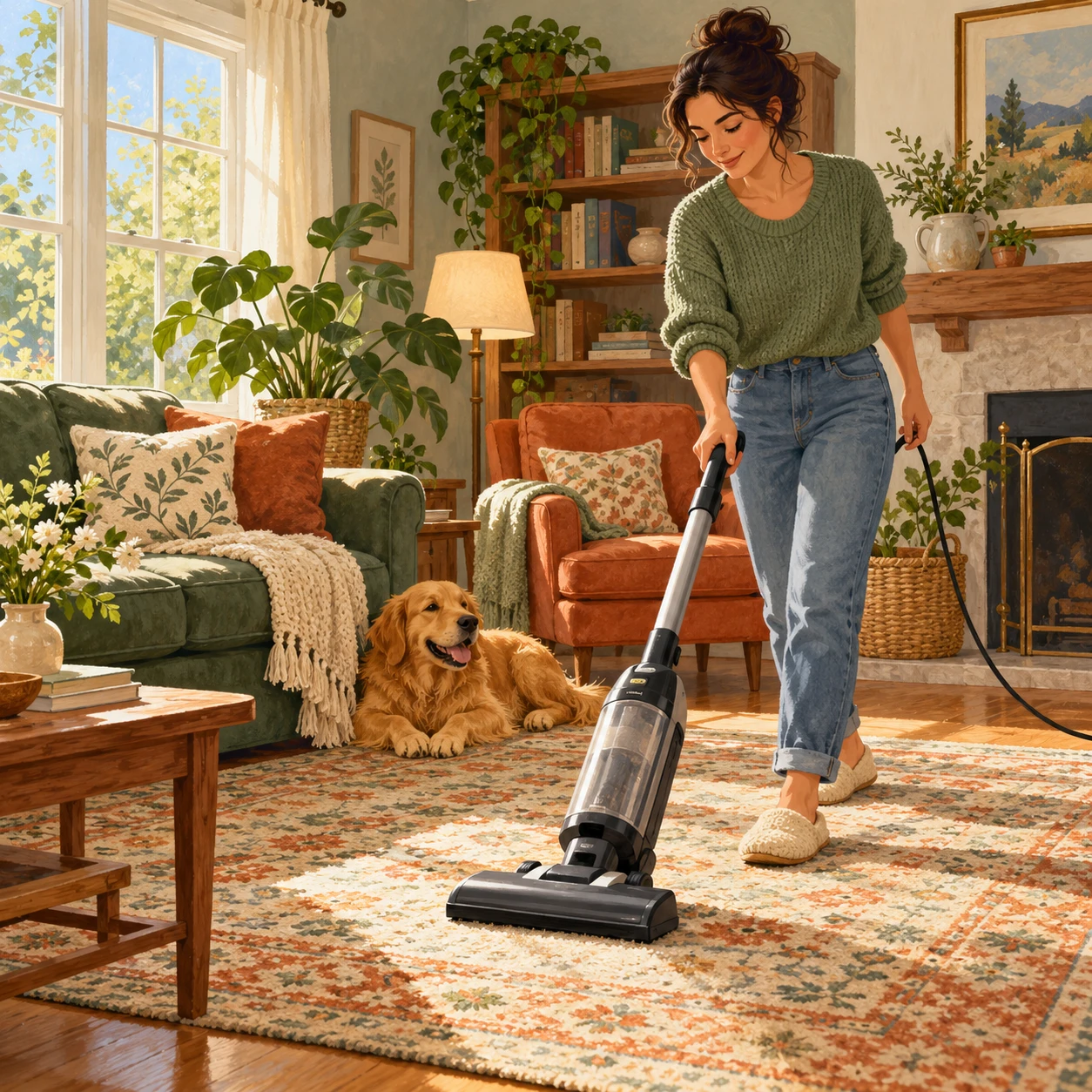
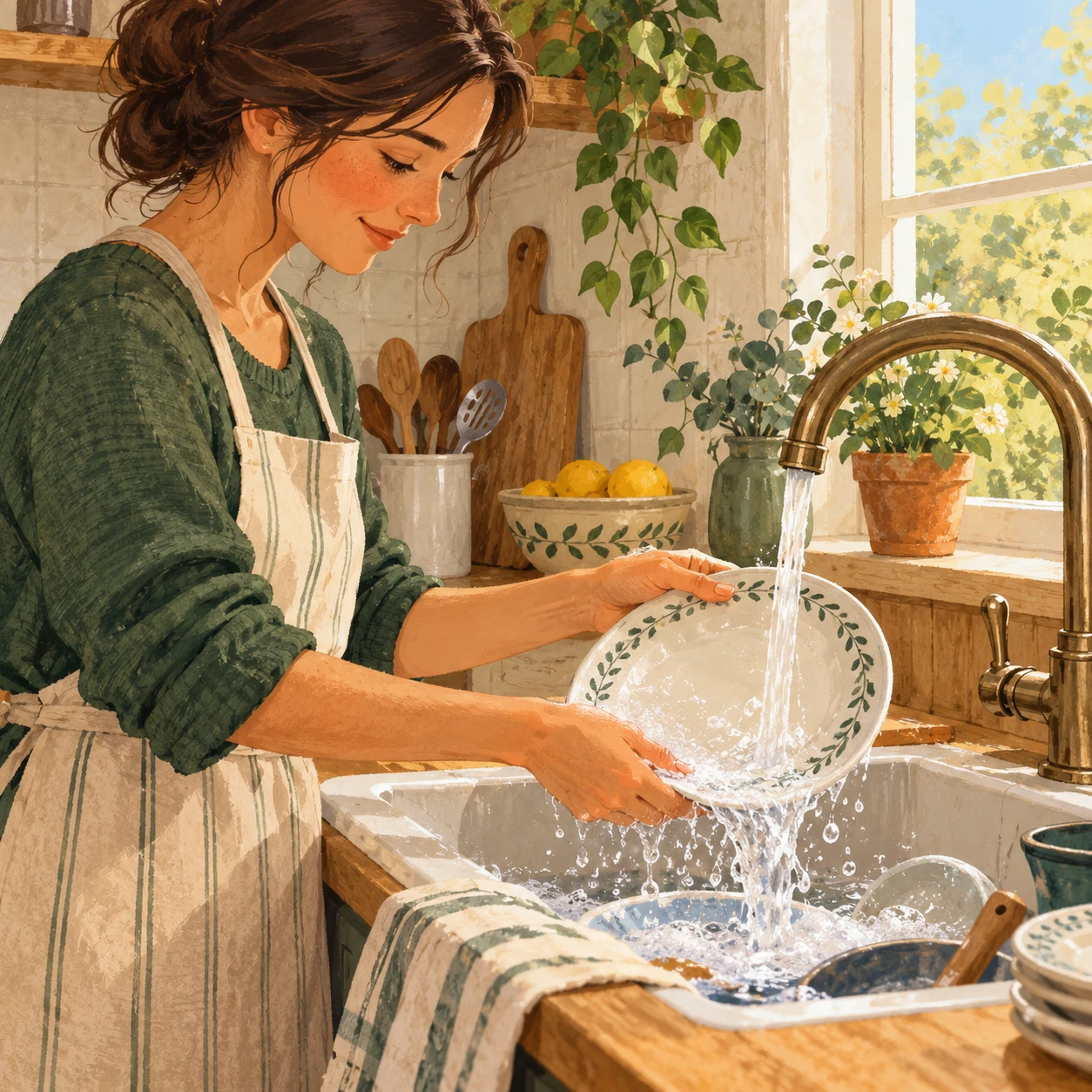
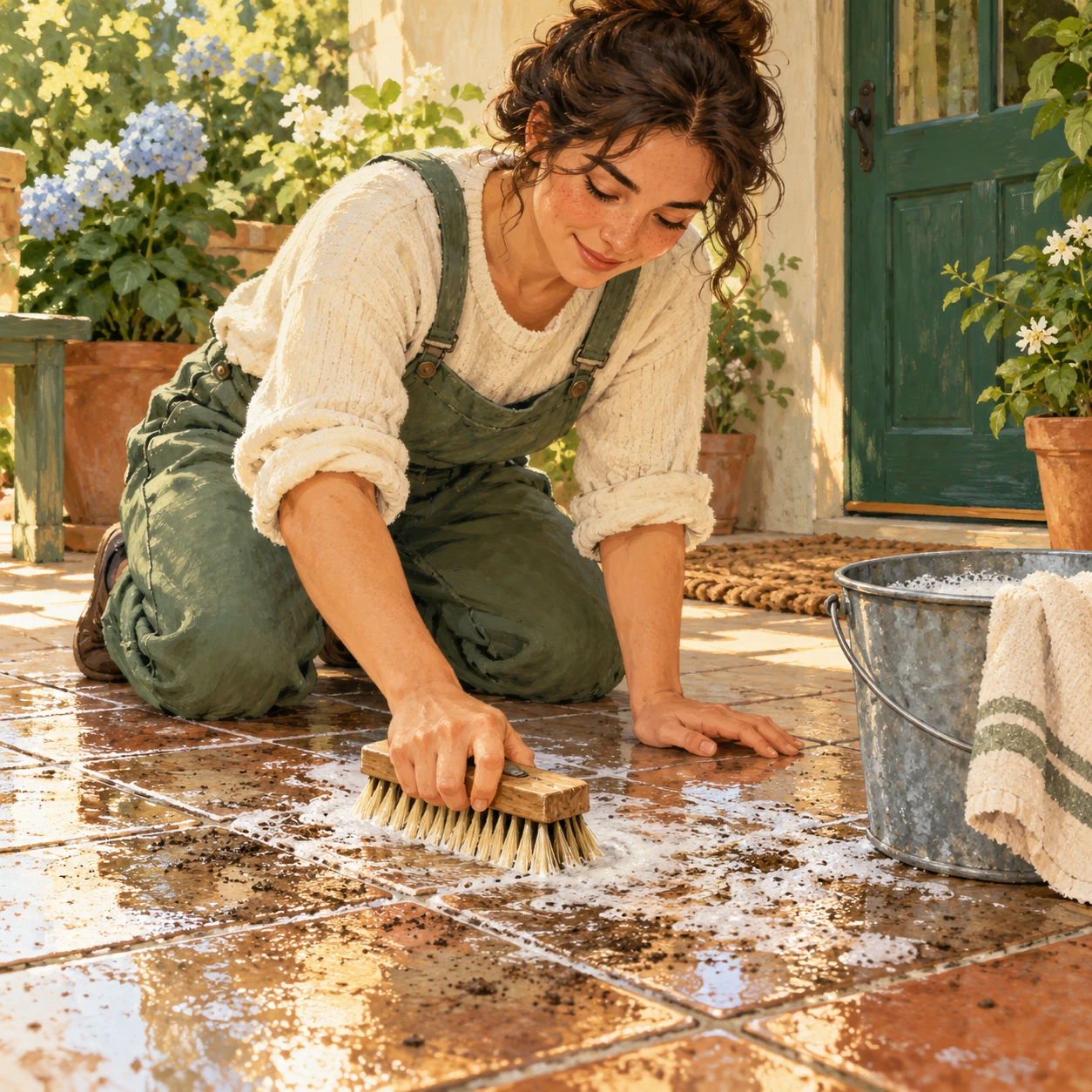
ほうきで掃く · モップで拭く · 掃除機をかける · ほこりを払う
場面から次の意味を区別しましょう:sweep = ほうきで掃く; mop = モップで拭く; vacuum = 掃除機をかける; dust = ほこりを払う。
We sweep the kitchen every evening.

家事 · A2. 場面から次の意味を区別しましょう:sweep = ほうきで掃く; mop = モップで拭く; vacuum = 掃除機をかける; dust = ほこりを払う。
このテーマの便利な12語を学びます。独立した例文を読んでから、新しい場面で練習しましょう。レベルは編集上の目安であり、認定ではありません。
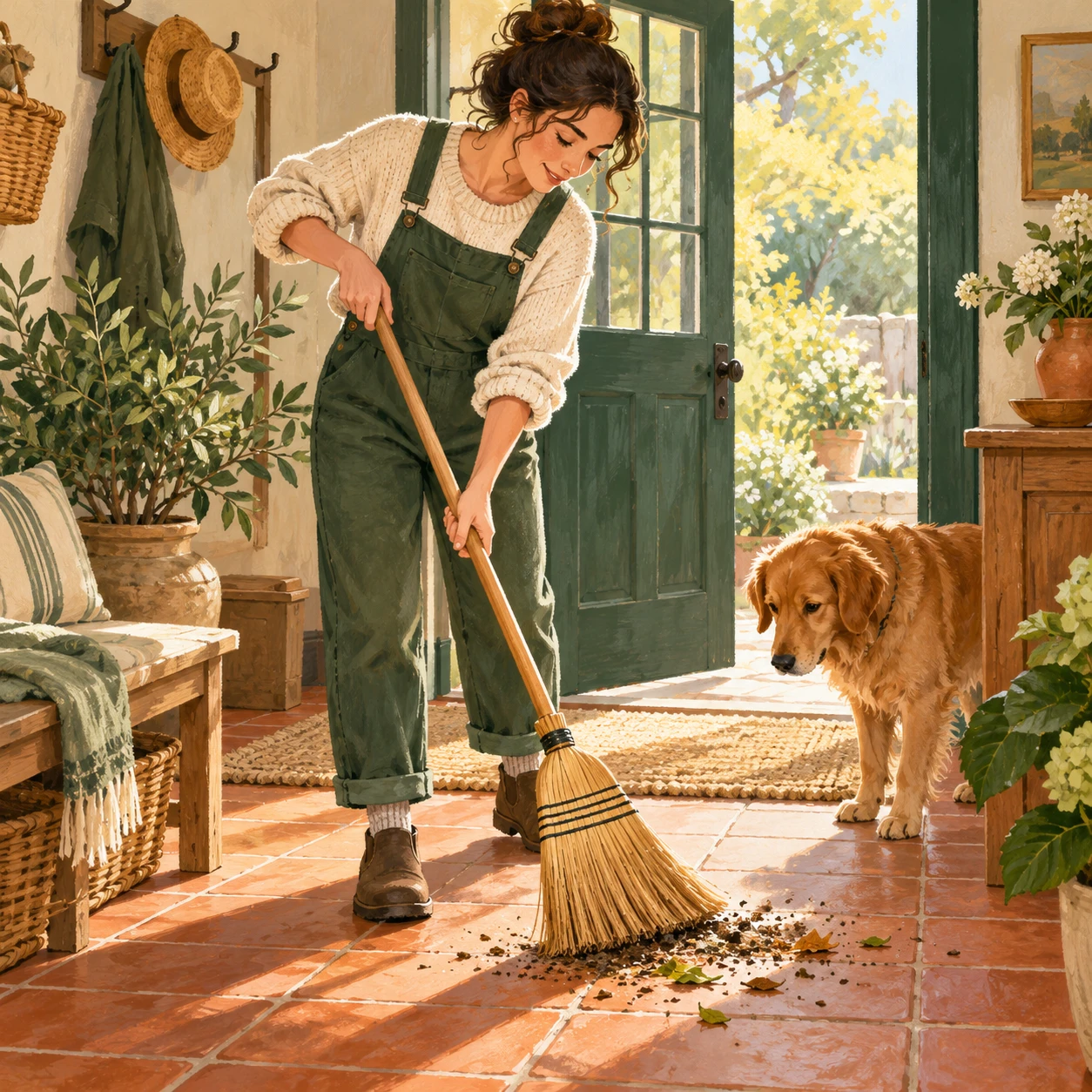
clean a floor using a brush or broom
We sweep the kitchen every evening.
毎晩、台所をほうきで掃きます。
このカードの意味に合わせた表現です。関連語では意味が変わる場合があり、言い換えがいつも使えるとは限りません。
「sweep the floor」を語の組み合わせとして練習しましょう。この単元で「sweep」は「ほうきで掃く」です。
場面から次の意味を区別しましょう:sweep = ほうきで掃く; mop = モップで拭く; vacuum = 掃除機をかける; dust = ほこりを払う。
We sweep the kitchen every evening.
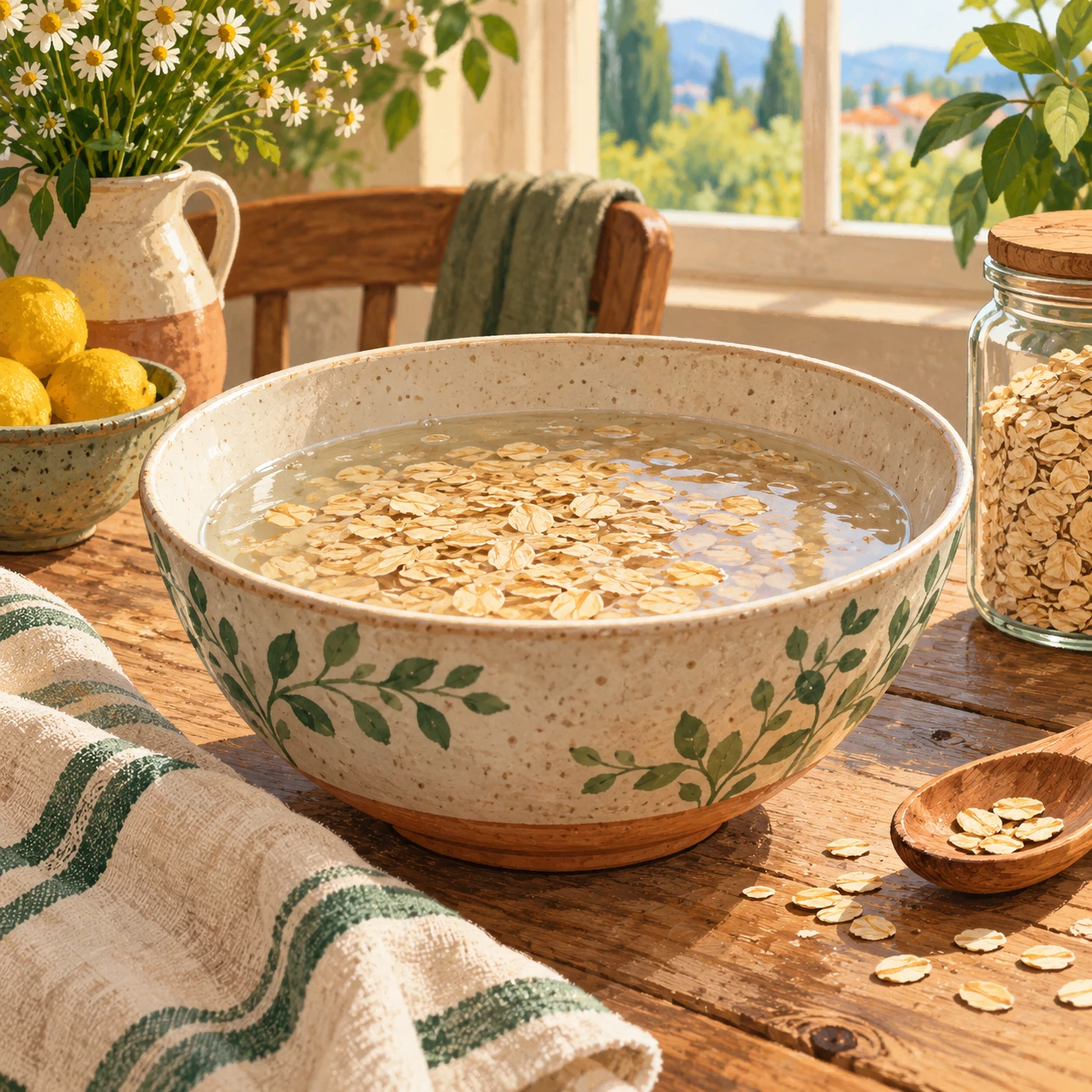
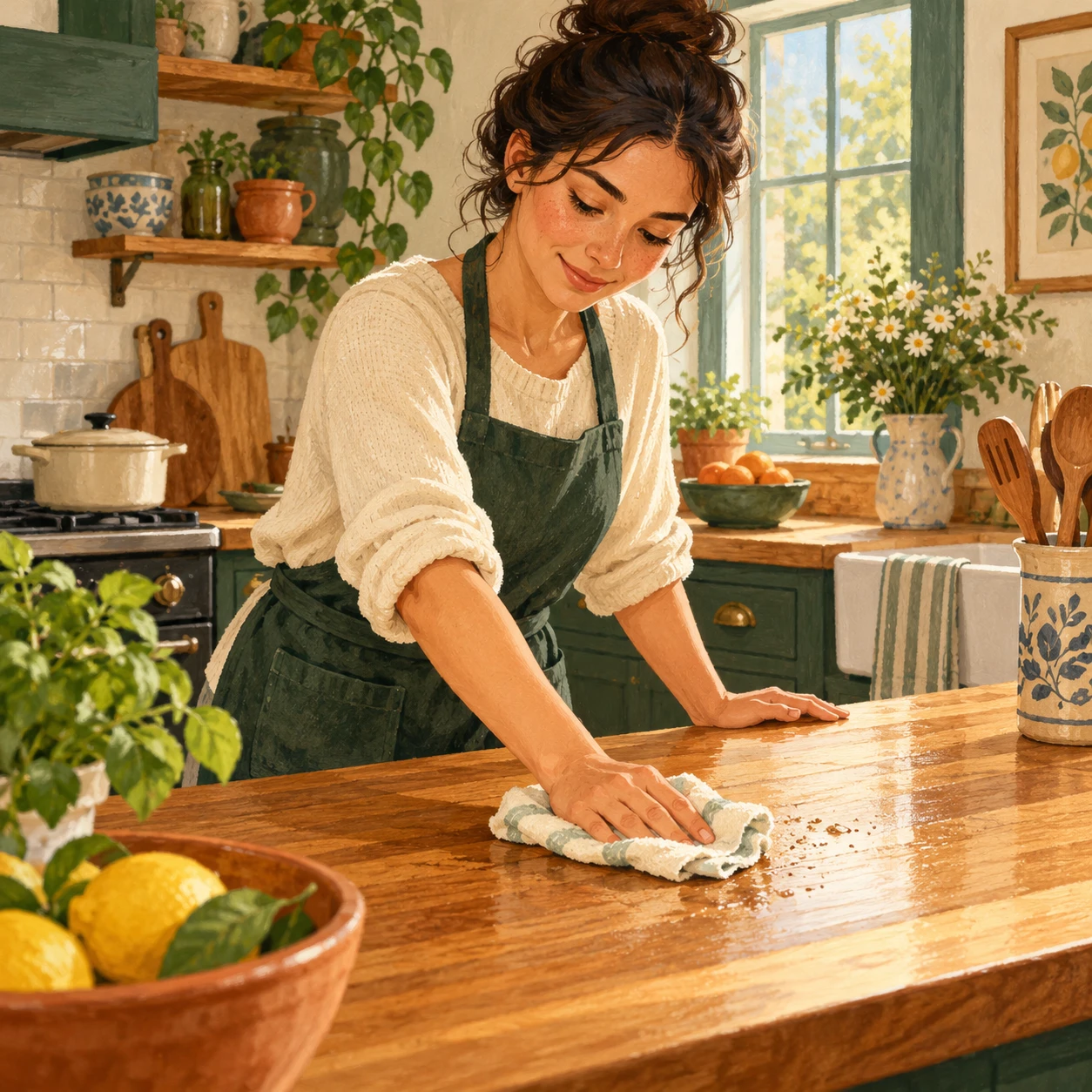
場面から次の意味を区別しましょう:rinse = すすぐ; scrub = こすり洗いする; soak = 水につけておく; wipe = 布で拭く。
Rinse the cup before you use it.
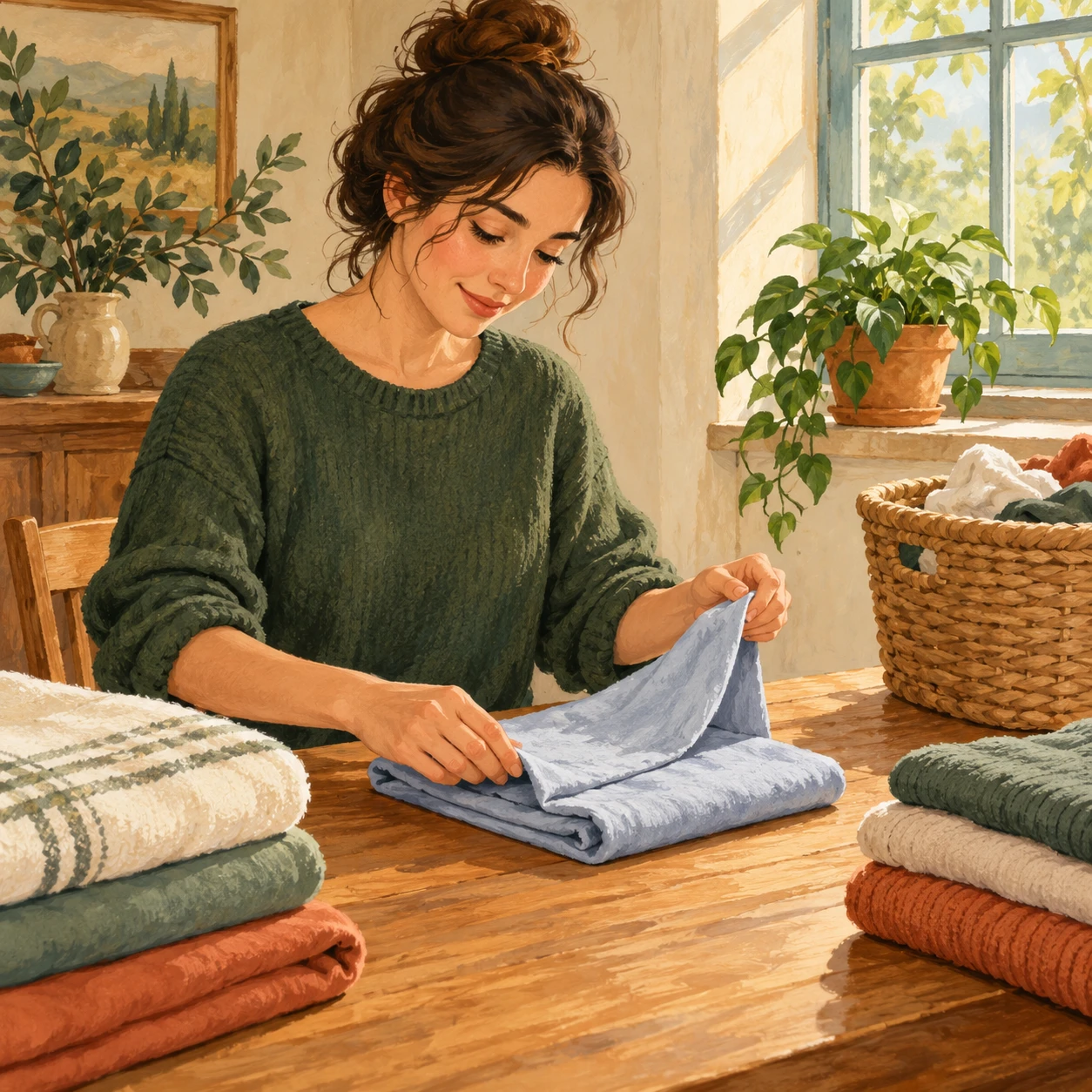
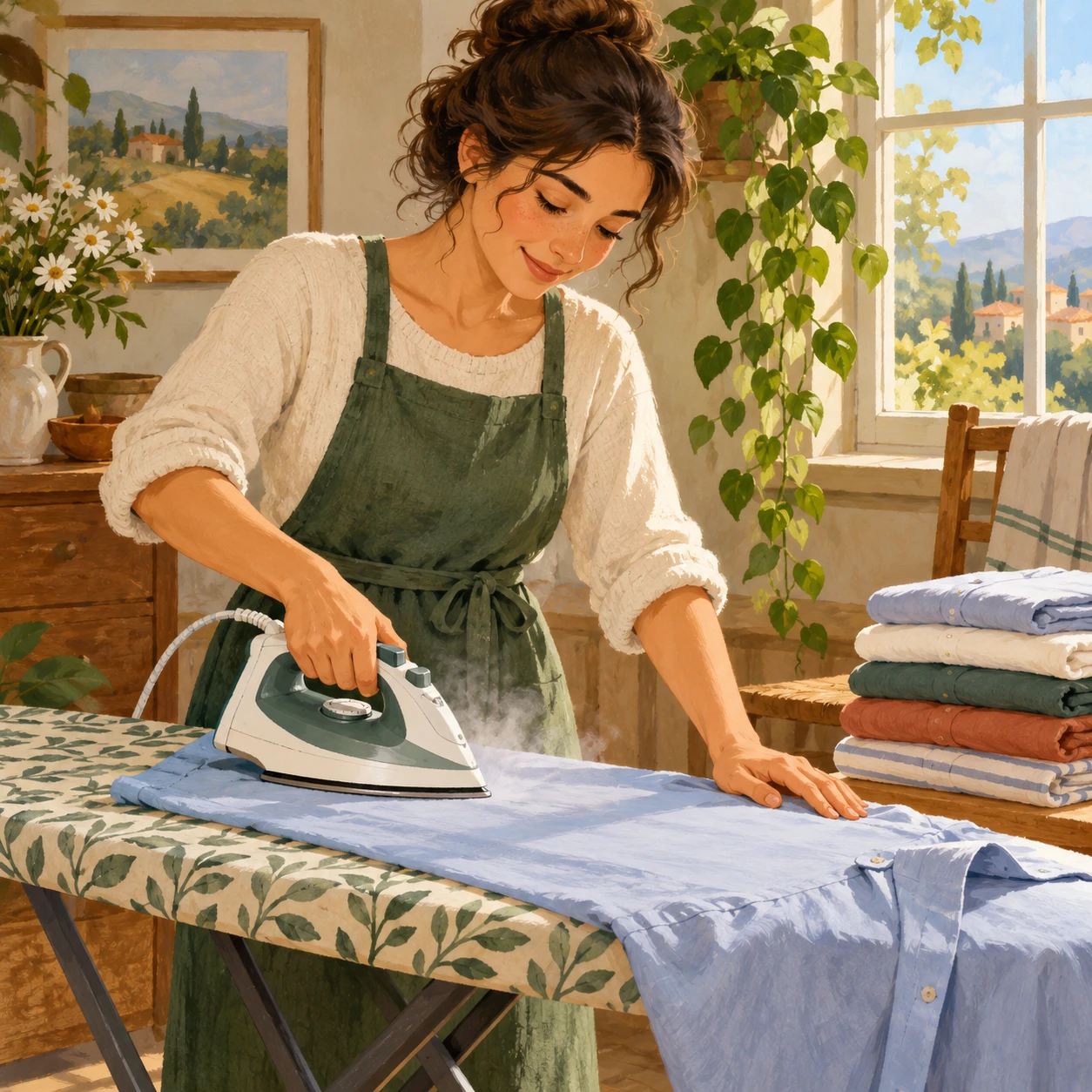
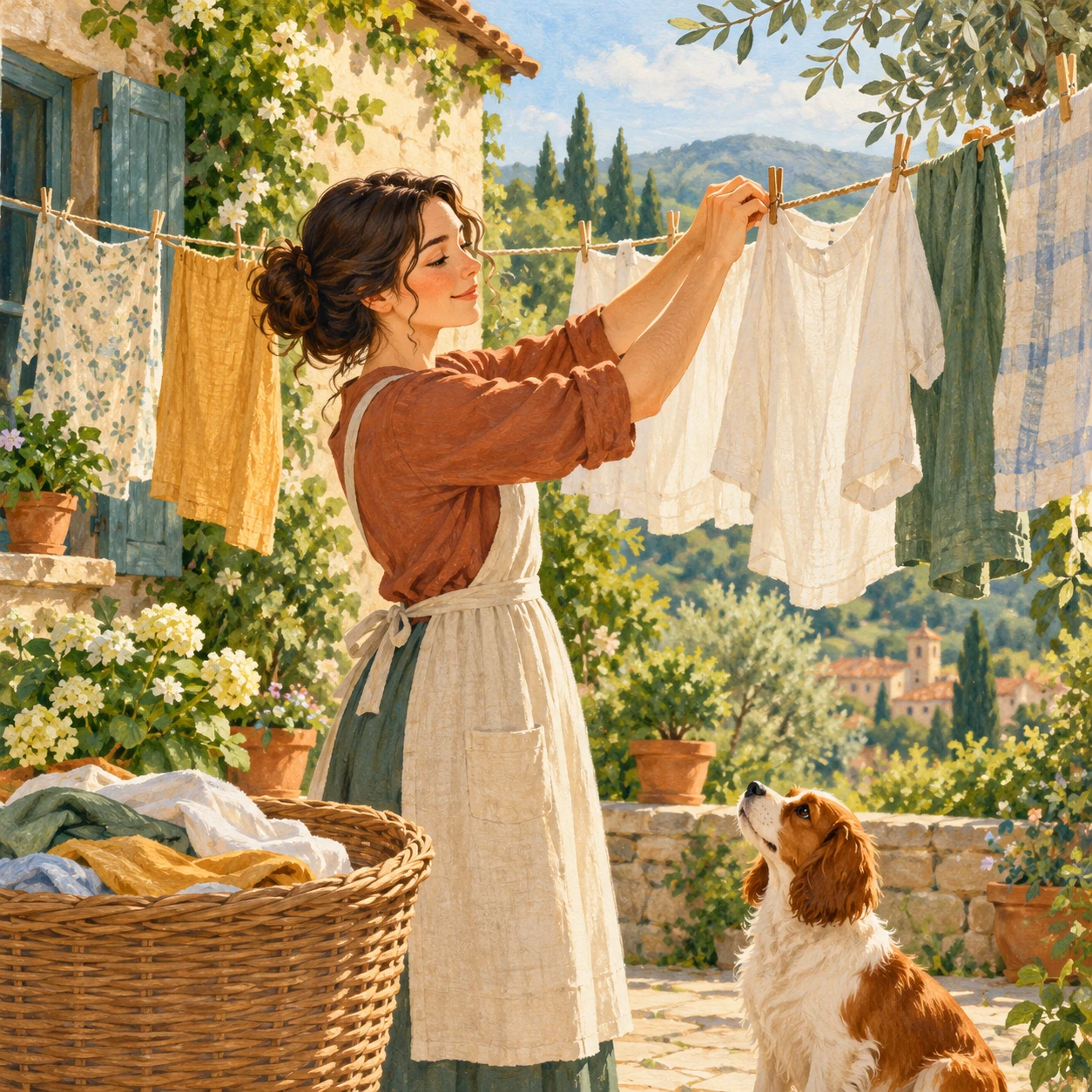
場面から次の意味を区別しましょう:fold = 折りたたむ; iron = アイロンをかける; hang = つるす; mend = 繕う。
He folds his shirts carefully.
Use a broom to ___ the dry leaves off the path.
場面から次の意味を区別しましょう:sweep = ほうきで掃く; mop = モップで拭く; vacuum = 掃除機をかける; dust = ほこりを払う。
We sweep the kitchen every evening.場面から次の意味を区別しましょう:rinse = すすぐ; scrub = こすり洗いする; soak = 水につけておく; wipe = 布で拭く。
Rinse the cup before you use it.場面から次の意味を区別しましょう:fold = 折りたたむ; iron = アイロンをかける; hang = つるす; mend = 繕う。
He folds his shirts carefully.初回答を残し、変化の理由を理解して、別の場面で確かめます。
まだ復習ノートはありません。まずは短いウォームアップを。
解答を開くと、その問題にヒント利用が記録されます。
Use a broom to ___ the dry leaves off the path.
「broom」に注目します。ここで必要なのは「ほうきで掃く」を表す「sweep」です。ほうき、ぬれたモップ、吸引機、乾いたほこり取りという道具で区別します。完成した文:「Use a broom to sweep the dry leaves off the path.」。
After washing the plates, let clean water flow over them to remove the soap, without brushing or rubbing them. This final action is to ___ them.
「remove the soap」に注目します。ここで必要なのは「すすぐ」を表す「rinse」です。水を流す・強く繰り返しこする・水に浸しておく・布で表面を拭く、を区別します。完成した文:「After washing the plates, let clean water flow over them to remove the soap, without brushing or rubbing them. This final action is to rinse them.」。
___ each towel in half so it fits neatly on the shelf.
「in half」に注目します。ここで必要なのは「折りたたむ」を表す「fold」です。折って小さくする、熱でしわを伸ばす、上からつるす、傷みを直す、の違いです。完成した文:「fold each towel in half so it fits neatly on the shelf.」。
Dip the long-handled tool with cloth strips in water and ___ the muddy tiles.
「cloth strips」に注目します。ここで必要なのは「モップで拭く」を表す「mop」です。ほうき、ぬれたモップ、吸引機、乾いたほこり取りという道具で区別します。完成した文:「Dip the long-handled tool with cloth strips in water and mop the muddy tiles.」。
Turn on the machine and ___ the carpet to suck up the dust.
「suck up」に注目します。ここで必要なのは「掃除機をかける」を表す「vacuum」です。ほうき、ぬれたモップ、吸引機、乾いたほこり取りという道具で区別します。完成した文:「Turn on the machine and vacuum the carpet to suck up the dust.」。
Which verb specifically means removing the fine powder on a bookshelf with a soft dry cloth or feather duster? ___
「soft dry cloth or feather duster」に注目します。ここで必要なのは「ほこりを払う」を表す「dust」です。ほうき、ぬれたモップ、吸引機、乾いたほこり取りという道具で区別します。完成した文:「Which verb specifically means removing the fine powder on a bookshelf with a soft dry cloth or feather duster? dust」。
The stain is difficult to remove, so ___ it hard with a stiff brush.
「stiff brush」に注目します。ここで必要なのは「こすり洗いする」を表す「scrub」です。水を流す・強く繰り返しこする・水に浸しておく・布で表面を拭く、を区別します。完成した文:「The stain is difficult to remove, so scrub it hard with a stiff brush.」。
Leave the dirty pan in warm water to ___ for half an hour.
「half an hour」に注目します。ここで必要なのは「水につけておく」を表す「soak」です。水を流す・強く繰り返しこする・水に浸しておく・布で表面を拭く、を区別します。完成した文:「Leave the dirty pan in warm water to soak for half an hour.」。
With one gentle pass of a soft cloth, remove the fresh milk from the table without rubbing hard. The verb for this cloth movement is ___.
「one gentle pass」に注目します。ここで必要なのは「布で拭く」を表す「wipe」です。水を流す・強く繰り返しこする・水に浸しておく・布で表面を拭く、を区別します。完成した文:「With one gentle pass of a soft cloth, remove the fresh milk from the table without rubbing hard. The verb for this cloth movement is wipe.」。
Use the heated flat metal tool to ___ the creases out of the shirt.
「heated flat metal」に注目します。ここで必要なのは「アイロンをかける」を表す「iron」です。折って小さくする、熱でしわを伸ばす、上からつるす、傷みを直す、の違いです。完成した文:「Use the heated flat metal tool to iron the creases out of the shirt.」。
___ the wet sheets on the washing line to dry.
「washing line」に注目します。ここで必要なのは「つるす」を表す「hang」です。折って小さくする、熱でしわを伸ばす、上からつるす、傷みを直す、の違いです。完成した文:「hang the wet sheets on the washing line to dry.」。
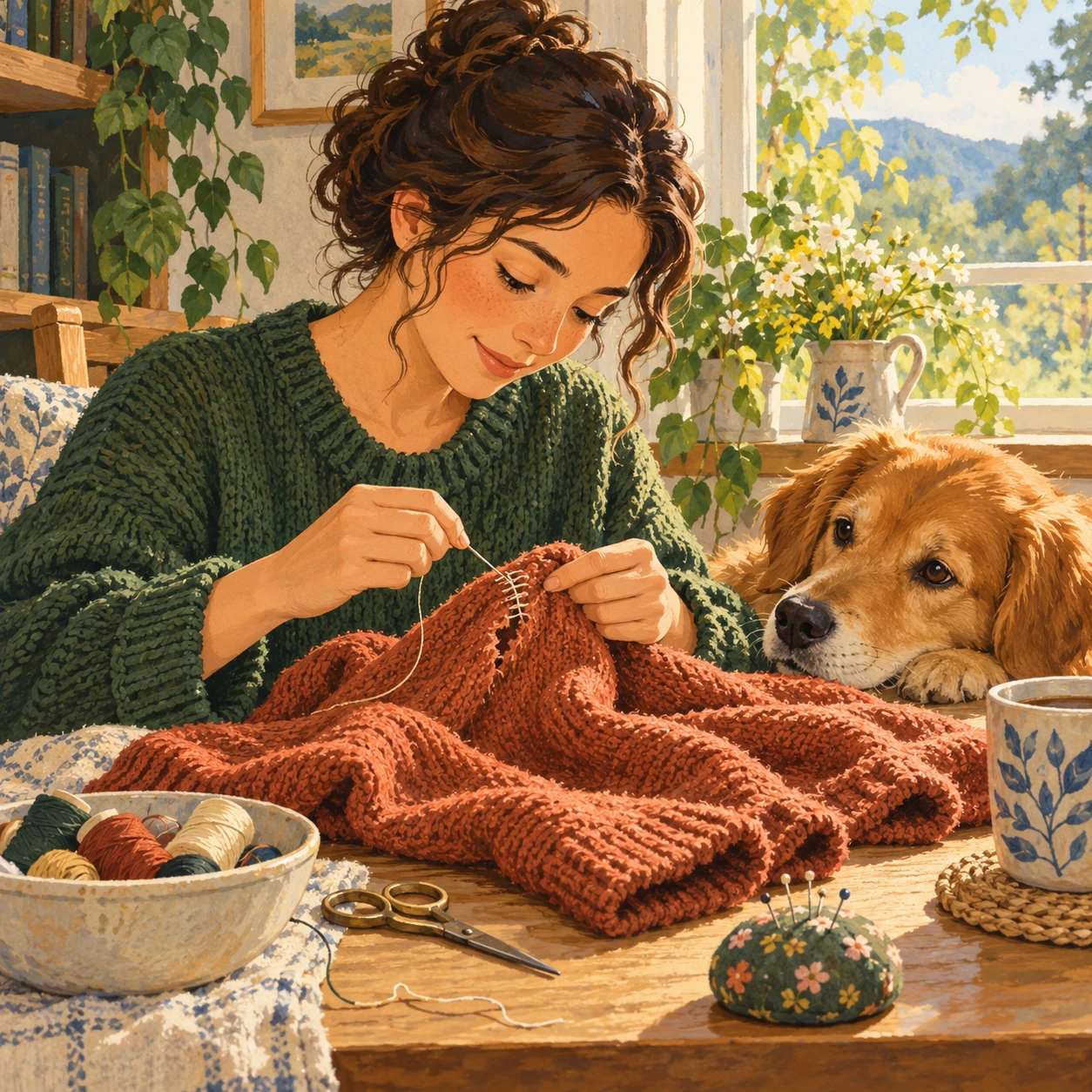
Use a needle and thread to ___ the hole in this shirt.
「needle and thread」に注目します。ここで必要なのは「繕う」を表す「mend」です。折って小さくする、熱でしわを伸ばす、上からつるす、傷みを直す、の違いです。完成した文:「Use a needle and thread to mend the hole in this shirt.」。
I will ___ the crumbs into a pile with this long-handled brush.
「crumbs into a pile」に注目します。ここで必要なのは「ほうきで掃く」を表す「sweep」です。ほうき、ぬれたモップ、吸引機、乾いたほこり取りという道具で区別します。完成した文:「I will sweep the crumbs into a pile with this long-handled brush.」。
We dip the absorbent cloth strips on a long handle into a bucket, then use that wet head to ___ the kitchen floor.
「absorbent cloth strips」に注目します。ここで必要なのは「モップで拭く」を表す「mop」です。ほうき、ぬれたモップ、吸引機、乾いたほこり取りという道具で区別します。完成した文:「We dip the absorbent cloth strips on a long handle into a bucket, then use that wet head to mop the kitchen floor.」。
Let clean water run over the soapy shirt to carry away the soap, without rubbing or using a brush. You ___ it.
「carry away the soap」に注目します。ここで必要なのは「すすぐ」を表す「rinse」です。水を流す・強く繰り返しこする・水に浸しておく・布で表面を拭く、を区別します。完成した文:「Let clean water run over the soapy shirt to carry away the soap, without rubbing or using a brush. You rinse it.」。
Rub the burned pan repeatedly and firmly with a stiff brush, rather than a soft wiping cloth. You must ___ it.
「repeatedly and firmly」に注目します。ここで必要なのは「こすり洗いする」を表す「scrub」です。水を流す・強く繰り返しこする・水に浸しておく・布で表面を拭く、を区別します。完成した文:「Rub the burned pan repeatedly and firmly with a stiff brush, rather than a soft wiping cloth. You must scrub it.」。
Bring the two ends of the blanket together to ___ it into a smaller shape.
「two ends」に注目します。ここで必要なのは「折りたたむ」を表す「fold」です。折って小さくする、熱でしわを伸ばす、上からつるす、傷みを直す、の違いです。完成した文:「Bring the two ends of the blanket together to fold it into a smaller shape.」。
The trousers are wrinkled. Press a heated flat metal base over the fabric to remove the creases: ___ them.
「heated flat metal base」に注目します。ここで必要なのは「アイロンをかける」を表す「iron」です。折って小さくする、熱でしわを伸ばす、上からつるす、傷みを直す、の違いです。完成した文:「The trousers are wrinkled. Press a heated flat metal base over the fabric to remove the creases: iron them.」。
We need to ___ the rug; the cleaner’s dust bag is empty and ready.
「cleaner’s dust bag」に注目します。ここで必要なのは「掃除機をかける」を表す「vacuum」です。ほうき、ぬれたモップ、吸引機、乾いたほこり取りという道具で区別します。完成した文:「We need to vacuum the rug; the cleaner’s dust bag is empty and ready.」。
Remove the fine powder from the ornaments by gently passing a soft dry cloth over them, without a machine or liquid. You ___ them.
「soft dry cloth」に注目します。ここで必要なのは「ほこりを払う」を表す「dust」です。ほうき、ぬれたモップ、吸引機、乾いたほこり取りという道具で区別します。完成した文:「Remove the fine powder from the ornaments by gently passing a soft dry cloth over them, without a machine or liquid. You dust them.」。
Leave the cloth fully immersed and untouched in still water for ten minutes before washing. You ___ it.
「fully immersed and untouched」に注目します。ここで必要なのは「水につけておく」を表す「soak」です。水を流す・強く繰り返しこする・水に浸しておく・布で表面を拭く、を区別します。完成した文:「Leave the cloth fully immersed and untouched in still water for ten minutes before washing. You soak it.」。
Pass a cloth gently over the mirror once to remove fresh fingerprints, without hard repeated rubbing. You ___ the mirror.
「cloth gently」に注目します。ここで必要なのは「布で拭く」を表す「wipe」です。水を流す・強く繰り返しこする・水に浸しておく・布で表面を拭く、を区別します。完成した文:「Pass a cloth gently over the mirror once to remove fresh fingerprints, without hard repeated rubbing. You wipe the mirror.」。
Put the coat on a hook and ___ it behind the door.
「hook」に注目します。ここで必要なのは「つるす」を表す「hang」です。折って小さくする、熱でしわを伸ばす、上からつるす、傷みを直す、の違いです。完成した文:「Put the coat on a hook and hang it behind the door.」。
I will ___ the torn pocket instead of buying a new jacket.
「torn pocket」に注目します。ここで必要なのは「繕う」を表す「mend」です。折って小さくする、熱でしわを伸ばす、上からつるす、傷みを直す、の違いです。完成した文:「I will mend the torn pocket instead of buying a new jacket.」。