01Pronoms sujets
Le pronom sujet fait l’action : I, you, he, she, it, we, they.
We play tennis.
Pronoms sujets et compléments · A1. Le pronom sujet fait l’action : I, you, he, she, it, we, they.
Travaille Pronoms sujets et compléments dans de courtes situations. Lis l’indice, choisis ou écris une forme, puis vérifie l’explication. Le niveau est une indication éditoriale.
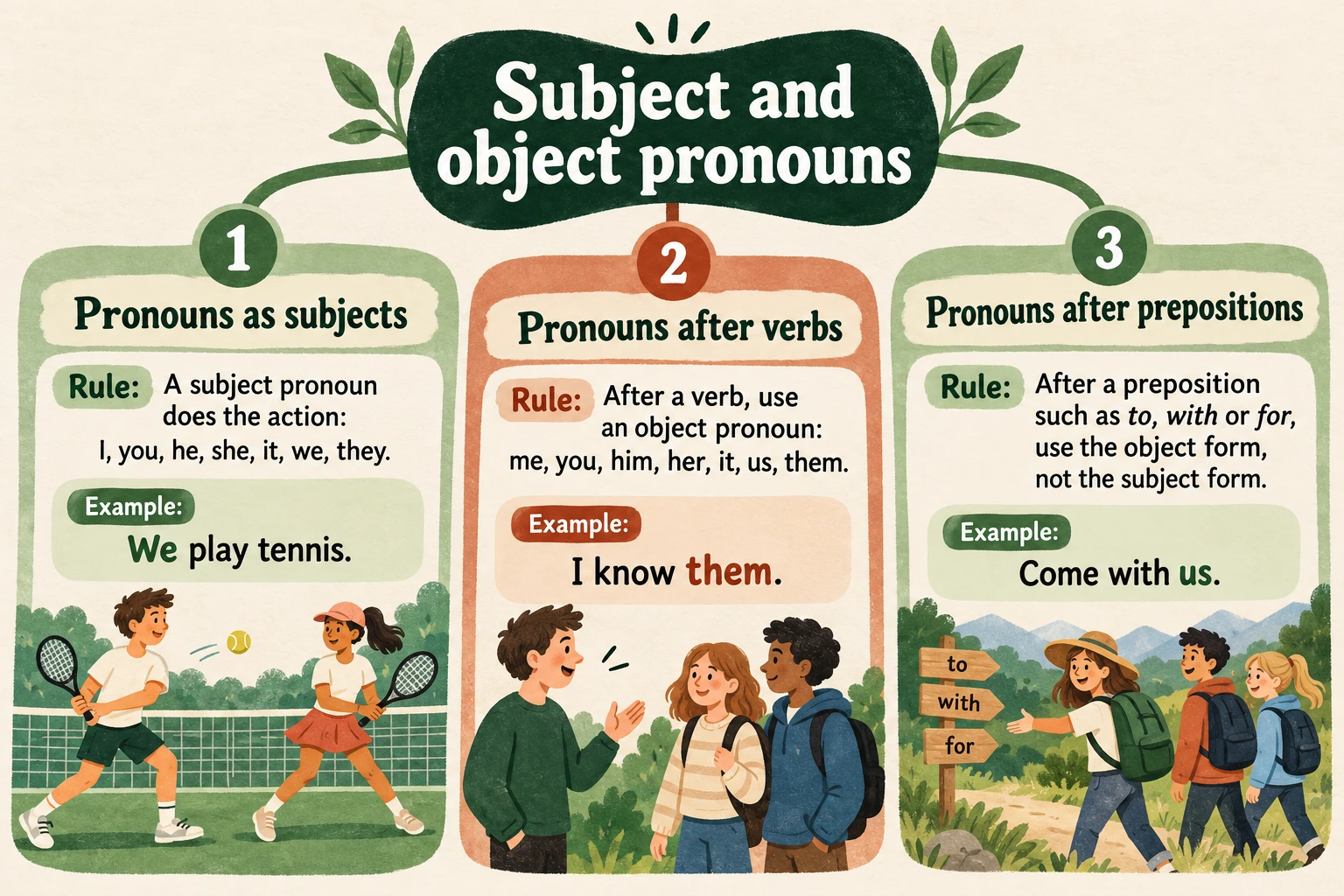
Le pronom sujet fait l’action : I, you, he, she, it, we, they.
We play tennis.Après un verbe, utilise un pronom complément : me, you, him, her, it, us, them.
I know them.Après une préposition comme to, with ou for, utilise la forme complément.
Come with us.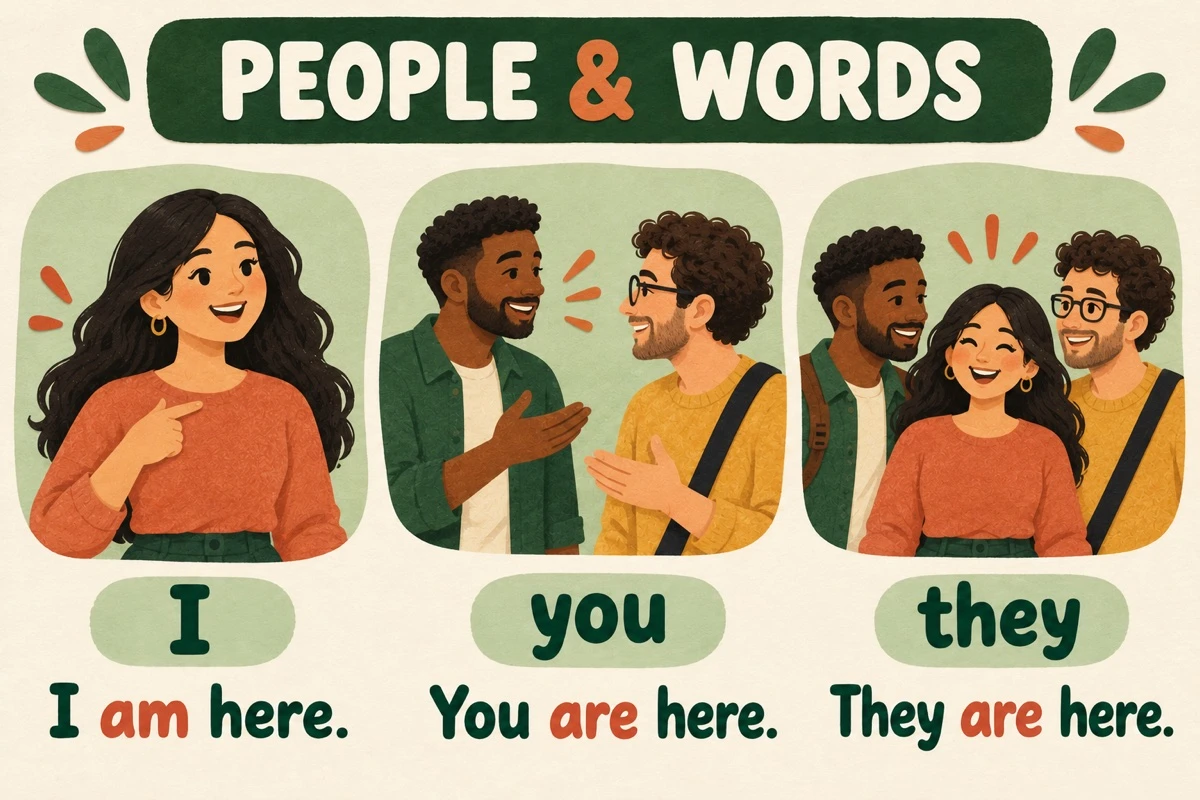
My name is Rosa. ___ work at the museum.
Le pronom sujet fait l’action : I, you, he, she, it, we, they.
We play tennis.Après un verbe, utilise un pronom complément : me, you, him, her, it, us, them.
I know them.Après une préposition comme to, with ou for, utilise la forme complément.
Come with us.Gardez la première tentative, comprenez le changement et essayez dans une nouvelle situation.
Pas encore de notes. Essayez un court échauffement.
Le pronom sujet fait l’action : I, you, he, she, it, we, they.
We play tennis.Après un verbe, utilise un pronom complément : me, you, him, her, it, us, them.
I know them.Après une préposition comme to, with ou for, utilise la forme complément.
Come with us.Ouvrir une réponse enregistre une aide pour cette question.
My name is Rosa. ___ work at the museum.
Observe « My name is Rosa. ___ work at the museum. ». Le pronom sujet fait l’action : I, you, he, she, it, we, they. Phrase complète : « My name is Rosa. I work at the museum. ».
Tom is waiting. Please call ___.
Observe « Tom is waiting. Please call ___. ». Après un verbe, utilise un pronom complément : me, you, him, her, it, us, them. Phrase complète : « Tom is waiting. Please call him. ».
The tickets are for Anna and me. They are for ___.
Observe « The tickets are for Anna and me. They are for ___. ». Après une préposition comme to, with ou for, utilise la forme complément. Phrase complète : « The tickets are for Anna and me. They are for us. ».
My brother and I live together. ___ live on King Street.
Phrase de référence : « My brother and I live together. We live on King Street. ». Le pronom sujet fait l’action : I, you, he, she, it, we, they.
These are my keys. Please give ___ back.
Observe « These are my keys. Please give ___ back. ». Après un verbe, utilise un pronom complément : me, you, him, her, it, us, them. Phrase complète : « These are my keys. Please give them back. ».
I am going with Sara. I am going with ___.
Observe « I am going with Sara. I am going with ___. ». Après une préposition comme to, with ou for, utilise la forme complément. Phrase complète : « I am going with Sara. I am going with her. ».
The cat is hungry. ___ wants some food.
Le chat est un seul animal. It est neutre ; he ou she convient aussi si son sexe est connu. Les trois prennent wants. Autres variantes vérifiées pour cette tâche : He / She. La liste ne couvre pas toutes les formulations possibles.
My parents are here. ___ are in the kitchen.
Observe « My parents are here. ___ are in the kitchen. ». Le pronom sujet fait l’action : I, you, he, she, it, we, they. Phrase complète : « My parents are here. They are in the kitchen. ».
I cannot hear the radio. Please turn ___ up.
Observe « I cannot hear the radio. Please turn ___ up. ». Après un verbe, utilise un pronom complément : me, you, him, her, it, us, them. Phrase complète : « I cannot hear the radio. Please turn it up. ».
This parcel is for my brother. It is for ___.
Phrase de référence : « This parcel is for my brother. It is for him. ». Après une préposition comme to, with ou for, utilise la forme complément.
We need a photo of our whole group, including me. Can you take a photo of ___?
Observe « We need a photo of our whole group, including me. Can you take a photo of ___? ». Après un verbe, utilise un pronom complément : me, you, him, her, it, us, them. Phrase complète : « We need a photo of everyone. Can you take a photo of us? ».
Lena is new here. Please sit next to ___.
Phrase de référence : « Lena is new here. Please sit next to her. ». Après une préposition comme to, with ou for, utilise la forme complément. Les pronoms de Lena ne sont pas précisés. Them est aussi accepté comme forme objet de they singulier. Après next to, emploie la forme objet, pas la forme sujet.