01ضمائر الفاعل
ضمير الفاعل يقوم بالفعل: I وyou وhe وshe وit وwe وthey.
We play tennis.
ضمائر الفاعل والمفعول · A1. ضمير الفاعل يقوم بالفعل: I وyou وhe وshe وit وwe وthey.
تدرّب على ضمائر الفاعل والمفعول في مواقف قصيرة. اقرأ القرينة واختر الصيغة أو اكتبها، ثم راجع السبب. المستوى دليل تحريري تقريبي.
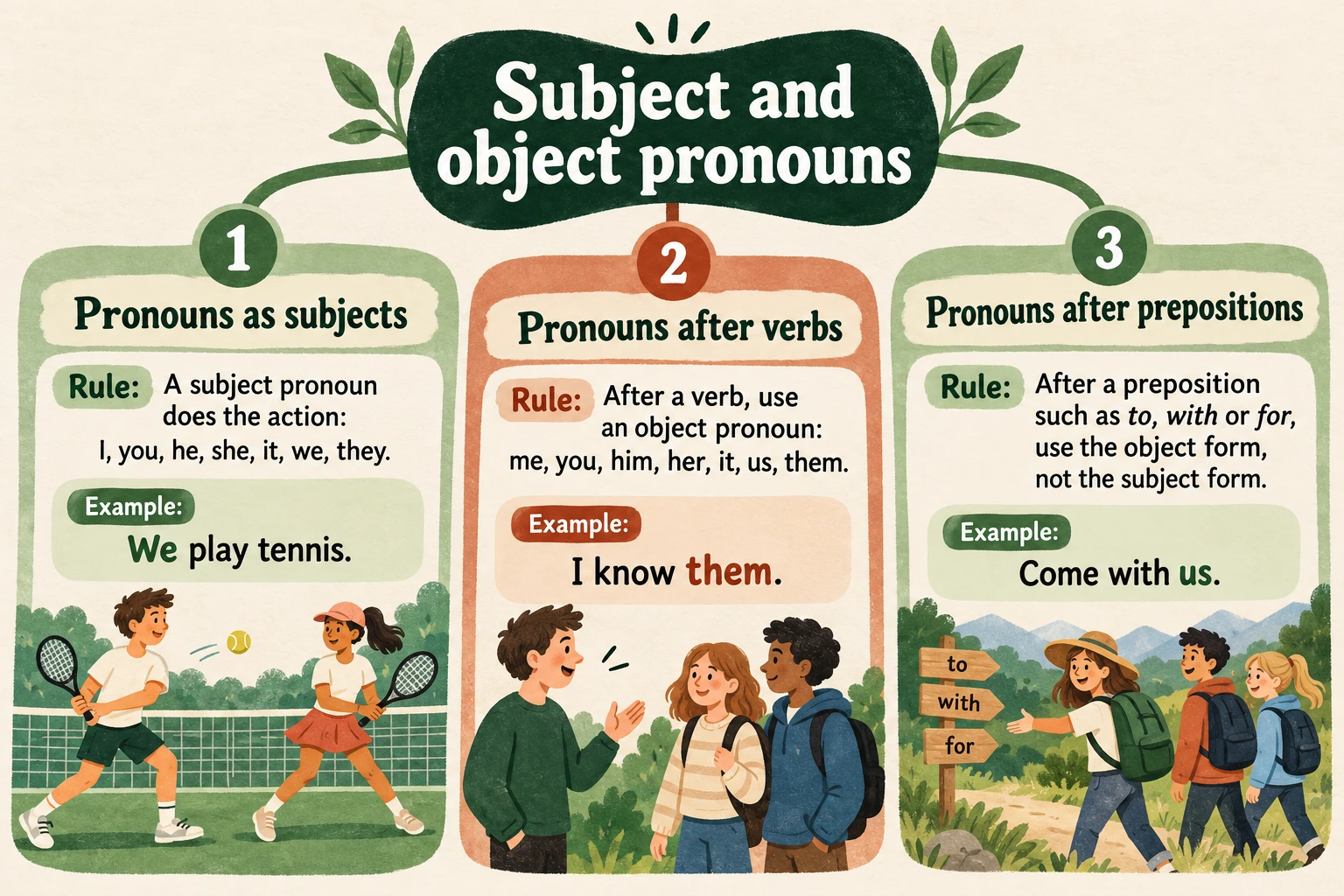
ضمير الفاعل يقوم بالفعل: I وyou وhe وshe وit وwe وthey.
We play tennis.بعد الفعل نستخدم ضمير المفعول: me وyou وhim وher وit وus وthem.
I know them.بعد حروف الجر مثل to وwith وfor نستخدم صيغة المفعول.
Come with us.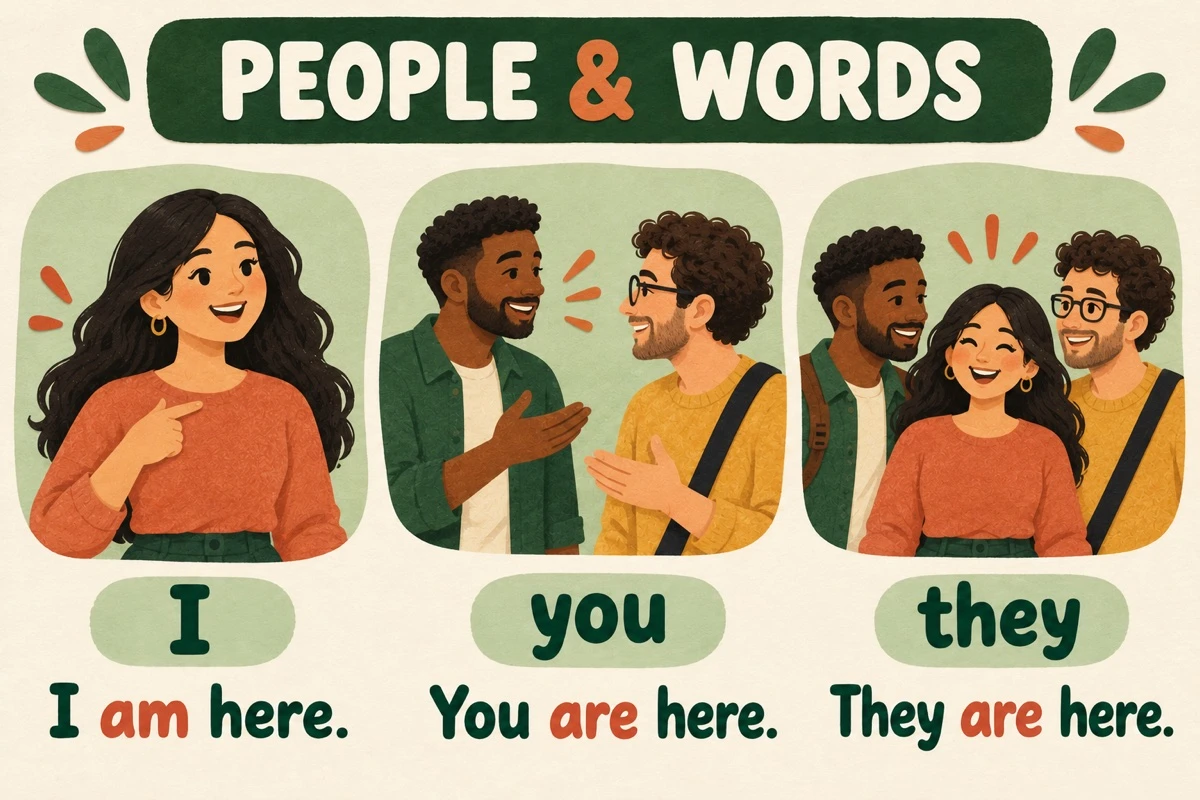
My name is Rosa. ___ work at the museum.
ضمير الفاعل يقوم بالفعل: I وyou وhe وshe وit وwe وthey.
We play tennis.بعد الفعل نستخدم ضمير المفعول: me وyou وhim وher وit وus وthem.
I know them.بعد حروف الجر مثل to وwith وfor نستخدم صيغة المفعول.
Come with us.احتفظ بالمحاولة الأولى، وافهم التغيير، ثم اختبر فهمك في موقف جديد.
لا توجد ملاحظات بعد. جرّب تهيئة قصيرة.
ضمير الفاعل يقوم بالفعل: I وyou وhe وshe وit وwe وthey.
We play tennis.بعد الفعل نستخدم ضمير المفعول: me وyou وhim وher وit وus وthem.
I know them.بعد حروف الجر مثل to وwith وfor نستخدم صيغة المفعول.
Come with us.فتح إجابة يسجّل استخدام المساعدة لذلك السؤال.
My name is Rosa. ___ work at the museum.
انظر إلى «My name is Rosa. ___ work at the museum.». ضمير الفاعل يقوم بالفعل: I وyou وhe وshe وit وwe وthey. الجملة المكتملة: «My name is Rosa. I work at the museum.».
Tom is waiting. Please call ___.
انظر إلى «Tom is waiting. Please call ___.». بعد الفعل نستخدم ضمير المفعول: me وyou وhim وher وit وus وthem. الجملة المكتملة: «Tom is waiting. Please call him.».
The tickets are for Anna and me. They are for ___.
انظر إلى «The tickets are for Anna and me. They are for ___.». بعد حروف الجر مثل to وwith وfor نستخدم صيغة المفعول. الجملة المكتملة: «The tickets are for Anna and me. They are for us.».
My brother and I live together. ___ live on King Street.
إكمال مرجعي: «My brother and I live together. We live on King Street.». ضمير الفاعل يقوم بالفعل: I وyou وhe وshe وit وwe وthey.
These are my keys. Please give ___ back.
انظر إلى «These are my keys. Please give ___ back.». بعد الفعل نستخدم ضمير المفعول: me وyou وhim وher وit وus وthem. الجملة المكتملة: «These are my keys. Please give them back.».
I am going with Sara. I am going with ___.
انظر إلى «I am going with Sara. I am going with ___.». بعد حروف الجر مثل to وwith وfor نستخدم صيغة المفعول. الجملة المكتملة: «I am going with Sara. I am going with her.».
The cat is hungry. ___ wants some food.
القطة حيوان واحد. الإحالة المحايدة هي it، ويصح he أو she إذا كان الجنس معلوماً. يأتي wants مع الثلاثة. تُقبل أيضاً هذه البدائل المراجَعة في هذه المهمة: He / She. ليست القائمة حصرية لكل صياغة إنجليزية ممكنة.
My parents are here. ___ are in the kitchen.
انظر إلى «My parents are here. ___ are in the kitchen.». ضمير الفاعل يقوم بالفعل: I وyou وhe وshe وit وwe وthey. الجملة المكتملة: «My parents are here. They are in the kitchen.».
I cannot hear the radio. Please turn ___ up.
انظر إلى «I cannot hear the radio. Please turn ___ up.». بعد الفعل نستخدم ضمير المفعول: me وyou وhim وher وit وus وthem. الجملة المكتملة: «I cannot hear the radio. Please turn it up.».
This parcel is for my brother. It is for ___.
إكمال مرجعي: «This parcel is for my brother. It is for him.». بعد حروف الجر مثل to وwith وfor نستخدم صيغة المفعول.
We need a photo of our whole group, including me. Can you take a photo of ___?
انظر إلى «We need a photo of our whole group, including me. Can you take a photo of ___?». بعد الفعل نستخدم ضمير المفعول: me وyou وhim وher وit وus وthem. الجملة المكتملة: «We need a photo of everyone. Can you take a photo of us?».
Lena is new here. Please sit next to ___.
إكمال مرجعي: «Lena is new here. Please sit next to her.». بعد حروف الجر مثل to وwith وfor نستخدم صيغة المفعول. لم تُحدَّد ضمائر Lena. تُقبل them أيضاً بوصفها صيغة المفعول لـthey المفردة. بعد next to نستخدم صيغة المفعول لا الفاعل.