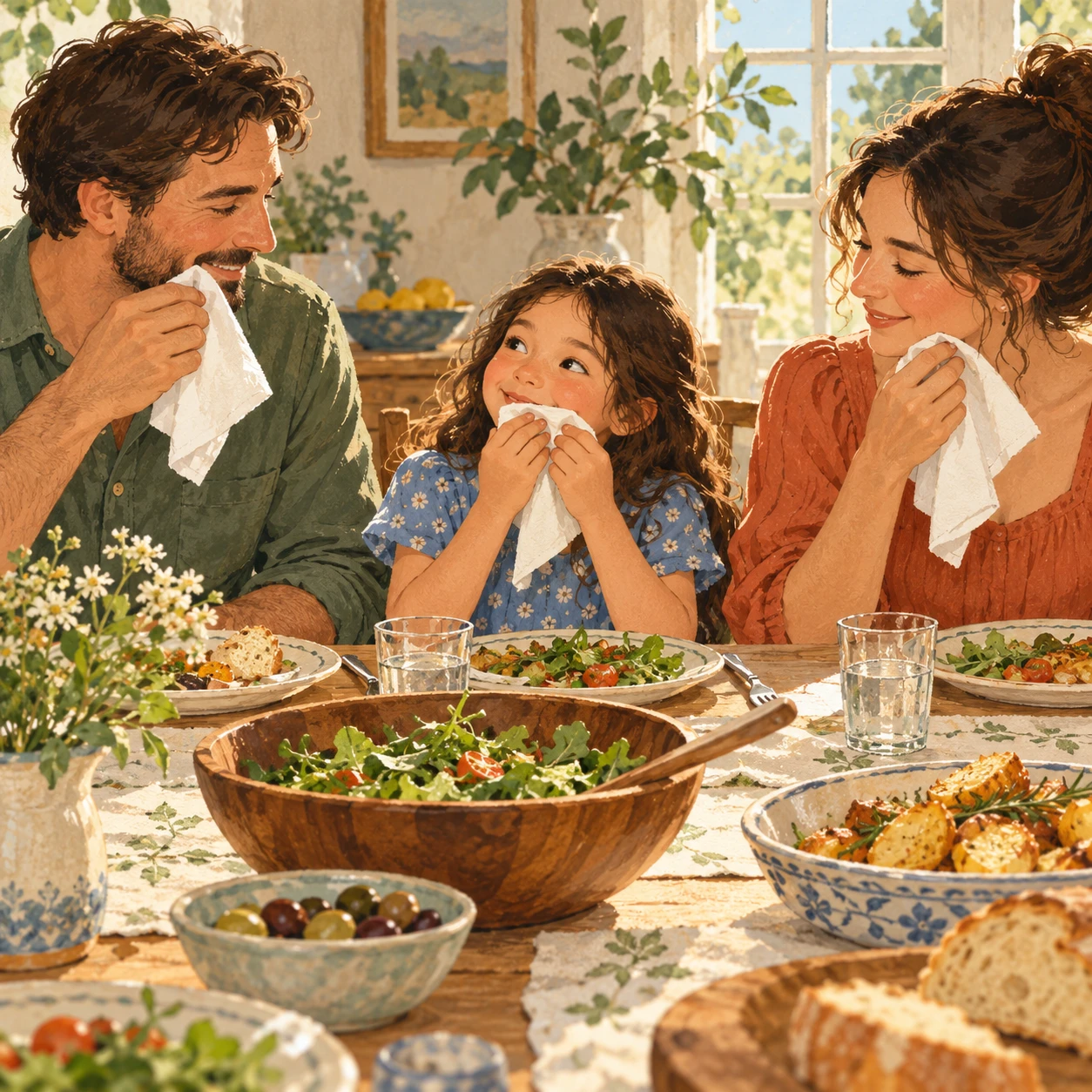
menú · cuenta · propina · reserva
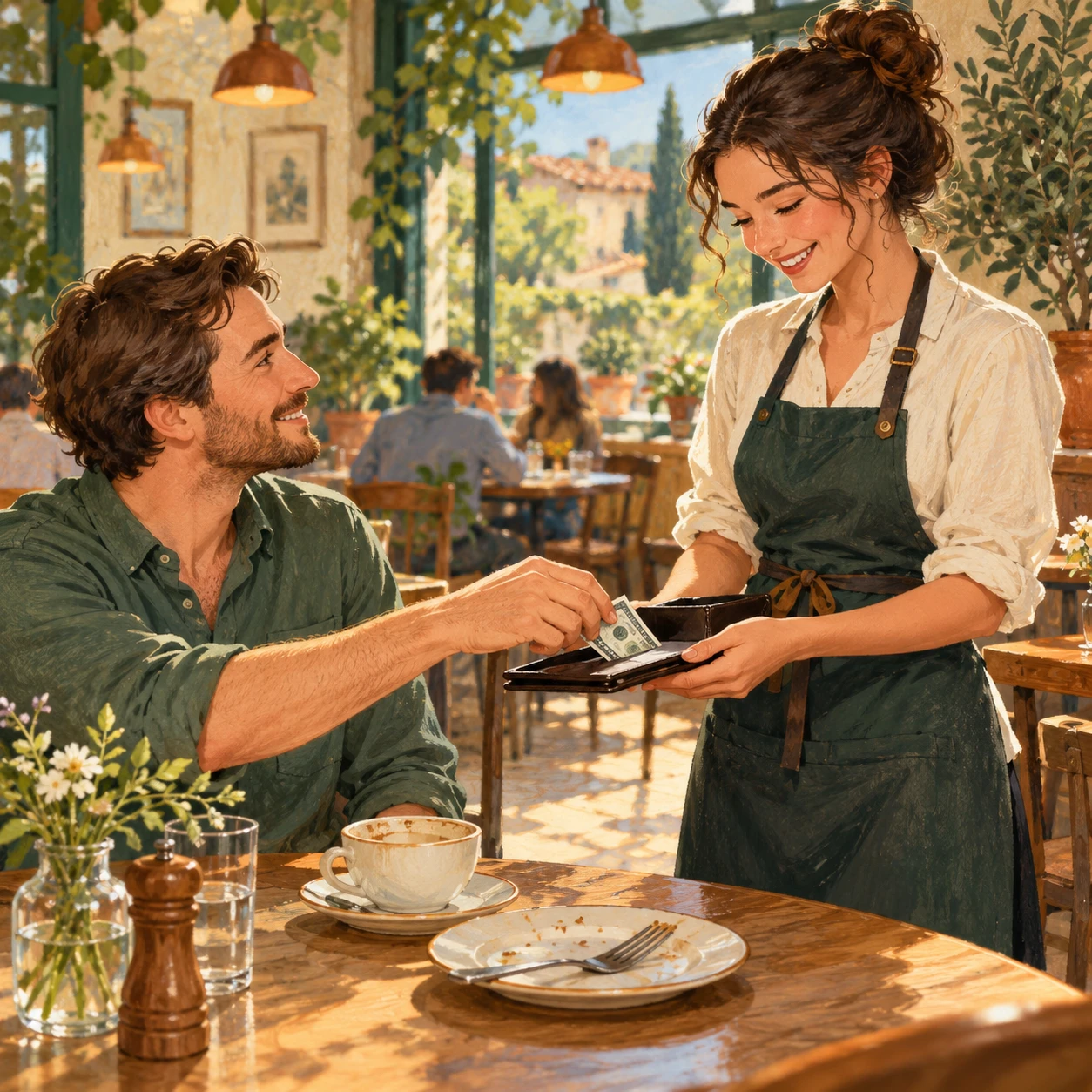
Distingue estos significados en su contexto: menu = menú; bill = cuenta; tip = propina; reservation = reserva.
The menu has pictures of the dishes.

En el restaurante · A1. Distingue estos significados en su contexto: menu = menú; bill = cuenta; tip = propina; reservation = reserva.
Aprende doce palabras útiles del tema. Estudia ejemplos independientes y practica en situaciones nuevas. El nivel es orientativo, no una certificación.
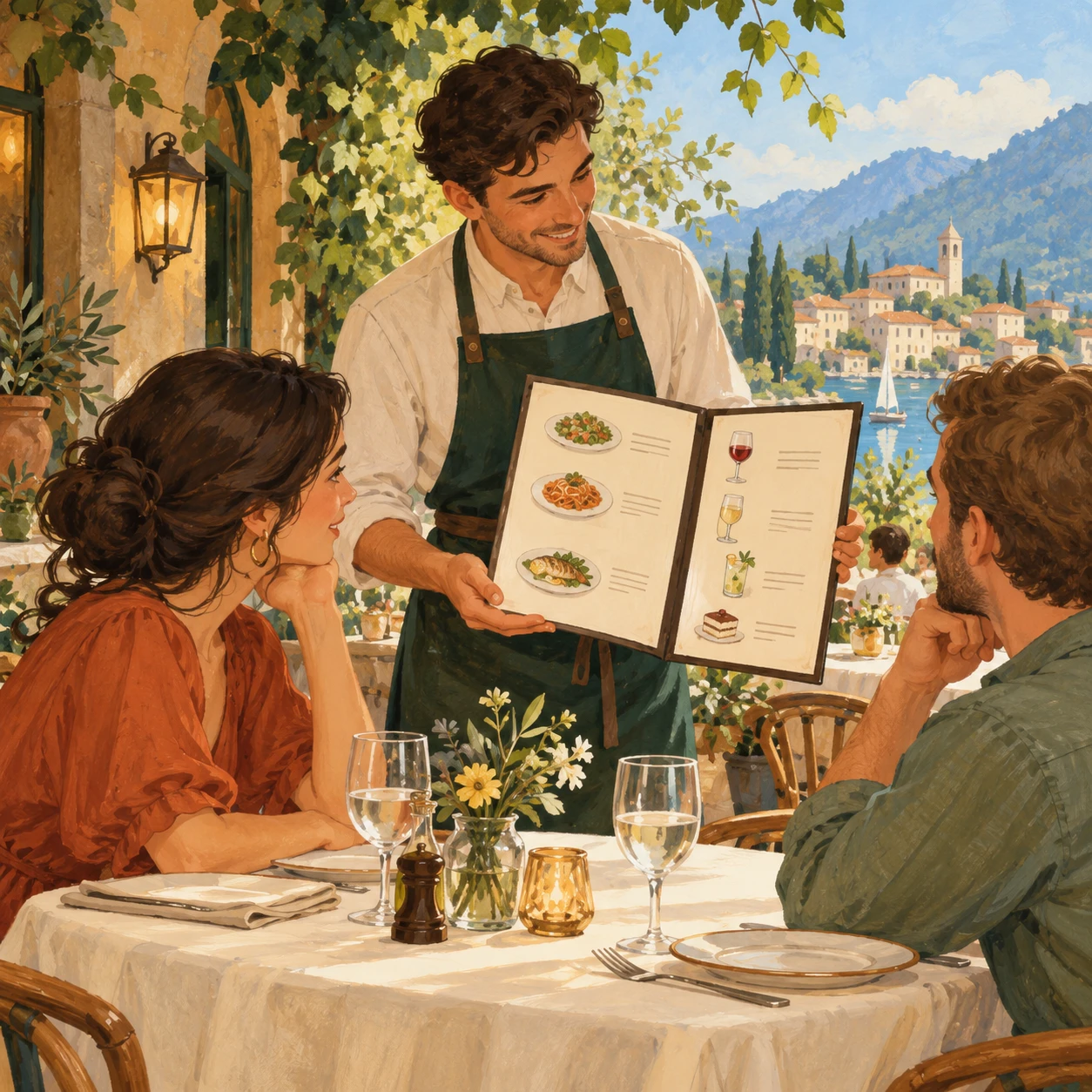
a list of the food and drinks available
The menu has pictures of the dishes.
El menú tiene fotos de los platos.
Se refieren a este sentido. La familia puede cambiar de significado; las expresiones próximas no siempre son intercambiables.
Practica «read the menu» como combinación. En esta unidad «menu» significa menú.
Distingue estos significados en su contexto: menu = menú; bill = cuenta; tip = propina; reservation = reserva.
The menu has pictures of the dishes.
Distingue estos significados en su contexto: fork = tenedor; knife = cuchillo; spoon = cuchara; plate = plato.
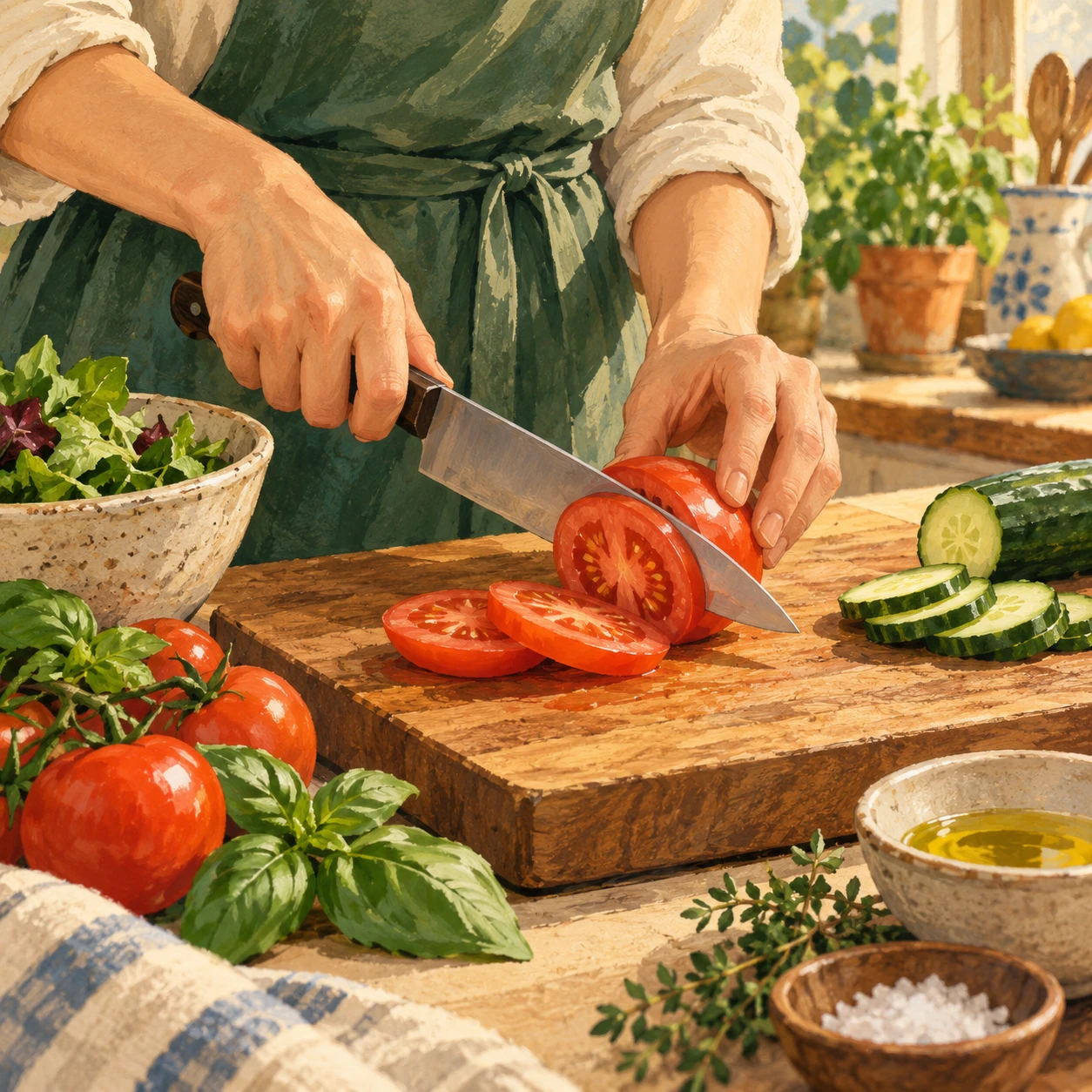
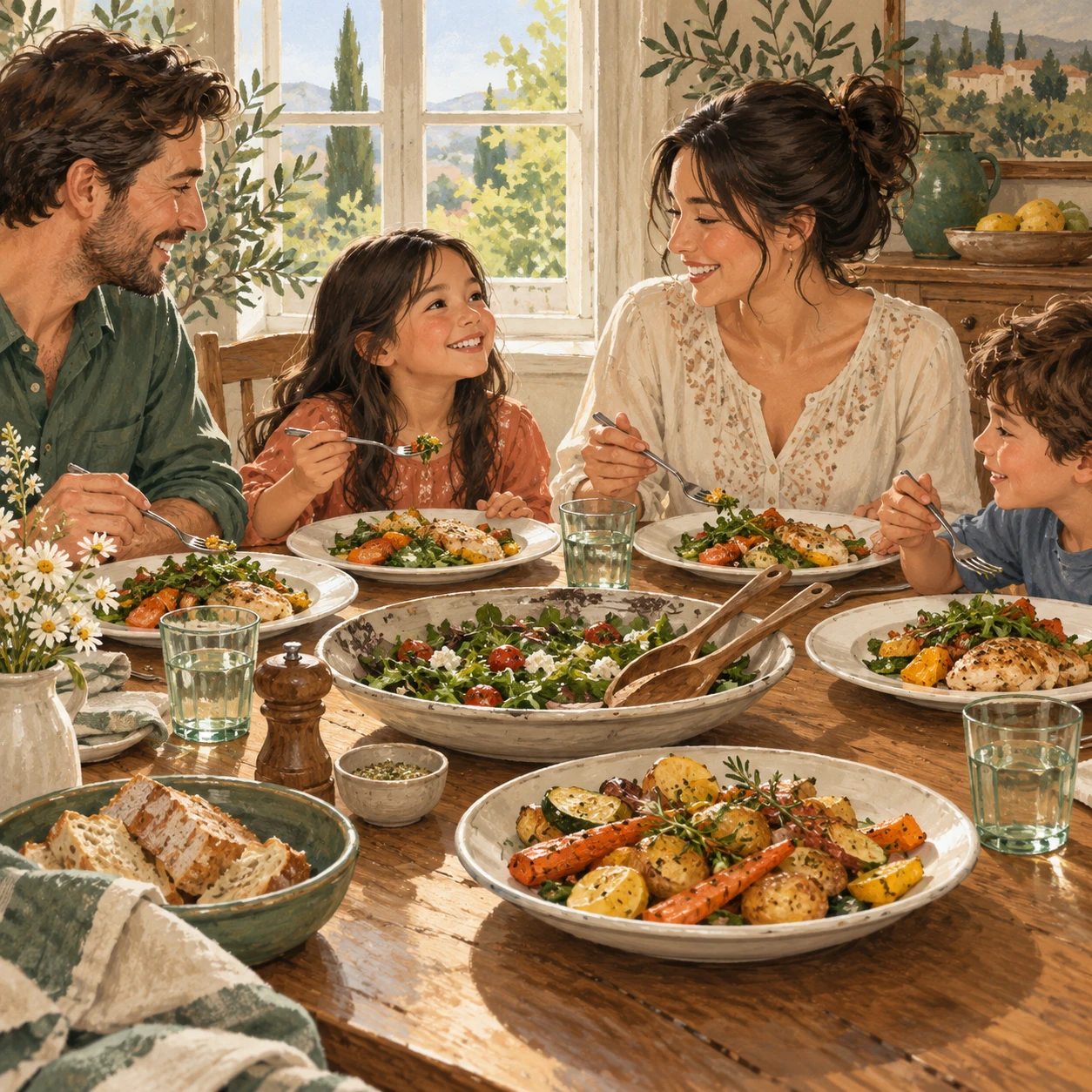
I eat the salad with a fork.
Distingue estos significados en su contexto: bowl = cuenco; cup = taza; glass = vaso; napkin = servilleta.
The cat drinks from a blue bowl.
We read the ___ to choose our food.
Distingue estos significados en su contexto: menu = menú; bill = cuenta; tip = propina; reservation = reserva.
The menu has pictures of the dishes.Distingue estos significados en su contexto: fork = tenedor; knife = cuchillo; spoon = cuchara; plate = plato.
I eat the salad with a fork.Distingue estos significados en su contexto: bowl = cuenco; cup = taza; glass = vaso; napkin = servilleta.
The cat drinks from a blue bowl.Conserva el primer intento, entiende el cambio y compruébalo en otra situación.
Aún no hay repasos. Prueba un calentamiento corto.
Abrir una respuesta registra ayuda para esa pregunta.
We read the ___ to choose our food.
Fíjate en «choose our food». Aquí se pide «menú»: «menu». Elegir comida, deber el total, pagar extra por servicio y reservar son distintos. Frase completa: «We read the menu to choose our food.».
Use the ___ with four points to pick up the pasta.
Fíjate en «four points». Aquí se pide «tenedor»: «fork». Mira forma y uso previsto, no un uso improvisado posible. Frase completa: «Use the fork with four points to pick up the pasta.».
She pours cereal and milk into a wide ___ with curved sides, not a drinking container.
Fíjate en «wide». Aquí se pide «cuenco»: «bowl». Mira forma y uso previsto, no un uso improvisado posible. Frase completa: «She pours cereal and milk into a wide bowl with curved sides, not a drinking container.».
We have finished eating. Could we have the ___ so we can pay?
Fíjate en «so we can pay». Aquí se pide «cuenta»: «bill». Elegir comida, deber el total, pagar extra por servicio y reservar son distintos. Frase completa: «We have finished eating. Could we have the bill so we can pay?».
The service was excellent, so we left an extra five pounds as a ___.
Fíjate en «extra five pounds». Aquí se pide «propina»: «tip». Elegir comida, deber el total, pagar extra por servicio y reservar son distintos. Frase completa: «The service was excellent, so we left an extra five pounds as a tip.».
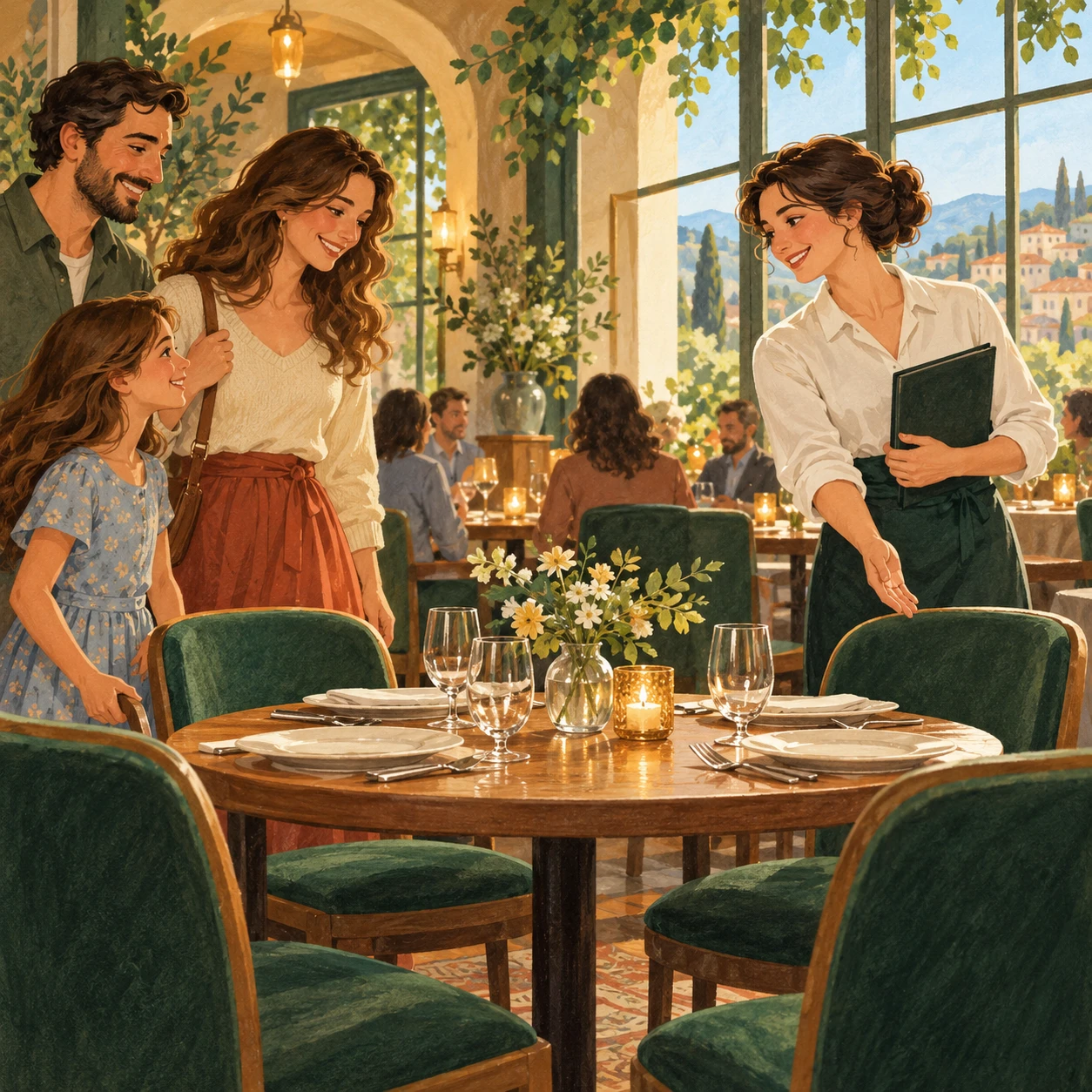
I called yesterday to book a table. I have a ___ for two people.
Fíjate en «book a table». Aquí se pide «reserva»: «reservation». Elegir comida, deber el total, pagar extra por servicio y reservar son distintos. Frase completa: «I called yesterday to book a table. I have a reservation for two people.».
Which table utensil has a sharp blade for cutting meat into pieces? ___
Fíjate en «sharp blade». Aquí se pide «cuchillo»: «knife». Mira forma y uso previsto, no un uso improvisado posible. Frase completa: «Which table utensil has a sharp blade for cutting meat into pieces? knife».
Use a ___ to lift the soup to your mouth.
Fíjate en «lift the soup». Aquí se pide «cuchara»: «spoon». Mira forma y uso previsto, no un uso improvisado posible. Frase completa: «Use a spoon to lift the soup to your mouth.».
Put the pizza on a flat ___, not in a deep bowl.
Fíjate en «flat». Aquí se pide «plato»: «plate». Mira forma y uso previsto, no un uso improvisado posible. Frase completa: «Put the pizza on a flat plate, not in a deep bowl.».
It has a handle and a saucer. We drink tea from it. It is not a drinking glass. It is a ___.
Fíjate en «handle and a saucer». Aquí se pide «taza»: «cup». Mira forma y uso previsto, no un uso improvisado posible. Frase completa: «It has a handle and a saucer. We drink tea from it. It is not a drinking glass. It is a cup.».
Windows are made of it. We use the same word for something we drink water from. The word is ___.
Fíjate en «Windows are made of it». Aquí se pide «vaso»: «glass». Mira forma y uso previsto, no un uso improvisado posible. Frase completa: «Windows are made of it. We use the same word for something we drink water from. The word is glass.».
Wipe the food from your mouth with a ___.
Fíjate en «Wipe the food». Aquí se pide «servilleta»: «napkin». Mira forma y uso previsto, no un uso improvisado posible. Frase completa: «Wipe the food from your mouth with a napkin.».
Before we order, the waiter gives us a ___ listing every dish available to choose and its price.
Fíjate en «listing every dish». Aquí se pide «menú»: «menu». Elegir comida, deber el total, pagar extra por servicio y reservar son distintos. Frase completa: «Before we order, the waiter gives us a menu listing every dish available to choose and its price.».
After the meal, the waiter brings our ___ showing the total amount we owe for what we ate.
Fíjate en «total amount we owe». Aquí se pide «cuenta»: «bill». Elegir comida, deber el total, pagar extra por servicio y reservar son distintos. Frase completa: «After the meal, the waiter brings our bill showing the total amount we owe for what we ate.».
He pushes the points of his ___ into a piece of potato.
Fíjate en «points». Aquí se pide «tenedor»: «fork». Mira forma y uso previsto, no un uso improvisado posible. Frase completa: «He pushes the points of his fork into a piece of potato.».
Be careful: the blade of that ___ is sharp.
Fíjate en «blade». Aquí se pide «cuchillo»: «knife». Mira forma y uso previsto, no un uso improvisado posible. Frase completa: «Be careful: the blade of that knife is sharp.».
Which word names a wide, deep eating dish for soup, rather than a drinking cup or glass? ___
Fíjate en «wide, deep eating dish». Aquí se pide «cuenco»: «bowl». Mira forma y uso previsto, no un uso improvisado posible. Frase completa: «Which word names a wide, deep eating dish for soup, rather than a drinking cup or glass? bowl».
She asks for a small handled drinking container with a matching saucer for coffee. It is not a glass. It is a ___.
Fíjate en «handled drinking container». Aquí se pide «taza»: «cup». Mira forma y uso previsto, no un uso improvisado posible. Frase completa: «She asks for a small handled drinking container with a matching saucer for coffee. It is not a glass. It is a cup.” / “She asks for a small cup and saucer for her coffee.».
A ___ is extra money for service, not the price of the meal.
Fíjate en «extra money for service». Aquí se pide «propina»: «tip». Elegir comida, deber el total, pagar extra por servicio y reservar son distintos. Frase completa: «A tip is extra money for service, not the price of the meal.».
The restaurant is full, but they have kept a table for our ___.
Fíjate en «kept a table». Aquí se pide «reserva»: «reservation». Elegir comida, deber el total, pagar extra por servicio y reservar son distintos. Frase completa: «The restaurant is full, but they have kept a table for our reservation.».
Which table utensil has a small rounded hollow end for measuring loose sugar into coffee? ___
Fíjate en «rounded hollow end». Aquí se pide «cuchara»: «spoon». Mira forma y uso previsto, no un uso improvisado posible. Frase completa: «Which table utensil has a small rounded hollow end for measuring loose sugar into coffee? spoon».
The waiter puts a clean flat ___ in front of each person for the main course.
Fíjate en «flat». Aquí se pide «plato»: «plate». Mira forma y uso previsto, no un uso improvisado posible. Frase completa: «The waiter puts a clean flat plate in front of each person for the main course.».
What is the usual name for a tall, straight-sided drinking container with a flat base and no handle, used for cold water at the table? A ___.
Fíjate en «tall, straight-sided drinking container with a flat base and no handle». Aquí se pide «vaso»: «glass». Mira forma y uso previsto, no un uso improvisado posible. Frase completa: «What is the usual name for a tall, straight-sided drinking container with a flat base and no handle, used for cold water at the table? A glass.” / “Her tall, narrow drinking glass is made of glass and has no handle.».
There is a folded paper ___ next to each plate.
Fíjate en «folded paper». Aquí se pide «servilleta»: «napkin». Mira forma y uso previsto, no un uso improvisado posible. Frase completa: «There is a folded paper napkin next to each plate.».