Speisekarte · Rechnung · Trinkgeld · Reservierung
Unterscheide diese Bedeutungen im Zusammenhang: menu = Speisekarte; bill = Rechnung; tip = Trinkgeld; reservation = Reservierung.
The menu has pictures of the dishes.

Im Restaurant · A1. Unterscheide diese Bedeutungen im Zusammenhang: menu = Speisekarte; bill = Rechnung; tip = Trinkgeld; reservation = Reservierung.
Lerne zwölf nützliche Wörter zu diesem Thema. Sieh dir eigenständige Beispiele an und übe dann neue Situationen. Die Stufe ist eine redaktionelle Orientierung, kein Zertifikat.
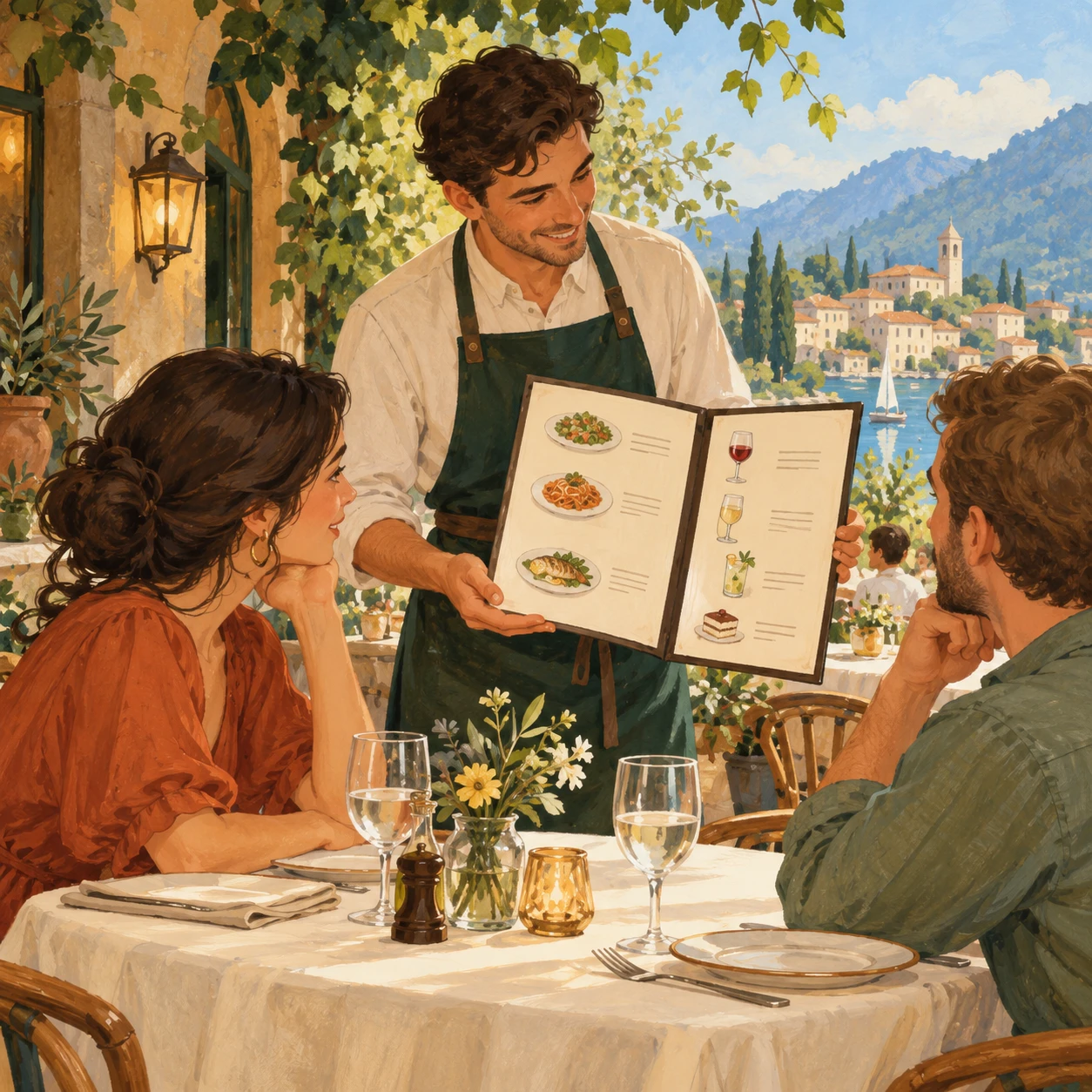
a list of the food and drinks available
The menu has pictures of the dishes.
Die Speisekarte zeigt Bilder der Gerichte.
Diese Angaben beziehen sich auf diese Bedeutung. Verwandte Wörter können andere Bedeutungen haben; ähnliche Ausdrücke sind nicht immer austauschbar.
Übe „read the menu“ als Wortverbindung. In dieser Einheit bedeutet „menu“ Speisekarte.
Unterscheide diese Bedeutungen im Zusammenhang: menu = Speisekarte; bill = Rechnung; tip = Trinkgeld; reservation = Reservierung.
The menu has pictures of the dishes.
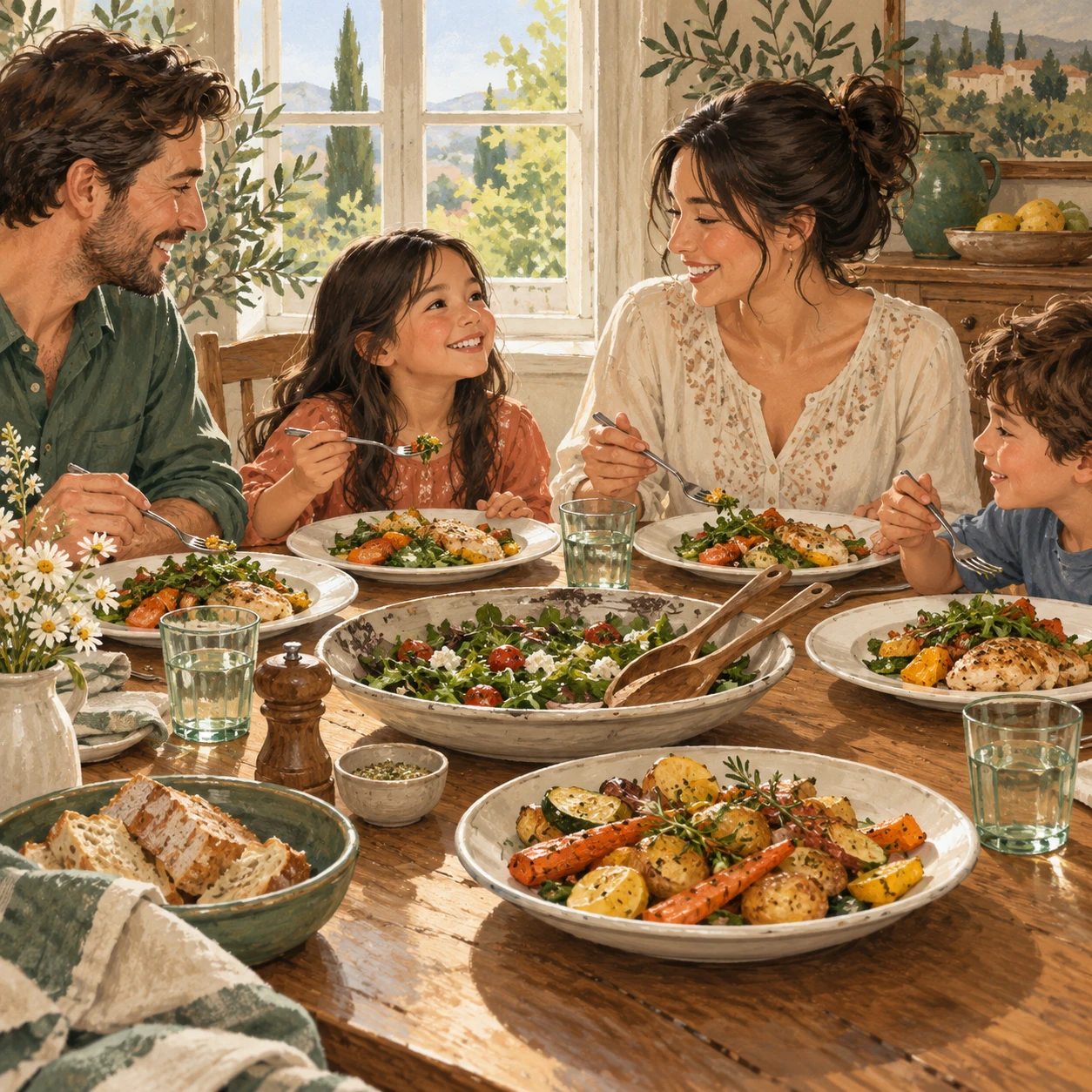
Unterscheide diese Bedeutungen im Zusammenhang: fork = Gabel; knife = Messer; spoon = Löffel; plate = Teller.
I eat the salad with a fork.
Unterscheide diese Bedeutungen im Zusammenhang: bowl = Schüssel; cup = Tasse; glass = Trinkglas; napkin = Serviette.
The cat drinks from a blue bowl.
We read the ___ to choose our food.
Unterscheide diese Bedeutungen im Zusammenhang: menu = Speisekarte; bill = Rechnung; tip = Trinkgeld; reservation = Reservierung.
The menu has pictures of the dishes.Unterscheide diese Bedeutungen im Zusammenhang: fork = Gabel; knife = Messer; spoon = Löffel; plate = Teller.
I eat the salad with a fork.Unterscheide diese Bedeutungen im Zusammenhang: bowl = Schüssel; cup = Tasse; glass = Trinkglas; napkin = Serviette.
The cat drinks from a blue bowl.Bewahre den ersten Versuch. Verstehe die Änderung. Prüfe sie in einer neuen Situation.
Noch keine Lernnotizen. Starte mit einem kurzen Einstieg.
Das Öffnen einer Antwort wird für diese Aufgabe als Hilfe erfasst.
We read the ___ to choose our food.
Achte auf „choose our food“. Hier ist „Speisekarte“ gemeint: „menu“. Essen auswählen, Gesamtbetrag schulden, Trinkgeld geben und vorab buchen sind verschieden. Vollständiger Satz: „We read the menu to choose our food.“.
Use the ___ with four points to pick up the pasta.
Achte auf „four points“. Hier ist „Gabel“ gemeint: „fork“. Prüfe Form und vorgesehenen Gebrauch, nicht eine improvisierte Nutzung. Vollständiger Satz: „Use the fork with four points to pick up the pasta.“.
She pours cereal and milk into a wide ___ with curved sides, not a drinking container.
Achte auf „wide“. Hier ist „Schüssel“ gemeint: „bowl“. Prüfe Form und vorgesehenen Gebrauch, nicht eine improvisierte Nutzung. Vollständiger Satz: „She pours cereal and milk into a wide bowl with curved sides, not a drinking container.“.
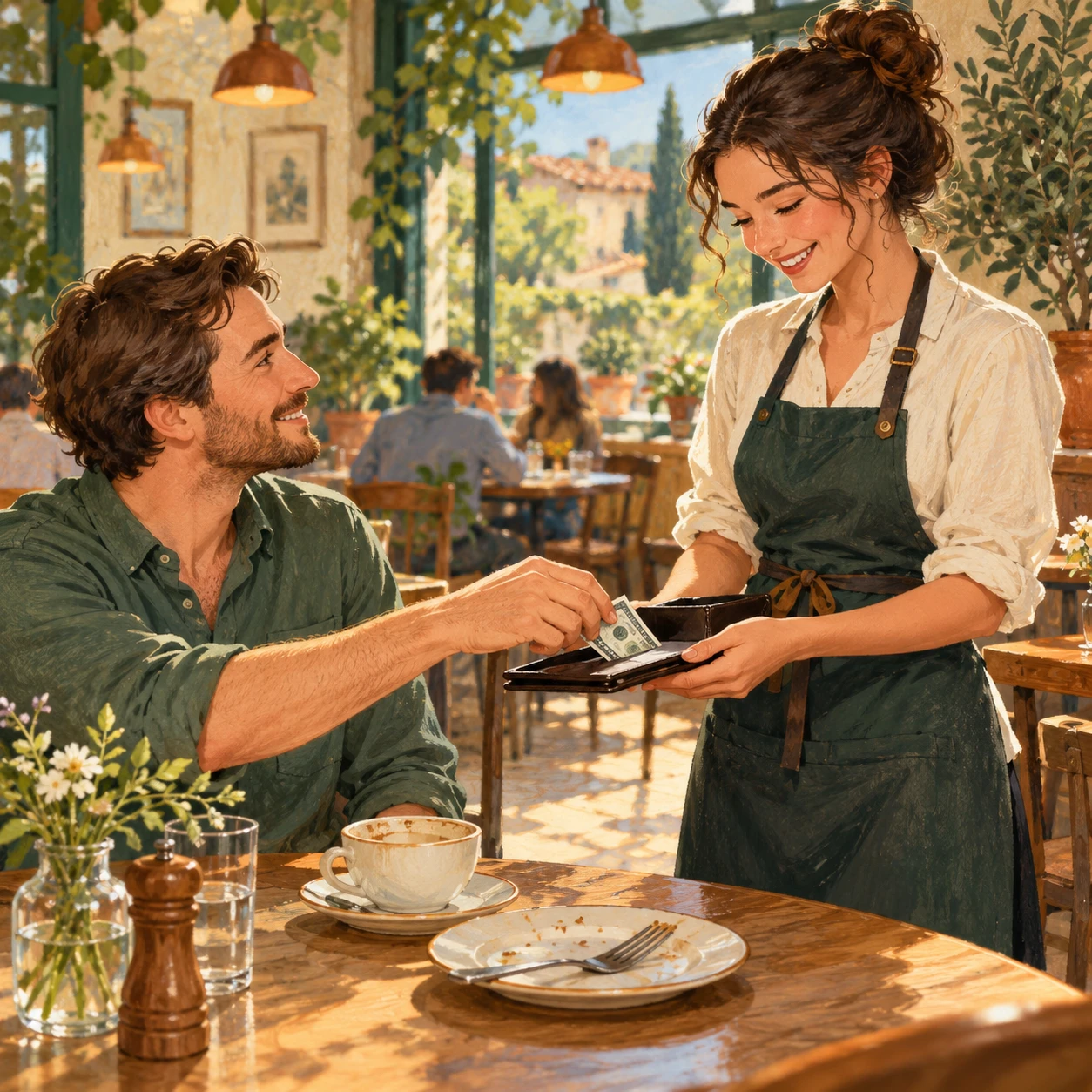
We have finished eating. Could we have the ___ so we can pay?
Achte auf „so we can pay“. Hier ist „Rechnung“ gemeint: „bill“. Essen auswählen, Gesamtbetrag schulden, Trinkgeld geben und vorab buchen sind verschieden. Vollständiger Satz: „We have finished eating. Could we have the bill so we can pay?“.
The service was excellent, so we left an extra five pounds as a ___.
Achte auf „extra five pounds“. Hier ist „Trinkgeld“ gemeint: „tip“. Essen auswählen, Gesamtbetrag schulden, Trinkgeld geben und vorab buchen sind verschieden. Vollständiger Satz: „The service was excellent, so we left an extra five pounds as a tip.“.
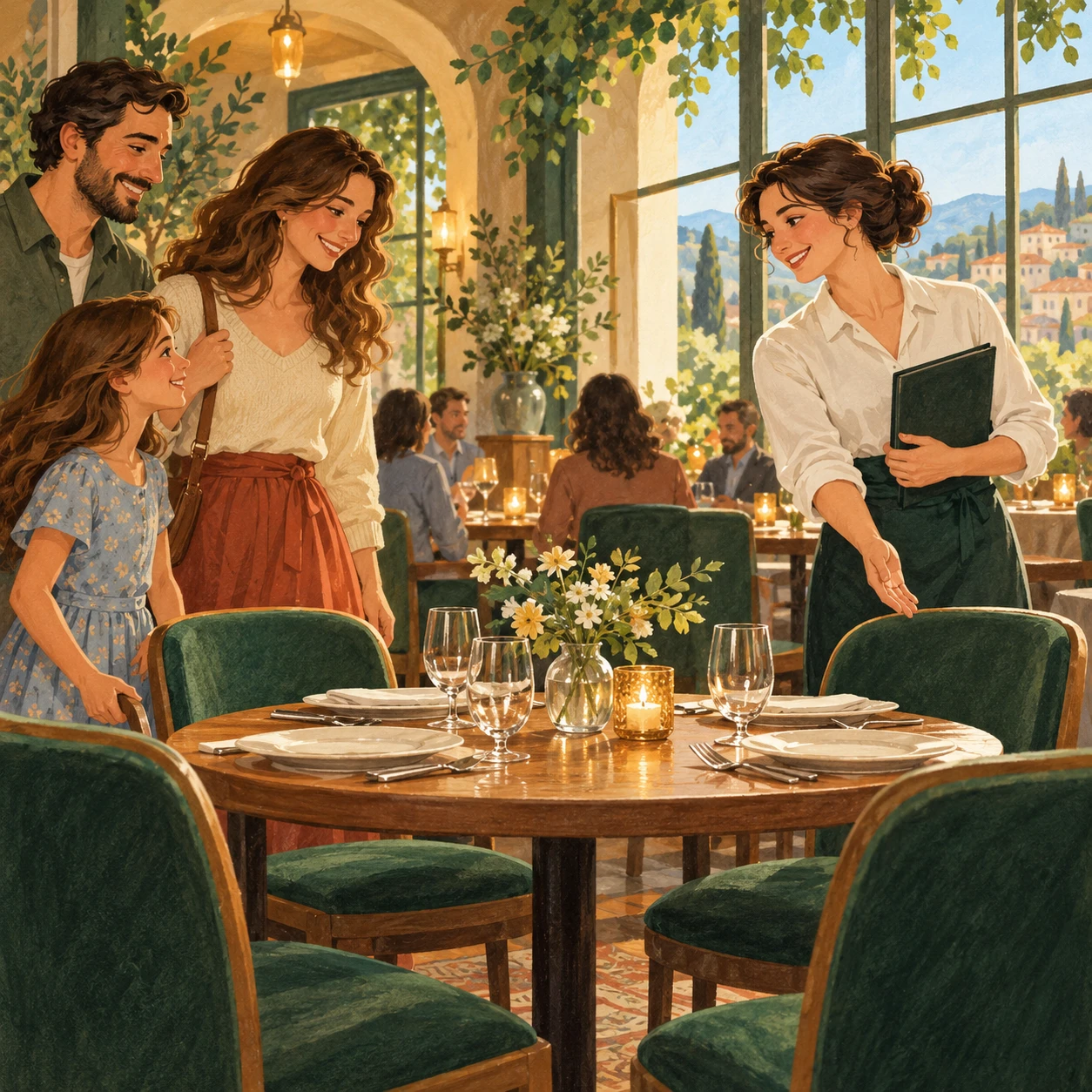
I called yesterday to book a table. I have a ___ for two people.
Achte auf „book a table“. Hier ist „Reservierung“ gemeint: „reservation“. Essen auswählen, Gesamtbetrag schulden, Trinkgeld geben und vorab buchen sind verschieden. Vollständiger Satz: „I called yesterday to book a table. I have a reservation for two people.“.
Which table utensil has a sharp blade for cutting meat into pieces? ___
Achte auf „sharp blade“. Hier ist „Messer“ gemeint: „knife“. Prüfe Form und vorgesehenen Gebrauch, nicht eine improvisierte Nutzung. Vollständiger Satz: „Which table utensil has a sharp blade for cutting meat into pieces? knife“.
Use a ___ to lift the soup to your mouth.
Achte auf „lift the soup“. Hier ist „Löffel“ gemeint: „spoon“. Prüfe Form und vorgesehenen Gebrauch, nicht eine improvisierte Nutzung. Vollständiger Satz: „Use a spoon to lift the soup to your mouth.“.
Put the pizza on a flat ___, not in a deep bowl.
Achte auf „flat“. Hier ist „Teller“ gemeint: „plate“. Prüfe Form und vorgesehenen Gebrauch, nicht eine improvisierte Nutzung. Vollständiger Satz: „Put the pizza on a flat plate, not in a deep bowl.“.
It has a handle and a saucer. We drink tea from it. It is not a drinking glass. It is a ___.
Achte auf „handle and a saucer“. Hier ist „Tasse“ gemeint: „cup“. Prüfe Form und vorgesehenen Gebrauch, nicht eine improvisierte Nutzung. Vollständiger Satz: „It has a handle and a saucer. We drink tea from it. It is not a drinking glass. It is a cup.“.
Windows are made of it. We use the same word for something we drink water from. The word is ___.
Achte auf „Windows are made of it“. Hier ist „Trinkglas“ gemeint: „glass“. Prüfe Form und vorgesehenen Gebrauch, nicht eine improvisierte Nutzung. Vollständiger Satz: „Windows are made of it. We use the same word for something we drink water from. The word is glass.“.
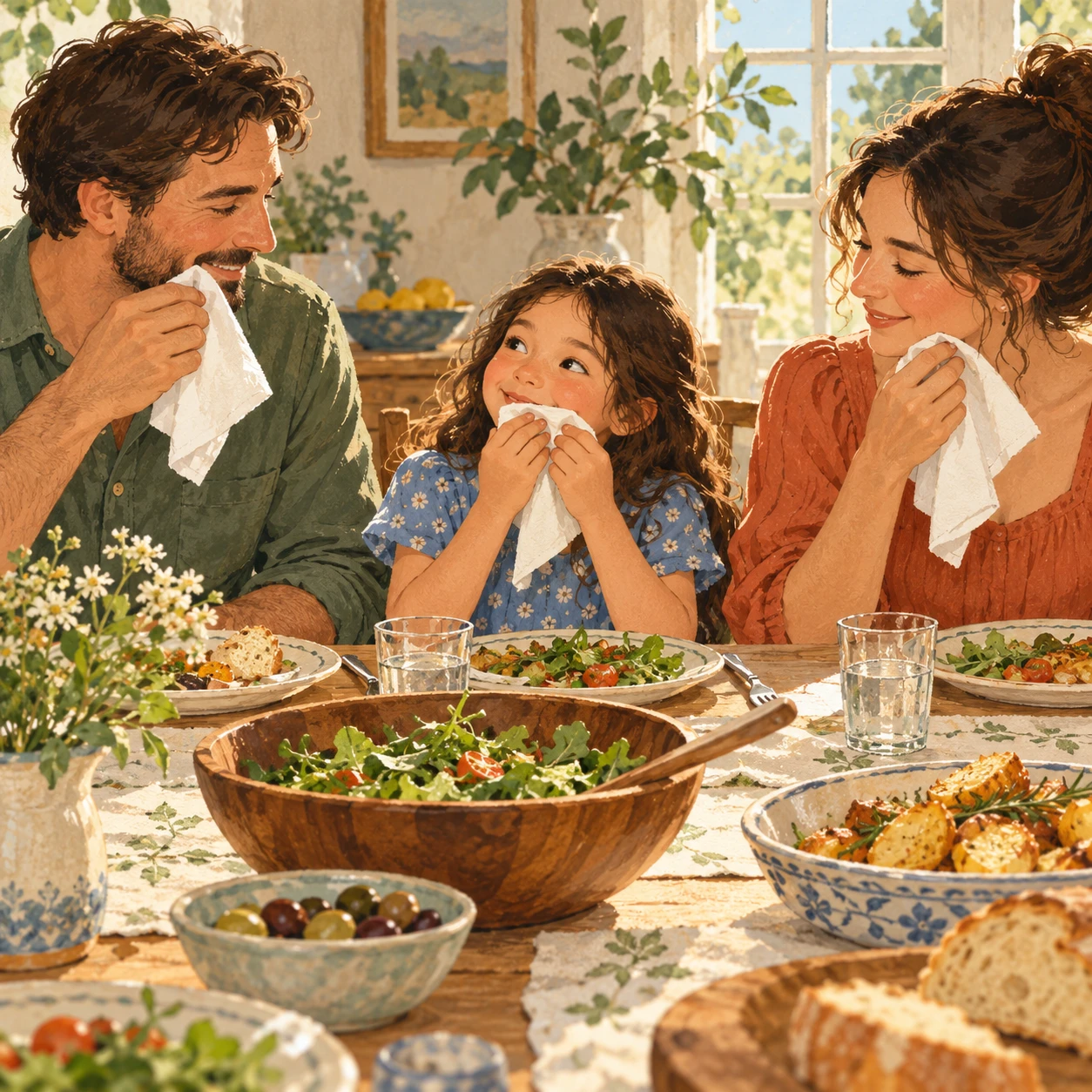
Wipe the food from your mouth with a ___.
Achte auf „Wipe the food“. Hier ist „Serviette“ gemeint: „napkin“. Prüfe Form und vorgesehenen Gebrauch, nicht eine improvisierte Nutzung. Vollständiger Satz: „Wipe the food from your mouth with a napkin.“.
Before we order, the waiter gives us a ___ listing every dish available to choose and its price.
Achte auf „listing every dish“. Hier ist „Speisekarte“ gemeint: „menu“. Essen auswählen, Gesamtbetrag schulden, Trinkgeld geben und vorab buchen sind verschieden. Vollständiger Satz: „Before we order, the waiter gives us a menu listing every dish available to choose and its price.“.
After the meal, the waiter brings our ___ showing the total amount we owe for what we ate.
Achte auf „total amount we owe“. Hier ist „Rechnung“ gemeint: „bill“. Essen auswählen, Gesamtbetrag schulden, Trinkgeld geben und vorab buchen sind verschieden. Vollständiger Satz: „After the meal, the waiter brings our bill showing the total amount we owe for what we ate.“.
He pushes the points of his ___ into a piece of potato.
Achte auf „points“. Hier ist „Gabel“ gemeint: „fork“. Prüfe Form und vorgesehenen Gebrauch, nicht eine improvisierte Nutzung. Vollständiger Satz: „He pushes the points of his fork into a piece of potato.“.
Be careful: the blade of that ___ is sharp.
Achte auf „blade“. Hier ist „Messer“ gemeint: „knife“. Prüfe Form und vorgesehenen Gebrauch, nicht eine improvisierte Nutzung. Vollständiger Satz: „Be careful: the blade of that knife is sharp.“.
Which word names a wide, deep eating dish for soup, rather than a drinking cup or glass? ___
Achte auf „wide, deep eating dish“. Hier ist „Schüssel“ gemeint: „bowl“. Prüfe Form und vorgesehenen Gebrauch, nicht eine improvisierte Nutzung. Vollständiger Satz: „Which word names a wide, deep eating dish for soup, rather than a drinking cup or glass? bowl“.
She asks for a small handled drinking container with a matching saucer for coffee. It is not a glass. It is a ___.
Achte auf „handled drinking container“. Hier ist „Tasse“ gemeint: „cup“. Prüfe Form und vorgesehenen Gebrauch, nicht eine improvisierte Nutzung. Vollständiger Satz: „She asks for a small handled drinking container with a matching saucer for coffee. It is not a glass. It is a cup.” / “She asks for a small cup and saucer for her coffee.“.
A ___ is extra money for service, not the price of the meal.
Achte auf „extra money for service“. Hier ist „Trinkgeld“ gemeint: „tip“. Essen auswählen, Gesamtbetrag schulden, Trinkgeld geben und vorab buchen sind verschieden. Vollständiger Satz: „A tip is extra money for service, not the price of the meal.“.
The restaurant is full, but they have kept a table for our ___.
Achte auf „kept a table“. Hier ist „Reservierung“ gemeint: „reservation“. Essen auswählen, Gesamtbetrag schulden, Trinkgeld geben und vorab buchen sind verschieden. Vollständiger Satz: „The restaurant is full, but they have kept a table for our reservation.“.
Which table utensil has a small rounded hollow end for measuring loose sugar into coffee? ___
Achte auf „rounded hollow end“. Hier ist „Löffel“ gemeint: „spoon“. Prüfe Form und vorgesehenen Gebrauch, nicht eine improvisierte Nutzung. Vollständiger Satz: „Which table utensil has a small rounded hollow end for measuring loose sugar into coffee? spoon“.
The waiter puts a clean flat ___ in front of each person for the main course.
Achte auf „flat“. Hier ist „Teller“ gemeint: „plate“. Prüfe Form und vorgesehenen Gebrauch, nicht eine improvisierte Nutzung. Vollständiger Satz: „The waiter puts a clean flat plate in front of each person for the main course.“.
What is the usual name for a tall, straight-sided drinking container with a flat base and no handle, used for cold water at the table? A ___.
Achte auf „tall, straight-sided drinking container with a flat base and no handle“. Hier ist „Trinkglas“ gemeint: „glass“. Prüfe Form und vorgesehenen Gebrauch, nicht eine improvisierte Nutzung. Vollständiger Satz: „What is the usual name for a tall, straight-sided drinking container with a flat base and no handle, used for cold water at the table? A glass.” / “Her tall, narrow drinking glass is made of glass and has no handle.“.
There is a folded paper ___ next to each plate.
Achte auf „folded paper“. Hier ist „Serviette“ gemeint: „napkin“. Prüfe Form und vorgesehenen Gebrauch, nicht eine improvisierte Nutzung. Vollständiger Satz: „There is a folded paper napkin next to each plate.“.