Genannte Einzelheiten
Ordne die gefragte Person, Zeit, den Ort oder Betrag dem richtigen Ereignis zu.
The doors open at eight. The class starts at nine.

Ein verlorener Rucksack · A1. Ordne die gefragte Person, Zeit, den Ort oder Betrag dem richtigen Ereignis zu.
Lies das originale englische Material und antworte mit Belegen. Die Stufe ist eine redaktionelle Orientierung, kein zertifiziertes Ergebnis.
Lies das originale englische Material und antworte mit Belegen. Die Stufe ist eine redaktionelle Orientierung, kein zertifiziertes Ergebnis.
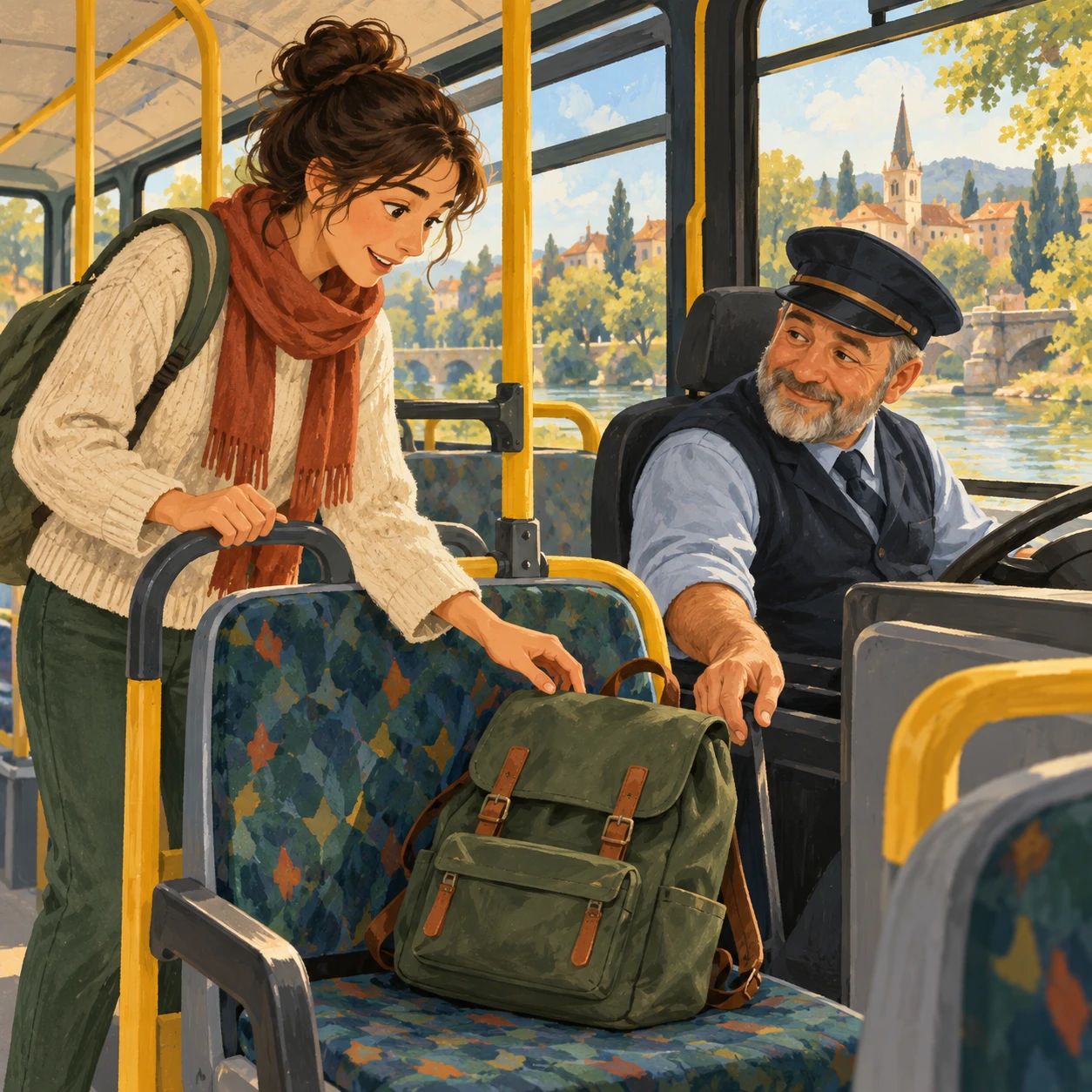
On Monday, Ben took the bus to his new art class. He sat at the back and put his backpack on the seat beside him. At the next stop, an old woman got on. Ben moved his bag under his seat so she could sit down.
When Ben arrived at the college, he got off quickly. The bus was already away when he remembered his bag. His phone was in his coat pocket, but his drawing book and lunch were in the backpack. He called the bus company. A woman asked for his name, the bus number and the colour of the bag.
The driver found the backpack at the end of the journey. Ben could collect it from the bus office after four. He went there after his class, which finished at half past three. The office worker asked Ben to describe something inside the bag. He told her about a drawing of a yellow house. She smiled and gave it back. Ben thanked her and went home.
Ordne die gefragte Person, Zeit, den Ort oder Betrag dem richtigen Ereignis zu.
The doors open at eight. The class starts at nine.
Nutze den tatsächlich genannten Grund; ein nur plausibler Grund von außen reicht nicht.
We meet inside because it is raining.
Lies das originale englische Material und antworte mit Belegen. Die Stufe ist eine redaktionelle Orientierung, kein zertifiziertes Ergebnis.
On Monday, Ben took the bus to his new art class. He sat at the back and put his backpack on the seat beside him. At the next stop, an old woman got on. Ben moved his bag under his seat so she could sit down.
When Ben arrived at the college, he got off quickly. The bus was already away when he remembered his bag. His phone was in his coat pocket, but his drawing book and lunch were in the backpack. He called the bus company. A woman asked for his name, the bus number and the colour of the bag.
The driver found the backpack at the end of the journey. Ben could collect it from the bus office after four. He went there after his class, which finished at half past three. The office worker asked Ben to describe something inside the bag. He told her about a drawing of a yellow house. She smiled and gave it back. Ben thanked her and went home.
A lost backpack
Nutze den tatsächlich genannten Grund; ein nur plausibler Grund von außen reicht nicht. Ordne die gefragte Person, Zeit, den Ort oder Betrag dem richtigen Ereignis zu.
We meet inside because it is raining.Nutze den tatsächlich genannten Grund; ein nur plausibler Grund von außen reicht nicht.
We meet inside because it is raining.Ordne die gefragte Person, Zeit, den Ort oder Betrag dem richtigen Ereignis zu.
The doors open at eight. The class starts at nine.Behalte den Erstversuch, prüfe den Beleg und versuche eine weitere Frage. Eine Folgefrage zum selben Material belegt keinen Transfer auf einen neuen Text.
Noch keine Lernnotizen. Starte mit einem kurzen Einstieg.
Ordne die gefragte Person, Zeit, den Ort oder Betrag dem richtigen Ereignis zu.
The doors open at eight. The class starts at nine.Nutze den tatsächlich genannten Grund; ein nur plausibler Grund von außen reicht nicht.
We meet inside because it is raining.Das Öffnen einer Antwort wird für diese Aufgabe als Hilfe erfasst.
A lost backpack
Antwort: „To an art class.“. Beleg: „On Monday, Ben took the bus to his new art class.“. Prüfe „To the bus office.“: Dies verändert die Reihenfolge der Handlungen. Beleg: „He went there after his class“.
A lost backpack
Antwort: „On the seat beside him.“. Beleg: „He sat at the back and put his backpack on the seat beside him.“. Prüfe „Under the front seat.“: Dies ist nicht der für diese Handlung genannte Ort.
A lost backpack
Antwort: „To make a seat free for a woman.“. Beleg: „Ben moved his bag under his seat so she could sit down.“. Prüfe „To take out his lunch.“: Der Text nennt diese Einzelheit nicht. Ergänze sie nicht.
A lost backpack
Antwort: „After the bus had left.“. Beleg: „The bus was already away when he remembered his bag.“. Prüfe „While he was drawing in class.“: Dies verwechselt die Zeit dieses Ereignisses mit einer anderen Zeit. Beleg: „He went there after his class“.
A lost backpack
Antwort: „In his coat pocket.“. Beleg: „His phone was in his coat pocket, but his drawing book and lunch were in the backpack.“. Prüfe „In his backpack.“: Dies ist nicht der für diese Handlung genannte Ort.
A lost backpack
Antwort: „To check that it belonged to Ben.“. Beleg: „The office worker asked Ben to describe something inside the bag. He told her about a drawing of a yellow house.“. Prüfe „To choose a picture for the office wall.“: Dies ist nicht der für diese Handlung genannte Grund.
A lost backpack
Antwort: „Its colour.“. Beleg: „A woman asked for his name, the bus number and the colour of the bag.“. Prüfe „The shop where he bought it.“: Der Text nennt diese Einzelheit nicht. Ergänze sie nicht.
A lost backpack
Antwort: „The driver.“. Beleg: „The driver found the backpack at the end of the journey.“. Prüfe „Ben’s classmate.“: Dies ordnet die Handlung oder Rolle der falschen Person oder Gruppe zu.
A lost backpack
Antwort: „After four.“. Beleg: „Ben could collect it from the bus office after four.“. Prüfe „Before half past three.“: Dies ist nicht die erfragte Uhrzeit. Beleg: „his class, which finished at half past three.“.
A lost backpack
Antwort: „He finished his art class.“. Beleg: „He went there after his class, which finished at half past three.“. Prüfe „He bought a new backpack.“: Der Text nennt diese Einzelheit nicht. Ergänze sie nicht.
A lost backpack
Antwort: „A drawing book and lunch.“. Beleg: „His phone was in his coat pocket, but his drawing book and lunch were in the backpack.“. Prüfe „A house key and a ticket.“: Dies ist nicht der für diese Handlung genannte Gegenstand.
A lost backpack
Antwort: „Ben got his backpack back.“. Beleg: „She smiled and gave it back. Ben thanked her and went home.“. Prüfe „The driver took the bag home.“: Dies ist nicht das für diese Handlung berichtete Ergebnis.